Why Dull Knives Are a Real Problem (And Most Sharpeners Make It Worse)
A dull knife is more dangerous than a sharp one. Dull blades require more pressure, so they slip more often and are more likely to cause accidents. A sharp knife slices cleanly with minimal pressure, giving you better control and safer cutting. But here's the problem: most home cooks buy the wrong sharpener, and many sharpeners actively damage blades.
The Three Types of Knife Sharpeners (And Which One You Actually Need)
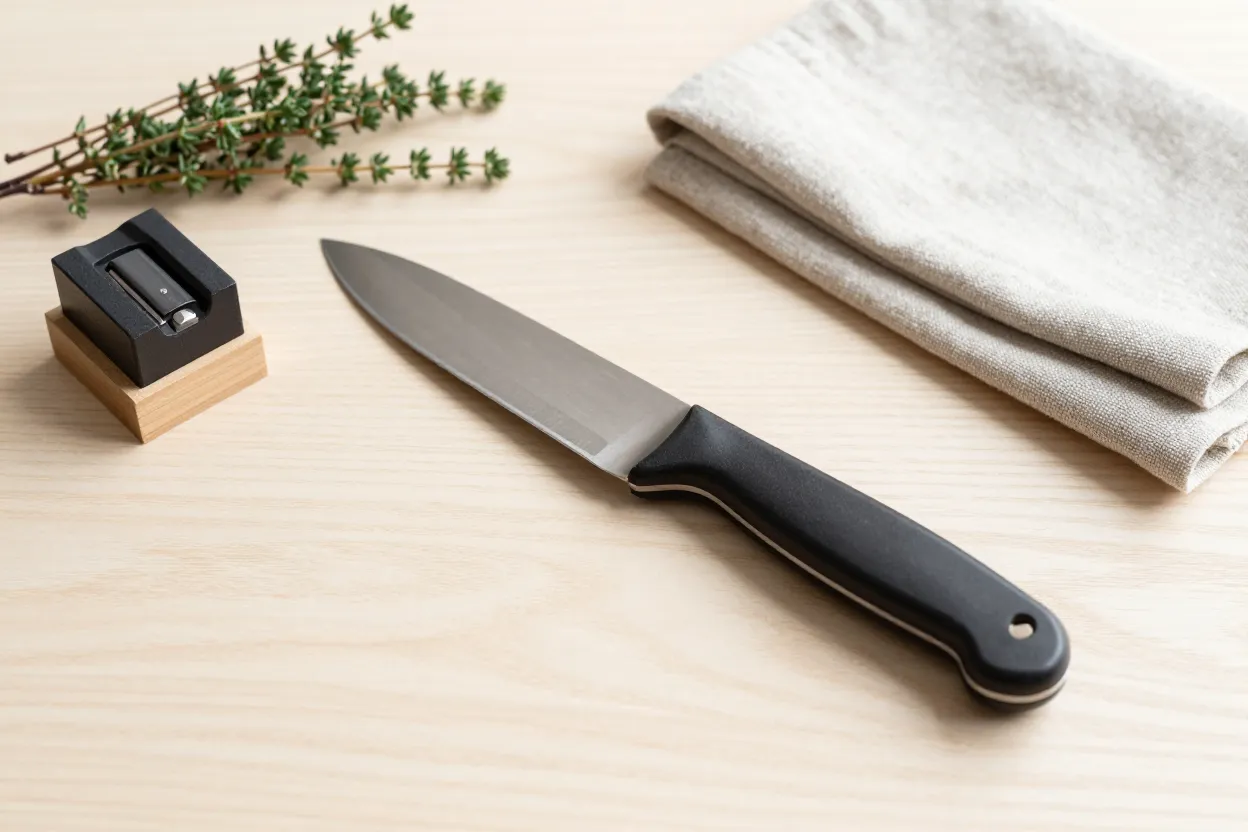
Pull-through sharpeners (like the Smith's Pocket Pal) use carbide and ceramic slots to sharpen blades quickly. They're cheap and require zero skill, but they remove too much material and can damage blade edges if overused. Best for maintenance touch-ups only, not serious sharpening.
Electric sharpeners (like the Chef's Choice 15 or Work Sharp Culinary E2) use motorized wheels or honing stages to sharpen blades at consistent angles. They're faster than manual systems and more precise than pull-throughs. The downside: they cost $50–$200, but if you have quality knives, they're worth it.
Whetstones (like the Lansky Sharpening System) are the gold standard. They require skill and learning, but a properly sharpened whetstone blade is sharper than anything from a pull-through or most electric sharpeners. The learning curve is real, but once you master it, you'll never go back.
The Secret Most Home Cooks Don't Know: Honing vs Sharpening
Your knife blade has microscopic teeth along the edge. Over time, these teeth get bent and dull. A sharpener removes material to create a new sharp edge. A honing rod realigns the bent teeth without removing material. Most home cooks sharpen once a year and wonder why their knives dull so quickly. The answer: they never hone. Use a honing rod 1–2x weekly, and you'll extend the time between actual sharpening from 2–3 months to 6+ months.
What Angle Should Your Blade Be?
Western kitchen knives (German, French, American brands) typically use 15–20° angles. Japanese knives use 10–15° angles. Your sharpener needs to maintain the correct angle, or you'll degrade the blade. Most pull-through sharpeners have a fixed 15–20° angle, which works for Western knives but damages Japanese knives. Electric sharpeners usually have adjustable angles. Whetstones let you set any angle with practice.
Our Recommendations Based on Your Situation
If you want the easiest solution: The Chef's Choice 15 Trizor XV is the best balance of ease and results. Plug it in, pull your knife through twice, and you're done. This is the one we recommend most to home cooks.
If you want professional-grade results: The Work Sharp Culinary E2 is the top pick. Two-stage honing, precision guides, and the ability to sharpen any blade type make it worth the investment.
If you want to learn proper technique: The Lansky Sharpening System is the best whetstone kit for beginners. The angle guides remove the skill requirement, and the 4 progressive grits teach you the full sharpening process.
If you have a tight budget: The Smith's Pocket Pal and KitchenIQ Edge Grip are solid for maintenance. Neither will give you perfect results, but they'll extend the time between professional sharpening.
Regardless of which sharpener you choose: Buy a honing rod (Zwilling or Wüsthof, $25–$60). Use it weekly. This is the overlooked step that keeps knives sharper longer.