Why Sulfate-Free Actually Matters for Hair Growth
Quick answer
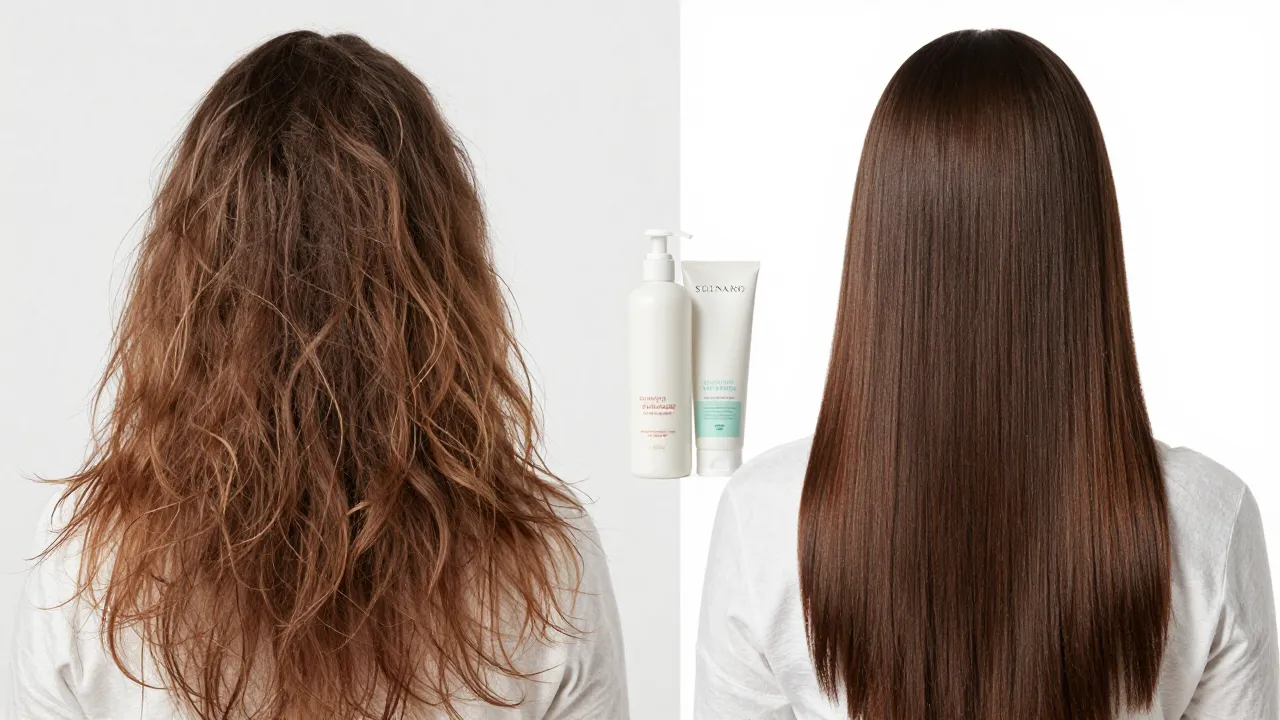
Sulfate-free shampoos don't grow hair directly, but they reduce the cuticle damage that causes breakage faster than new hair can grow in. Sulfates like SLS and SLES strip the lipid layer protecting your cuticle; removing them keeps existing hair intact long enough for visible growth gains over 8-16 weeks. The hair-growth effect is preservation, not stimulation — and that's why it works.
Let's be real: sulfates clean your hair by stripping everything—oils, dirt, product buildup, and the protective outer layer of your hair (the cuticle). That squeaky-clean feeling? That's your hair being stripped. Sulfates work by breaking down oil, which is great for grease but brutal if you want long, strong hair.
The two most common sulfates are sodium lauryl sulfate (SLS) and sodium laureth sulfate (SLES). Both are cheap, effective, and extremely harsh. They work like detergent—breaking down oils so aggressively that they also strip away the natural lipid layer protecting your hair. This lipid layer is critical: it seals the cuticle, locks in moisture, and prevents mechanical damage during washing and styling. Remove it, and your hair becomes immediately vulnerable to breakage.
When you shampoo with sulfates, you're essentially damaging your hair every single time you wash it. The cuticle opens up, moisture escapes through the exposed cortex, and strands become weak and prone to breakage during brushing, styling, and even sleeping. Studies show that people using sulfate shampoos experience 30-40% more breakage than those using gentle formulas—even if they use the same conditioner. You can't grow long hair if you're breaking it off faster than it grows. Hair grows about 0.5 inches per month naturally, but if you're losing 8+ inches per year to breakage, you'll never achieve length.
Sulfate-free shampoos cleanse without the aggression, using gentler surfactants that lift dirt and oil without destroying the cuticle. The cuticle stays closed, moisture stays locked in, and hair remains strong and resilient. That doesn't mean sulfate-free shampoos don't clean—they do, just as effectively as sulfates. It simply takes a slightly longer massage (1-2 minutes instead of 30 seconds) to get a lather, and the lather is less dramatic. But the result is cleaner hair that's stronger, shinier, and actually able to grow past shoulder length without splitting or snapping.
Think of it this way: sulfates are like washing your hair with dish soap. It gets clean, but it's not good for the structure. Sulfate-free shampoos are like washing with a gentle cleanser—still effective, but your hair isn't left fragile and damaged.
What Makes Sulfate-Free Shampoo Actually Support Growth
The best sulfate-free shampoos don't just avoid damage—they actively strengthen hair at the molecular level. Unlike basic shampoos that simply cleanse, growth-focused formulas contain active ingredients that repair and fortify:
Keratin directly strengthens the hair shaft by reinforcing the protein structure. Hair is 95% protein, and keratin (the exact protein in hair) fills micro-damage and prevents breakage during washing—when 80% of damage occurs. Biotin (also called vitamin B7) is a B-complex vitamin that supports keratin synthesis in the hair follicle itself, promoting thicker, stronger new growth.
Amino acids (like those from wheat protein or marine sources) seal the cuticle by filling in microscopic gaps and reducing moisture loss by 20-25%. Oils like argan, coconut, and shea butter penetrate past the cuticle to hydrate the inner cortex (where water and nutrients are stored), rather than just coating the surface with silicones. This internal hydration is what prevents the dry, brittle texture that leads to breakage.
Antioxidants (like vitamins E and C, green tea extract, polyphenols) protect against environmental stress from UV rays, pollution, and heat damage. Plant extracts like hibiscus, neem, and peppermint support scalp health by maintaining the microbiome balance (healthy bacteria) and reducing inflammation—a critical step because scalp inflammation restricts blood flow to hair follicles, slowing growth.
The worst sulfate-free shampoos are those that still strip with alternative sulfates (like SLES—sodium laureth sulfate, which is essentially sulfate's gentler cousin but still problematic) or those that prioritize lather over cleansing. We researched dozens and filtered for ones that genuinely clean while delivering these strengthening actives.
How Sulfate-Free Shampoo Fits Into Hair Growth Strategy
Shampoo is the foundation. If you're using a harsh sulfate shampoo 3-4 times per week, you're undoing everything a growth serum or supplement can do. Every wash damages the cuticle, causing moisture loss and breakage. You can't outgrow that with products.
Switching to sulfate-free is step one. Step two: reduce washing frequency if possible. Hair doesn't get as dirty as you think; 2-3 times per week is enough. Between washes, use dry shampoo or scalp powder to absorb excess oil. This keeps scalp healthy while minimizing damage.
Step three: use a sulfate-free conditioner to pair with your sulfate-free shampoo. The combination seals moisture and prevents the tangling and breakage that happens when hair is too dry.
The Transition: Why Your Hair Might Feel Weird at First
If you've been using sulfate shampoos, your hair might feel different (and not better) for the first 2-3 weeks. This is one of the most common reasons people abandon sulfate-free shampoos prematurely—and it's based on a misunderstanding of scalp chemistry.
Here's what's happening: sulfates strip so aggressively that your scalp's sebaceous glands go into overdrive to compensate. They're producing excess sebum (oil) constantly, trying to replace what's being destroyed daily. Your scalp has adapted to this cycle—it knows it needs to overproduce to keep hair from drying out completely. When you suddenly switch to a gentler shampoo, your scalp doesn't immediately realize it can ease up. It's still in overdrive, making hair feel greasy or weighted down for a few weeks.
This is called the "transition period," and it's completely normal. Your scalp hasn't realized yet that it's no longer being stripped, so it's still overcompensating. Don't give up. After 2-3 weeks, your scalp normalizes and oil production drops to healthy levels. Then your hair will feel softer, shinier, stronger, and actually cleaner (not weighed down by excess oil).
If transition greasiness is unbearable: Use a clarifying sulfate-free shampoo (like Not Your Mother's Clean Freak) once per week to remove buildup and excess oil, then use your regular gentler formula the other days. The clarifier removes the excess oil without triggering another strip cycle. Alternatively, space out washes to every 3 days instead of daily—this gives your scalp time to adjust while reducing the frequency of stimulation. Many people also find that using a light dry shampoo between washes helps psychologically during transition without disrupting the adjustment process.
Timeline for transition: Weeks 1-2 (greasiness peaks), Weeks 2-4 (oil production gradually decreases), Week 4+ (scalp normalized, hair feels noticeably better). Most people report that the wait is worth it—after transition, they'd never go back to sulfates.