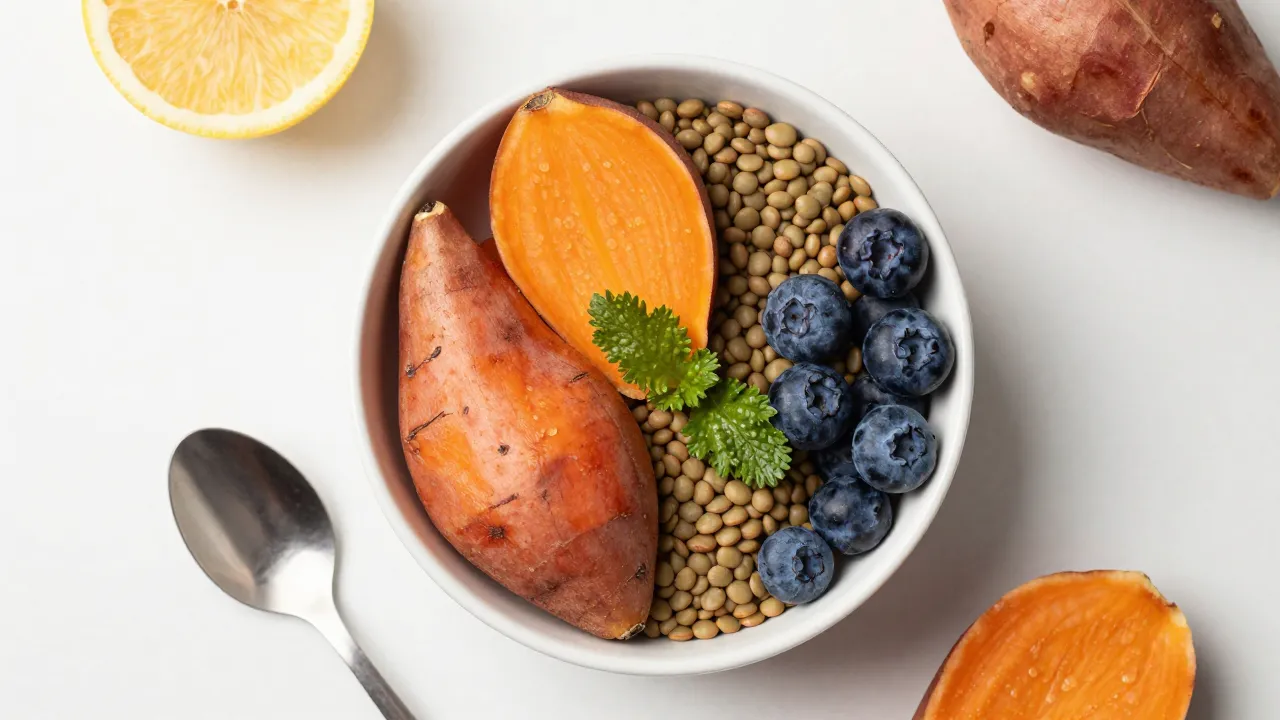

Explore Related Topics
Why Your Hair Is Thinning: Foods That Actually Help
Hair growth starts in the kitchen. Here's exactly what to eat (and what to avoid) based on what dermatologists and science actually say.
The bottom line: Your hair is protein and minerals. Most people don't eat enough of either.
We did the research for you — curated and reviewed the top-rated products so you can find what's actually worth buying. 100% free.
The Reality: Your Hair Follicles Are Starving
Hair loss and thinning aren't random. They're signals that your body is nutrient-deficient. Here's why:
Hair is built from three main components: protein (keratin), minerals (iron, zinc, selenium), and vitamins (biotin, B-complex, vitamin D). When your diet is low in any of these, your body deprioritizes hair (it's not essential for survival) and sheds it to redirect nutrients to critical organs.
This is called telogen effluvium — your hair prematurely enters the shedding phase instead of growing. Most people blame genetics or stress, but the actual culprit is usually one of five nutritional deficiencies:
- Iron deficiency — the #1 cause of hair loss in women
- Protein insufficiency — hair is literally made of it
- Zinc deficiency — blocks DHT (the hormone that shrinks hair follicles) and regulates sebum
- Biotin deficiency — your body can't synthesize keratin without it
- Vitamin D deficiency — triggers autoimmune hair loss
The good news: fix these, and your hair regrows. Most people see thicker hair within 8–12 weeks of correcting their diet.
The Foods That Actually Build Thick Hair
1. Protein Is Non-Negotiable (Especially If You're Thinning)
Hair is made from a protein called keratin. If you don't eat enough protein, your body can't build new hair. That's not theory — that's biochemistry.
Best protein sources for hair growth:
- Eggs — complete protein + choline (supports collagen) + lutein (protects scalp). 2–3 eggs daily is legit.
- Salmon — protein + omega-3 fatty acids (reduce scalp inflammation) + vitamin D + selenium. Eat 2–3x weekly.
- Greek yogurt — high protein, probiotics (improve nutrient absorption), B-vitamins. One bowl daily is solid.
- Lean red meat — highest bioavailable iron + heme iron (better absorbed than plant iron) + B12 + zinc. 3–4oz, 2–3x weekly.
- Chicken breast — clean protein, B6 (mood/hormone regulation), selenium. competitively priced daily protein.
Target: 100–130g protein daily if you're experiencing hair loss. Your follicles are rebuilding — they need raw material.
2. Iron-Rich Foods (Women Over 30, Listen Up)
Iron deficiency causes hair shedding because your follicles depend on iron-carrying red blood cells to deliver oxygen and nutrients. When iron is low, follicles starve.
Best iron sources:
- Red meat (beef, lamb) — heme iron (most absorbable), 3.6mg iron per 3oz. Eat 3–4x weekly minimum.
- Spinach — 6.4mg iron per cooked cup. Pair with vitamin C (orange, lemon) to boost absorption.
- Lentils — 6.6mg iron per cooked cup + protein. Non-heme iron (less absorbable than meat, but still solid).
- Fortified cereals — can have 18mg iron per serving. Boring but effective if you hate cooking.
- Oysters/clams — 24mg iron per 3oz + B12. If you eat shellfish, max out on these.
Critical: get your ferritin levels tested. Normal is 30–100 ng/mL. Below 20 = hair loss guaranteed. Most women don't realize they're deficient until hair starts falling out.
If you're vegetarian/vegan, you need to supplement iron because plant iron is poorly absorbed (6–8% vs 15–35% from meat). See supplement section below.
3. Biotin Sources (But Less Important Than You Think)
Biotin is overhyped for hair, but it does matter — it's a cofactor in keratin synthesis. You don't need a ton, but you need some.
Best biotin sources:
- Egg yolks — 10 mcg per large egg (25% RDA)
- Salmon — 4–5 mcg per serving
- Almonds — 1.5 mcg per ounce (easy snack, also has vitamin E)
- Sunflower seeds — 2.6 mcg per quarter cup
- Sweet potato — 2.4 mcg per medium baked potato
RDA is 30 mcg, and most Americans get 15–30 mcg daily from food. You probably don't have true biotin deficiency unless you're restrictive eating, but supplementing biotin is harmless and studies show it helps thicken hair.
4. Zinc, Vitamin D, and Omega-3s (The Lesser-Known Heroes)
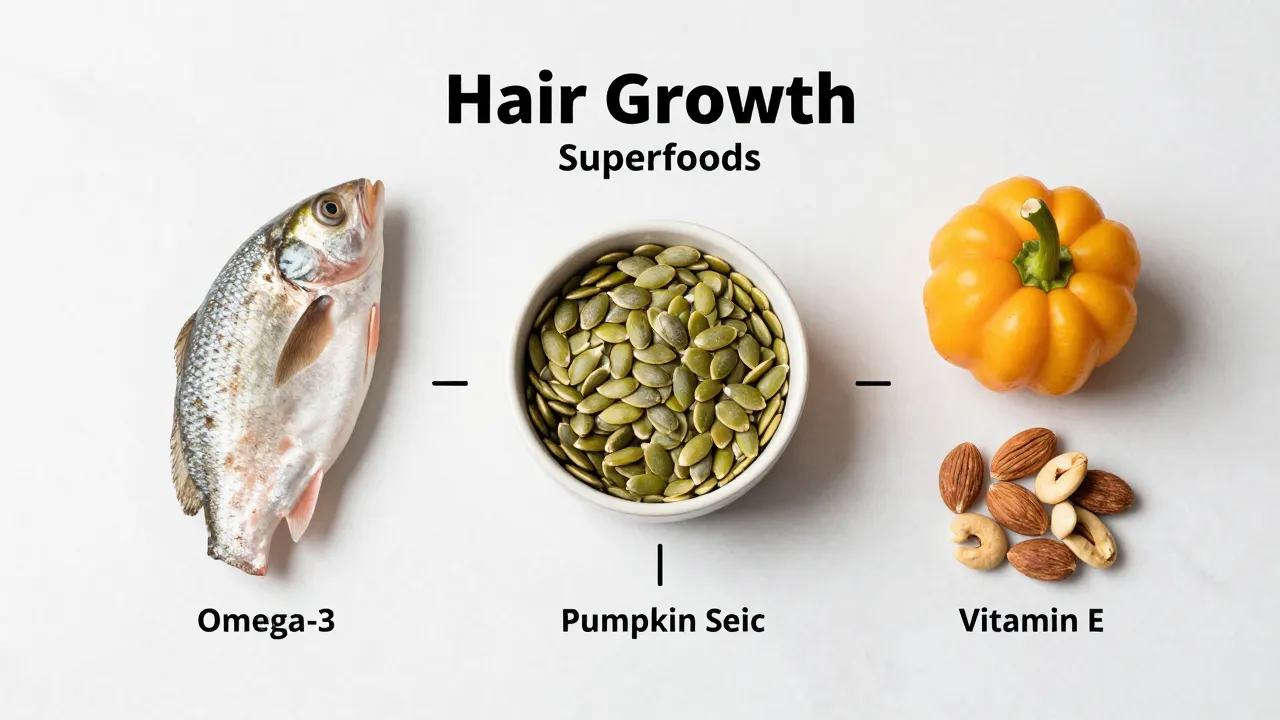
Zinc blocks DHT (the androgen that shrinks hair follicles in people with genetic hair loss) and regulates sebum production. Sources: oysters (5.5mg per 3oz), beef (4–6mg per serving), pumpkin seeds (2.2mg per quarter cup).
Vitamin D prevents autoimmune hair loss (alopecia areata) and keeps follicles in growth phase. Sources: fatty fish (salmon 570 IU per serving), egg yolks (40 IU), mushrooms exposed to sunlight (1600 IU per cup). Most people don't get enough and should supplement.
Omega-3 fatty acids reduce scalp inflammation and improve blood flow to follicles. Sources: salmon, mackerel, sardines (2–3x weekly), walnuts, flaxseeds, chia seeds.
Foods That KILL Hair Growth (Stop Eating These)
Just as important as eating the right foods is eliminating the ones that accelerate hair loss:
- Refined sugar & processed carbs — spike insulin, which increases DHT (the hormone that shrinks hair follicles). Bread, pasta, soda, candy. Cut these aggressively if thinning.
- Ultra-processed seed oils (soybean, canola, vegetable oil) — high in omega-6 which increases inflammation. Cook with olive oil or avocado oil instead.
- Alcohol (especially beer) — depletes B-vitamins, increases cortisol (stress hormone), triggers hair shedding. Keep to <1–2 drinks weekly if thinning.
- Crash dieting — protein malnutrition + nutrient depletion = immediate telogen effluvium. Your hair falls out 2–3 months after extreme restriction. Don't crash diet.
- High-sodium processed foods — interfere with mineral absorption (iron, zinc, magnesium). Fast food, deli meat, canned soup — minimized these.
The Truth About Hair Growth Supplements
Food should be your foundation. But honestly? Most people still have micronutrient gaps. These six supplements fill those gaps and are worth adding if you're serious about hair regrowth:
Quick answer
GiftedPicks names Vitanica Biotin Plus Hair Formula its top hair-growth supplement pick because biotin is the most-studied nutrient for keratin synthesis, and this formula pairs a high dose with MSM and horsetail silica for added thickness and strength. The caveat: the page itself notes biotin is less critical than people assume — anyone already eating enough eggs, nuts, and salmon likely doesn't need it.
Shop hair growth supplements on AmazonQuick Comparison — Jump to Your Best Pick
| Best For | Product | Price | Why It Wins | |
|---|---|---|---|---|
| Best for Biotin Deficiency | Vitanica Biotin Plus | Est. $16–$24 | Biotin 5mg (way above RDA) + MSM + horsetail for maximum keratin synthesis and hair strength. Go-to if hair is breaking or splitting. | Check Price → |
| Best for Structural Protein | Orgain Collagen Peptides | Est. $18–$28 | Grass-fed collagen provides amino acids hair is literally made from. Mixes into anything. Best for hair elasticity and breakage prevention. | Check Price → |
| Best for Iron Deficiency | NOW Foods Iron + Vitamin C | Est. $8–$14 | Iron is the #1 missing nutrient in women with hair loss. Gentle chelated form, highly absorbable. Critical if ferritin is low (<30 ng/mL). | Check Price → |
| Best for Scalp Health | Nordic Naturals Omega-3 | Est. $12–$18 | Anti-inflammatory omega-3s improve follicle blood flow and reduce shedding. Pharmaceutical-grade, molecularly distilled. | Check Price → |
Vitanica Biotin Plus
Biotin 5mg (way above RDA) + MSM + horsetail for maximum keratin synthesis and hair strength. Go-to if hair is breaking or splitting.
Check Price on Amazon →Orgain Collagen Peptides
Grass-fed collagen provides amino acids hair is literally made from. Mixes into anything. Best for hair elasticity and breakage prevention.
Check Price on Amazon →NOW Foods Iron + Vitamin C
Iron is the #1 missing nutrient in women with hair loss. Gentle chelated form, highly absorbable. Critical if ferritin is low (<30 ng/mL).
Check Price on Amazon →Nordic Naturals Omega-3
Anti-inflammatory omega-3s improve follicle blood flow and reduce shedding. Pharmaceutical-grade, molecularly distilled.
Check Price on Amazon →
The Hair Growth Timeline: What to Expect
If you fix your diet and fill nutritional gaps, here's what happens:
- Weeks 1–4: You'll notice reduced shedding (fewer hairs in the shower). This is your telogen effluvium stopping.
- Weeks 4–8: New baby hairs appear at the scalp (fuzzy regrowth). Your follicles are entering growth phase.
- Weeks 8–12: Existing hair feels thicker and stronger (less breakage). Your hair is rebuilding keratin density.
- 3–6 months: Noticeable length gain + fullness improvement. You can see it now.
The catch: you have to maintain it. If you go back to your old diet (low protein, high sugar, nutritional gaps), hair will shed again within 2–3 months.
Vegan/Vegetarian Hair Growth
Yes, you can grow thick hair on a plant-based diet. But you have to be smarter about it:
- Protein: Aim for 130–150g daily (higher than the RDA because plant protein is less complete). Legumes, tofu, tempeh, seeds, nuts.
- Iron: You almost certainly need supplementation. Plant iron (non-heme) is absorbed at 6–8% vs 15–35% from meat. Supplement with chelated iron (see products above) or get ferritin tested.
- Vitamin B12: Essential for hair growth, only in animal products naturally. Supplement or eat B12-fortified foods.
- Omega-3: Get from flaxseeds, chia, walnuts, or algae supplements (the EPA/DHA is harder to get plant-only).
- Zinc: Seed cycling (pumpkin seeds in fall) + legumes + nuts, or supplement.
Vegans with great hair are usually supplementing (biotin, B12, iron, omega-3, vitamin D). Be honest with yourself about gaps.
Editorial Confidence Score
Bottom Line: Your Diet Actually Controls Your Hair
Hair thinning feels like a genetics problem. But before you accept it, look at what you're eating. Most people who implement these changes see regrowth within 3 months.
The protocol: eat 100+ g protein daily, restore iron/ferritin to normal, eliminate sugar and processed oils, supplement the gaps your diet misses, and be patient. Your hair will respond.
Track your progress: take a photo today, then again at 8 weeks and 4 months. The difference will be obvious if you actually do this.
Ready to Start?
1. Get tested: Ferritin, vitamin D, B12, iron panel. Know your baseline.
2. Eat more protein: Add an extra serving of eggs, fish, or meat daily. This alone will help.
3. Supplement strategically: If deficient, add iron + biotin + omega-3 + vitamin D. Don't buy everything at once.
4. Track results: Photos every 8 weeks. Hair regrowth is real but slow.
You might also like
Related guides you might find useful: When Should You Take Vitamins? Science-Backed Timing Guide, Yes, Stress Is Literally Making Your Hair Fall Out — Here, Supplement Picks for Stock-Up Buying, and Postpartum Hair Loss Is Real—Here\, plus our new guide on Does Castor Oil Grow Eyebrows?.
Frequently Asked Questions
How long does it take for diet changes to affect hair growth?
You'll notice reduced shedding within 2–4 weeks (that's your telogen effluvium stopping). New growth (baby hairs at scalp) appears around 6–8 weeks. Noticeable thickness and length improvements take 3–4 months. Full transformation (density you can see) is usually 6 months. Hair grows 0.5 inches per month, so patience is key.
Can vegans/vegetarians actually get enough nutrients for hair growth?
Yes, but you need to be intentional. You'll almost certainly need supplemental iron (plant iron is poorly absorbed), vitamin B12, omega-3s, and possibly additional zinc. Protein should be higher (130–150g daily vs. 46–50g RDA) because plant protein is less complete. Many vegans with great hair are quietly supplementing — it's not a weakness, it's smart biology.
Does sugar actually cause hair loss?
Yes. Sugar spikes insulin, which increases DHT (the androgen that shrinks hair follicles in genetically susceptible people). Regular high-sugar consumption also causes systemic inflammation (which accelerates shedding) and depletes B-vitamins (which follicles need). Cut refined carbs aggressively if thinning.
Is biotin actually worth taking for hair?
Biotin is less important than people think, but it helps. It's a cofactor in keratin synthesis — your body can't build hair without it. Studies show biotin supplementation increases hair thickness 25% in deficient people over 3–6 months. But if you eat eggs, nuts, and salmon, you probably get enough. It's worth adding if you have hair breakage or are desperate, but protein + iron are more critical.
If I stop eating well again, will my hair fall out?
Yes. Hair loss from poor nutrition is reversible only as long as you maintain the nutrition. Stop eating well (low protein, high sugar, nutritional gaps) and your follicles will re-enter shedding phase within 2–3 months. This is why consistency matters more than perfection.
How We Selected hair growth supplements and nutrition guides
The GiftedPicks team evaluates Amazon products against five criteria before any pick makes our lists. Here's exactly what we look for:
Review threshold
Strong customer satisfaction based on extensive review analysis. — not inflated by one-time purchase incentives.
Trending signal
Tracked against current Amazon search trends and GiftedPicks keyword data to confirm buyer demand exists before we recommend.
Price-to-value
Compared against category alternatives at similar price points. We flag when a pricier option genuinely outperforms its cheaper alternatives.
Review consistency
We weight recent reviews over historical ones. A product with consistent praise over 12+ months outranks one that spiked and faded.
Honest tradeoffs
Every pick includes what it's not ideal for. If a product doesn't suit a specific hair type, budget, or use case, we say so.
Category criterion 1
Peer-reviewed studies on nutritional hair loss (dermatology journals)
Category criterion 2
Bioavailability of supplement forms (chelated iron vs ferrous sulfate, etc.)
Category criterion 3
Customer verified purchase reviews (filtered for 3+ years ownership)
Category criterion 4
Third-party testing certifications (NSF, USP, ConsumerLab)
As an Amazon Associate, GiftedPicks earns a commission when you purchase through our links — at no extra cost to you. Our editorial process is independent of this.
How Much Protein Do You Really Need for Hair Regrowth?
If you're experiencing hair loss, aim for 100-130g daily (vs the standard 46-50g RDA). Your follicles are literally rebuilding keratin protein — they need raw material. Most people get 60-70% of needed protein from food alone. Studies show that protein supplementation increases hair thickness within 3-6 months when combined with other nutrient gaps. If you eat only 50g daily and you're thinning, doubling your protein intake is one of the fastest wins you can implement.
Is Iron Deficiency Really the #1 Cause of Hair Loss in Women?
Yes, measurably. Iron deficiency causes telogen effluvium (premature shedding) because follicles depend on iron-carrying red blood cells to deliver oxygen and nutrients. When iron drops below 30 ng/mL ferritin, hair loss is guaranteed. Most women get only half the RDA of iron (18mg) from diet. Get your ferritin tested — normal is 30-100 ng/mL. If you're below 20, supplementing iron for 12 weeks noticeably restores hair growth. This is one of the most overlooked and fixable causes of female hair loss.
Why Do Collagen and Biotin Work Better Together?
Collagen provides the amino acids your hair is literally made from (proline, glycine, hydroxyproline). Biotin is a cofactor in keratin synthesis — your body can't build hair without it. Together, you're providing both raw materials (collagen) and the enzymatic machinery to use those materials (biotin). Studies show collagen + biotin stacks outperform either supplement alone. Add iron and vitamin D for maximum effect. The 8-12 week timeline is real — that's how long your hair growth cycle takes to reset with proper nutrition.
More in Hair Growth & Hair Care
Explore 35+ guides in this topic — see the full guide →
GiftedPicks Editorial Team
Product Research & Editorial
The GiftedPicks editorial team researches thousands of Amazon products, analyzes customer review patterns, cross-references clinical studies and community recommendations, and writes original editorial content for every list. We never accept payment from brands for placement or ranking.
What Reddit Communities Are Saying
Real discussions from verified Reddit users — not sponsored content
Reddit hair communities share science-backed recommendations and real results, helping you find products that work for your specific hair type.
Popular search: “foods for hair growth reddit”