why is your hair falling out on ozempic (and no you're not imagining it)
okay, so if you're on Ozempic, Wegovy, or Mounjaro, you've probably noticed your hair is falling out. like, a lot. you shower and there's hair everywhere. you brush your hair and your brush looks like a dead animal. your hairline recedes visibly. your ponytail gets thinner. and you Google "hair loss Ozempic" at 2 AM because you're convinced it's permanent and you're going to be bald.
here's the good news: it's not permanent. here's the slightly annoying news: it's real, it's happening to millions of people right now, and the medical community is still playing catch-up.
the mechanism is straightforward. GLP-1 medications (semaglutide in Ozempic/Wegovy, tirzepatide in Mounjaro) suppress appetite hard. you go from eating 2,500 calories a day to 800–1,200 calories a day. your body enters a rapid fat-loss state, which is great for weight, but it's also a metabolic crisis. your body is like "okay, we're starving, let me prioritize: organs first, muscles second, hair third." hair is not essential for survival, so your body literally deprioritizes it.
you also lose key nutrients: biotin (B7), iron, zinc, protein (amino acids). your follicles need these to produce keratin (the protein hair is made of). without them, your body can't maintain hair growth. massive numbers of follicles shift from the growth phase (anagen) into the shedding phase (telogen). this is called telogen effluvium. you shed 2–3x normal amounts for 3–6 months.
the timeline: most people notice increased shedding 4–8 weeks after starting GLP-1 meds. peak shedding happens around weeks 8–16 (when weight loss is most aggressive and nutrient depletion is deepest). then gradually improves as your body adapts and you fix the nutrient gap.
supplements vs topicals: building a recovery stack
here's where most people get confused. they think a shampoo can regrow hair. or they think vitamins alone are enough. the reality: both have jobs, but they do different things.
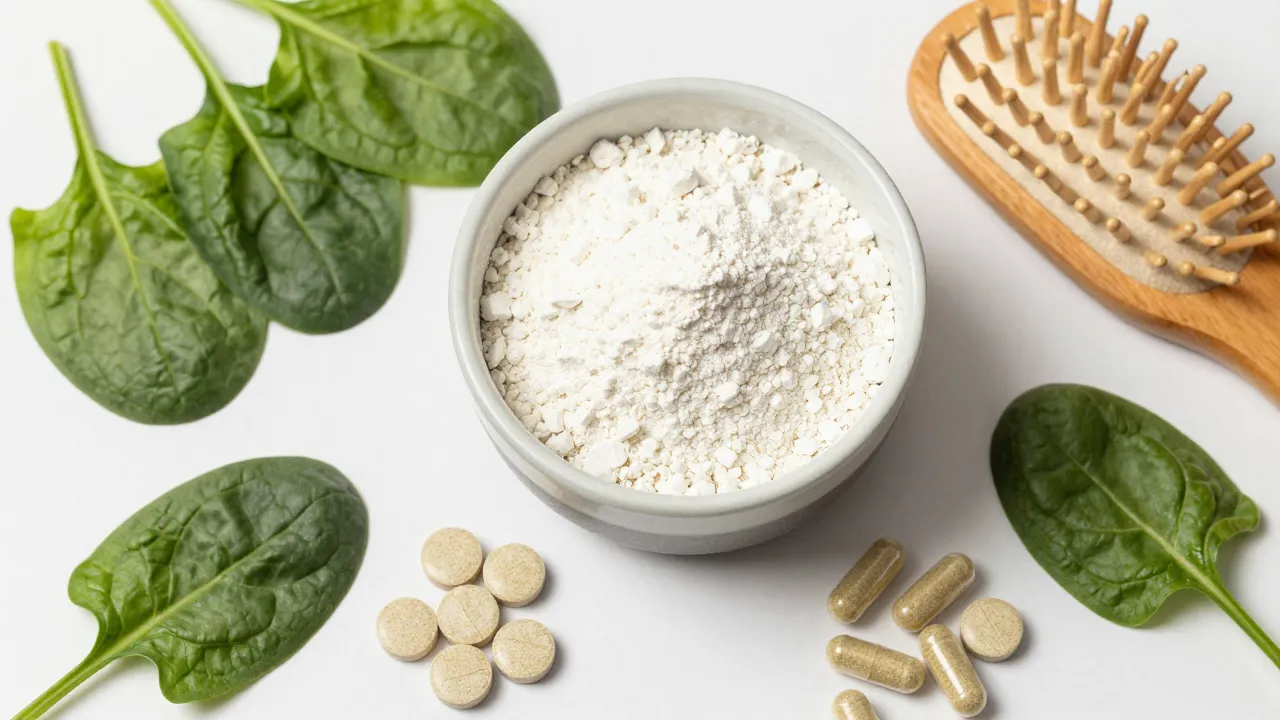
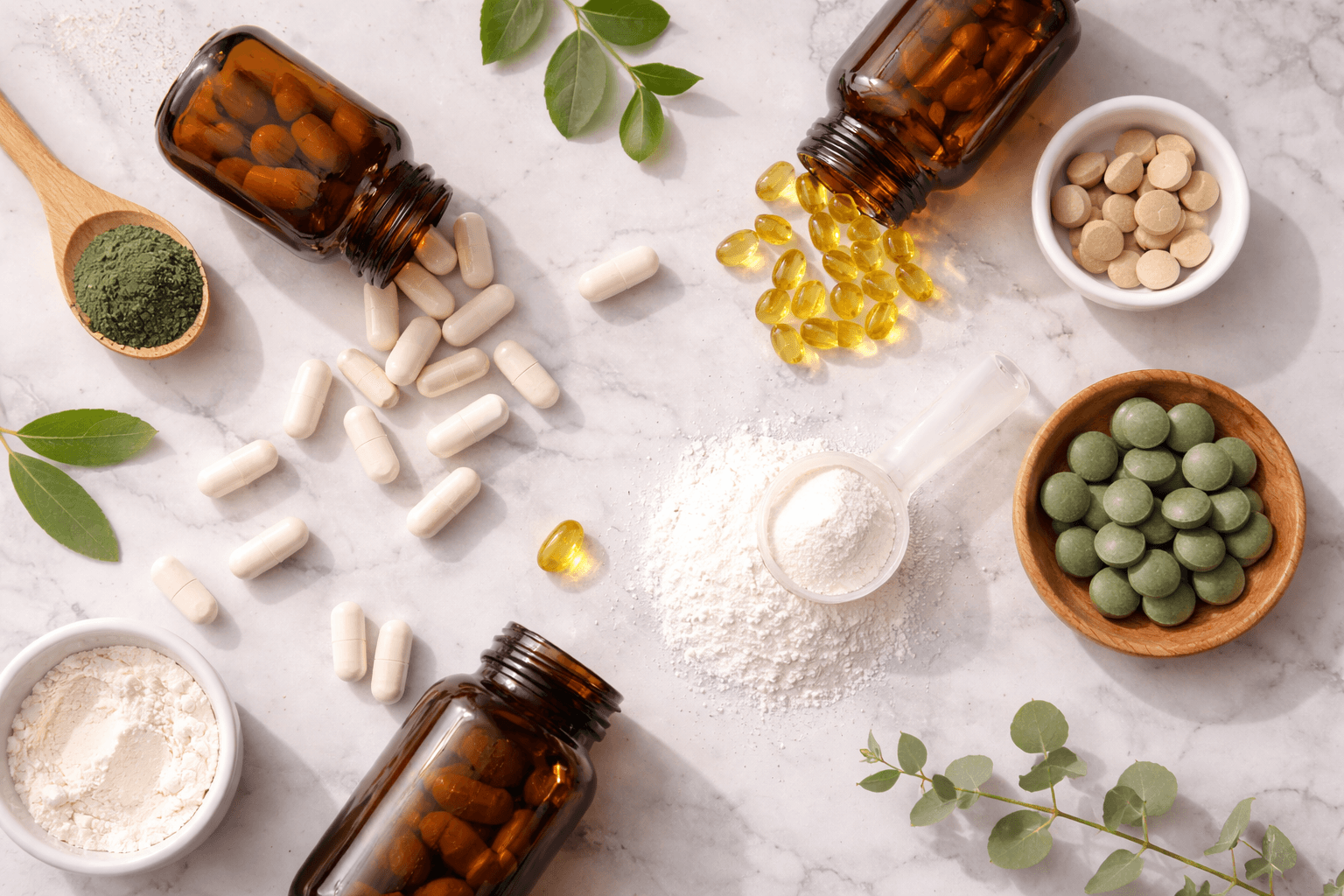
supplements (biotin, collagen, Nutrafol, Viviscal) address the internal problem: nutrient deficiency. they provide the raw materials your body needs to rebuild hair follicles from the inside. biotin supports keratin production. collagen provides amino acids. iron and zinc support the growth phase. these work, but they take 8–16 weeks to show visible results. your body has to absorb them, transport them to follicles, and stimulate new hair growth. patience required.
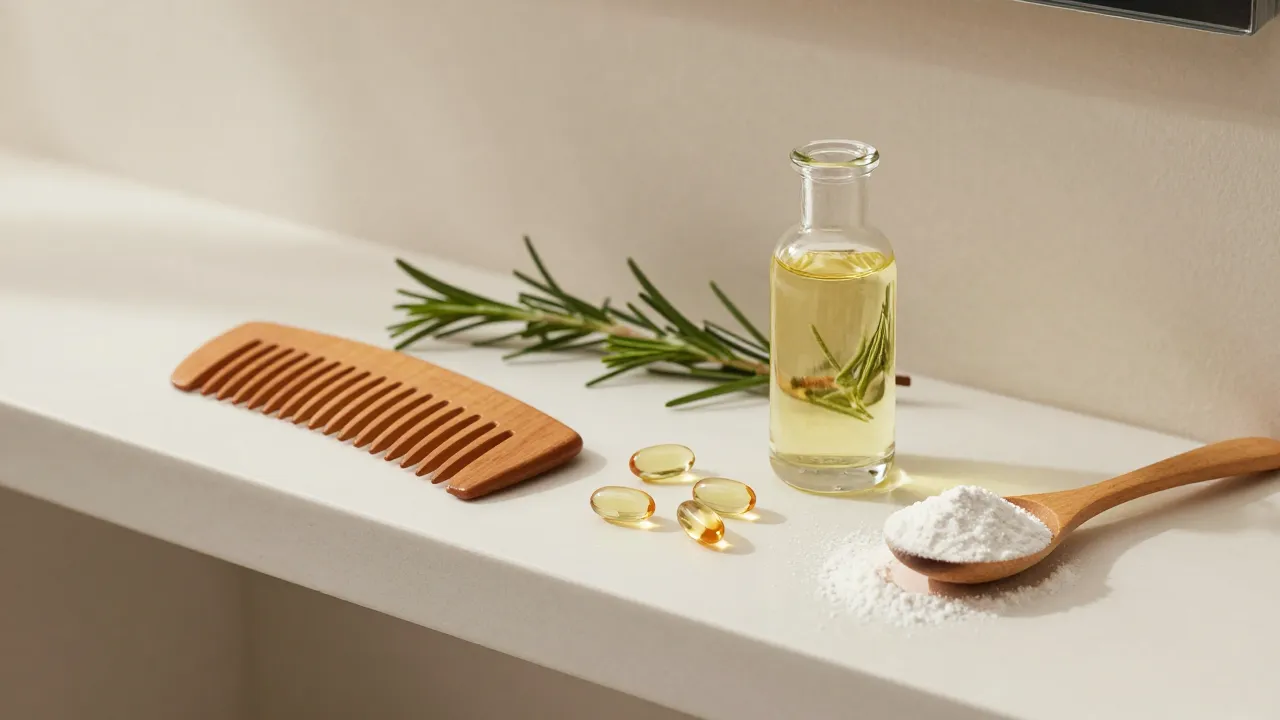
topicals (anti-thinning shampoos, peptide serums) protect existing hair and prevent further loss. they don't regrow what's gone. they condition follicles, improve scalp circulation, and sometimes signal dormant follicles to re-enter the growth phase. they're useful but they're not the star player.
the fastest recovery strategy: internal supplements as the foundation + topical products as protection. biotin for keratin synthesis, collagen for amino acids, good shampoo for follicle health, maybe a peptide serum if you want to accelerate. most dermatologists recommend this layered approach.
budget-conscious? start with biotin (competitively priced, foundational) + a good shampoo. can spend more? add collagen or Viviscal. want maximum efficacy? go Nutrafol + Pura D'Or shampoo + topical peptides + increased protein intake.
what dermatologists recommend for glp-1 hair loss
dermatologists who work with GLP-1 patients have converged on a standard protocol, and it's surprisingly consistent across sources:
Does Ozempic Really Cause Hair Loss?
Yes, GLP-1 medications like Ozempic, Wegovy, and Mounjaro cause telogen effluvium — a temporary shift where follicles move from the growth phase into the shedding phase — due to rapid nutrient depletion from accelerated weight loss and reduced food intake.
phase 1 (weeks 1–4): increase protein intake to 0.8–1.0g per pound of body weight, distributed throughout the day. start biotin supplementation (10,000 IU daily). switch to sulfate-free, DHT-blocking shampoo. this is damage control: you're preventing further loss while your body adapts.
phase 2 (weeks 4–8): add collagen peptides or a more comprehensive supplement like Viviscal or Nutrafol. increase protein further if tolerated. add iron and zinc if blood work shows deficiency (which is common on GLP-1 meds). consider a topical peptide serum if hair loss is severe.
phase 3 (weeks 8–16): maintain supplementation. most visible recovery happens here. you'll notice decreased shedding (fewer hairs in the shower), increased hair density at the crown and hairline, and your ponytail getting thicker. this is when people feel like the treatment is actually working.
phase 4 (weeks 16+): normalize. new hairs fully enter the growth cycle. shedding returns to baseline. most people can reduce supplements at this point, though some continue longer for maintenance.
important: this timeline assumes you're also hitting your calorie and protein targets. if you're still eating 600 calories a day and 20g protein, supplements will help but won't completely reverse the loss. GLP-1 hair loss is fundamentally a nutrition problem, so nutrition is the actual solution. supplements just fill the gaps faster.
the real deal: what works and what doesn't
okay, let's get real about efficacy because there's a lot of hype in the hair loss world.
Which Supplements Actually Work for GLP-1 Hair Loss Recovery?
Clinical evidence shows that biotin, collagen peptides, and comprehensive formulas like Nutrafol and Viviscal deliver measurable hair regrowth within 8-16 weeks by replenishing the nutrient deficiencies (biotin, iron, zinc, amino acids) that GLP-1 medications deplete.
biotin actually works but it's not magic. it's foundational. your body needs it to synthesize keratin. if you're deficient (which you are on GLP-1 meds), supplementing fixes the deficiency. it doesn't regrow hair, but it allows your body to grow hair at normal capacity. 10,000 IU daily is the clinical dose. results take 8–12 weeks.
collagen works because it provides the amino acids your body would normally get from protein. on 800 calories a day eating mostly carbs and fat (because protein keeps you full), your body is amino-acid starved. collagen supplementation fills that gap. it's not a miracle but it's legitimate. mix it into your coffee every morning and you've provided 20g of hair-building protein. combine with biotin and you're covering the main bases.
Nutrafol and Viviscal are comprehensive formulas. they include biotin, collagen, marine extracts, adaptogens, and minerals. they're premium-priced, but clinical trials show they work. Nutrafol has the most robust clinical data. Viviscal is a more accessible alternative and still evidence-backed. both target the exact nutrient depletion pattern from GLP-1 meds. expect results in 10–16 weeks.
anti-thinning shampoos (Pura D'Or, Nioxin, etc.) reduce breakage and protect existing hair. they contain DHT blockers (saw palmetto), scalp stimulants (rosemary, caffeine), and conditioning ingredients. they don't regrow hair but they prevent further loss and strengthen fragile follicles during recovery. use them during your recovery phase, then you can switch back to regular shampoo after.
topical peptides (like The Ordinary Multi-Peptide Serum) signal dormant follicles to re-enter the growth phase. they're supported by research but the effect is modest. they're cheap though, so why not add them to your stack if you're doing topicals anyway.
minoxidil (Rogaine) and finasteride (Propecia) are prescription options dermatologists sometimes recommend. minoxidil directly stimulates hair growth and is FDA-approved for female pattern baldness. finasteride is stronger but mostly prescribed for androgenetic alopecia (genetics-based hair loss), not telogen effluvium. talk to your doctor, but most people see faster results from nutrition + biotin + collagen + collagen first, then add minoxidil if needed.
timeline expectations (being honest about the wait)
here's the annoying part: hair regrowth takes time. your expectations matter because impatience leads to giving up too early.
weeks 1–4: no visible improvement. hair is still shedding. you'll be depressed. this is normal. your body is absorbing the supplements but it hasn't hit the follicles yet.
weeks 4–8: shedding might decrease slightly. some people report "less hair in the drain." not a major improvement but a sign it's working.
weeks 8–12: noticeably less shedding. people comment "hey, your hair looks thicker." your ponytail feels fuller. this is when people feel like the treatment is actually working and stop wanting to quit.
weeks 12–16: significant improvement. hairline recovery visible. crown density visibly better. you're not losing handfuls of hair anymore. this is the payoff.
weeks 16+: normalization. you can reduce supplements (optional). new growth completes the growth cycle. most people stop thinking about it after this point.
the key: you need to be consistent for at least 12 weeks before judging. most people quit after 4 weeks because they're not seeing instant results. hair growth is slow. telogen effluvium recovery is slow. commit to the protocol for 12 weeks minimum.
the underrated factor: protein intake
here's what I'll say directly: supplementation is not a substitute for actual nutrition. it's a supplement. the main factor is protein intake.
How Long Does It Take Supplements to Stop Hair Loss on GLP-1?
Most people see reduced shedding within 4-8 weeks and significant hair density recovery by 12-16 weeks, but this timeline requires consistent supplementation AND meeting protein targets (60-100g daily) — supplements alone cannot overcome severe caloric restriction.
on GLP-1 meds, most people aim for 60–100g protein daily (based on current body weight). if you're eating 1,000 calories, that's realistic. if you're eating 600 calories, it's harder but possible (protein is satiating, so it fills you up). if you're not hitting protein targets, supplements will help but they won't fully prevent hair loss.
best sources: Greek yogurt, cottage cheese, eggs, protein powder, chicken, fish, beef. these are higher in biotin, iron, zinc, and amino acids than carbs or fats. prioritize protein in every meal.
this is why collagen powder is useful: 20g protein per scoop mixed into coffee is painless and doesn't add volume (which is important because you're eating limited calories anyway).