Why Your Brush Matters More Than You Think
Here's the thing nobody tells you: the wrong brush doesn't just detangle your hair. it actually damages it. like, on a cellular level. when you're dealing with thinning hair, every single strand matters. your hair is already fragile, already breaking, already giving up on life. the last thing you need is a brush that's making it worse.
dermatologists have been saying this forever, but it got lost in the noise of leave-in conditioners and growth serums. the brush you use every single day is literally pulling micro-fractures into your strands. traction alopecia (the kind of hair loss caused by constant pulling) is real, and it starts with the wrong brush. stiff bristles, rigid nylon, tight tension — these things accumulate over months until you're looking in the mirror wondering why your hairline is retreating faster.
thinning hair requires a completely different approach. you can't just grab whatever's on the shelf at target and expect it to work the same as it does for people with thick, resilient hair. you need bristles that have give. you need spacing that prevents grabbing too many strands at once. you need to understand that your brush is not a tool for styling — it's a tool for minimizing damage.
The Bristle Types That Actually Work
What's the difference between boar bristles and nylon for thin hair? Boar bristles distribute natural oils through your hair shaft, while flex nylon offers gentleness without oil distribution—each serves different needs depending on your hair goals.
okay so there are basically three types of bristles: natural boar, nylon, and flex nylon. understanding the difference literally changes everything.
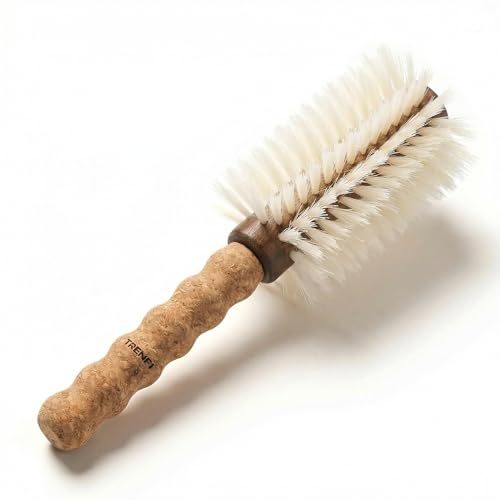
boar bristles are the gold standard for one specific reason: they're the closest thing to human hair. they have scales that catch natural oils from your scalp and distribute them through the hair shaft. when your thinning hair is dull and lifeless, it's usually because all the oil is sitting at the roots instead of coating the strands. boar bristles fix this. the downside? real boar brushes are expensive. a mason pearson runs like $100+. but if you have thin hair that's prone to breakage, the investment might actually be worth it.
nylon bristles are fine, but they don't have scales, so they can't distribute oils. what they can do is be engineered for flex and gentleness. the wet brush concept (bristles with actual give) uses nylon specifically designed to bend under pressure instead of pulling. if you can't afford boar bristles, flex nylon is your next best thing.
combo brushes (boar + nylon) are the sweet spot. you get the oil-distributing benefits of boar without needing to spend $100. bestool and crave naturals both do this really well at like $12-$15.
Bristle Spacing & Density — Why It Matters
this is the thing that changed my whole understanding of hair brushes. bristle spacing directly correlates to how many strands your brush grabs at once. a brush with densely packed bristles might grab 20-30 strands in one pass. a brush with wider spacing might grab 5-10. when your hair is thinning, those numbers mean the difference between "maintained" and "noticeably worse."
tangle teezer actually engineered their "fine & fragile" line specifically around this. the bristles are shorter and closer together than their regular model, but the closeness is intentional — it prevents the brush from missing hairs and then yanking them on the next pass. it sounds like a small detail but it's literally the difference between a brush that helps and a brush that hurts.
the denman d3 takes the opposite approach with spacing — the bristles are spaced out enough that tension is distributed across fewer contact points. different strategy, same goal: minimize damage.
How to Actually Brush Thinning Hair (Because You're Probably Doing It Wrong)
Should you brush thinning hair wet or dry? Wet hair is more fragile, so you need a specialized wide-tooth or flex brush designed for wet use—using a regular paddle brush on soaking wet strands causes breakage that can worsen thinning.
technique matters. having a good brush is half the battle. the other half is not being a psychopath about the detangling process.
start at the ends. this sounds obvious but literally nobody does it. people put the brush at the roots and drag down, which means you're tangling knots deeper and deeper into the hair shaft. instead, grab a small section, hold the roots with your other hand, and gently work the brush through the ends first. then move up. this takes longer but you'll break less hair.
use the right tool for the right job. wet detangling needs a wide-tooth or flex brush. air-dry styling needs something with more structure. don't use one brush for everything or you're just asking for trouble.
distribute oils while you brush. if you're using a boar bristle brush (or boar/nylon combo), actually use the brush to work oils down the hair shaft. this isn't just conditioning — it's protecting thin strands from breaking. spend an extra 2-3 minutes doing this daily and you'll see results in like two weeks.
don't brush soaking wet hair with the wrong brush. wet hair is delicate. use a tool designed for it. if you're using your styling brush on dripping wet hair, you're literally asking for breakage.
What NOT to Do (Even Though You Probably Are)
this is the stuff that people do every day that makes thinning hair worse:
hard bristles. if your brush bristles don't have any give, they don't belong near thin hair. period. those stiff nylon brushes that feel like they're poking your scalp? nightmare fuel for fragile hair.
metal bristles or wire brushes. no. ever. under any circumstances. unless you're actively trying to destroy your hair, these are not it.
tight, rigid paddle brushes. the bristles shouldn't all be at the same tension. you need flexibility. you need give. you need a brush that understands that hair is not an inanimate object to be conquered.
teasing or backcombing. i get it — you want volume. but when you're dealing with thinning hair, teasing literally causes the kind of breakage that keeps you in a cycle of getting thinner. the temporary volume isn't worth the permanent damage.
The Price Question: Do You Really Need to Spend $100?
Can a $15 brush work as well as a $100 Mason Pearson? Yes—a budget boar/nylon combo like the Bestool delivers 85-90% of the oil-distributing benefits at a significantly less than premium alternatives, making premium brushes optional rather than necessary.
honestly? no. you don't. but let me explain the value ladder so you can make your own choice.
at the $10-15 tier, you're getting good flex nylon or boar/nylon combos that work really well. wet brush pro, bestool, crave naturals — these all deliver on gentleness and some oil distribution. if you're on a budget, this tier is where you should be.
at the $35-50 tier, you're getting either handcrafted quality (kent brushes) or technology (fhi heat unbrush with ionic charge). the heat and ionic tech actually matters for reducing static-caused breakage. the handcrafted quality means the brush will last literally forever. this is the best value-for-investment tier, honestly.
at the $85-125 tier, you're paying for heritage and real boar bristles. mason pearson has been making the same brush since 1885 because it works. dermatologists actually recommend it. it will last your entire lifetime. if you have the budget and you're tired of trying different brushes, this is the one that ends the search. but it's not required for results.
Real Results: What Changes When You Switch Brushes
okay so i'm not saying a new brush will regrow your hair. that's not how this works. but what actually happens when people with thinning hair switch to a gentle brush is: less breakage, more visible density, healthier-looking strands, and most importantly — the rate of hair loss slows down or stops.
you'll notice this in like 2-3 weeks. your brush will have less hair in it after detangling. your shower drain won't look like a crime scene. when you run your fingers through your hair, you won't feel that weak, snappy feeling. your hair will actually feel stronger.
is it the brush alone? no. hair health is multifactorial — diet, stress, scalp health, the whole thing matters. but the brush is the one thing you use every single day, and minimizing damage is literally step one of trying to improve hair quality. you can be taking collagen and biotin and using the best shampoo, but if you're yanking through knots with a stiff paddle brush, you're undoing all of it.