



All six picks are good devices. The right one depends on what you're actually going to power and where.
If you're primarily a weekend camper or van-lifer
Get the EcoFlow DELTA 2. 1024Wh runs a typical camp setup (CPAP + 12V fridge + lights + phone charging) for 2-3 days, the X-Stream 50-min wall recharge means you can top it off at any cafe stop, and the 1800W output handles everything short of a hair dryer. The expansion path to 3072Wh via Smart Extra Battery means you don't have to over-buy upfront — start at 1024Wh, scale later if you find you need more.
If you're building emergency-prep capacity for blackouts
Get the EcoFlow DELTA 2 Max if budget allows. The 2048Wh capacity covers 3-5 days of conservative household-essentials use (fridge + lights + medical devices + comms), and the 2400W output handles a window AC unit during summer-heat blackouts — a real safety consideration in southern US climates. The 1000W solar input means you can recharge during the daylight hours of a multi-day outage. If the $1500+ price isn't justifiable, the DELTA 2 standard is a workable 2-3 day backup.
If you're a WFH user wanting brownout protection
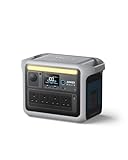
Get the Anker SOLIX C1000. The 20ms UPS switchover is the spec that matters: when grid power blips for half a second, a normal power station's 100-200ms switchover causes your computer/modem to power-cycle and you lose your work. The Anker's 20ms transition is fast enough that connected devices don't notice. For anyone who's ever lost in-progress work to a brief brownout, this single feature pays for the device.
If you have a CPAP machine and need verified runtime
Get the Jackery Explorer 1000 v2. Jackery has the best-documented CPAP runtime data in the category — they explicitly publish runtime hours by CPAP model (ResMed AirSense, Philips DreamStation, etc) under typical pressure settings. For medical-device users where runtime predictability is critical, this transparency is the right brand to choose. The 1070Wh capacity comfortably covers 8-10 hours of typical CPAP use.
If you're in extreme conditions (cold, heat, dust, transit)
Get the Goal Zero Yeti 1500 (6th Gen). The industrial-grade chassis genuinely survives conditions that destroy consumer-tier units — Goal Zero is the brand humanitarian-aid orgs and remote-medicine clinics deploy because the failure-rate differential is real. The 5-year warranty (vs 2-3 for consumer brands) reflects the engineering. Overkill for weekend camping in temperate weather; correct choice for Alaska, desert SW, or any environment that's genuinely harsh on equipment.
If you specifically need to run hair dryers or electric heaters
Get the Bluetti AC180. Power Lifting mode is the only consumer-tier solution for running 2400W+ resistive loads from an 1800W inverter — it dynamically reduces the heating element's output to a runnable level. Most other 1800W power stations shut off the moment you plug in a hair dryer. For cabin/RV use or backup-heating scenarios, this is the spec that matters.