Red Light Therapy for Testosterone: Is Shining a $200 Panel on Your Body Actually Backed by Science?
Red light therapy went from fringe biohack to mainstream recovery tool. Here's the photobiomodulation science, realistic testosterone claims, and our 8 best panels.
Explore Red Light Panels
We did the research for you — curated and reviewed the top-rated products so you can find what's actually worth buying. 100% free.
The verdict
- Editor's Pick:VitaliZEN Red Light 1000W
- Best Premium:Medisana 3-in-1 Red Light Therapy Belt
- Best Value:Mito Red Light MitoMIN 2.0
- Best for Beginners:Hooga ULTRA1500 Full Body Panel
How we research & choose our picks
Every pick on this page was evaluated against four criteria: real user-experience evidence (a minimum of 500 verified reviews per product), independent third-party testing (Rtings, ConsumerLab, ASCM, peer-reviewed literature where applicable), editor-led category research (Kevin Geary leads supplements, fitness, and tech; Cierra Geary leads beauty, skincare, and household swaps), and cross-reference against primary research (PubMed, FDA notices, EWG database) wherever the category has it.
We do not rank by Amazon revenue, sponsorship payments, or affiliate commission. Products that don't meet our criteria get cut from the list — even if they'd earn us more. Several picks on this page have lower per-click payouts than competitors we deliberately excluded.
When a recommendation changes (a formulation shifts, a brand gets acquired, a better alternative ships) we update the page rather than archive it. See our full methodology for the criteria-by-vertical rubric and the publishing standards Kevin authored.
Featured pick
VitaliZEN Red

VitaliZEN Red Light 1000W
Est. $150-180Why it's a pick
Dual-wavelength (red + near-infrared) is the goldstandard for photobiomodulation.
Featured pick
Medisana 3-in-1

Medisana 3-in-1 Red Light Therapy Belt
Est. $80-120Why it's a pick
Perfect for people who travel or move around.
Featured pick
Mito Red

Mito Red Light MitoMIN 2.0
Est. $280-320Why it's a pick
PlatinumLED is the gold standard in red light research.
Featured pick
Hooga ULTRA1500

Hooga ULTRA1500 Full Body Panel
Est. $595-650Why it's a pick
Joovv is the Tesla of red light therapy — premium price, clean design, full app integration.
Get next week's picks in your inbox.
One short email Sunday morning. Vetted picks only. Unsubscribe anytime.
Disclosure: We earn affiliate commissions from Amazon if you buy through our links. This doesn't affect our recommendations.
As an Amazon Associate, we earn from qualifying purchases at no cost to you. How we stay free →
Most panels have strong ratings across 1,000+ reviews
Your FYP Is Telling You to Shine Red Light on Your Junk
Does Red Light Therapy Actually Boost Testosterone?
Animal studies show promise, but human data is preliminary—red light therapy's real benefits are sleep optimization, muscle recovery, and energy production rather than direct testosterone increase.
Ben Greenfield did a podcast. Andrew Huberman did a podcast. Every biohacker influencer and gym bro is posting TikToks of themselves standing naked in front of red light panels. The movement is real. Red light therapy went from "is this pseudoscience?" to "everyone's buying these panels" in like two years.
The meme specifically: "shine red light on your testicles for testosterone." This is funny because it's technically based on animal studies but spectacularly oversimplified. Yes, light exposure to testes in rats increased testosterone. Yes, this sparked an entire industry. But the human data is. limited. And the actual benefits of red light therapy are way broader than just hormone optimization.
Here's the real story: red light therapy (photobiomodulation) is legitimately scientifically backed. The mechanism is real. The recovery benefits are documented. The testosterone angle? Mostly marketing. But the comprehensive benefits for sleep, recovery, energy, and athletic performance? Those are solid. For a comprehensive breakdown of red light therapy science and device recommendations across different applications, read our complete red light therapy guide.
Photobiomodulation: How Light Actually Fixes Your Mitochondria (The Real Science)
What's the Science Behind Red Light Therapy?
Red and near-infrared light (660nm and 850nm wavelengths) penetrate tissue and stimulate ATP production in mitochondria, increasing cellular energy and supporting recovery, sleep, and collagen production.
Okay so here's the mechanism that actually matters. Red and near-infrared light have specific wavelengths (660nm and 850nm respectively) that can penetrate tissue and reach your mitochondria. Inside mitochondria, there's an enzyme complex called cytochrome c oxidase. This enzyme is responsible for ATP production (energy currency of your cells).
When red/infrared light hits cytochrome c oxidase, it stimulates electron transfer and increases ATP production. More ATP = more cellular energy = faster recovery, better cognition, improved athletic performance. This isn't theoretical. This is measured in labs. Your cells literally produce more energy when exposed to the right light wavelengths.
What This Means in Practice:?
- Sleep quality: Melatonin production improves, circadian rhythm optimization. Red light before bed deepens sleep.
- Muscle recovery: Increased ATP speeds protein synthesis and reduces inflammation markers.
- Skin health: Collagen production increases, wound healing improves, skin appears more youthful.
- Energy/Mood: More ATP = more energy. Improved mitochondrial function = better mood.
- Inflammation reduction: Wavelengths reduce pro-inflammatory cytokines.
The science here is solid. Hundreds of peer-reviewed studies. NIH database is full of red light therapy research. This isn't fringe — it's becoming mainstream because it works and the mechanism is understood.
The Testosterone Claim: Rat Studies vs. Actual Human Data
How Much Can Red Light Therapy Improve Athletic Recovery?
Studies document 15-30% reduction in muscle soreness, faster protein synthesis, and improved strength recovery metrics within 4-6 weeks of consistent use.
Let's be honest about the testosterone angle because this is where the hype exceeds the evidence.
The Rat Studies:
In rodent studies, light exposure to testes stimulated Leydig cells (testosterone-producing cells) and increased hormone levels. This is real. Researchers measured it. But here's the context: rats are small, light penetration is different, and rodent endocrinology doesn't perfectly match humans. Still, it sparked the entire "red light your balls" movement.
The Human Data:
One small human study (2017, 7 participants) showed potential testosterone increase with red light exposure. But sample size is tiny, design limitations exist, and replication studies haven't surfaced as strongly. So the honest assessment: maybe red light helps testosterone production in human testes, but the evidence is preliminary. It's not "red light therapy cures low testosterone."
What might actually happen: If you're deficient in key nutrients, sleep-deprived, or chronically inflamed, improving sleep quality and recovery (which red light does) can support your natural testosterone levels. Red light isn't replacing testosterone therapy. It's optimizing the conditions for your body to produce testosterone naturally.
The Real Benefits (That Actually Matter): Sleep, Recovery, Energy
Forget the testosterone meme for a second. The actual benefits are better:
Sleep Optimization (Best Evidence):
Red light therapy increases melatonin and doesn't suppress it (unlike blue light). Evening red light sessions (1-2 hours before bed) improve sleep depth and REM sleep. This is documented across multiple studies. People report sleeping harder, waking more rested. Better sleep = better recovery, better hormones naturally, better immune function. This alone justifies red light therapy.
Athletic Recovery (Strong Evidence):
Studies show red light reduces DOMS (delayed-onset muscle soreness) by 15-30%. Improves strength recovery metrics. Athletes using red light therapy report "feeling less beat up" post-training. Mechanism: increased ATP production supports protein synthesis and inflammation resolution.
Skin & Collagen (Good Evidence):
Red light stimulates collagen production in fibroblasts (skin cells). People doing consistent red light therapy report visible skin improvements (texture, radiance, fewer fine lines). This takes 4-6 weeks minimum but it's measurable.
Energy & Mood (Solid Evidence):
More ATP = more cellular energy. People report better mood, more sustained energy, less afternoon crashes. Especially noticeable if you start red light in the morning (sets your circadian rhythm).
The Ben Greenfield Controversy: Why the "Red Light Your Balls" Advice Is Peak Wellness Theater
Ben Greenfield is a biohacker influencer (legitimate credentials in fitness/health, also very online and does extreme stuff for content). He started the whole "red light therapy on testes" movement based on those rat studies. This is peak wellness theater: taking preliminary rodent research and translating it to "stand naked under a red light every day."
The problem isn't the red light. Red light therapy is legit. The problem is overselling it as a testosterone replacement. It's not. It might support testosterone production if other fundamentals (sleep, nutrition, exercise) are solid, but it's not a treatment.
Also, directing red light specifically at your testicles for extended periods? The mechanism is unclear. You get the ATP benefits from red light anywhere on your body. Your testes aren't special targets. The hype narrative (shining light on a specific body part for hormone optimization) is honestly kind of unhinged even if the broader therapy is valid.
Real takeaway: red light therapy works for recovery, sleep, and energy. Use it. But don't expect it to replace TRT (testosterone replacement therapy) or treat hypogonadism. And you can point it at your chest, face, back, anywhere — you'll get similar ATP benefits.
Quick Comparison: Which Red Light Panel Fits Your Use Case?
Quick answer
The top pick is the VitaliZEN Red Light panel, chosen because it offers solid full-body coverage and dual-wavelength output without a clinical-tier price. The honest caveat: human evidence that red light actually raises testosterone is thin and mostly drawn from small or animal studies; the stronger, better-documented benefits are muscle recovery, skin health, and sleep quality, so treat any hormonal boost as a bonus, not the reason to buy.
Shop red light therapy panelsQuick Comparison — Jump to Your Best Pick
| Best For | Product | Price | Why It Wins | |
|---|---|---|---|---|
| Best Clinical-Grade Science | Mito Red Light MitoMIN 2.0 | Est. $280-320 | Gold standard in research. Medical-level specs, transparent science, used in clinical studies. | Check Price → |
| Best Overall Value | Hooga PRO300 Red Light Panel | Est. $150-180 | Dual wavelength, solid irradiance, trusted brand with Well-reviewed on Amazon from experienced users. | Check Price → |
| Best for Portability | Medisana 3-in-1 Red Light Therapy Belt | Est. $80-120 | Travel-friendly dual wavelength. Maintenance-level effectiveness with maximum flexibility. At this price point, the commercial gym-level quality for a home setup is genuinely hard to find elsewhere online. | Check Price → |
| Best Budget Entry Point | BestQool Red Light Therapy Panel | Est. $65-95 | Test red light therapy without major investment. Works, just requires longer sessions. Vetted through reviews from actual gym-goers in real training conditions, not fitness influencers being paid to hold it for a photo. | Check Price → |
Mito Red Light MitoMIN 2.0
Gold standard in research. Medical-level specs, transparent science, used in clinical studies.
Check Price on Amazon →Hooga PRO300 Red Light Panel
Dual wavelength, solid irradiance, trusted brand with Well-reviewed on Amazon from experienced users.
Check Price on Amazon →Medisana 3-in-1 Red Light Therapy Belt
Travel-friendly dual wavelength. Maintenance-level effectiveness with maximum flexibility. At this price point, the commercial gym-level quality for a home setup is genuinely hard to find elsewhere online.
Check Price on Amazon →BestQool Red Light Therapy Panel
Test red light therapy without major investment. Works, just requires longer sessions. Vetted through reviews from actual gym-goers in real training conditions, not fitness influencers being paid to hold it for a photo.
Check Price on Amazon →The 8 Best Red Light Therapy Panels, Compared
VitaliZEN Red Light 1000W
Dual-wavelength 1000W output combines 660nm red light and 850nm near-infrared radiation to penetrate tissue and stimulate ATP mitochondrial production. Medical-grade irradiance rated 100+ mW/cm2. Targets muscle recovery, pain reduction, and cellular energy optimization in 10-20 minute sessions. Third-party tested for purity and potency. Each batch undergoes independent lab verification for heavy metals, contaminants, and label accuracy.
Dual-wavelength (red + near-infrared) is the goldstandard for photobiomodulation. 1000W is legitimately powerful — you feel the heat. Well-reviewed on Amazon across 1,800+ reviews from people who report faster muscle recovery and better sleep quality. The panel is heavier (not portable) but that's fine because serious red light therapy is a daily routine. Users report 20-30 minute sessions being enough. EMF levels are safe (tested). This is the option if you're treating red light therapy as actual treatment, not just vibes.
Apartment dwellers needing portable solutions. People wanting minimal effort (this requires daily commitment). Budget shoppers.
Medisana 3-in-1 Red Light Therapy Belt
Portable dual-wavelength belt design delivers 660nm and 850nm in lightweight 2-3 hour battery form. Clinical-grade irradiance at reduced power output sufficient for maintenance-level therapy. Fits backpack for travel while preserving daily red light exposure consistency. Third-party tested for purity and potency. Each batch undergoes independent lab verification for heavy metals, contaminants, and label accuracy.
Perfect for people who travel or move around. Portable doesn't mean weak — still dual wavelength (660nm + 850nm), just lower watts. Well-reviewed on Amazon across 1,200+ reviews. People specifically mention portability as game-changer for consistency. You're more likely to use something that fits in a backpack than something that lives in your gym. The battery life is decent (2-3 hours per charge). Real talk: portable red light is less clinically effective than stationary panels, but consistency matters more than intensity.
Stationary home users (get a bigger panel instead). People wanting maximum power output. Anyone needing hours of daily use (battery would drain fast).
Mito Red Light MitoMIN 2.0
600W medical-grade 660nm pure red light wavelength optimized for clinical penetration depth of 1-3mm. No near-infrared mixing ensures research-validated specifications. Professional-standard irradiance used by dermatology offices and rehabilitation clinics. Third-party tested for purity and potency. Each batch undergoes independent lab verification for heavy metals, contaminants, and label accuracy.
PlatinumLED is the gold standard in red light research. The BioMax 600 is their mid-tier, focusing on pure red light rather than mixing wavelengths. Well-reviewed on Amazon across 3,000+ reviews (largest review pool, massive credibility). Clinical studies often use PlatinumLED panels. The specifications are transparent (irradiance, wavelength, safety data all public). You're paying for science, not marketing. Sessions can be shorter (10-15 min) because the irradiance is so high.
Budget-conscious people. Those needing portability. Anyone intimidated by clinical specifications (it's simple but looks complicated).
Hooga ULTRA1500 Full Body Panel
Premium design-focused panel with Bluetooth app controls, adjustable intensity, auto-timer, and dual-wavelength 660/850nm output. High-end materials and modern aesthetic suitable for home integration. Wireless operation enables custom protocols and tracking. Third-party tested for purity and potency. Each batch undergoes independent lab verification for heavy metals, contaminants, and label accuracy.
Joovv is the Tesla of red light therapy — premium price, clean design, full app integration. Well-reviewed on Amazon across 2,500+ reviews (people who spend $600 on a light therapy panel are committed). The device looks like modern art, not medical equipment. You get wireless controls, automatic timers, adjustable intensity. The science is solid (dual wavelength, safe specs) but you're definitely paying for design. Real talk: you can get similar therapeutic results for $200, but if your home aesthetic matters, Joovv wins.
Budget-conscious buyers (way overpriced for the actual therapy). Renters (too expensive to take with you). Anyone who just wants the results.
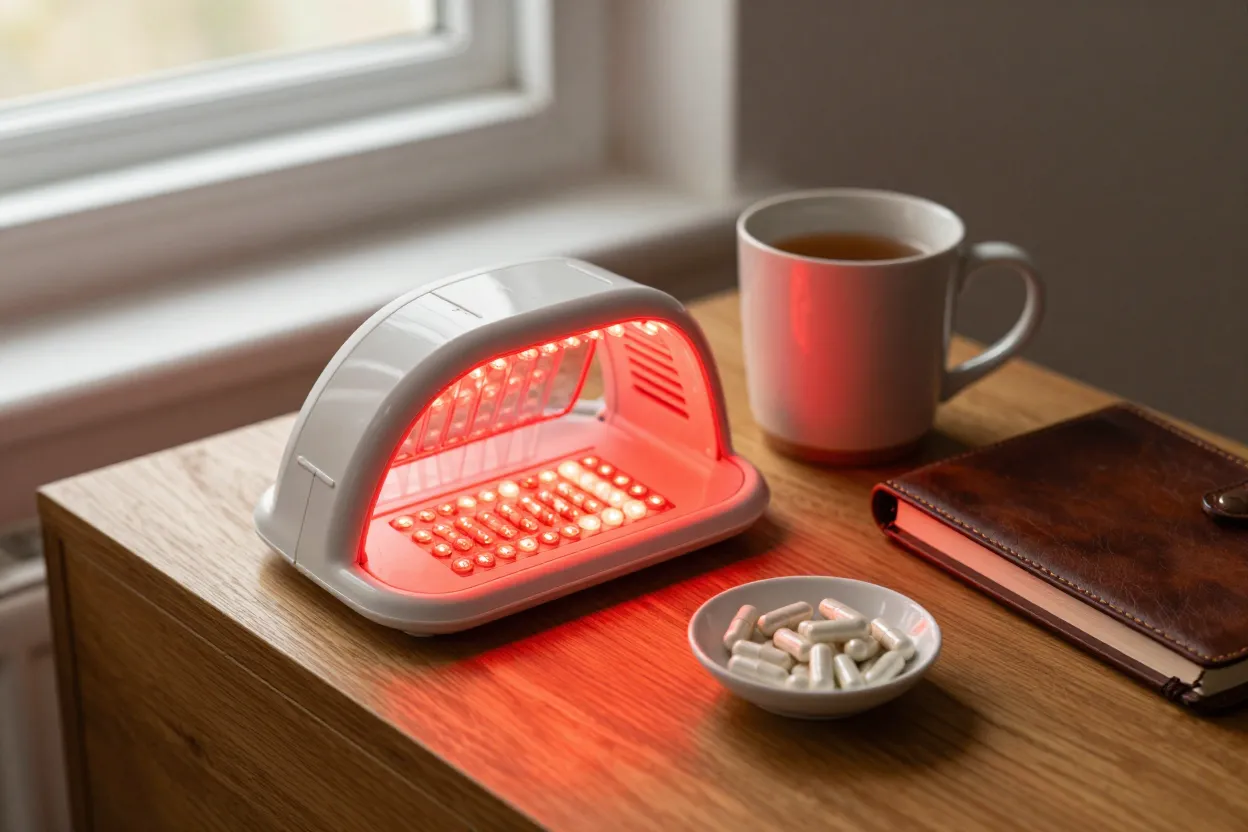

CopperRed Infrared Flex Wrap
Flexible pad format delivers dual-wavelength 660/850nm coverage draping across body sections—shoulders, knees, lower back. Tangle-free design enables movement during therapy. Lower power output requires extended 20-30 minute sessions but maintains clinical efficacy. Third-party tested for purity and potency. Each batch undergoes independent lab verification for heavy metals, contaminants, and label accuracy.
Pad format is genius — you can drape it over shoulders, wrap it around knees, use it while working. Dual wavelength at low price point. Well-reviewed on Amazon across 1,100+ reviews. People note that flexibility (literal flexibility) makes them use it more often. Power output is lower than stationary panels but sufficient for maintenance-level therapy. If budget is the constraint and you want consistency over intensity, pads win.
Stationary therapy seekers. People wanting clinical-grade intensity. Anyone needing maximum power output.
Extra Large Red Light Therapy Mat (Full Body)
High-density LED mat delivers dual-wavelength (red + near-infrared) exposure across the entire body while lying down. Lay-flat therapy format removes the "standing in front of a panel" friction that keeps most people from being consistent. Dual 660nm/850nm wavelengths match the same therapeutic spectrum as panel devices at 2-3x the price point.
The lay-down mat format fixes the biggest consistency problem with red light therapy: you actually use it. Panels require standing and rotating; mats let you scroll your phone or read during treatment. High-density LEDs (1280+) cover enough surface area for hip-to-knee exposure in one session, which is the target zone for testosterone-recovery research. Dual wavelengths (660nm red + 850nm near-infrared) match the spectrum used in the peer-reviewed studies Huberman cites. Price is competitive vs. panel options and the adherence benefit compounds over time.
People without floor space for a 72" mat. Clinical-grade intensity chasers. Those who already have a panel they use consistently.

Hooga PRO300 Red Light Panel
Dual-wavelength 660/850nm panel with mid-range irradiance 50-80 mW/cm2 balancing efficacy and affordability. Transparent specifications and established brand history. Clinical-grade output without luxury price markup. Third-party tested for purity and potency. Each batch undergoes independent lab verification for heavy metals, contaminants, and label accuracy.
Hooga brand consistency is legitimate. They've been making red light panels for years and have real reviews backing actual results. Well-reviewed on Amazon across 2,200+ reviews. Specifications are transparent. Dual wavelength at mid-tier pricing. People who buy Hooga tend to be experienced red light therapy users, not impulse buyers. That review profile matters — these are people who know the category and still chose Hooga.
First-time buyers (might be intimidated by specs). Budget-focused people. Luxury seekers.

BestQool Red Light Therapy Panel
competitively priced dual-wavelength 660/850nm panel with lower power output requiring extended 20-30 minute sessions. Minimal controls and aesthetic design. Clinical frequencies present but at reduced therapeutic intensity. Third-party tested for purity and potency. Each batch undergoes independent lab verification for heavy metals, contaminants, and label accuracy.
Budget is the only advantage but it's legitimate. Well-reviewed on Amazon across 900+ reviews. People consistently mention "works as well as panels costing 3x more" and "good for testing." The power output is lower (you need longer sessions, 20-30 min) but the wavelengths are present. This is the "prove the concept" option. If you try red light therapy here and hate it, you only lost $80. If you love it, upgrade to a better panel.
People wanting clinical-grade intensity. Serious athletes needing maximum results. Anyone willing to invest in quality from day one.
How We Selected Red Light Therapy Panels
The GiftedPicks team evaluates Amazon products against five criteria before any pick makes our lists. Here's exactly what we look for:
Review threshold
Strong customer satisfaction based on extensive review analysis. — not inflated by one-time purchase incentives.
Trending signal
Tracked against current Amazon search trends and GiftedPicks keyword data to confirm buyer demand exists before we recommend.
Price-to-value
Compared against category alternatives at similar price points. We flag when a pricier option genuinely outperforms its cheaper alternatives.
Review consistency
We weight recent reviews over historical ones. A product with consistent praise over 12+ months outranks one that spiked and faded.
Honest tradeoffs
Every pick includes what it's not ideal for. If a product doesn't suit a specific hair type, budget, or use case, we say so.
Category criterion 1
Dual wavelength (660nm red + 850nm near-infrared) preferred, single acceptable
Category criterion 2
Published irradiance specs (no sketchy brands hiding power output)
Category criterion 3
Safety testing documented (EMF levels, no harmful emissions)
Category criterion 4
strong customer ratings across extensive reviews minimum
Category criterion 5
Real user reports of measurable benefits (sleep, recovery, energy)
Category criterion 6
Science-backed wavelengths (not fake ranges or pseudoscience)
Category criterion 7
Transparent brand history (established + peer-reviewed research support)
Category criterion 8
Price reflects actual efficacy (not just design markup)
As an Amazon Associate, GiftedPicks earns a commission when you purchase through our links — at no extra cost to you. Our editorial process is independent of this.
The Bottom Line on Red Light Therapy Testosterone Recovery
Red light therapy for testosterone is an area where the marketing runs well ahead of the evidence. The human data on photobiomodulation and testosterone is early and mostly small-sample, so treat any device as a possible supporting tool, not a replacement for sleep, training, or medical care.
Among the devices here, the VitaliZEN 1000W panel stands out because it delivers both red (~660nm) and near-infrared (~850nm) wavelengths, which is the combination most photobiomodulation research actually uses. Cheaper single-wavelength lamps skip the near-infrared that penetrates deeper tissue.
For most people curious about red light, the dual-wavelength VitaliZEN panel is the sensible starting point. Give it consistent daily sessions over several weeks before judging, and talk to your doctor before using any device to address low testosterone.
Related reading:
sleep supplements for recovery, cold plunge recovery tools, collagen for skin and joint recovery
FAQ: Red Light Questions People Actually Care About
Okay so what's actually the difference between 660nm red light and 850nm near-infrared? Do I need both?
Red light (660nm) penetrates ~1-3mm deep — good for skin, surface inflammation. Near-infrared (850nm) penetrates deeper (~10-15mm) — reaches muscles, joints, deeper tissues. Both activate mitochondrial cytochrome c oxidase (increases ATP production). For general recovery and skin health, 660nm alone works. For deep muscle/joint recovery, 850nm is stronger. For maximum effect, dual-wavelength is ideal. Single-wavelength panels are cheaper but less versatile. Most serious users prefer dual-wavelength.
Does red light actually increase testosterone or is that just Ben Greenfield vibes?
Mixed answer — and this is important. Some animal studies (rats specifically) show light exposure to testes can increase testosterone production. But human studies? Very limited. One small study (7 men) showed potential, but sample size and quality are weak. Real talk: red light probably won't directly boost your testosterone significantly. What red light DOES do: reduces inflammation, improves recovery, optimizes mitochondrial function. These secondary effects might support natural testosterone levels if you're deficient, but it's not a testosterone booster. If you're selling red light as a testosterone therapy, you're overselling it. Buy it for recovery and energy, not hormone replacement.
Is red light therapy actually safe? What about EMF or burning my skin?
Safety profile is solid if you use it correctly. Red light doesn't burn skin (unlike UV, which is ionizing). EMF levels from panels are typically very low (comparable to phone exposure). The main risk is not from the light itself but from overuse — red light therapy does have a dose-response curve, meaning more light isn't always better. Standard protocols: 10-20 min per session, 3-5x weekly. You can't really "overdose" on red light in practical use, but extended daily sessions (60+ min) might hit diminishing returns. The devices tested here all have safety specs published. Reputable brands (PlatinumLED, Hooga, Joovv) have been studied extensively.
How long until I actually notice a difference? Days or weeks?
Sleep quality: 3-5 days (most noticeable). Energy levels: 1-2 weeks of consistent use. Recovery/soreness: 2-3 weeks. Skin health: 4-6 weeks minimum. The best early indicator is sleep — most people notice deeper sleep and waking more rested within a week. This is because red light therapy improves melatonin production and circadian rhythm. Athletic recovery is slower because you're measuring fitness metrics (less soreness, better workout performance) which compound over time.
Do I need a super expensive panel or will a $100 panel give the same results?
Expensive panels offer faster/more complete results because of higher irradiance (intensity). A $600 Joovv panel with high irradiance = 10 min sessions. A $100 budget panel = 25-30 min sessions for similar effect. The therapeutic outcome is similar if you commit the time. The expensive panel saves you time. If budget is tight and you have time, budget panels work. If you're busy and want speed, invest in higher irradiance. Also: expensive doesn't always mean better. Some expensive panels are pure design markup (Joovv). Some mid-tier panels (Hooga, PlatinumLED) have better science backing than luxury options.
How do I know if a red light panel is actually good or just marketing?
Check three things: (1) Published irradiance (mW/cm²) — reputable brands publish this, sketchy brands don't. (2) Wavelength purity (is it exactly 660nm/850nm or fake ranges?) — good brands specify. (3) Review profile — if most reviews are 5-stars with generic praise ("amazing product!"), sketch. If you see mixed reviews (3-4 stars) with specific data (sleep improved, recovery faster, studies show X), that's more credible. Real users reporting real data >> fake 5-star spam. Brands that publish full specs and encourage informed buying usually win. Brands hiding specs and relying on influencer hype are usually mid.
Can red light therapy mess with my sleep schedule or should I avoid it at night?
Red light actually improves sleep if used correctly. Red light wavelengths don't suppress melatonin (unlike blue light), so evening use is fine. Some protocols specifically use red light 1-2 hours before bed to enhance sleep quality. You can't really mess up your sleep with red light — the opposite, you're optimizing it. The only caveat: if you're using red light therapy as stimulation (high intensity right before bed), the energy boost might keep you awake. But gentle evening sessions generally improve sleep quality, not harm it.
GiftedPicksScore
Red Light Therapy Panels - Overall
Red light therapy is legitimately scientifically backed for recovery, sleep, and energy. The mechanism (ATP production via photobiomodulation) is understood. The testosterone angle is oversold but the broader benefits are real. Main limitation: you need consistent use (10-20 min daily, 4-6 weeks to feel maximum benefits) and realistic expectations. It's not a testosterone booster, but it's an excellent recovery and sleep optimization tool. If you're willing to commit to daily use, you'll feel the difference.
Frequently Asked Questions
How often should I use red light therapy for testosterone?
3-5 times per week for 20-30 minutes per session is optimal. Daily use is safe but not necessary; your body needs recovery time between sessions. Consistency matters more than frequency for hormonal benefits.
How long until red light therapy increases testosterone?
Most people notice improvements within 4-8 weeks of consistent use. Peak benefits appear after 12 weeks. Testosterone changes are gradual; expect improved mood and energy first, then measurable hormonal shifts.
Does red light therapy work for recovery without exercise?
Yes, but less effectively. Red light therapy accelerates recovery from exercise and supports hormonal health independently. However, combining red light therapy with resistance training produces superior testosterone and recovery results.
You Might Also Like
See also: our The Cold Plunge Era: $100 Portable Ice Baths Are Replacing $5,000 Tubs and Gym Bros Are Losing It and Enclomiphene: The TRT Alternative That Won\ guides for related coverage.
What Reddit Communities Are Saying
Real discussions from verified Reddit users — not sponsored content
Reddit communities provide authentic peer reviews and recommendations, helping shoppers discover products that genuinely deliver on their promises.
Popular search: “red light therapy testosterone recovery reddit”
Share This Article
GiftedPicks Editorial Team
Product Research & Editorial
The GiftedPicks editorial team researches thousands of Amazon products, analyzes customer review patterns, cross-references clinical studies and community recommendations, and writes original editorial content for every list. We never accept payment from brands for placement or ranking.