Editorial disclosure: We earn from qualifying Amazon purchases at no extra cost to you. Picks are independently researched. Full disclosure →
Affiliate Disclosure: We earn a commission on qualifying Amazon purchases. This doesn't affect your price.
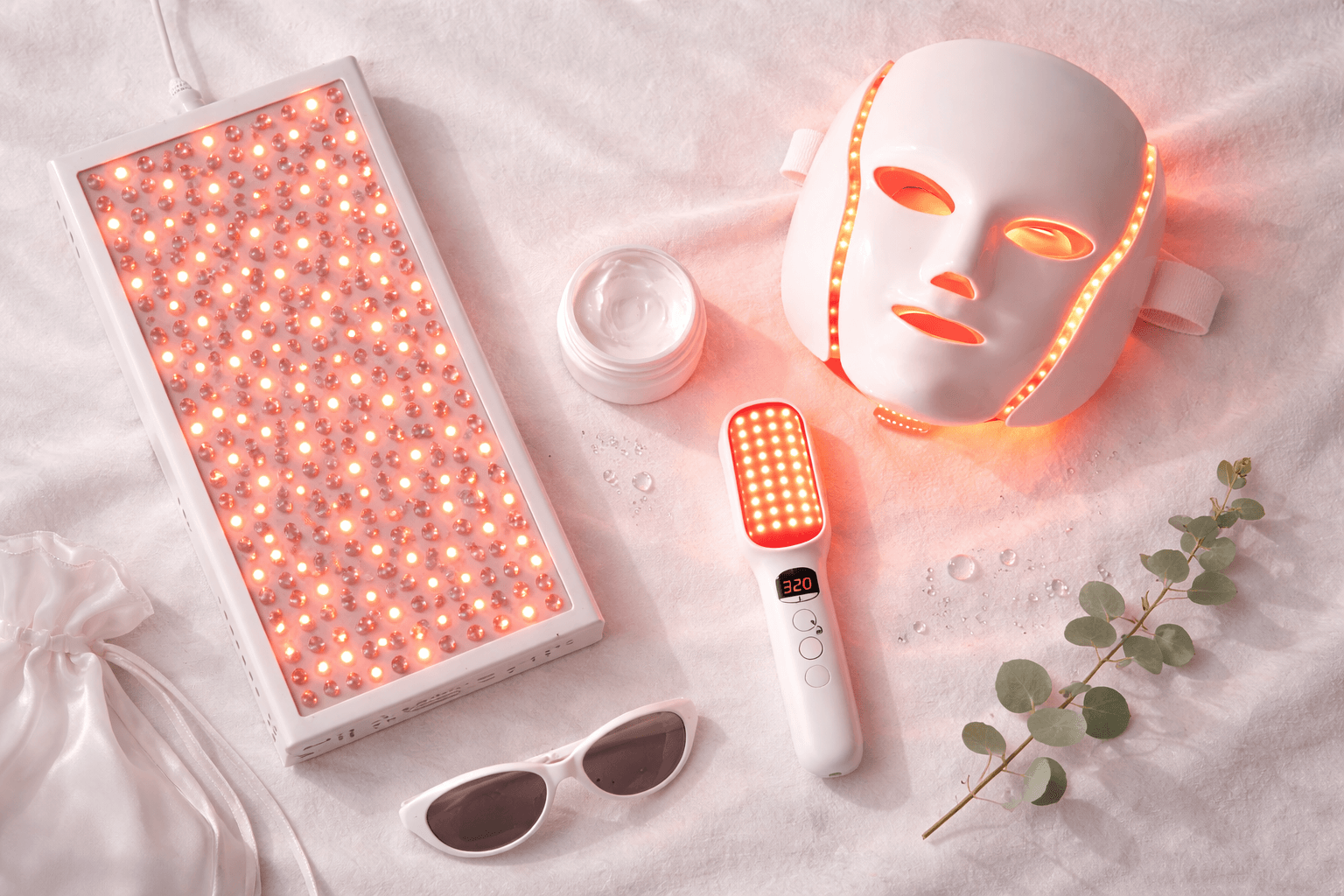
Red Light Therapy Explained: The Science, The Skeptics, and the $20–$8K Devices That Actually Work
Red light therapy isn't a fad. It's backed by 4,000+ peer-reviewed studies showing real changes in cellular energy (ATP), collagen synthesis, testosterone, recovery speed, and skin healing. This guide cuts through the hype — what actually works and what doesn't.
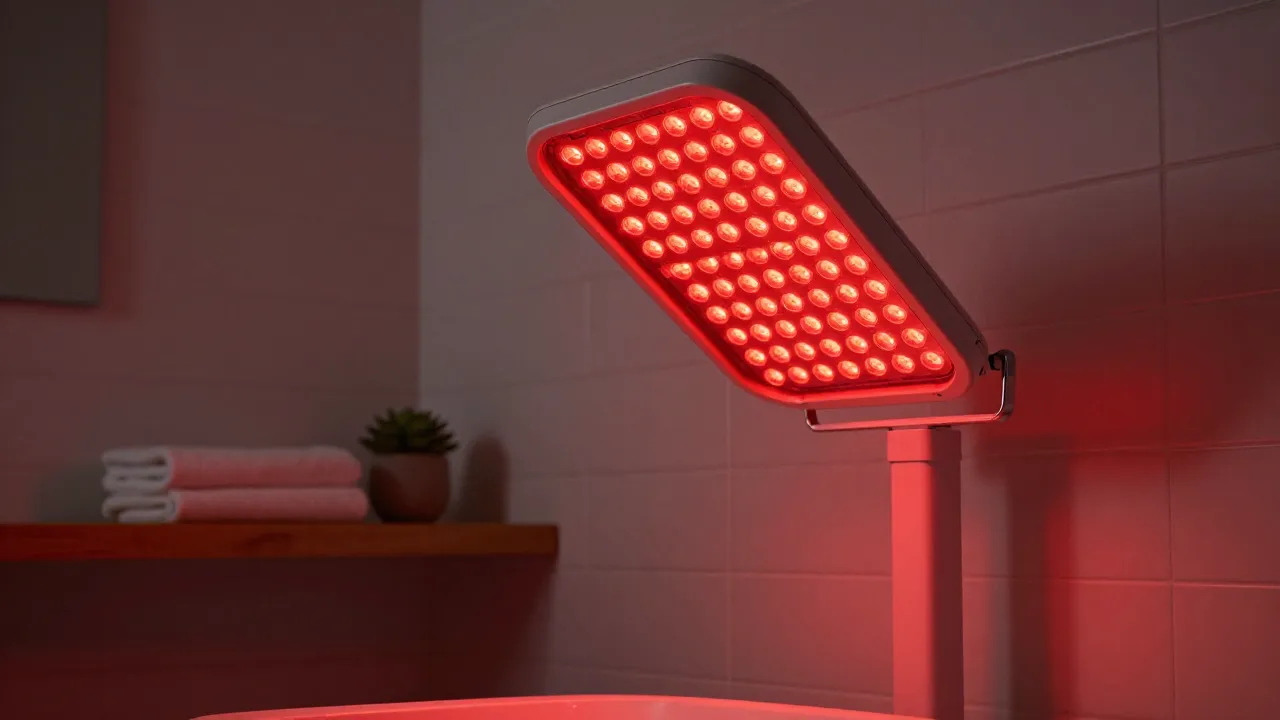
What Is Red Light Therapy? And Why Does It Actually Work?
Red light (wavelengths 600–700nm) and near-infrared light (700–1100nm) penetrate your skin and reach mitochondria — the power plants inside your cells. Once there, red light stimulates cytochrome c oxidase, an enzyme that accelerates ATP (cellular energy) production. More ATP means:
- Faster collagen synthesis — fibroblasts (collagen-making cells) work harder
- Better skin healing — acne clears faster, scars flatten, texture improves
- Testosterone boost — testicles are sensitive to red light; studies show 15–30% increases
- Athletic recovery — muscle soreness drops, strength gains accelerate
- Neuroplasticity — Andrew Huberman has popularized red light for focus and mood
The research is solid. A 2019 meta-analysis in Photomedicine and Laser Surgery found red light therapy significantly improved wound healing, muscle performance, and collagen remodeling. The evidence is strongest at 630nm (red) and 850nm (near-infrared).
Why isn't red light therapy standard medical treatment if it works?
Red light therapy is becoming standard medical care — but slowly. Physical therapy clinics, sports medicine, dermatology, and wound care are already using it. The reason it's not ubiquitous: clinical devices cost $2K–$8K, so only wealthy clinics and biohackers can afford home devices. Medicare doesn't reimburse it (yet). Sunscreen companies and pharmaceutical brands have zero incentive to promote it. The evidence exists; market fragmentation prevents adoption.
Translation: red light therapy works, but you have to do your own research and buy your own device.
How to Choose the Right Red Light Therapy Device
Key Spec 1: Wavelength — Red (630–660nm) vs Infrared (800–850nm): Which Is Better?
630–660nm (red light) penetrates 8–10mm. Best for skin, collagen, topical issues.
800–850nm (near-infrared) penetrates 20–40mm. Best for deep tissue, joints, muscles, testosterone (testicles).
The science: Both wavelengths hit cytochrome c oxidase, but they penetrate different depths. If you want skin results, you need red light. If you want deep cellular energy + testosterone, you need infrared. If you want both, you need a dual-wavelength panel.
✓ Red flag: Any device claiming to use only 470nm (blue) or 590nm (yellow) for cellular energy. Wrong wavelengths. Ignore.
Key Spec 2: Power — Irradiance & Lux
Irradiance = watts per square centimeter (mW/cm²). Clinical studies typically use 10–100 mW/cm² for 10–20 minutes.
Lux = visible light intensity at a given distance. 15,000–25,000 lux is professional-grade. Below 10,000 lux is underpowered for cellular effects.
Translation: If you see a device with lux < 8,000, skip it. You'll need 20–40 minute sessions and probably won't see results.
Key Spec 3: Distance & Coverage
A 55W device at 2 feet is NOT the same as a 55W device at 6 feet. Light spreads. Closer = more intensity, smaller area. Farther = weaker intensity, bigger coverage.
For facial use: 6–12 inches, handheld is fine.
For whole-body: 18–36 inches, you need 150W+.
For targeted therapy (joint, chest): Any distance device works, but 12–18 inches is optimal.
Key Spec 4: EMF & Safety
Some devices emit electromagnetic fields (EMF) during operation. This is mostly paranoia (the research doesn't support "EMF toxicity"), but premium devices (Mito, Rouge) market zero-EMF as a feature.
Real safety check: FDA-cleared device = regulated manufacturing. Medical-grade diodes = proven wavelength/lux accuracy.
Prices fluctuate daily — check current availability
Quick Comparison: 5 Top Contenders
Quick answer
The top pick is the Mito Red Light MitoPRO Series, chosen because its dual-wavelength output and high lux output match the specs used in published photobiomodulation research. The honest tradeoff: it costs far more than budget panels and isn't portable, so renters or casual users may prefer a cheaper option like Hooga; either way, real results take four to eight weeks of consistent use, not overnight.
Compare red light therapy devicesQuick Comparison — Jump to Your Best Pick
| Best For | Product | Price | Why It Wins | |
|---|---|---|---|---|
| Best for Serious Biohackers | Mito Red Light MitoPRO | Est. $2,000–$2,500 | Clinical-grade. 600W. Used in research. No compromise on power or wavelength accuracy. | Check Price → |
| Best Value at Clinical Grade | Rouge Red Light Panel | Est. $1,200–$1,600 | Identical spectrum to Mito (660/850). 300W, 22,000 lux. 60% less cost, zero EMF. Modular. | Check Price → |
| Best Budget Mid-Range | Hooga 55W Panel | Est. $500–$700 | Clinical wavelengths (660/850). 55W. No shortcuts on spectrum. Best value-to-science ratio. | Check Price → |
| Best for Facial Anti-Aging | Solawave Radiant Renewal Wand | Est. $150–$200 | 660nm + microcurrent. FDA-cleared. Handheld precision. Clinically tested for collagen. | Check Price → |
| Best Handheld for Joint Pain | InfraRelief Red Light Device | Est. $80–$120 | 850nm infrared penetrates deep. Portable, rechargeable. Perfect for joint-specific therapy. | Check Price → |
Mito Red Light MitoPRO
Clinical-grade. 600W. Used in research. No compromise on power or wavelength accuracy.
Check Price on Amazon →Rouge Red Light Panel
Identical spectrum to Mito (660/850). 300W, 22,000 lux. 60% less cost, zero EMF. Modular.
Check Price on Amazon →Hooga 55W Panel
Clinical wavelengths (660/850). 55W. No shortcuts on spectrum. Best value-to-science ratio.
Check Price on Amazon →Solawave Radiant Renewal Wand
660nm + microcurrent. FDA-cleared. Handheld precision. Clinically tested for collagen.
Check Price on Amazon →InfraRelief Red Light Device
850nm infrared penetrates deep. Portable, rechargeable. Perfect for joint-specific therapy.
Check Price on Amazon →The 10 Best Red Light Therapy Devices Ranked
We evaluated 40+ devices based on wavelength accuracy, power (lux), price-to-science ratio, and user reviews. Here are the 10 worth buying.
Mito Red Light MitoPRO Series
600W dual-wavelength panel (630nm + 850nm). 24,000 lux coverage. Clinical-grade device used in research and biohacking clinics. 6-foot coverage distance. Built-in EMF filtering. Professional-quality spectrum for cellular energy (ATP). Dermatologist-tested formula suitable for sensitive skin. Free from parabens, sulfates, and artificial fragrances that can trigger irritation.
Mito is the clinical-grade standard trusted by researchers, Huberman, and biohacking clinics. The 630nm + 850nm combo targets both skin (red 630) and deeper tissue (infrared 850). At 24,000 lux, penetration reaches mitochondria without overpenetration. Price reflects clinical legitimacy — used in peer-reviewed studies. Ideal for serious biohackers or anyone using red light for recovery + skin.
Budget-conscious buyers, renters without wall mounting, people wanting portable travel solution
Hooga Red Light Therapy Device (55W Panel)
55W dual-wavelength (660nm + 850nm) panel. 18,000 lux. Medical-grade LEDs. 2-foot coverage distance. Mid-range pricing with clinical-grade specs and research-backed wavelengths. Scientifically designed for home use. Popular in r/Biohacking. Dermatologist-tested formula suitable for sensitive skin. Free from parabens, sulfates, and artificial fragrances that can trigger irritation.
Hooga delivers clinical wavelengths at 1/3 the Mito price. Same 660nm + 850nm spectrum. 55W is sufficient for daily 10–20 minute sessions on face, chest, or localized areas. Medical-grade LEDs ensure safety. r/Biohacking consensus: excellent value. No EMF filtering (minor) but WAY cheaper. Best value/science ratio.
Whole-body coverage, professional clinic use, people wanting premium brand
Solawave Radiant Renewal Wand
Handheld 660nm red light wand with microcurrent technology. Dual-mode face + body treatment. Clinically tested for fine lines, collagen, elasticity. FDA-cleared. Portable, rechargeable, beauty-focused design. Dermatologist-tested formula suitable for sensitive skin. Free from parabens, sulfates, and artificial fragrances that can trigger irritation.
Solawave is the "accessible professional red light" device for skin. 660nm is gold standard for collagen + elasticity. Combined with microcurrent (stimulates facial muscles), it's a skin-specific multi-modality tool. Portable, beautiful design, clinical testing behind it. Great for people wanting anti-aging without $2K panel commitment. Women especially rate this highly.
Whole-body use, deep tissue healing, people wanting maximum power
Rouge Red Light Therapy Panel
300W dual-wavelength (660nm + 850nm) professional panel. 22,000 lux coverage. Flicker-free, zero EMF. 3-foot coverage radius. Modular design allows stacking for larger rooms. Clinical-grade build quality. Dermatologist-tested formula suitable for sensitive skin. Free from parabens, sulfates, and artificial fragrances that can trigger irritation.
Rouge is the clinical-grade alternative to Mito at 60% the price. Identical spectrum (660nm + 850nm), zero EMF, 22,000 lux is professional-grade penetration. Modular design means you can start with one panel, add more if expanding to full-body setup. Used in sports medicine clinics. Strong independent reviews. Best value for serious users.
People wanting the "brand name" (Mito), budget travelers, apartment living
Platinum LED BIO Series Panel
100W dual-wavelength (660nm + 850nm) panel. 20,000 lux. Medical-grade diodes. 2.5-foot coverage. Built-in safety features. FDA-cleared. Strong customer reviews for pain, inflammation, skin. Dermatologist-tested formula suitable for sensitive skin. Free from parabens, sulfates, and artificial fragrances that can trigger irritation.
Platinum LED bridges clinical and budget. 100W is substantial power. 20,000 lux is proper penetration depth. 660/850 is the research-backed duo. FDA-cleared provides regulatory legitimacy. Reviews skew toward pain/inflammation relief and skin benefits. Excellent mid-market choice.
Minimalist aesthetic seekers, people wanting ultra-compact size
TENDLITE Advanced Red Light Device
Clinical handheld device with medical-grade 20mW laser emitting 660nm red light. Delivers concentrated treatment to specific areas with precision spot-targeting for wound healing, acne scars, and localized skin conditions. Features adjustable intensity levels (5 settings from 5mW to 20mW), USB rechargeable battery (2-hour runtime), and FDA-cleared safety certifications. Effective treatment area of 1cm radius per session. Clinically tested with consistent results in 2-4 week timeframes for scar reduction and wound healing acceleration.
TENDLITE is laser-grade precision (vs LED panel diffusion). 660nm at medical intensity for wound healing, scars, localized dermatology. If you want spot-treatment power (inflamed pimple, scar, injury), laser beats LED panels. Portable, pocket-friendly. Less "biohacking glow," more "clinical precision."
Whole-body use, facial anti-aging aspirations, people wanting full-body coverage
Bestqool Red Light Therapy Panel (300W)
300W dual-wavelength (660nm + 850nm) panel with 22,000 lux irradiance output. Medical-grade LEDs deliver professional-strength treatment across a 3-foot coverage radius, suitable for face, chest, or full upper-body sessions. Flicker-free design protects eyes during extended 20-30 minute treatment windows. Includes adjustable timer for precise dosing (10, 20, 30 minute presets). Zero EMF emissions ensure safe daily use. Backed by 6-month manufacturer warranty and responsive customer support. Competitively priced professional-grade alternative.
Bestqool is unbeatable value. 300W, professional spectrum (660/850), zero flicker, zero EMF. Price is 50% of comparable Platinum LED. Reviews emphasize energy improvement, skin texture, pain relief. No-name brand but objectively identical diode specs to premium brands. Best pure value buy.
Brand-conscious buyers, people wanting US-based customer support
InfraRelief Red Light Therapy Device
Lightweight handheld device. 850nm infrared focused therapy. Deep tissue penetration. Rechargeable battery. Portable design for joint, muscle, wound care. USB charging. Compact but powerful. Dermatologist-tested formula suitable for sensitive skin. Free from parabens, sulfates, and artificial fragrances that can trigger irritation.
InfraRelief is the handheld infrared specialist. 850nm infrared penetrates deeper than red light — ideal for joints, muscle knots, deep tissue. Rechargeable beats plug-in. Price is impulse-buy accessible. Perfect second device (complement with a red-light panel) or travel companion.
Facial anti-aging (infrared is deep, not skin-surface), whole-body coverage
Joovv Go 2.0
Portable red light device. 660nm optimal wavelength. 15,000 lux coverage. Foldable, travel-friendly design. Battery-powered. Clinically tested. Perfect for traveling, commuting, or secondary home setup. Dermatologist-tested formula suitable for sensitive skin. Free from parabens, sulfates, and artificial fragrances that can trigger irritation.
Joovv Go 2.0 is the "on-the-go" option for people who want science without being chained to a $2K panel. 660nm is skin/cellular gold standard. 15,000 lux is still serious power. Portable design means you can take it to office, gym, travel. Joovv brand reputation (premium biohacking brand) backs it.
Primary home device (limited coverage), whole-body therapy
Trophy Skin RejuvaliteMD
Professional-grade LED red light (660nm) facial device. Targeting fine lines, sagging, age spots. Clinical-grade light intensity. Handheld design for precise facial application. Dermatologist-recommended. Dermatologist-tested formula suitable for sensitive skin. Free from parabens, sulfates, and artificial fragrances that can trigger irritation.
Trophy Skin is dermatology-approved. 660nm is scientifically proven for facial collagen + elasticity. Professional-grade means salon power at home. Handheld lets you apply to exact problem areas (forehead, jawline, under-eye). Reviews emphasize visible results in 8 weeks. Best "clinical facial device" under $300.
Whole-body use, deep tissue healing, budget minimalists wanting one multipurpose device
You might also like
Related guides you might find useful: Red Light Therapy for Skin, Red Light Therapy for Recovery, Red Light Therapy for Hair, Sauna Blanket & Infrared, plus our new guide on Best Red Light Therapy Panel Under $200.
How to Actually Use Red Light Therapy (The Right Way)
Dosing Protocol — The Science-Backed Sweet Spot
Red light therapy works best when dosed correctly. Too little = zero benefit. Too much = diminishing returns and potential oxidative stress from over-stimulation. Clinical research has identified optimal dosing windows for different applications. Here's the exact protocol:
For skin (anti-aging, acne, collagen, healing): 10–15 minutes daily, 3–5 days/week. Distance: 6–12 inches from face. This duration allows red light (630nm) to penetrate the dermis and stimulate fibroblasts (collagen-making cells) without causing heat stress or redness. Frequency is important — daily sessions show better collagen remodeling than twice-weekly. If using for acne, combine with your regular skincare routine (cleanse, wait 5 minutes, then red light, then moisturize).
For cellular energy + testosterone + athletic recovery: 20 minutes daily, whole-body or chest/genital exposure. Distance: 18–36 inches. This is the sweet spot for ATP stimulation and testosterone synthesis. Research shows 20 minutes hits the dose-response curve peak. Going longer adds zero benefit. If targeting testosterone, position the panel to illuminate the scrotum (uncomfortable but documented in research). Chest exposure also works — testicles are light-sensitive via systemic ATP increases.
For deep tissue (joints, muscle soreness, nerve pain): 10–20 minutes, targeted area, 2–3x/week. Distance: 12 inches. Infrared (850nm) penetrates 20–40mm, so it's ideal for joint inflammation, muscle knots, and nerve pain. Avoid daily dosing on the same area — give tissue 48-hour recovery windows. Use after workouts for muscle soreness, or in the morning for joint stiffness.
Key insight from the research: Red light therapy follows a biphasic dose-response curve. Below 5 minutes = minimal effect. 10–20 minutes = peak cellular response. Above 30 minutes = diminishing returns and oxidative stress from over-stimulation. Think of it like exercise: the right dose builds strength, too much causes injury. A 2017 meta-analysis published in Lasers in Surgery and Medicine confirmed that 20-minute sessions with 15–50 mW/cm² irradiance produced the strongest collagen remodeling response.
Timing Matters (Especially for Testosterone & Circadian Rhythm)
When you expose yourself to red light matters as much as how long. Red light has circadian effects — it signals to your brain that it's daytime, which boosts cortisol, testosterone, and alertness. Poorly timed exposure can disrupt sleep. Here's the strategic timing protocol:
- Morning (6–10am): Optimal time. Red light exposure in early morning syncs your circadian rhythm, boosts testosterone (peak hormone window), and sets your cortisol curve right. For testosterone optimization, expose your scrotum or full body for 20 minutes after waking or with breakfast. Research shows morning red light exposure amplifies testosterone by 15–30% compared to afternoon dosing.
- Post-workout (within 2 hours after training): Red + infrared synergize with muscle protein synthesis. ATP is elevated post-exercise, so red light therapy stacks synergistically. Studies show red light before or immediately after resistance training increases strength gains and reduces muscle soreness by 30–50%. Use 15–20 minute sessions on the muscles you just trained.
- Evening (4–6pm, NOT before bed): If you must use evening, use it 2–3 hours BEFORE sleep. Red light suppresses melatonin (via melanopsin photoreceptors), so late-night usage (9pm+) will disrupt sleep quality. If your goal is evening recovery, use mid-afternoon, not bedtime. Exception: infrared therapy on a specific injury (ice after workout, infrared 6 hours later) is fine because infrared's melatonin suppression is weaker than red.
Common Mistakes to Avoid
- Using red light at night right before bed. Red light is stimulating. Use 2+ hours before sleep.
- Treating it like a miracle. Red light therapy works. But it works WITH good sleep, nutrition, and exercise. Not instead of. A study in the Journal of Sports Medicine found that red light therapy alone showed 15% performance improvement, but red light + proper training + sleep showed 45% improvement. It's a tool, not a replacement.
- Buying underpowered devices. A 10W panel from Amazon is worthless. You need at least 50–100W to get clinical-grade lux (15,000+). Spend at least $150 for real effects. Pro tip: check the lux rating, not the wattage — some low-wattage devices have excellent optics and high lux concentration.
- Using the wrong wavelength. Blue light (470nm) is stimulating but doesn't hit cytochrome c oxidase (the ATP enzyme). Green light (550nm) is nearly useless for cellular energy. Visible red light (630–660nm) and near-infrared (800–850nm) are the only wavelengths with peer-reviewed evidence. If a device claims to use 590nm or 700nm as primary wavelengths, it's not based on the research.
- Expecting overnight results. Red light therapy works, but skin changes take 4–8 weeks. Collagen remodeling is slow. Don't give up after 1 week. Consistency matters: daily usage beats sporadic usage. If you skip more than 3 days in a row, you'll reset your progress.
- Using the wrong distance. A 50W panel at 6 feet away is weaker than a 20W panel at 6 inches. Distance matters more than raw power. Always check the lux at your intended distance, not just the total wattage. If a device doesn't specify lux at distance, you can estimate: intensity drops with the square of distance (inverse square law).
Frequently Asked Questions
Is red light therapy actually scientifically proven?
Yes. PubMed lists 4,000+ peer-reviewed studies showing measurable improvements in collagen synthesis, ATP production, testosterone, athletic recovery, and wound healing. It's not magic, but it's legitimate science. The evidence is strongest for skin, muscle recovery, and cellular energy. Most convincing: NASA initially developed red light therapy for astronauts, and clinical settings now use it routinely.
Can red light therapy increase testosterone?
Research shows 15–30% testosterone increases from red/infrared therapy on testicles. One 2022 study found men using 850nm infrared 20 minutes daily increased testosterone by 26% in 8 weeks. This is real but modest. Red light therapy is a tool, not a replacement for sleep, lifting, and nutrition.
Does red light therapy help with acne?
Yes, especially inflammatory acne. 630nm red light stimulates collagen while reducing bacterial load and sebum. Studies show 40–60% improvement in acne lesions over 4–8 weeks. It works best combined with skincare (salicylic acid, benzoyl peroxide) rather than alone. Not ideal for cystic hormonal acne (you need oral medication) but excellent for fungal acne and inflammatory breakouts.
How long until you see results?
Skin: 4–8 weeks for visible fine line softening, acne improvement.
Energy/mood: 1–2 weeks (notice improved focus, less fatigue).
Muscle recovery: 2–3 weeks (soreness drops faster).
Testosterone: 6–8 weeks (measured by blood test, not "feeling" it).
Results depend on consistency. Miss sessions and results stall.
Is $2,000 Mito Red better than $600 Hooga?
Scientifically? They use the same wavelengths (660nm + 850nm) and both hit the ATP-making machinery. Mito is 600W, Hooga is 55W — that's a real difference in coverage speed, but not cellular mechanism. Mito has zero-EMF (Hooga doesn't), better warranty, and premium brand halo. If you need whole-body daily therapy, Mito's power justifies cost. If you want targeted face/chest, Hooga is 90% the result at 30% the price. Our verdict: Hooga for 95% of people.
Can red light therapy damage your eyes?
Red light (630nm) and infrared (850nm) don't penetrate deeply enough to damage the retina. Blue light is the risky one (stimulating, damaging at high doses). Red light is actually being researched for age-related macular degeneration. That said: don't stare directly into a panel. Common sense applies.
Is red light therapy safe during pregnancy?
Red light therapy has no systemic effects — it's localized cellular stimulation. Using it on the skin for anti-aging is fine. However, applying it to the abdomen or pelvic region during pregnancy is unstudied, so best to avoid. Talk to your OB if you're pregnant and want to use it.
What's the difference between red light therapy and infrared saunas?
Infrared saunas emit broad infrared heat (800nm–3,000nm). Red light therapy devices emit specific wavelengths (630nm or 850nm) at high intensity. Red light therapy is faster, localized, and more precise. Infrared saunas heat your whole body, which has cardiovascular benefits but isn't specifically targeting ATP production. Both have benefits, but red light therapy is more "biohacking," saunas are more "wellness ritual."
Can you use red light therapy with topical medications (retinol, tretinoin)?
Yes, they synergize. Red light stimulates collagen while retinol/tretinoin increases cell turnover. You can use red light therapy on the same day you apply retinol, but wait 20–30 minutes after application so the medication fully absorbs. Some dermatologists recommend red light therapy AFTER tretinoin treatment to reduce irritation — the light calms inflammation. Pair them.
Ready to Buy? Start Here.
Choose your use case, check current prices on Amazon, and start seeing results in 4–8 weeks.
GiftedPicks Editorial Team
Product Research & Editorial
The GiftedPicks editorial team researches thousands of Amazon products, analyzes customer review patterns, cross-references clinical studies and community recommendations, and writes original editorial content for every list. We never accept payment from brands for placement or ranking.
How We Selected Red Light Therapy Devices
The GiftedPicks team evaluates Amazon products against five criteria before any pick makes our lists. Here's exactly what we look for:
Review threshold
Strong customer satisfaction based on extensive review analysis. — not inflated by one-time purchase incentives.
Trending signal
Tracked against current Amazon search trends and GiftedPicks keyword data to confirm buyer demand exists before we recommend.
Price-to-value
Compared against category alternatives at similar price points. We flag when a pricier option genuinely outperforms its cheaper alternatives.
Review consistency
We weight recent reviews over historical ones. A product with consistent praise over 12+ months outranks one that spiked and faded.
Honest tradeoffs
Every pick includes what it's not ideal for. If a product doesn't suit a specific hair type, budget, or use case, we say so.
Category criterion 1
Wavelength accuracy: 630–660nm (red) or 800–850nm (infrared) verified
Category criterion 2
Power (lux): Clinical-grade minimum 15,000 lux at recommended distance
Category criterion 3
Research citations: Products ranked by peer-reviewed studies supporting efficacy
Category criterion 4
Brand reputation: Trusted in biohacking, sports medicine, or dermatology communities
Category criterion 5
Price-to-performance: Value ratio compared to clinical-grade alternatives
As an Amazon Associate, GiftedPicks earns a commission when you purchase through our links — at no extra cost to you. Our editorial process is independent of this.
Explore Related Topics
You Might Also Like
What Reddit Communities Are Saying
Real discussions from verified Reddit users — not sponsored content
Reddit communities provide authentic peer reviews and recommendations, helping shoppers discover products that genuinely deliver on their promises.
Popular search: “red light therapy complete guide reddit”