

The complete galaxy projector buyer's guide
Galaxy projectors are commodity LED products with broadly similar specs across price tiers — the meaningful differences are in build quality, light mode variety, design intentionality, and warranty/return support. The picks above represent the four use cases that cover the vast majority of buyers; here's the deeper context on each decision a shopper actually has to make.
Why does light mode count matter so much?
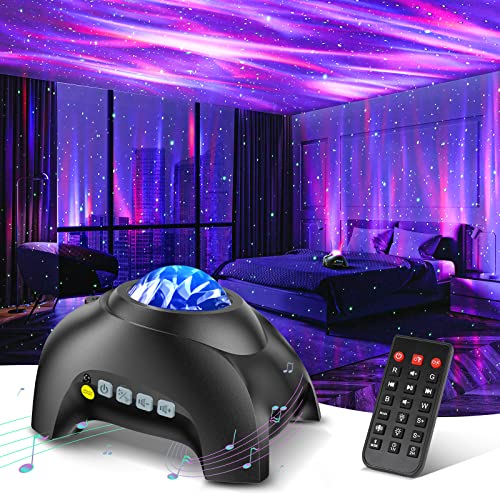
Visual habituation kills galaxy projector enthusiasm faster than any other failure mode. A 4-mode projector becomes background within a few weeks — your brain stops registering the same starfield loop as novel, and the projector ends up gathering dust. Projectors with 30+ modes (like the 33-mode editor's pick) maintain novelty by giving you fresh visual combinations to cycle through over months. For nightly use scenarios, this is the single most predictive feature for whether you'll still be using the projector a year after purchase.
Why is the astronaut design so iconic on TikTok?
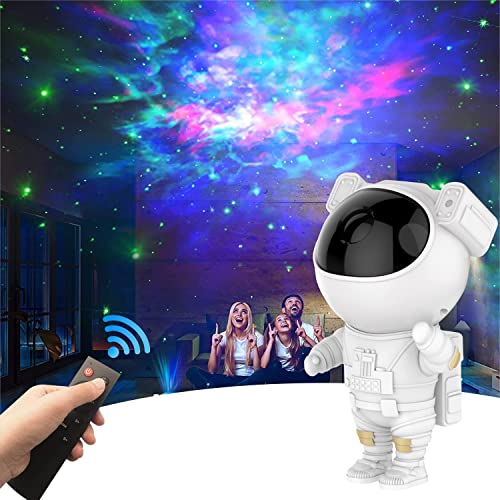
The astronaut figurine projector hit a perfect intersection of design language and platform mechanics — a sculptural object that reads visually distinct in a 3-second TikTok scroll, makes a clean foreground silhouette in room-tour videos, and signals "intentional aesthetic decor" in a way a black plastic box does not. The 360°-adjustable head adds practical utility on top of the visual identity. If your purchase trigger was a specific TikTok video, this is almost certainly the projector you saw.
Is a built-in Bluetooth speaker worth paying extra for?
Depends on your existing audio setup. If you already own a quality Bluetooth speaker for the bedroom, the integrated speaker on the YGiTK pick is redundant — buy the editor's pick instead. If you don't have a bedside speaker and you anticipate playing ambient music or sleep playlists alongside the visuals (which most galaxy projector users end up doing), consolidating into one device removes a cable, a second power draw, and a second app to manage. The speaker is appropriate for ambient-volume listening, not bass-heavy music playback.
Are sub-$20 galaxy projectors ever worth it?
Almost never for nightly use. The sub-$20 tier is dominated by listings with weak optics (blurry star points, dim maximum brightness), no timer function, micro-USB power input, and a high rate of failure within 3-6 months. They can work as a one-time gift or a novelty test of the category, but if you're shopping for something you'll actually use, the $30-60 sweet spot is where build quality, optical sharpness, and feature completeness all clear the daily-use bar. The budget pick on this list ($18-30) is the floor of what we'd recommend.
Will a galaxy projector disturb sleep?
Not if used correctly. The recommended pattern: project during your wind-down period (30-60 minutes before sleep) at a low brightness setting, set the auto-timer for 1-2 hours, and let the projector shut itself off as you drift off. Deep blue and purple wavelengths in starfield projection are less stimulating than the blue-white light of phone screens. Avoid leaving the projector running all night — both because your sleep cycle benefits from darkness in deep sleep stages and because LEDs degrade faster with continuous runtime.
Do galaxy projectors work as gifts?
Yes — they're a strong gift category for Gen Z teens, college students, and young adults setting up new bedrooms or apartments. The astronaut design pick is the most gift-friendly option because the figurine itself is a display piece even when off, which makes it feel like a thoughtful object rather than a generic gadget. Price-wise, the $25-45 range hits the gift sweet spot — substantial enough to feel like a real gift, accessible enough not to be awkward.
How long do galaxy projector LEDs actually last?
LED lifespan ratings on consumer projectors typically claim 20,000-50,000 hours, but real-world durability is more often limited by build quality of the housing, optical assembly, and power circuitry than by LED degradation. Brands at the $30-60 tier reliably deliver 2-4+ years of nightly use; sub-$20 units frequently fail within 6-12 months due to housing or circuitry issues unrelated to the LED itself. Use the timer function — continuous all-night runtime measurably shortens working life across the category.