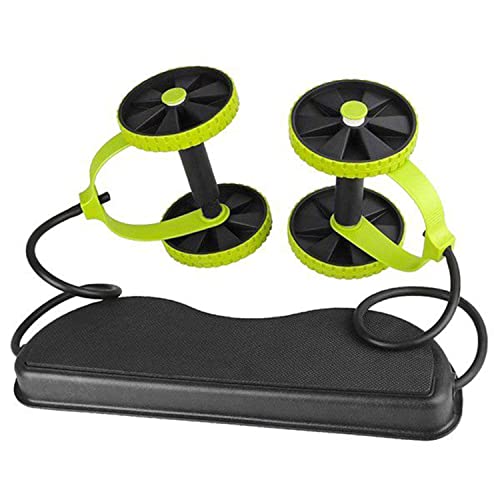


The Ab Wheel Myth (And Why Form Actually Matters)
okay so ab wheels are one of those tools that looks simple but is actually technical. people see someone doing a perfect ab wheel rollout and think "oh I can just roll out and do crunches." then they buy a wheel, roll out too far, their back hyperextends, and they either tweak their back or decide ab wheels don't work. the truth: the wheel itself is fine. the form is where people fail.
The Correct Form (Where 90% of People Fail)
here's what most people get wrong: they roll out too far, too fast, and their lower back sags (hyperextension). your core fails and your back takes over. that's not core training, that's spinal injury risk. correct form: roll out slowly while maintaining a neutral spine (no sagging). engage your anterior core (abs and serratus anterior) to keep your torso rigid. stop before your form breaks (which is way shorter than full extension). pause for a second, then roll back. the ROM (range of motion) that matters isn't how far you go — it's how much your core can control. beginners should only roll out 6–12 inches. that's it. as your core gets stronger over weeks, you extend the ROM. it takes months to safely do full rollouts.
Dual Wheel vs Single Wheel: Stability vs Difficulty: Which Is Better?
dual-wheel ab rollers (like Ab Carver Pro) have two wheels side-by-side. you can't tip sideways. they're stable and safer. single-wheel rollers have one wheel. you need way more core control to stay balanced. dual wheels are better for progression — you build base strength safely before advancing to single. single wheels are the ultimate difficulty upgrade. most people should use dual wheels. only advanced core athletes should mess with single wheels.
Progressive Overload With Ab Wheels
here's how to progress ab wheel training without getting hurt: week 1–2: knee rollouts (kneeling, short range). week 3–4: increase ROM (roll out further while maintaining control). week 5–8: standing rollouts from knees (half rollouts). week 9+: full standing rollouts. this is months of progression. people try to jump to full rollouts in week 1 and blow out their back. slow progression saves your spine and builds real strength.
What Ab Wheels Actually Target?
ab wheels aren't just "ab" exercises. they target the entire anterior core: rectus abdominis (the six-pack muscles), obliques (side core), and serratus anterior (the muscles under your armpits that stabilize your shoulder blades). they also require spinal stabilization (internal core work) to prevent hyperextension. this is why ab wheels are so effective — they force true core control, not just flexion (like crunches).
The Budget vs Premium Dilemma: Which Is Better?
a $15 single wheel works fine. a $40 dual wheel is more stable and better for progression. a $100 Rogue wheel is overkill for home use but indestructible. for most people, the Ab Carver Pro is the sweet spot. it's durable, stable, and suitable for all progression levels. if you're on an ultra-tight budget, Sklz is solid. if you're a serious lifter and want maximum durability, Rogue is the investment.
The Knee Roller Gateway
if you've never done ab wheel work, start with a knee roller (padded ab wheel where you kneel). it's easier on your joints, less intimidating, and a logical progression. once you master knee rollouts, move to the standing Ab Carver Pro. this progression takes 4–8 weeks depending on training frequency. rushing it increases injury risk.
The Reality Check: Who Should Use Ab Wheels?
people with solid core strength (planks for 60+ seconds, can do dead bugs, has training experience). people wanting advanced core development (ab wheels are genuinely advanced). people with healthy spines (no existing lower back issues). ab wheels are not good for people with low back pain or zero core foundation. if you have back pain, work with physical therapy first, build base core strength, then introduce ab wheels.
The Frequency and Volume
ab wheels aren't a daily tool. 2–3 times per week is plenty. 3 sets of 8–12 reps (or as many as you can do with perfect form) is the standard. if you do ab wheels and your back hurts after (not core fatigue, but actual pain), you went too far or your form broke. dial it back.
Single Wheel Progression (For Advanced Only)
once you've mastered dual-wheel rollouts, single wheels are the next progression. they require significantly more core control (no side stabilization). the single wheel will reveal weaknesses in your transverse abdominis (deep core stability). if you want to try one, start with very short range of motion and expect to fall on your face a few times. it's humbling but effective.