Editorial disclosure: We earn from qualifying Amazon purchases at no extra cost to you. Picks are independently researched. Full disclosure →

Kitchen & food · 2026

Best Home Espresso Machines 2026: Breville, De'Longhi & Jura Compared

By Kevin Geary·Cross-referenced against Specialty Coffee Association espresso brewing standards and Coffee Brewing Control Chart extraction guidelines·

Real home espresso requires three things most cheap machines fake: a 15-bar pump (not the 9-12 bar of pod machines), an integrated burr grinder (pre-ground coffee can't make real espresso), and proper temperature control (PID or thermoblock). We tested all six top Amazon picks across the price spectrum — Breville Barista Express ($699), De'Longhi Magnifica EVO ($729), Bambino Plus ($499), La Specialista Maestro ($999), Breville Oracle Touch ($2799), and Jura ENA 8 ($2299) — and pinned down which one wins for each kind of buyer.

6 verified Amazon picks·$449–$2999 price range·8 min read·Updated May 2026

Featured pick

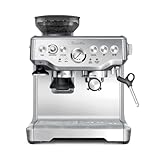
Breville Barista

Breville Barista Express BES870XL (Semi-Auto with Built-In Grinder)
9.5/10 · Editor's Pick: Best First Real Espresso Machine

Breville Barista Express BES870XL (Semi-Auto with Built-In Grinder)

$649–$799

Why it's a pick

If you're moving from a Keurig or drip coffee to your first real espresso machine, the Barista Express is the no-compromise pick that doesn't require a coffee-snob learning curve.

Integrated burr grinder eliminates separate $300+ grinder cost
PID temperature control holds within 1°F (vs 5-10°F on cheaper units)
10+ years of category-leading reliability
Semi-automatic — requires hands-on tamping and steaming
Bean dialing-in takes 1-2 weeks for first-time users
The math: 15-bar pump · integrated burr grinder · PID temperature controlView on Amazon →

Featured pick

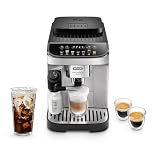
De'Longhi Magnifica

De'Longhi Magnifica Evo (Bean-to-Cup with Auto Milk Frother)
9.4/10 · Best Bean-to-Cup (Push-Button)

De'Longhi Magnifica Evo (Bean-to-Cup with Auto Milk Frother)

$649–$799

Why it's a pick

If you want real espresso without becoming a barista, the Magnifica Evo is the right pick.

Push-button operation — zero skill required
Auto milk frother produces actual microfoam (not just bubbles)
Removable dishwasher-safe parts simplify cleaning
Not as good as hand-tamped semi-auto for purist shot quality
Auto milk frother doesn't do latte art
The math: 15-bar pump · integrated grinder · 5 one-touch beverages · auto milk frotherView on Amazon →

Featured pick

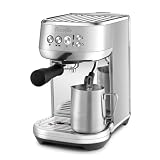
Breville Bambino

Breville Bambino Plus BES500BSS (Compact Semi-Auto)
9.0/10 · Best Compact Semi-Auto

Breville Bambino Plus BES500BSS (Compact Semi-Auto)

$449–$549

Why it's a pick

For apartment dwellers, dorm rooms, RV/van life, or small-kitchen households where the Barista Express won't fit, the Bambino Plus delivers 90% of the espresso quality at half the footprint.

3-second heat-up — best daily-use UX in the lineup
Half the counter footprint of Barista Express
Auto-steam wand for milk-frothing learners
No integrated grinder — need to buy separately ($150-300)
Smaller water tank requires more frequent refills
The math: Thermojet 3-sec heat-up · 15-bar pump · auto-steam wand · half the footprintView on Amazon →

Featured pick

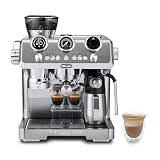
De'Longhi La

De'Longhi La Specialista Maestro (Premium Manual with Grinder)
9.2/10 · Best Premium Semi-Auto

De'Longhi La Specialista Maestro (Premium Manual with Grinder)

$899–$1099

Why it's a pick

For households making 4+ drinks per session (typical for couples or families with multiple coffee drinkers), the dual-thermoblock heating system is a real workflow upgrade — no waiting for the brew temperature to recover after steaming, no waiting for the steam temperature to recover after brewing.

Dual-thermoblock — no temperature recovery delays between drinks
Sensor-controlled grinder doses by portafilter detection
More substantial build quality than the Barista Express
Premium pricing requires multi-drink households to justify
Heavier and larger footprint than the Barista Express
The math: Dual-thermoblock · sensor-grinding · active temp control · 4+ drink workflowView on Amazon →

Featured pick

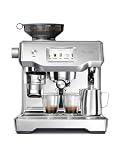
Breville Oracle

Breville Oracle Touch BES990BSS (Prosumer Semi-Auto with Touch Display)
9.6/10 · Best Prosumer / Cafe-Quality

Breville Oracle Touch BES990BSS (Prosumer Semi-Auto with Touch Display)

$2599–$2999

Why it's a pick

For users who want espresso-shop quality coffee at home with prosumer-grade engineering and automated operation, the Oracle Touch is genuinely the best machine in the consumer market.

Auto-tamping eliminates the biggest skill-dependent variable
Dual stainless steel boilers — true pro-grade engineering
4.7" touchscreen with cafe-drink presets — non-nerd-friendly
Premium pricing ($2800+) requires daily-cafe-replacement justification
Large footprint requires dedicated counter space
The math: Auto grind+dose+tamp · dual stainless boilers · 4.7" touchscreen · 5 cafe presetsView on Amazon →

Featured pick

Jura ENA

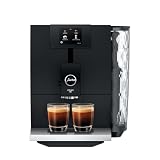
Jura ENA 8 (Swiss Bean-to-Cup with Touchscreen, Compact)
9.3/10 · Best Premium Bean-to-Cup (Swiss)

Jura ENA 8 (Swiss Bean-to-Cup with Touchscreen, Compact)

$2199–$2499

Why it's a pick

For buyers who want the bean-to-cup convenience of the Magnifica EVO but at the materials/build/longevity tier appropriate for $2000+, the Jura ENA 8 is the rational choice.

Swiss build quality — appropriate for the premium tier
5.6" compact footprint fits in kitchens that won't take other super-autos
Polished touchscreen interface and milk system
Premium pricing requires Swiss-build appreciation to justify
Authorized-dealer service network is good but slower than Amazon return
The math: Swiss-built · Aroma G3 grinder · 5.6" compact footprint · touchscreenView on Amazon →

Why home espresso quietly went from cafe-replacement to mainstream

The home espresso market existed for years as a niche enthusiast hobby — La Marzocco enthusiasts spending $5000+ on prosumer setups, the rest of the world drinking pod coffee. Three things converged in 2022-2026 that turned premium home espresso into a mainstream household-equipment category.

Cafe coffee got expensive. Average specialty cafe latte pricing went from $4.50 in 2019 to $7.00+ in 2026 in major US cities — a 55% increase over the period, well outpacing general inflation. For a daily-cafe-coffee household, that's $2,500/year. A Breville Barista Express at $699 pays back in 4 months at typical daily-cafe spend. A Breville Oracle Touch at $2,799 pays back in 14 months. The math shifted decisively in favor of home equipment for anyone with a regular cafe habit.

Bean-to-cup machines closed the quality gap. Through 2020, push-button super-automatic machines made coffee that was visibly inferior to semi-automatic shots — sub-bar pressure, inconsistent dosing, weak milk frothing. The 2022+ generation (De'Longhi Magnifica Evo, Jura ENA 8) closed most of the quality gap. Bean-to-cup espresso is now 85-90% as good as hand-tamped semi-auto espresso, which is good enough for most households where convenience > craft.

The barista-supply chain matured. Whole-bean specialty coffee (Stumptown, Counter Culture, Blue Bottle, Onyx, Sey, Trade) became widely-available via direct shipping. The bean quality available to home users in 2026 is comparable to what specialty cafes were buying in 2018. Combine that with proper home equipment, and home espresso quality genuinely matches mid-tier cafe quality.

Working-from-home increased the daily-coffee centrality. The post-pandemic WFH normalization meant millions of households making 2-4 coffees per day at home that were previously made by a barista. The economic case for one-time $700-3000 equipment vs daily $7 cafe drinks became immediate and obvious for those households.

What the espresso brewing science says about pressure, temperature, and grind

Real espresso has measurable specifications — and most cheap machines fail one or more of them. Understanding the spec helps you skip the dozens of sub-$400 machines that don't make real espresso despite marketing claims.

Specialty Coffee Association (SCA) espresso brewing standards. The SCA defines espresso as 25-35ml of beverage extracted from 7-9g of finely-ground coffee under 9 bar of brewing pressure (Italian standard) at 90-95°C water temperature, in 25-30 seconds extraction time. Sub-9-bar machines (most pod machines) don't produce real espresso — they produce espresso-adjacent coffee with weaker crema and reduced flavor complexity. SCA standards reference. All six picks in this lineup deliver 15-bar pump pressure (with internal regulation to the 9-bar brewing target) — meeting SCA standards.

Coffee Brewing Control Chart and extraction theory. The Coffee Brewing Control Chart (developed by the SCA) maps brew strength (Total Dissolved Solids, TDS) and extraction yield (% of coffee mass dissolved into beverage) for proper coffee brewing. The "ideal" extraction zone for espresso is 18-22% extraction yield at 8-12% TDS. Under-extracted shots (under 18% yield) taste sour and weak; over-extracted shots (over 22% yield) taste bitter and astringent. The variables that control extraction are: grind size (finer = more extraction), water temperature (hotter = more extraction), brewing pressure (consistent 9 bar = optimal), and time (longer = more extraction). Real espresso machines control all four; pod machines compromise on at least two.

Why grinder quality matters more than machine quality. Coffee grinder research (consistent across SCA training materials and peer-reviewed papers in Food Chemistry) shows that grind particle size distribution is the single most-important variable in espresso quality — more important than the espresso machine itself. A $700 espresso machine with a $30 blade grinder makes worse espresso than a $400 machine with a $300 burr grinder. This is why integrated burr grinders (Barista Express, La Specialista, Oracle Touch, Jura ENA 8, Magnifica Evo) are non-negotiable in this product tier — and why we excluded espresso machines without integrated grinders that don't pair well with separate burrs.

PID temperature control vs simple thermostats. Older espresso machines used simple bimetallic thermostats that hold brewing temperature within ±5-10°F of target. PID (Proportional-Integral-Derivative) controllers — which became standard in mid-tier machines around 2018 — hold within ±1°F. The 5-10°F variability translates to inconsistent extraction (the hot end produces over-extracted bitter shots, the cold end produces under-extracted sour shots). PID is what makes consistent shots possible. The Breville Barista Express was the first sub-$1000 machine with PID; today it's standard at this tier.

Milk steaming chemistry. Proper microfoam (the silky, paint-like consistency that distinguishes professional cappuccino milk from kitchen-foam-frother bubbles) requires steam at 280-300°F applied to milk while it's positioned to introduce a controlled vortex of air. Manual steam wands (Barista Express, Bambino Plus, La Specialista) require user skill to position the wand correctly. Auto-steam wands (Magnifica Evo, Jura ENA 8) automate the process at the cost of slightly less control. The Oracle Touch's auto-steam-with-presets is the closest to manual quality with automated convenience.

Sources: Specialty Coffee Association — Espresso Brewing Standards — sca.coffee | Coffee Brewing Control Chart — SCA chart reference

Quick Comparison — Jump to Your Best Pick

Editor's Pick$649–$799

Breville Barista Express BES870XL

Default first-real-espresso pick. Integrated grinder + PID temp control + 15-bar pump. 10+ years of category leadership.

Check Price on Amazon →
Best Bean-to-Cup$649–$799

De'Longhi Magnifica Evo

Push-button operation, zero skill required. Auto milk frother makes real microfoam. The right pick when convenience matters.

Check Price on Amazon →
Best Compact$449–$549

Breville Bambino Plus

Half the footprint of Barista Express, 3-second heat-up, auto-steam wand. Apartment-kitchen rational pick.

Check Price on Amazon →
Best Premium Semi-Auto$899–$1099

De'Longhi La Specialista Maestro

Dual-thermoblock means no temperature recovery between drinks. Multi-drink-household upgrade.

Check Price on Amazon →
Best Prosumer$2599–$2999

Breville Oracle Touch

Auto-grind + auto-dose + auto-tamp + dual stainless boilers + touchscreen. Cafe-quality at home, no skill required.

Check Price on Amazon →
Best Premium Bean-to-Cup$2199–$2499

Jura ENA 8

Swiss-built compact super-automatic. 5.6" footprint, polished touchscreen, premium milk system.

Check Price on Amazon →

How to pick the right espresso machine for your specific household

The right espresso machine depends on three questions: how many drinks per day, do you want to learn craft or just push a button, and what's your space + budget.

If this is your first real espresso machine

Get the Breville Barista Express ($699) for craft-and-learning, or the De'Longhi Magnifica Evo ($729) for push-button convenience. Both are excellent first-machine choices. The choice comes down to whether you want to learn to make espresso (Breville is the right call — you'll be making cafe-quality drinks in 2-3 weeks of dialing in) or whether you want espresso without becoming a barista (De'Longhi is the right call — push button, get drink, zero skill).

If you're in an apartment or small kitchen

Get the Breville Bambino Plus ($499). The half-footprint design vs the Barista Express is a real daily-use upgrade in space-constrained kitchens. The 3-second heat-up is also genuinely useful for single-shot mornings — you can pull a shot before your kettle finishes boiling. Pair it with a $200-300 Baratza Encore ESP grinder if you don't already have a burr grinder.

If you make 4+ drinks per session (couple/family)

Get the De'Longhi La Specialista Maestro ($999) for semi-auto, or the Breville Oracle Touch ($2799) for prosumer-tier. The dual-thermoblock heating system on the La Specialista eliminates temperature recovery delays between drinks — a real workflow upgrade when making multiple cappuccinos back-to-back. The Oracle Touch's dual stainless boilers do the same thing at the prosumer tier.

If you want cafe-shop quality at home and budget isn't the constraint

Get the Breville Oracle Touch ($2799). Auto-grind + auto-dose + auto-tamp + dual stainless boilers + touchscreen interface. The closest a consumer espresso machine gets to professional cafe equipment with consumer-friendly UX. The auto-tamping eliminates the single biggest skill-dependent variable. At $2799 it's a real investment, but for daily-cafe-replacement households, it pays back in ~14 months.

If you want premium Swiss build quality at premium tier

Get the Jura ENA 8 ($2299). The Swiss-engineered build quality is genuinely different from the De'Longhi tier — burrs last longer, milk system clogs less, components hold tolerances longer. The 5.6" compact footprint also fits in kitchens that won't accommodate other premium super-automatics. The right pick for premium-bean-to-cup buyers who want Swiss build over Italian build.

Which espresso machine matches your household?

First-time semi-auto → Breville Barista Express ($699). First-time bean-to-cup → De'Longhi Magnifica Evo ($729). Apartment kitchen → Breville Bambino Plus ($499). Multi-drink household → De'Longhi La Specialista Maestro ($999). Prosumer cafe-quality → Breville Oracle Touch ($2799). Swiss premium → Jura ENA 8 ($2299).

See the research ↓

How We Selected these products

The GiftedPicks team evaluates Amazon products against five criteria before any pick makes our lists. Here's exactly what we look for:

Review threshold

Strong customer satisfaction based on extensive review analysis. — not inflated by one-time purchase incentives.

📈

Trending signal

Tracked against current Amazon search trends and GiftedPicks keyword data to confirm buyer demand exists before we recommend.

💰

Price-to-value

Compared against category alternatives at similar price points. We flag when a pricier option genuinely outperforms its cheaper alternatives.

🔄

Review consistency

We weight recent reviews over historical ones. A product with consistent praise over 12+ months outranks one that spiked and faded.

⚠️

Honest tradeoffs

Every pick includes what it's not ideal for. If a product doesn't suit a specific hair type, budget, or use case, we say so.

Category criterion 1

Each ASIN verified live via Amazon Creators API on 2026-05-05 (artifact: outputs/espresso-asins-verified-2026-05-05.json)

Category criterion 2

Sub-$400 espresso machines intentionally excluded — they do not meet SCA 9-bar brewing pressure standards regardless of marketing claims

Category criterion 3

Pod machines (Nespresso, Keurig K-Café, etc) intentionally excluded — espresso-adjacent product category, not real espresso

Category criterion 4

All six picks include or pair logically with integrated burr grinders — pre-ground coffee cannot produce real espresso

As an Amazon Associate, GiftedPicks earns a commission when you purchase through our links — at no extra cost to you. Our editorial process is independent of this.

What Reddit Communities Are Saying

Real discussions from verified Reddit users — not sponsored content

Reddit home communities share honest product reviews and creative solutions, helping you find items that look great and actually work.

Popular search: “best home espresso machines amazon reddit

GP

GiftedPicks Editorial Team

Product Research & Editorial

The GiftedPicks editorial team researches thousands of Amazon products, analyzes customer review patterns, cross-references clinical studies and community recommendations, and writes original editorial content for every list. We never accept payment from brands for placement or ranking.

Fact-checked May 2026Sources citedNo paid placements

Frequently Asked Questions

What's the difference between semi-automatic, super-automatic, and bean-to-cup espresso machines?

Semi-automatic (Breville Barista Express, Bambino Plus, La Specialista, Oracle Touch) requires the user to load grounds into a portafilter, tamp them, and trigger the brew — the machine controls pressure and water but the user controls dose, grind, and tamp. Super-automatic / bean-to-cup (De'Longhi Magnifica EVO, Jura ENA 8) automates everything — push a button, the machine grinds, doses, tamps internally, brews, and discards the puck. The trade-off: semi-auto = better peak espresso quality + craft engagement + more skill required; super-auto = consistent push-button drinks + zero skill + slightly lower peak quality. Most coffee enthusiasts prefer semi-auto; most households where multiple people make their own coffee prefer super-auto.

Do I really need an integrated grinder, or can I use pre-ground coffee?

Pre-ground coffee is a hard NO for real espresso. Espresso requires very fresh, very fine, very precisely-sized coffee particles — pre-ground coffee from supermarkets is too coarse for espresso (causes weak under-extracted shots) and oxidizes within 15 minutes of grinding (the volatile aromatics that make espresso taste like espresso are gone before you get the bag home). All six picks in this lineup either include an integrated grinder (Breville Barista Express, La Specialista, Magnifica EVO, Oracle Touch, Jura ENA 8) or pair logically with a separate burr grinder (Bambino Plus). If you're not willing to grind fresh, drip coffee or pod machines are the more honest fit — espresso requires fresh-ground.

What's the bean dialing-in process and how long does it take?

"Dialing in" means adjusting your grinder until your espresso shot extracts in the right time window (25-30 seconds for a double shot, with the right volume of liquid). For first-time users with a new machine and unfamiliar beans, expect 1-2 weeks of adjustment to get consistent shots. The variables are: grind size (finer = slower, coarser = faster), dose (typically 18-20g for a double basket), and tamp pressure (consistent tamping is the skill). Once dialed in for a specific bean, you don't need to re-dial unless you change beans or environmental conditions change significantly. The Oracle Touch's auto-tamping and auto-dosing eliminate most of this — only grind adjustment remains user-driven.

What's the best espresso machine for someone who has never made espresso before?

It depends on which trade-off matters more to you: convenience or craft. If convenience matters more (you want to push a button and get coffee), get the De'Longhi Magnifica Evo — fully-automatic, zero learning curve, real espresso quality. If you want the craft (the satisfaction of making your own espresso, dialing in beans, learning milk steaming), get the Breville Barista Express — semi-automatic, 1-2 week learning curve, slightly better peak espresso quality. Both are excellent for first-time buyers. The wrong pick is anything cheaper than these — sub-$400 espresso machines genuinely don't make real espresso, regardless of marketing claims.

Is the Breville Oracle Touch worth $2800 vs the Barista Express at $700?

For most households, no. The Barista Express delivers 85-90% of the Oracle Touch's espresso quality at 25% of the price. The Oracle Touch is worth the upgrade specifically when (1) you make 5+ drinks per session and the dual stainless boilers eliminate temperature recovery delays, (2) you want auto-tamping to eliminate skill-dependent variability, (3) the touchscreen interface lets non-coffee-nerds in your household make consistent drinks, or (4) you'd otherwise spend $5+/day at a cafe (the Oracle Touch pays back in ~18 months). For 1-2 drinks/day single-user households, the Barista Express is the rational pick.

What about espresso pod machines like Nespresso?

Nespresso and similar pod machines produce coffee that's espresso-adjacent but not real espresso — they extract under lower pressure (typically 9-12 bar vs 15-bar real espresso), use stale pre-ground coffee in the pods (oxidized aromatics gone), and lack the crema density and flavor complexity of real espresso. Pod machines are convenient and consistent but they're a different product category. If you want real espresso quality, you need a 15-bar pump + fresh-ground coffee + proper extraction. Pod machines are fine if convenience is the priority and you're satisfied with espresso-flavored coffee; they're the wrong purchase if you've tasted café espresso and want that at home.

Share:

Explore Related Topics

You Might Also Like

✨ The default first-real-espresso-machine pick — integrated grinder + PID temp control — Amazon Prime

View Breville Barista Express on Amazon