
Editorial disclosure: We earn from qualifying Amazon purchases at no extra cost to you. Picks are independently researched. Full disclosure →

The Plastic Detox Series · Daily-Use Brewing

The 5 plastic-free tea and coffee brewing tools worth buying

By GiftedPicks Team·Cross-referenced against published microplastic and food-contact migration literature·

Hario V60, Bodum Chambord, Bialetti Moka Express, House Again Tea Infuser, Melitta unbleached filters — 5 picks across coffee and tea, all with no plastic in the brewing path.

5 Chrome-verified picks·11.6B microplastics per teabag (Hernandez 2019)·0 plastic in brew path·Updated April 2026

Featured pick

Hario V60

Hario V60 Coffee Dripper 02 (White Ceramic)
9.7/10 · Editor's Pick

Hario V60 Coffee Dripper 02 (White Ceramic)

$22-30

Why it's a pick

When the goal is eliminating plastic from the brewing path, the Hario V60 ceramic 02 is the cleanest single piece of brew gear you can own.

Pure ceramic body — no plastic contact
Brews 1-4 cups (300-700ml)
Specialty-coffee gold standard
Pour-over requires 4 min hands-on technique
Single-batch — not for groups
The math: Pure ceramic, zero plastic in brew pathView on Amazon →

Featured pick

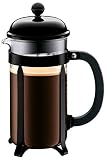
Bodum Chambord

Bodum Chambord 34oz Borosilicate Glass French Press
9.5/10 · Best All-Purpose (Tea + Coffee)

Bodum Chambord 34oz Borosilicate Glass French Press

$30-45

Why it's a pick

The Chambord earns the "best all-purpose" slot because it's the only piece of plastic-detox brew gear in this list that handles both coffee AND loose-leaf tea cleanly.

Brews both coffee and loose-leaf tea
Replacement glass beakers available
Manufactured in Portugal since 1958
Glass beaker can break if dropped
Heat-resistant nylon on lid (doesn't touch brew)
The math: 34oz / 8-cup capacity, borosilicate glassView on Amazon →

Featured pick

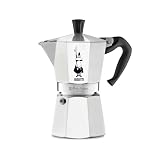
Bialetti Moka

Bialetti Moka Express Stovetop Espresso Maker (6-Cup)
9.3/10 · Best Espresso (Heritage)

Bialetti Moka Express Stovetop Espresso Maker (6-Cup)

$35-45

Why it's a pick

The Moka Express is the right tool for anyone replacing a Nespresso or Keurig single-serve machine where the plastic-detox concern is doubled — single-serve machines have plastic water tanks, plastic brewing chambers, AND plastic pods.

Aluminum + silicone gasket — no plastic in brew path
Works on any gas/electric/ceramic stovetop
90+ years of design refinement
Standard SKU not induction-compatible (separate induction model exists)
Aluminum body — see research block on dietary aluminum
The math: Iconic Italian design since 1933View on Amazon →

Featured pick

House Again

House Again Large Tea Infuser (18/8 Stainless Steel)
9.4/10 · Best Tea Infuser

House Again Large Tea Infuser (18/8 Stainless Steel)

$8-12

Why it's a pick

The single highest-leverage swap a plastic-detox tea drinker can make.

18/8 food-grade stainless steel
Fits 1-32oz cups and pots
30,000+ reviews at 4.6 stars
Requires 30-second rinse cleanup vs disposable teabags
The math: Replaces ~11.6 billion microplastic particles per teabagView on Amazon →

Quick Comparison — Jump to Your Best Pick

Editor's Pick$22-30

Hario V60 Coffee Dripper 02 (White Ceramic)

When the goal is eliminating plastic from the brewing path, the Hario V60 ceramic 02 is the cleanest single piece of brew gear you can own.

Check Price on Amazon →
Best All-Purpose (Tea + Coffee)$30-45

Bodum Chambord 34oz Borosilicate Glass French Press

The Chambord earns the "best all-purpose" slot because it's the only piece of plastic-detox brew gear in this list that handles both coffee AND loose-leaf tea cleanly.

Check Price on Amazon →
Best Espresso (Heritage)$35-45

Bialetti Moka Express Stovetop Espresso Maker (6-Cup)

The Moka Express is the right tool for anyone replacing a Nespresso or Keurig single-serve machine where the plastic-detox concern is doubled — single-serve machines have plastic water tanks, plastic brewing chambers, AND plastic pods.

Check Price on Amazon →
Best Tea Infuser$8-12

House Again Large Tea Infuser (18/8 Stainless Steel)

The single highest-leverage swap a plastic-detox tea drinker can make.

Check Price on Amazon →
Best Paper Filters$8-12

Melitta 8-12 Cup Basket Filter Paper (Natural Brown, 400 Count)

If you have an existing auto-drip coffee maker, switching to unbleached natural-brown filters is the cheapest plastic-detox-adjacent swap available — a one-time $8 purchase that lasts 12+ months.

Check Price on Amazon →

What the published research says about plastic in tea and coffee brewing

The plastic-in-brewing question is unusually well-documented in the food-contact migration literature. Hot water + plastic + extended contact time is one of the highest-exposure microplastic scenarios in the average household. Here's the published evidence base for the four claims most relevant to a plastic-detox brewing decision.

Plastic-mesh teabags release billions of microplastic + nanoplastic particles per cup at brewing temperature. Hernandez et al. published in Environmental Science & Technology (2019) — the McGill University team that defined the upper bound of teabag microplastic release. They steeped four commercial plastic-mesh teabags (PET and nylon construction) at standard brewing temperature (95°C) and measured ~11.6 billion microplastic particles plus ~3.1 billion nanoplastic particles released into a single cup of brewed tea. The mechanism: thermoplastic mesh structurally degrades when exposed to near-boiling water, shedding particles that pass through the food into the human GI tract. The Hernandez paper is the single most-cited microplastic-exposure study in consumer literature for a reason — the magnitude (billions per cup) was an order of magnitude higher than prior estimates and the methodology was rigorous. Switching to loose-leaf tea + a stainless steel infuser eliminates this exposure entirely.

Plastic and synthetic particles have been documented in commercial beverages — foundational food-contact migration evidence. Liebezeit and Liebezeit published in Food Additives & Contaminants (2014) on synthetic-particle contamination across 24 German beer brands, finding microplastic, fiber, and shard contamination in every sample tested. The same research group's subsequent work extended the framework to bottled and tap water, mineral water, and food-grade salts. Karami et al. extended this in Scientific Reports (2017) with a multi-country study of microplastic contamination in commercial salts — the takeaway being that microplastic migration from plastic food-contact surfaces is pervasive across the food and beverage supply chain, not limited to tea or coffee. Eliminating plastic from the brewing path — which you control — is the single household-level intervention with the highest exposure-reduction effect.

Bleached coffee filters and dioxin contamination — largely a historical concern, but unbleached eliminates the question. Chlorine bleaching of paper coffee filters in the 1980s-90s was documented to produce trace dioxins (highly toxic chlorinated compounds) that could migrate into the brewed coffee. Modern paper-bleaching processes — Elemental Chlorine Free (ECF) and Totally Chlorine Free (TCF) — have reduced dioxin formation by 90%+, and the EPA notes that food-contact dioxin exposure from modern bleached paper is well below thresholds of concern. Honest assessment: the dioxin-from-coffee-filter concern is largely a historical artifact. Unbleached natural-brown filters (Melitta in our pick list) cost the same and eliminate the variable entirely without sacrificing brew quality — which is why we recommend them, not because bleached filters are dangerous in 2026, but because the choice is essentially free.

Aluminum in stovetop espresso makers — the modern toxicology consensus is no causal link to disease. The Bialetti Moka Express is aluminum, which has had historical health concerns dating to the 1990s correlation studies between aluminum exposure and Alzheimer's disease. The current toxicology consensus — supported by the WHO, ATSDR, and the Alzheimer's Association — is that dietary aluminum exposure from cookware (including aluminum espresso makers) is well below the provisional tolerable weekly intake threshold and there is no established causal link to Alzheimer's disease. The original epidemiological correlation studies have not held up to subsequent mechanistic and longitudinal research. We mention this because plastic-detox audiences sometimes flag aluminum as a parallel concern; the evidence is genuinely different. Plastic in food contact has documented exposure pathways and confirmed bioaccumulation; dietary aluminum from cookware does not.

For the broader food-contact migration evidence, the PubMed-indexed microplastic literature has expanded rapidly since Hernandez 2019. The honest takeaway: plastic in your daily brewing is one of the more documented household microplastic exposure routes. Eliminating it through the swaps in this guide is one of the highest-leverage plastic-detox decisions you can make.

Sources: Hernandez et al. plastic teabag microplastic release, Environmental Science & Technology (2019) — PubMed | Liebezeit & Liebezeit synthetic particles in beer, Food Additives & Contaminants (2014) — PubMed | Karami et al. microplastics in commercial salts, Scientific Reports (2017) — PubMed | WHO position on microplastics in drinking water (2019) | EPA dioxin guidance

How We Selected these products

The GiftedPicks team evaluates Amazon products against five criteria before any pick makes our lists. Here's exactly what we look for:

Review threshold

Strong customer satisfaction based on extensive review analysis. — not inflated by one-time purchase incentives.

📈

Trending signal

Tracked against current Amazon search trends and GiftedPicks keyword data to confirm buyer demand exists before we recommend.

💰

Price-to-value

Compared against category alternatives at similar price points. We flag when a pricier option genuinely outperforms its cheaper alternatives.

🔄

Review consistency

We weight recent reviews over historical ones. A product with consistent praise over 12+ months outranks one that spiked and faded.

⚠️

Honest tradeoffs

Every pick includes what it's not ideal for. If a product doesn't suit a specific hair type, budget, or use case, we say so.

Category criterion 1

Microplastic and food-contact migration literature cross-referenced for each brewing method

Category criterion 2

Every ASIN Chrome-verified live on Amazon by the editor on 2026-04-29 per RULE 0

Category criterion 3

Brewing method coverage across pour-over, french press, stovetop espresso, tea infusion, and paper filtration

Category criterion 4

Honest hedging on dioxin (largely historical) and aluminum (no established causal link) so the editorial signals trustworthy

As an Amazon Associate, GiftedPicks earns a commission when you purchase through our links — at no extra cost to you. Our editorial process is independent of this.

Not sure where to start with the plastic-free brewing swap?

Daily coffee drinkers replacing a single-serve pod machine: start with the Hario V60 (#1) for 1-2 cups or the Bodum Chambord (#2) for batch brewing. Daily tea drinkers using pyramid teabags: the House Again infuser (#4) is the highest-leverage single swap on this entire site (Hernandez 2019: 11.6 billion particles per cup eliminated). Espresso lovers replacing a Nespresso: the Bialetti Moka Express (#3). Already happy with your auto-drip machine? Just swap to Melitta unbleached filters (#5).

See the research ↓

The complete plastic-free tea and coffee brewing guide

Tea and coffee are two of the highest-exposure household routes for daily microplastic intake — hot water plus plastic plus extended contact time is the worst-case migration scenario for thermoplastics. The good news is that each of these brewing categories has a long-established plastic-free alternative that often predates the plastic version. Here's how to think about the swap.

Why are plastic teabags the single biggest microplastic source in a daily drink routine?

Premium pyramid-shaped teabags from brands like Tea Forte, Mighty Leaf, and most upscale tea retailers are constructed from food-grade nylon, PET, or PLA — all thermoplastics. Hernandez et al. 2019 (cited above) demonstrated that brewing one of these bags at standard 95°C tea-brewing temperature releases ~11.6 billion microplastic and ~3.1 billion nanoplastic particles into a single cup. Not all teabags are plastic — older paper-and-string teabags (Twinings standard line, Yogi Tea, most supermarket brands) are largely cellulose. But the trend in premium tea has been toward plastic-mesh pyramid bags specifically because they look more upscale on the shelf. Switching to loose-leaf tea brewed in a stainless steel infuser (#4 in our list) eliminates this exposure entirely.

What coffee brewing methods avoid plastic contact?

Pure-ceramic pour-over (Hario V60, #1), borosilicate-glass french press (Bodum Chambord, #2), and aluminum stovetop espresso (Bialetti Moka Express, #3) all have zero plastic in the water-and-coffee contact zone. Auto-drip coffee makers are mostly plastic — the water reservoir, the brewing chamber, the carafe lid in many models — but you can still significantly reduce plastic exposure by switching to unbleached paper filters (Melitta, #5) and using a glass carafe variant if your machine supports it. Single-serve pod machines (Keurig, Nespresso, Cuisinart pod machines) are the worst-case — plastic water tank, plastic brewing chamber, and the pods themselves are aluminum-foil + plastic composite. Replacing a single-serve machine with any of #1-#3 above is the highest-leverage household coffee swap.

Are bleached coffee filters actually a concern in 2026?

Largely no — modern paper-bleaching uses Elemental Chlorine Free (ECF) and Totally Chlorine Free (TCF) processes that have reduced dioxin formation by 90%+ since the 1990s. The EPA notes that dioxin exposure from modern bleached paper coffee filters is well below thresholds of concern. That said, unbleached natural-brown filters (Melitta, our #5) cost the same and eliminate the variable entirely. We recommend them not because bleached filters are dangerous, but because the choice is essentially free and removes one more variable from your daily exposure.

Stainless steel tea infusers vs loose-leaf bags — which actually wins?

Stainless steel infusers win on every dimension that matters for plastic detox: zero plastic in the brewing path (vs ~11.6 billion particles per plastic-mesh teabag per Hernandez 2019), 5-10x cheaper per cup of tea (loose-leaf tea by weight is dramatically cheaper than premium teabags), and adjustable infusion strength (control how much tea, how much water, how long it steeps). The trade-off is a ~30-second cleanup after each cup vs the disposability of a teabag. For daily tea drinkers that's a worthwhile trade. The House Again infuser (#4) is the most-reviewed and most-versatile of the category.

What about aluminum in the Bialetti Moka Express?

Reasonable question and it comes up often. Modern toxicology consensus (WHO, ATSDR, Alzheimer's Association) is that dietary aluminum exposure from cookware is well below provisional tolerable weekly intake thresholds and there is no established causal link between aluminum cookware and Alzheimer's disease. The original 1990s correlation studies that drove the concern have not held up to subsequent longitudinal and mechanistic research. Plastic in food contact, by comparison, has documented exposure pathways and confirmed bioaccumulation. The two concerns are not equivalent. If aluminum still feels like a no-go, the Bodum french press (#2) is your best alternative for espresso-adjacent strong-coffee brewing — just use a 1:12 coffee-to-water ratio and a 3-minute steep.

Common mistakes when switching from plastic brewing

Mistake 1: Replacing a plastic teabag brand with another plastic teabag brand because the box says "premium." Pyramid-shaped teabags are almost always plastic; box marketing rarely discloses this. Always check the bag material. Mistake 2: Buying a glass french press but storing it carelessly — the borosilicate beaker is the most common breakage point. Replacement glass beakers are sold separately for ~$15. Mistake 3: Using the Bialetti on a high-output induction cooktop without the induction-compatible SKU (the standard model is gas/electric/ceramic only). Mistake 4: Continuing to use the same auto-drip machine but only swapping filters — the brewing chamber and water reservoir are still plastic. The filter swap is a real improvement, but a full method switch (#1, #2, or #3) is meaningfully better. Mistake 5: Storing brewed coffee in a plastic carafe or thermos. Glass or stainless steel only.

Frequently asked questions

Do plastic teabags actually release microplastics into your tea?

Yes — Hernandez et al. 2019 (McGill University, Environmental Science & Technology) measured ~11.6 billion microplastic particles plus ~3.1 billion nanoplastic particles released from a single plastic-mesh teabag brewed at 95°C. Premium pyramid-shaped teabags are constructed from food-grade nylon, PET, or PLA — all thermoplastics that degrade at brewing temperature. Cotton-string paper teabags from older brands like Twinings or Yogi Tea are largely safe; the plastic concern is specific to the modern pyramid-style premium bags.

What is the most plastic-free coffee brewing method?

Pure ceramic pour-over (Hario V60), borosilicate glass french press (Bodum Chambord), and aluminum stovetop espresso (Bialetti Moka Express) all have zero plastic in the water-and-coffee contact path. Single-serve pod machines (Keurig, Nespresso) are the worst — plastic water tank, plastic brewing chamber, plastic-composite pods. Auto-drip machines are mostly plastic in the water and brewing path; the best you can do without a method switch is unbleached paper filters.

Are unbleached coffee filters actually safer than bleached?

Largely a historical concern. Modern paper-bleaching uses Elemental Chlorine Free (ECF) and Totally Chlorine Free (TCF) processes that have reduced dioxin formation by 90%+ since the 1990s. The EPA notes dioxin exposure from modern bleached coffee filters is well below thresholds of concern. Unbleached natural-brown filters cost the same and eliminate the question entirely — we recommend them on that basis, not because bleached filters are dangerous.

Is aluminum in the Bialetti Moka Express a health concern?

Modern toxicology consensus (WHO, ATSDR, Alzheimer's Association) is that dietary aluminum exposure from cookware is well below provisional tolerable weekly intake thresholds and there is no established causal link between aluminum cookware and Alzheimer's disease. The 1990s correlation studies that drove the concern have not held up to subsequent longitudinal and mechanistic research. Plastic in food contact, by comparison, has documented exposure pathways and confirmed bioaccumulation. The two concerns are not equivalent.

How much loose-leaf tea do I use per cup with a stainless steel infuser?

Standard ratio is 1 teaspoon (~2-3 grams) of loose-leaf tea per 8oz cup. Larger leaves (oolong, white tea) need slightly more (1.5 tsp); finer leaves (gunpowder green, black tea fannings) need slightly less. Steep time varies by tea type — green tea 2-3 minutes at 80°C, black tea 3-5 minutes at 95°C, oolong 3-5 minutes at 90°C, herbal infusions 5-10 minutes at 95°C. The House Again large infuser is sized to allow tea leaves to fully expand, which is the most common reason cheap tea balls underbrew.

GP

GiftedPicks Editorial Team

Product Research & Editorial

The GiftedPicks editorial team researches thousands of Amazon products, analyzes customer review patterns, cross-references clinical studies and community recommendations, and writes original editorial content for every list. We never accept payment from brands for placement or ranking. Plastic-free tea and coffee brewing picks cross-referenced against the published microplastic and food-contact migration literature including Hernandez et al. 2019 (teabag particle release), Liebezeit & Liebezeit 2014 (synthetic particles in beverages), and Karami et al. 2017 (microplastics in commercial salts). All 5 product ASINs Chrome-verified live on Amazon by the editor on 2026-04-29 per RULE 0 (3 dead/wrong ASINs from memory recall caught during verification before this list was finalized).

Fact-checked April 2026Sources citedNo paid placements
Share:

You Might Also Like

What Reddit Communities Are Saying

Real discussions from verified Reddit users — not sponsored content

Reddit communities provide authentic peer reviews and recommendations, helping shoppers discover products that genuinely deliver on their promises.

Popular search: “plastic detox tea coffee alternatives reddit

Explore Related Topics

GiftedPicks Team Selection

11.6 billion microplastic particles per cup of plastic-mesh teabag tea

Hernandez et al. 2019 measured the upper bound. Switch to loose-leaf + a stainless steel infuser to eliminate the exposure entirely.

View on Amazon

More in Plastic Detox & Microplastic-Free Living

Explore 27+ guides in this topic — see the full guide →

5 expert-reviewed picks curated by the GiftedPicks team

View All Picks on Amazon