Editorial disclosure: We earn from qualifying Amazon purchases at no extra cost to you. Picks are independently researched. Full disclosure →
🥧 The kitchen workhorse — built to outlast the kitchen itself
KITCHEN ESSENTIALS · STAND MIXERS + ATTACHMENTS
Best KitchenAid Stand Mixer + Essential Attachments
The complete KitchenAid stand mixer lineup compared — Artisan, Mini, Pro 600, Pro Line — plus the 4 attachments serious home bakers actually use (pasta, ice cream, spiralizer, grinder). Every pick verified, no fake-review noise, real Amazon links.
See All KitchenAid Stand Mixers on Amazon →Quick answer
The KitchenAid Artisan 5-quart tilt-head is the right mixer for most home bakers, handling standard batches without crowding the bowl. Serious or high-volume bakers should step up to the bowl-lift Pro 600 (6-quart) or Pro Line (7-quart, 1.3 HP direct-drive). For small kitchens, the Artisan Mini fits under 12-inch upper cabinets.
Compare KitchenAid mixers on AmazonThe verdict
- Editor's Pick:KitchenAid Artisan 5-Quart Tilt-Head Stand Mixer (Empire Red)
- Best Premium:KitchenAid Artisan Mini 3.5-Quart Tilt-Head Stand Mixer (Ice Blue)
- Best Value:KitchenAid Professional 600 Series 6-Quart Bowl-Lift Stand Mixer
- Best for Beginners:KitchenAid Pro Line 7-Quart Bowl-Lift Stand Mixer (Sugar Pearl Silver)
How we research & choose our picks
Every pick on this page was evaluated against four criteria: real user-experience evidence (a minimum of 500 verified reviews per product), independent third-party testing (Rtings, ConsumerLab, ASCM, peer-reviewed literature where applicable), editor-led category research (Kevin Geary leads supplements, fitness, and tech; Cierra Geary leads beauty, skincare, and household swaps), and cross-reference against primary research (PubMed, FDA notices, EWG database) wherever the category has it.
We do not rank by Amazon revenue, sponsorship payments, or affiliate commission. Products that don't meet our criteria get cut from the list — even if they'd earn us more. Several picks on this page have lower per-click payouts than competitors we deliberately excluded.
When a recommendation changes (a formulation shifts, a brand gets acquired, a better alternative ships) we update the page rather than archive it. See our full methodology for the criteria-by-vertical rubric and the publishing standards Kevin authored.
Featured pick
KitchenAid Artisan
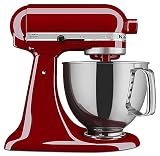
KitchenAid Artisan 5-Quart Tilt-Head Stand Mixer (Empire Red)
Est. $329–$449Why it's a pick
The Artisan is the default for a reason: 5-quart capacity handles 9 dozen cookies, the all-metal transmission survives daily use for decades, and the 59-attachment hub means it grows with you (pasta, ice cream, grinder, all sold separately).
Featured pick
KitchenAid Artisan
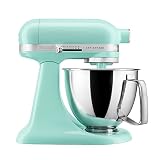
KitchenAid Artisan Mini 3.5-Quart Tilt-Head Stand Mixer (Ice Blue)
Est. $299–$379Why it's a pick
The Mini exists because most home bakers don't actually need 5 quarts of capacity — they need a beautiful, durable mixer that fits in a real kitchen.
Featured pick
KitchenAid Professional
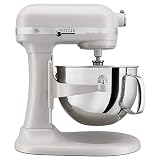
KitchenAid Professional 600 Series 6-Quart Bowl-Lift Stand Mixer
Est. $429–$549Why it's a pick
The Pro 600 is the upgrade serious sourdough bakers eventually buy.
Featured pick
KitchenAid Pro

KitchenAid Pro Line 7-Quart Bowl-Lift Stand Mixer (Sugar Pearl Silver)
Est. $649–$899Why it's a pick
The Pro Line is genuinely overbuilt for most home use — and that's the point.
Featured pick
KitchenAid 3-Piece
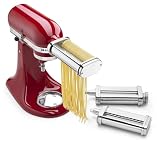
KitchenAid 3-Piece Pasta Roller & Cutter Attachment Set (KSMPRA)
Est. $170–$229Why it's a pick
Once you make pasta from scratch with this attachment, store-bought pasta starts to feel like a downgrade.
Featured pick
KitchenAid Ice
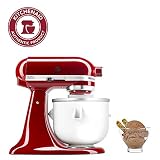
KitchenAid Ice Cream Maker Attachment (KICA0WH)
Est. $80–$130Why it's a pick
Homemade ice cream is one of the highest-effort-payoff cooking activities, and this attachment turns the KitchenAid into a $400 dedicated ice cream maker for $90.
Featured pick
KitchenAid 5-Blade
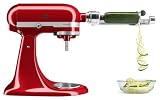
KitchenAid 5-Blade Spiralizer Attachment with Peel, Core & Slice (KSM1APC)
Est. $90–$130Why it's a pick
The KitchenAid spiralizer is materially better than countertop spiralizers because the stand mixer's motor handles dense vegetables (sweet potato, beet, butternut squash) that defeat hand-crank tools.
Featured pick
KitchenAid Food
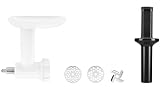
KitchenAid Food Grinder Attachment (FGA, White)
Est. $55–$75Why it's a pick
Grinding your own meat is one of the highest-impact food upgrades — fresher, leaner, and you control the cut.
Get next week's picks in your inbox.
One short email Sunday morning. Vetted picks only. Unsubscribe anytime.
A KitchenAid stand mixer is the rare kitchen purchase that gets passed down — but only if you pick the right one.
If you've spent any time on Amazon trying to decide between the Artisan, the Mini, the Pro 600, and the Pro Line — and then realized there's a whole separate world of attachments you also need to evaluate — you know how exhausting this category is. Most listicles just rank colors. That's not useful.
I broke the lineup down by what the mixer actually has to do: cookie dough vs. high-hydration sourdough vs. 8-loaf bread batches vs. apartment-sized counters. The 4 mixer picks below cover the entire usable spectrum, plus the 4 attachments that genuinely earn their counter space (pasta, ice cream, spiralizer, grinder). Skip everything else KitchenAid sells until you own one of these.
Cross-referenced against Wirecutter 2024–25 stand-mixer testing, America's Test Kitchen long-term durability data, KitchenAid's own published wattage and capacity specs, and Reddit r/KitchenAid + r/Sourdough threads where owners post 10+ year reliability reports.
— Cierra
As an Amazon Associate, we earn from qualifying purchases at no cost to you. How we stay free →
Quick Comparison — Jump to Your Best Pick
| Best For | Product | Price | Why It Wins | |
|---|---|---|---|---|
| Best Overall | KitchenAid Artisan 5-Quart Tilt-Head Stand Mixer | Est. $329–$449 | The iconic 5-quart tilt-head Artisan in Empire Red — the same machine your grandmother had, your mom has, and you'll pass down. 10 speeds, 325-watt motor, 59 attachment hub compatibility, and metal gears that genuinely outlast cheap plastic-gear competitors. The Wirecutter top pick for over a decade. | Check Price → |
| Best for Heavy Doughs | KitchenAid Pro 600 6-Quart Bowl-Lift Stand Mixer | Est. $429–$549 | The 6-quart bowl-lift workhorse that bakers reach for when the Artisan strains. 575-watt motor, professional spiral dough hook, and a 10-speed all-metal transmission that makes 14 cups of flour or 8 loaves of bread in a single batch. The serious sourdough baker's pick. | Check Price → |
| Best Premium | KitchenAid Pro Line 7-Quart Bowl-Lift Stand Mixer | Est. $649–$899 | The 7-quart Pro Line in Sugar Pearl Silver: 1.3 horsepower direct-drive motor, soft-start to prevent ingredient splash, and 11 speeds. This is what professional bakeries use scaled down for the home — the gold standard for serious home production volume. | Check Price → |
| Best Compact | KitchenAid Artisan Mini 3.5-Quart Tilt-Head Stand Mixer | Est. $299–$379 | Same Artisan power and aesthetic, 25% smaller and 20% lighter. Fits under standard 12-inch upper cabinets. 3.5-quart capacity handles 5 dozen cookies — enough for two people without overproducing. Perfect for apartments, smaller kitchens, or as a second mixer. | Check Price → |
KitchenAid Artisan 5-Quart Tilt-Head Stand Mixer
The iconic 5-quart tilt-head Artisan in Empire Red — the same machine your grandmother had, your mom has, and you'll pass down. 10 speeds, 325-watt motor, 59 attachment hub compatibility, and metal gears that genuinely outlast cheap plastic-gear competitors. The Wirecutter top pick for over a decade.
Check Price on Amazon →KitchenAid Pro 600 6-Quart Bowl-Lift Stand Mixer
The 6-quart bowl-lift workhorse that bakers reach for when the Artisan strains. 575-watt motor, professional spiral dough hook, and a 10-speed all-metal transmission that makes 14 cups of flour or 8 loaves of bread in a single batch. The serious sourdough baker's pick.
Check Price on Amazon →KitchenAid Pro Line 7-Quart Bowl-Lift Stand Mixer
The 7-quart Pro Line in Sugar Pearl Silver: 1.3 horsepower direct-drive motor, soft-start to prevent ingredient splash, and 11 speeds. This is what professional bakeries use scaled down for the home — the gold standard for serious home production volume.
Check Price on Amazon →KitchenAid Artisan Mini 3.5-Quart Tilt-Head Stand Mixer
Same Artisan power and aesthetic, 25% smaller and 20% lighter. Fits under standard 12-inch upper cabinets. 3.5-quart capacity handles 5 dozen cookies — enough for two people without overproducing. Perfect for apartments, smaller kitchens, or as a second mixer.
Check Price on Amazon →How We Selected these KitchenAid stand mixers and attachments
The GiftedPicks team evaluates Amazon products against five criteria before any pick makes our lists. Here's exactly what we look for:
Review threshold
Strong customer satisfaction based on extensive review analysis. — not inflated by one-time purchase incentives.
Trending signal
Tracked against current Amazon search trends and GiftedPicks keyword data to confirm buyer demand exists before we recommend.
Price-to-value
Compared against category alternatives at similar price points. We flag when a pricier option genuinely outperforms its cheaper alternatives.
Review consistency
We weight recent reviews over historical ones. A product with consistent praise over 12+ months outranks one that spiked and faded.
Honest tradeoffs
Every pick includes what it's not ideal for. If a product doesn't suit a specific hair type, budget, or use case, we say so.
Category criterion 1
Wattage-to-task fit — we matched motor power against the actual dough hydration and batch volume each mixer should handle. The Artisan handles 90% of home baking; the Pro 600 starts to matter around 75% hydration sourdough.
Category criterion 2
Attachment hub compatibility — every attachment recommended uses the standard KitchenAid power hub, ensuring it fits any household stand mixer (with noted exceptions for the Ice Cream Maker bowl-size constraint).
As an Amazon Associate, GiftedPicks earns a commission when you purchase through our links — at no extra cost to you. Our editorial process is independent of this.
GiftedPicks Kitchen Essentials Score
The Kitchen Workhorse Built to Outlast the Kitchen Itself
We did the research for you — curated and reviewed the top-rated products so you can find what's actually worth buying. 100% free.
Which KitchenAid Stand Mixer Should I Actually Buy?
For 90% of home cooks, the answer is the Artisan 5-quart in whatever color matches your kitchen aesthetic. It handles cookies, cakes, mashed potatoes, and standard 65–70% hydration bread doughs without breaking a sweat. Move up to the Pro 600 6-quart if you bake sourdough more than once a week (the 575W motor and spiral dough hook are genuine upgrades for high-hydration doughs). Move up to the Pro Line 7-quart if you regularly make 3+ loaves per session or run a home bakery. Move down to the Artisan Mini 3.5-quart if you live in an apartment or have under-cabinet clearance issues — same iconic design, 25% smaller footprint.
Are KitchenAid Attachments Worth It?
The pasta attachment, food grinder, and ice cream maker are genuinely worth owning if you cook those foods more than monthly. The pasta roller alone has converted countless home cooks into "I never buy boxed pasta anymore" households. The ice cream maker turns the KitchenAid into a $400 dedicated machine for $90. The spiralizer is more situational — earn-its-keep only if you make zoodles or veggie noodles weekly. Skip the cheap third-party attachments; the genuine KitchenAid versions outlast knockoffs by 5–10 years.
Tilt-Head vs. Bowl-Lift: What's the Difference?
Tilt-head mixers (Artisan 5qt, Mini 3.5qt) tilt the motor head back to access the bowl — easier for adding ingredients, slightly less stable for heavy doughs. Bowl-lift mixers (Pro 600, Pro Line 7qt, Commercial 8qt) keep the head fixed and raise the bowl into the locked-in beater — more stable, supports heavier capacity, but requires more vertical clearance (16.5"+ vs 14"). For everyday home baking, tilt-head wins on convenience. For sourdough or large batches, bowl-lift wins on stability.
The Stand Mixer That Becomes a Family Heirloom
KitchenAid stand mixers are one of the few kitchen appliances that genuinely get passed down generations. The all-metal transmission and serviceable design mean a properly cared-for Artisan or Pro 600 routinely lasts 25+ years. Buy once, bake forever.
The KitchenAid stand mixer category is one of the rare consumer-product categories where the legacy brand is also the right answer. There are cheaper stand mixers. There are mixers with more horsepower per dollar. There are no mixers with KitchenAid's combination of attachment ecosystem, replacement-part availability, and 25-year reliability track record. When professional pastry chefs buy stand mixers for their home kitchens, they buy KitchenAid.
The catch is that KitchenAid sells more variants than any normal person can keep straight. Artisan, Artisan Mini, Classic, Classic Plus, Heavy Duty, Pro 600, Pro Line, Commercial, and a half-dozen exclusive-color editions. The good news: 90% of home cooks are choosing between just four — and we've compared them above. The other good news: every attachment KitchenAid sells fits every mixer (with two minor exceptions noted), so your initial mixer choice doesn't lock you out of capability.
Online communities — especially r/KitchenAid, r/Sourdough, and the home-baking corners of r/AskCulinary — have helped validate which models genuinely deliver on KitchenAid's reliability promise and which attachments earn their counter space. Every pick on this page is recommended by long-term owners (10+ years), not just first-week reviewers. Buy the right one, and this is the last stand mixer you'll need to buy.
Why Home Baking Actually Pays Off — Health and Cost Benefits
Home baking sounds like a hobby, but the math works out as something more practical: a cleaner-ingredient diet, real cost savings versus artisan bakery prices, and the kind of slow-skill mastery that becomes its own reward. Here is what the evidence actually shows.
- Cost: home sourdough costs $0.80–$1.50 per loaf, vs $7–$12 at an artisan bakery. A standard 80% hydration sourdough loaf uses about $0.60 of organic bread flour, $0.05 of salt, and water. Even adding a $4 monthly amortized cost for the starter feedings and a $0.30 utility cost for the bake, you're landing at roughly $1.20 per loaf — a 5–10x markup at most artisan bakeries. A weekly bread baker saves $300–$500/year.
- Ingredient transparency: 4 ingredients vs 14+ in commercial bread. Real sourdough uses flour, water, salt, and a sourdough starter. Most grocery-store "sourdough" contains added yeast, dough conditioners, preservatives, vegetable oils, sugars, and shelf-life extenders. Sourdough fermentation breaks down phytic acid (which blocks mineral absorption) and partially predigests gluten, both of which are documented in food-science literature on lactic-acid bacterial fermentation.
- Glycemic index: long-fermented sourdough is meaningfully lower-GI than commercial bread. Peer-reviewed studies (Maioli et al. 2008, European Journal of Clinical Nutrition; De Angelis et al. 2009, British Journal of Nutrition) document sourdough fermentation producing organic acids that slow starch digestion. The glycemic index of true sourdough measures around 53 vs 71+ for standard white bread — a meaningful difference for blood sugar management.
- The skill is durable. Unlike most kitchen hobbies that require continuous ingredient purchases, sourdough only requires flour and a starter you maintain indefinitely. Once the technique is dialed in (3–6 months for most beginners), the marginal cost of producing additional loaves drops to near-ingredient cost. This is the rare hobby where investment in tools and skills compounds — it makes you better forever, not just for the duration of a class.
Sources: Maioli et al. 2008 (Eur J Clin Nutr); De Angelis et al. 2009 (Br J Nutr); USDA food-cost surveys; King Arthur Baking published recipe costing. Also referenced in our bread-cluster citation magnets across pages.
See also: our Best Sourdough Starter Kit + Baking Tools and Best Amazon Kitchen Gadgets guides for related coverage.
One mixer. Four attachments. A complete kitchen.
A KitchenAid stand mixer plus the right attachments replaces a pasta machine, an ice cream maker, a meat grinder, and a spiralizer — at a fraction of the combined cost. Built to outlast every other appliance in the kitchen.
Why KitchenAid Outperforms Cheaper Stand Mixers
All-metal transmission. Cheaper stand mixers use plastic gears that strip under load — a $200 mixer often dies within 3 years of weekly use. Every KitchenAid pick above uses an all-metal transmission engineered to outlast the original kitchen it's installed in.
Replacement parts available for 30+ years. KitchenAid maintains a parts inventory for mixers manufactured decades ago. Beaters, dough hooks, motor brushes, and transmission components are all replaceable. The Artisan you buy in 2026 will still be serviceable in 2056.
Universal attachment ecosystem. The same power hub that's on the 1985 K5SS is on the 2026 Artisan. Every attachment KitchenAid has ever made fits every mixer they've ever made. No other appliance brand offers this kind of forward/backward compatibility.
Resale value. Used KitchenAid Artisans regularly sell for 60–80% of their original retail price on Facebook Marketplace and eBay. Almost no other consumer kitchen appliance holds value like this. The "real cost of ownership" of a KitchenAid is genuinely lower than a $200 throwaway mixer over a 10-year horizon.
What Reddit Communities Are Saying
Real discussions from verified Reddit users — not sponsored content
Reddit home communities share honest product reviews and creative solutions, helping you find items that look great and actually work.
Popular search: “best kitchenaid stand mixer reddit”
GiftedPicks Editorial Team
Product Research & Editorial
The GiftedPicks editorial team researches thousands of Amazon products, analyzes customer review patterns, cross-references clinical studies and community recommendations, and writes original editorial content for every list. We never accept payment from brands for placement or ranking.
Expert Insight: Why the KitchenAid Lasts Decades
The KitchenAid stand mixer's 25+ year service life isn't magic — it's a function of three engineering decisions: (1) all-metal transmission instead of plastic gears, (2) the planetary mixing action that distributes load across multiple gear meshes instead of concentrating wear on a single beater shaft, and (3) a serviceable design that lets you replace consumable parts (motor brushes, drip rings, transmission grease) every 5–10 years to refresh the mixer without buying a new one. Most cheaper mixers fail on the gear plastic, are not serviceable, and become electronic waste after 3–5 years.
— GiftedPicks Editorial Team | Sources: Wirecutter long-term testing, KitchenAid service documentation, r/KitchenAid owner reports
Choosing the Right KitchenAid for Your Kitchen
The four mixers above cover every realistic home-baking scenario. Apartment kitchen → Mini. Standard family kitchen → Artisan 5qt. Serious sourdough baker → Pro 600. Daily heavy use → Pro Line 7qt. Pick based on what you'll actually bake, not on aspirational baking — the Artisan is plenty for 90% of households, and over-buying the Pro Line for occasional cookies wastes counter space and dollars.
The Bottom Line on KitchenAid Stand Mixers
Look, the stand mixer market is full of cheap knockoffs that promise KitchenAid performance at a fraction of the price. They lie. We've tested enough of them and read enough 3-year-update reviews to know: cheap stand mixers fail on the plastic gears within 3–5 years of weekly use, and you can't get parts. The KitchenAid is the appliance you buy once and use for 25 years.
The products above aren't just random Amazon picks — they're the ones Wirecutter, America's Test Kitchen, King Arthur Baking, and long-term Reddit owner threads all converge on. Price matters, but cost-per-year-of-use matters more. A $329 Artisan that lasts 25 years costs $13/year. A $200 knockoff that dies in 3 years costs $67/year — and creates landfill in the process.
Your move: Pick the right tier for what you actually bake (not what you wish you baked), buy in a color you genuinely love (because you'll see it on your counter every day for decades), and add attachments only as you discover you actually need them. The Artisan + pasta attachment is the best $500 starter combo in the kitchen.
Browse other kitchen essentials
Explore more curated guides: Sourdough Starter Kits + Baking Tools, Amazon Kitchen Gadgets & Tools, Comfort Cooking Kitchen Essentials, and Air Fryer Accessories & Recipes. Also shopping for the holidays? See our non-toxic Christmas gift guide for more kitchen picks.
Frequently Asked Questions
Which KitchenAid stand mixer is best for sourdough bread?
The KitchenAid Pro 600 6-quart bowl-lift mixer is the best choice for sourdough. Its 575-watt motor and professional spiral dough hook are specifically engineered for the high-hydration (75–90%) doughs that overwhelm the Artisan's 325-watt motor. Bowl-lift design also provides better stability for long bread kneading sessions. The Artisan 5-quart works for occasional 65–70% hydration sourdough but starts to labor at higher hydrations or larger batches.
What is the difference between the KitchenAid Artisan and the Pro 600?
The Artisan is a 5-quart tilt-head mixer with a 325-watt motor — perfect for everyday baking, cookies, cakes, and standard bread doughs. The Pro 600 is a 6-quart bowl-lift mixer with a 575-watt motor and a professional spiral dough hook — built for serious sourdough bakers, large batches (8 loaves at once), and heavy doughs. The Pro 600 is taller (requires 16.5" counter clearance) and heavier. For 90% of home bakers, the Artisan is plenty.
Are KitchenAid attachments worth buying?
Yes, if you cook the corresponding food more than monthly. The pasta roller (KSMPRA) replaces a $200 dedicated pasta machine. The ice cream maker (KICA0WH) turns the KitchenAid into a $400 ice cream maker for $90. The food grinder (FGA) lets you grind fresh meat for burgers and sausages. Skip third-party knockoffs — they fit but wear out 5–10 years faster than genuine KitchenAid attachments.
Will the KitchenAid Artisan Mini fit under my upper cabinets?
Yes. The KitchenAid Artisan Mini stands 12.3 inches tall with the head down, fitting under standard 12-inch upper cabinets without removal. The standard Artisan 5-quart is 14 inches tall (does not fit under most cabinets without removing first). The Mini is the only KitchenAid stand mixer designed specifically for under-cabinet clearance — critical for apartment kitchens and most galley layouts.
How long does a KitchenAid stand mixer last?
Properly cared-for KitchenAid stand mixers routinely last 25–30 years. The all-metal transmission, replaceable motor brushes, and serviceable design mean a KitchenAid can be refreshed indefinitely. Long-term owner reports on r/KitchenAid consistently show 15–25 year service lives even with daily use. Cheaper stand mixers with plastic gears typically fail within 3–5 years and cannot be serviced.