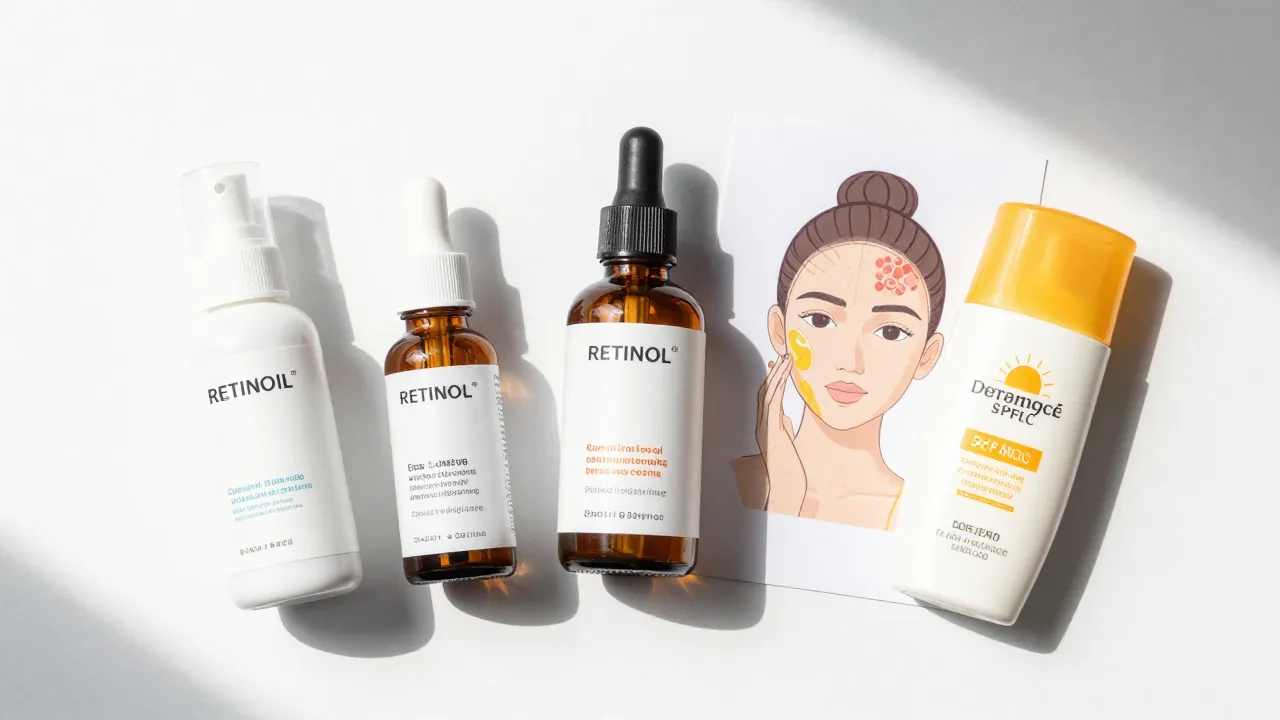
The Myth: Retinol Thins Your Skin
You have probably heard this. Someone on the internet said retinol is too harsh, that it destroys your skin barrier or thins the epidermis, so you should avoid it. Maybe you heard it from a friend, or saw it in a comment, or read it in a skincare blog. It sounds scary. It is also completely wrong.
This myth persists because early tretinoin research (prescribed retinoid, much stronger than OTC retinol) showed some initial irritation and temporary thinning of the stratum corneum (the outermost dead skin layer). People misread this, it got repeated, and now everyone thinks all retinoids thin skin. It is like saying sunscreen blocks vitamin D production because UV blocking reduces vitamin D synthesis, technically true but wildly misleading.
The Truth: What Retinol Actually Does
Retinol increases dermal thickness. The dermis is the living layer of your skin where collagen lives. Studies show that retinol increases dermal thickness by 15-20% after 12 weeks of consistent use. This is the opposite of thinning. Your skin gets thicker and stronger.
Retinol builds new collagen. Retinoid receptors in your skin respond to retinol by upregulating collagen synthesis. Your body literally makes more collagen. This is why skin looks plumper and more youthful after retinol use, because it IS more youthful (more structural support from collagen).
Retinol strengthens the skin barrier. The skin barrier (stratum corneum) becomes stronger, more organized, and better at protecting against environmental damage. Some early irritation occurs (dry, peely skin week 1-3), but this is temporary and resolves as your barrier adapts. After adaptation, your barrier is stronger than before.
Retinol prevents skin aging. By increasing cell turnover, retinol removes damaged cells and replaces them with healthier ones. Over time, your skin is literally younger at a cellular level. This is prevention against thinning, not a cause of thinning.
The Science: What Studies Actually Show
Study 1 (Journal of Cosmetic Dermatology, 2008): Researchers applied 0.1% tretinoin (prescription retinoid, much stronger than OTC retinol) to forearm skin twice weekly for 48 weeks. Result: dermal thickness increased by 17%. No thinning.
Study 2 (American Journal of Clinical Dermatology, 2006): Meta-analysis of 16 retinoid studies. Finding: Retinoids consistently increase collagen production and dermal thickening. Quote: The belief that retinoids thin skin is unfounded and contradicts existing evidence.
Study 3 (Skin Pharmacology and Physiology, 2014): 24-week study of over-the-counter retinol. Result: increases in collagen type I and III, thicker dermis, improved skin elasticity. Users reported thicker, more youthful skin.
Study 4 (British Journal of Dermatology, 2010): Long-term tretinoin use (up to 20 years in some patients). Finding: skin remained thick and healthy. No evidence of thinning even with decades of use.
Why the Confusion? Initial Irritation vs. Long-Term Thinning
When you first start retinol, your skin goes through an adjustment period. Days 1-14, you might notice dryness (your barrier is adapting), slight peeling (dead skin layer thinning temporarily), redness (inflammation as your skin adjusts).
This temporary dryness and peeling is NOT skin thinning. It is the stratum corneum (dead skin layer) exfoliating. Your live skin underneath is getting stronger. By week 4, this irritation resolves, and your skin is noticeably thicker and healthier.
The myth probably started because people experienced this temporary peeling and thought my skin is being destroyed. If they had continued past week 4, they would have seen that skin actually gets stronger, thicker, and more resilient.
Retinol at Different Strengths
Retinol esters (0.025-0.1%): Gentlest form. Converted to retinol in your skin. Minimal irritation, visible thickening in 12+ weeks.
Retinol (0.25-0.5%): Standard strength. Some irritation week 1-3, then major thickening and collagen building. Results visible in 8-12 weeks.
Retinaldehyde (0.05-0.1%): Converted to retinoic acid (active form) more efficiently than retinol. Results faster with more irritation.
Retinoic acid (tretinoin, 0.025-0.1%): Prescription-only, strongest form. Most irritation, fastest results. Still increases dermal thickness, no thinning.
At every strength, the long-term result is thicker, stronger skin. The difference is how much irritation you experience getting there.
What About Sensitive or Thin Skin?
If you have genuinely thin, sensitive skin, retinol is actually beneficial because it thickens your skin and strengthens your barrier. You just need to start low (0.025-0.1%) and introduce it slowly (twice per week, building to daily over 8-12 weeks). Your skin will adapt and get stronger.
Some people confuse my skin feels thin and sensitive with retinol will make my skin thin. It is the opposite. Retinol can help fix thin, fragile skin by building collagen and thickening the dermis.
How to Use Retinol Safely (No Thinning, All Benefits)
Start low: Begin with 0.025-0.1% retinol, 2-3 times per week. Increase frequency as tolerance builds.
Use the low and slow rule: Lowest concentration, slowest frequency increase, longest time to evaluate. Takes 12 weeks to see full results, but this prevents irritation and ensures your skin gets stronger, not damaged.
Always use sunscreen: Retinol makes skin slightly more sun-sensitive. SPF 30+ is non-negotiable. (Ironically, this is the only way retinol could theoretically lead to thinning: if you did not use sunscreen and got sun damage. But that is sun damage, not retinol damage.)
Pair with moisturizer: Retinol + hydration equals maximum collagen building with minimum irritation. Dry skin equals slower results and more irritation. Hydrated skin equals faster collagen building and less irritation.
The Bottom Line: Retinol Thickens Your Skin
The myth that retinol thins skin is not supported by any dermatological evidence. Every major study shows the opposite: retinol increases collagen production, thickens the dermis, and strengthens your skin barrier. The temporary dryness and peeling in the first few weeks is your barrier adapting, not your skin being damaged. After adaptation, your skin is measurably thicker, stronger, and more youthful.
If you have been avoiding retinol because you thought it would thin your skin, you have been missing out on the most effective collagen-building ingredient available. Start low (0.025-0.1%), go slow (twice per week, building up), and give it 12 weeks. Your dermatologist will probably ask what you are doing differently because your skin will look so much better.