The Hair Loss Conversation Nobody Has
Okay so male pattern baldness is weird because there ARE treatments that actually work — but everyone acts like it's either "shave your head" or "get a transplant." The truth: minoxidil (Rogaine) and finasteride (Propecia) are FDA-approved medications that work. They're not cures, but they work. Most guys have just never tried them because the conversation is embarrassing or because they don't know the actual differences.
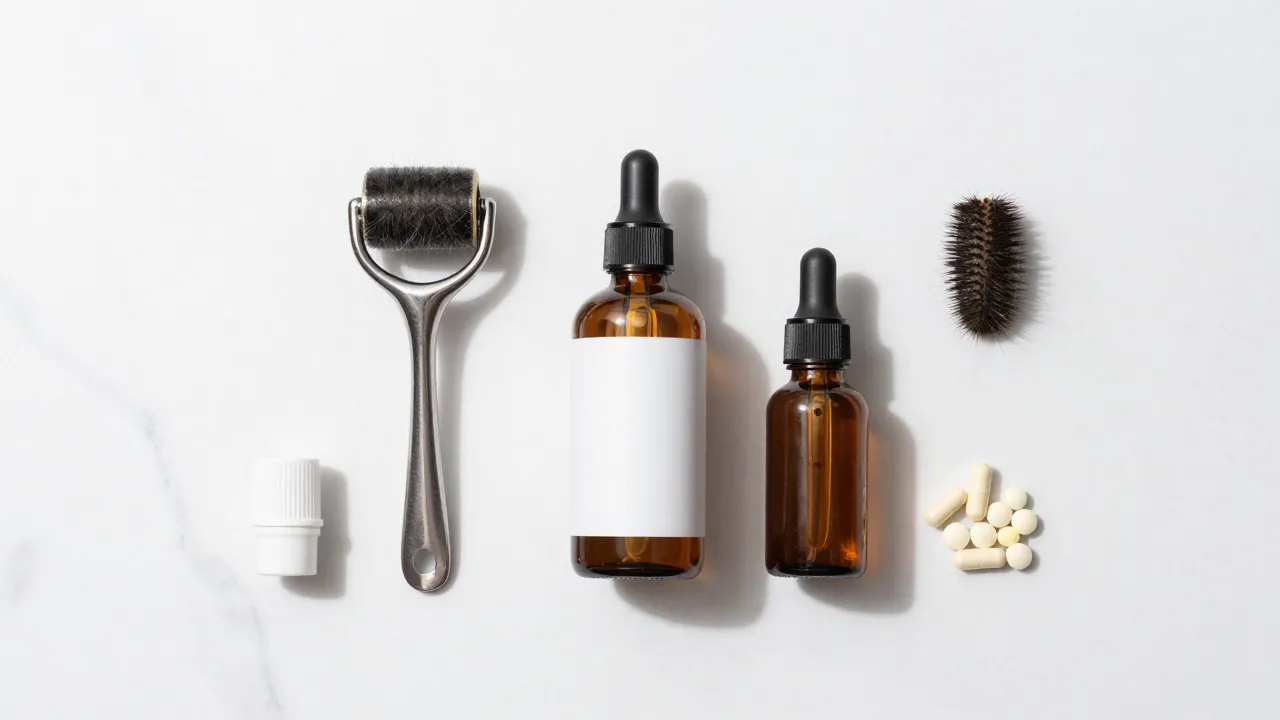
Here's what makes this comparison important: minoxidil and finasteride work through completely different mechanisms. Understanding what each does (and what it doesn't) changes your entire approach to hair loss. If you want the full landscape first, our overview of men's hair loss treatments that actually stop shedding covers every option side by side, while rosemary oil vs minoxidil and Nutrafol vs Viviscal supplements dig into the natural and nutritional add-ons.
The evidence base for finasteride is unusually deep: in a five-year follow-up of men with male pattern hair loss, 90% of finasteride-treated men either maintained or improved their scalp coverage versus continued deterioration in 75% of the placebo group (Kaufman et al., Journal of Investigative Dermatology Symposium Proceedings). That durability is the core reason dermatologists lean on it for prevention.
Minoxidil: The Hair Regrowth Medication
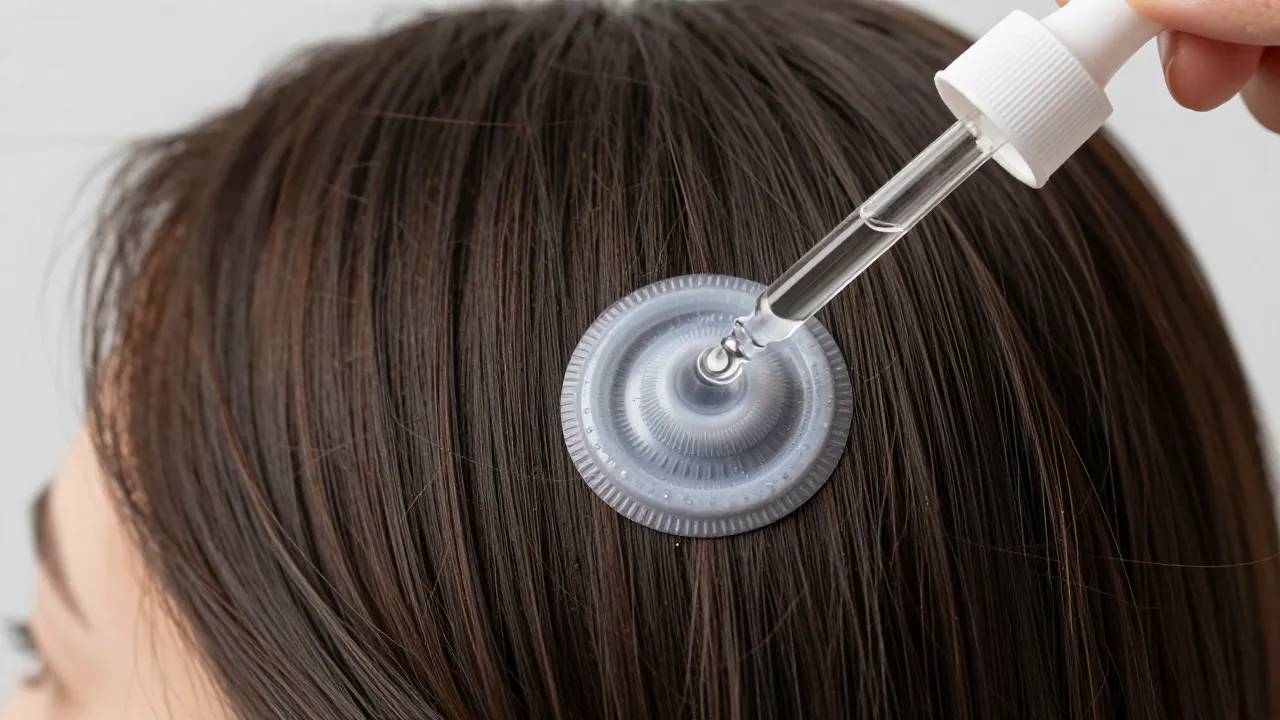
Minoxidil (brand name Rogaine) is a topical medication that GROWS hair. How it works: it increases blood flow to hair follicles and extends the growth phase of hair, so existing thin hairs become thicker and new hairs are produced. It's not preventing loss — it's actively stimulating regrowth.
Studies show: 67% of men experience moderate to dense hair regrowth within 4–6 months. The hair that regrows is actual new hair (not just thickening existing strands, though that happens too). You apply minoxidil twice daily to your scalp. Consistency is critical — if you miss days, you're reducing effectiveness.
Timeline: slight regrowth at 4 months, noticeable improvement at 6 months, dramatic improvement at 12 months. This is NOT fast. But it's measurable and real.
Side effects: minimal. Topical application means it doesn't get into your bloodstream much. Some people experience scalp irritation or itching (usually temporary). Sexual side effects are rare with topical minoxidil (unlike finasteride).
The catch: minoxidil is TEMPORARY. When you stop using it, you lose the regrown hair within 6 months because minoxidil's effect stops. This is crucial — you're not fixing the underlying problem (DHT-driven hair loss), you're temporarily stimulating regrowth. Once the medication wears off, the hair sheds again because the DHT damage is still happening.
Finasteride: The Hair Loss Prevention Medication
Finasteride (brand name Propecia) is an oral medication that STOPS hair loss. How it works: it blocks 5-alpha reductase, the enzyme that converts testosterone to DHT. DHT is the hormone that causes male pattern baldness by shrinking hair follicles (miniaturization). By blocking DHT, finasteride halts this process.
Studies show: 90% of men on finasteride maintain their existing hair, and 66% experience some regrowth. This is PREVENTION, not regrowth in the minoxidil sense. You're stopping the loss and allowing some recovery, but you're not getting new thick hair the way minoxidil does.
Timeline: noticeable hair loss slowdown at 3 months, stabilization at 6 months, some regrowth visible at 6–12 months. Slower than minoxidil initially, but the results are permanent (as long as you keep taking it).
Side effects: sexual dysfunction (ED, reduced libido) in ~2% of users. This is rare but real. These effects reverse after stopping finasteride. Most guys don't experience this, but you need to know it's possible. There's also a small increased risk of prostate issues (this is debated in research).
The key advantage: finasteride's results are DURABLE. Stop taking it and your hair loss resumes, but the hair you've maintained won't shed because finasteride stopped working — it'll shed because DHT continues to damage it (and you're no longer blocking DHT). The mechanism is different than minoxidil, where stopping = immediate loss of regrown hair.
Minoxidil vs Finasteride: Head to Head
Speed of Results: Minoxidil wins. Visible improvement in 4–6 months. Finasteride takes 6+ months to show improvement.
Mechanism: Minoxidil REGROWS hair. Finasteride STOPS loss. They're completely different approaches.
Permanence of Results: Finasteride wins. Results are permanent (as long as you take it). Minoxidil results disappear when you stop.
Side Effects: Minoxidil wins. Topical application means minimal side effects. Finasteride carries sexual dysfunction risk (small but real).
Cost: Finasteride wins. Generic finasteride is $20–40/month. Minoxidil is $30–50+/month.
Convenience: Finasteride wins. One pill daily. Minoxidil requires twice-daily topical application.
The Best Approach: Combining Them
The REAL answer is: use both. Minoxidil regrows hair (fast visible results). Finasteride stops loss (durability). Together, they're synergistic. Dermatologists recommend this exact combination for moderate to severe hair loss.
Timeline with combination: 3–6 months noticeable improvement, 12 months dramatic improvement. Cost: $50–100/month total. This is the gold standard protocol.
Who Should Use Each
MINOXIDIL ALONE: If you want fast, visible results and don't mind applying topical twice daily. If you're not interested in systemic medication. If you want to see results quickly (4–6 months).
FINASTERIDE ALONE: If you're okay with slower results but want to prevent ongoing loss. If you don't want topical application. If you want durability and cost-effectiveness.
BOTH (RECOMMENDED): If you have moderate to severe hair loss and want maximum results. If you can commit to twice-daily topical + daily pill. If you have a budget for $50–100/month.
The Bottom Line
Male pattern baldness IS treatable. Minoxidil + finasteride work. They're not cures, but they're proven, FDA-approved, and they deliver results. For most men who are serious about keeping and regrowing hair, the verdict is the combined protocol — generic finasteride daily to block DHT, plus Rogaine 5% minoxidil foam twice daily to drive regrowth. If you only want one medication, make it finasteride for cost-effective, durable prevention; reach for minoxidil alone only when you specifically want faster visible regrowth and prefer to avoid an oral drug. Whichever path you choose, consistency over 6–12 months matters more than the product.