The Jump Rope Problem: Why Most People Fail
okay so jump rope tangles are real and they're the reason most people quit before they actually get good. you buy a $10 jump rope from Amazon, try it for 5 minutes, it knots up 47 times, and you decide jump rope isn't for you. the truth: your rope was trash. a good rope doesn't tangle. a great rope literally never tangles. and that's worth paying for.
Speed Ropes vs Weighted Ropes: What's the Difference?
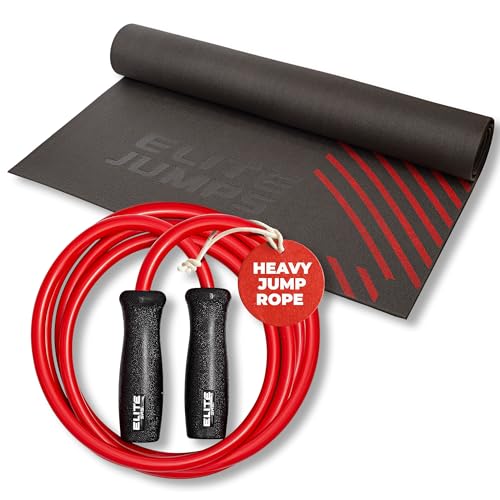
speed ropes (ultralight PVC cable with ball-bearing handles) are designed for fast rotation. you're doing traditional single jumps or double unders. they're thin, responsive, and require coordination. weighted ropes are heavier (1–2 lb) and slower. you're jumping slower but building more upper body and shoulder endurance. the calorie burn is similar (weighted gets more muscular work, speed gets more conditioning work). pick speed if you want cardiovascular training. pick weighted if you want strength-cardio hybrid. most people should start with speed (more universal) and add weighted later if interested.
The Tangle Factor: Why Rope Quality Matters
cheap ropes tangle because the cable is too thick or the handles don't spin smoothly. good ropes have ball-bearing handles (they rotate independently so the rope doesn't twist). ultralight PVC cable (thin) spins faster without knotting. this is why Crossrope is the industry standard — the engineering is dialed. a cheap rope might cost $10, but if you spend 50% of your time untangling it, the $40 Crossrope is cheaper per usable minute.
Adjustable Length: Why It Matters
jump rope length is critical. too long and you hit your head. too short and you trip. your height determines the ideal length. adjustable ropes let you dial it perfectly. fixed-length ropes are a trap (unless they're the exact right length for you). most good ropes are adjustable. avoid fixed-length ropes unless you're testing commitment.
Double Unders: The Advanced Skill
a double under is the rope passing under your feet twice per jump. this requires speed, timing, and a rope that won't tangle. most people can't do double unders on their first rope. it's a skill. if you want to master it, you need a rope designed for it (like Crossrope). cheap ropes make double unders nearly impossible because they tangle constantly. if double unders are your goal, invest in Crossrope from day one.
The Budget Reality
$6–12 rope: good for testing. $15–25 rope: solid speed rope for cardio training. $35–55 rope: professional-grade, suitable for double unders. $60+ rope: luxury option or professional use. if you're serious about jumping, the $15–25 range covers everything. Tangram or beaded ropes are excellent value. if you want to master double unders specifically, Crossrope at $40 is worth it.
The Space Requirement
you need a 6x6-foot clear space minimum. if you're jumping in a small apartment, good luck (and your downstairs neighbor needs a mat under you). a mat cushions impact and reduces noise. if you have neighbors, invest in a budget-friendly mat. it's more accessible than angry neighbors.
Jump Rope as a Conditioning Tool
30 seconds of jump rope is equivalent to 2 minutes of running in terms of cardiovascular intensity. it's brutal and effective. most people can't jump for more than 30–60 seconds at a time initially. the goal is to build up to 3–5 minutes of continuous jumping. start with 20 seconds, rest, repeat for 5–10 minutes. you'll be wrecked and your heart will be happy.
The Rope Lifespan Reality
a cheap rope lasts 3–6 months with regular use (the cable frays or snaps). a good rope lasts 2–3 years. a premium rope (Crossrope) lasts 5+ years. the per-use cost of a Crossrope is way lower than cheap ropes. it's also more satisfying because it doesn't fail when you're finally getting good.