



why korean toner pads replaced half our skincare shelf
Korean toner pads are pre-soaked cotton rounds that combine toning, exfoliating, and essence delivery into one swipe. They originated in Korean dermatology clinics as post-procedure calming treatments and evolved into the at-home staple that has taken over skincare communities worldwide. The concept is simple but effective: instead of pouring liquid toner onto a cotton round (wasting product and getting uneven coverage), these pads come pre-saturated with a precise amount of active ingredients and are textured to provide controlled physical exfoliation alongside the chemical actives.
What makes them different from using a regular toner with a cotton pad? Three things. First, the formula-to-pad ratio is controlled — you get the same concentration every time without over-applying or under-applying. Second, most Korean toner pads use dual-textured material — one side exfoliates, the other deposits serum — which is impossible to replicate with a generic cotton round. Third, the pad formulas are specifically designed for the pad format, meaning the viscosity, pH, and active concentration are calibrated for the contact time and surface area of a pad swipe, not a splash-and-pat application.
The category has exploded over the past two years, with brands like COSRX, Medicube, Anua, Abib, and numbuzin all releasing multiple pad variants targeting different skin concerns. That variety is exactly why this guide exists — not all toner pads do the same thing, and picking the wrong one for your skin type wastes money and can cause irritation.
understanding acid types in toner pads
The most important factor when choosing a toner pad is understanding the type of acid (or lack thereof) in the formula. There are three main categories, and each works differently on your skin.
What's the difference between AHA and BHA exfoliating pads for different skin concerns?
AHA (Alpha Hydroxy Acid) — glycolic acid and lactic acid are the most common. AHAs work on the skin surface by dissolving the bonds between dead skin cells. Glycolic acid has the smallest molecular size, so it penetrates fastest and deepest (more effective but more irritating). Lactic acid has larger molecules for gentler, more gradual exfoliation. AHAs are best for dullness, uneven texture, and surface-level hyperpigmentation. They increase sun sensitivity, so always follow with SPF the next morning. For comprehensive brightening, many combine toner pads with vitamin C serums for multi-pathway brightening. If you are interested in how acids compare to other resurfacing methods, our spicule serum vs retinol comparison breaks down the science.
BHA (Beta Hydroxy Acid) — salicylic acid and betaine salicylate are the key players. BHAs are oil-soluble, meaning they can penetrate into pores and dissolve the sebum plugs that cause blackheads and breakouts. This is the critical difference from AHA: BHA goes inside the pore, AHA stays on the surface. If your primary concern is acne, blackheads, or oily congestion, BHA pads are what you need. Betaine salicylate (used by COSRX) is a gentler BHA derivative with the same mechanism but slower penetration, making it safer for daily use.
PHA (Polyhydroxy Acid) — gluconolactone and lactobionic acid are the gentlest exfoliants available. PHAs have the largest molecular size of all hydroxy acids, which means they exfoliate only the outermost surface layer without penetrating deep enough to cause irritation. PHAs are also humectants — they attract moisture to the skin while exfoliating. This makes PHA pads ideal for sensitive, rosacea-prone, or dry skin types that cannot tolerate AHA or BHA. The Anua Heartleaf pad uses PHA for exactly this reason.
how to choose the right toner pad for your skin type
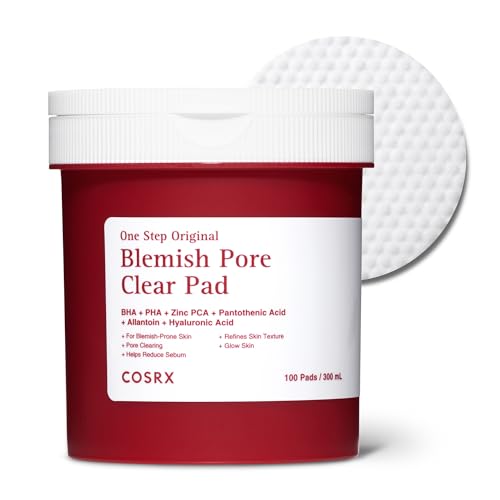
Oily and acne-prone skin: Start with a BHA pad like the COSRX One Step Original Clear Pad for daily maintenance, or the Medicube Zero Pore Pad 2.0 if you want more aggressive exfoliation. BHA penetrates into pores to dissolve oil and prevent breakouts. If your skin tolerates daily BHA, you can graduate to the Medicube triple-acid formula. Always introduce one pad at a time and wait two weeks before increasing frequency.
Which Korean toner pads work best for sensitive, reactive, and barrier-compromised skin?
Sensitive and reactive skin: The Anua Heartleaf 77% pad or the numbuzin No.1 Centella Green Pad are your safest starting points. The Anua provides gentle PHA exfoliation with anti-inflammatory Heartleaf extract, while the numbuzin No.1 skips acids entirely and focuses on barrier repair with Centella Asiatica. If you have rosacea or eczema tendencies, start with the numbuzin No.1 and add the Anua only after your barrier is stable. For stronger barrier support, layer these with peptide serums that strengthen skin resilience. For broader guidance on sensitive skin routines, our Korean skincare routine guide covers the full regimen.
Hyperpigmentation and dullness: The numbuzin No.5 Vitamin-Niacinamide pad is purpose-built for brightening. Its 5% niacinamide plus tranexamic acid plus vitamin C derivative triple-pathway approach targets melanin production at multiple stages. For surface-level dullness and texture, pair it with an AHA pad like the numbuzin No.4 Peeled Egg Pad on alternating nights. Our niacinamide vs vitamin C comparison explains why these two ingredients are more effective together than separately.
Combination skin: You likely need two pads — a BHA pad for your T-zone (nose, forehead, chin) and a gentler PHA or hydrating pad for your cheeks and jawline. The COSRX BHA Blackhead Power Pad works well as a targeted T-zone treatment 3-4 times per week, while the Anua Heartleaf pad covers the rest of your face daily. This multi-pad approach is actually how many Korean skincare enthusiasts use them.
how to use korean toner pads correctly
Cleanse your face first — toner pads are step two, not step one. Use your regular cleanser (double cleanse if wearing sunscreen or makeup), pat dry, then swipe the textured side of the pad across your face in outward motions. Avoid the eye area unless the product specifically says it is eye-safe. After swiping with the textured side, flip the pad and press the smooth side onto your skin for 10-15 seconds to let the serum absorb. Do not rinse off. Follow with your moisturizer. For the Abib Heartleaf pad, you can also press it directly onto irritated spots and leave for 5-10 minutes as a mini sheet mask.
Frequency: Start with every other night regardless of the pad type. Even PHA pads should be introduced gradually. After two weeks with no irritation, you can move to nightly use for gentle formulas (Anua, numbuzin No.1). For stronger formulas (Medicube, COSRX BHA Blackhead), 3-4 times per week is the sweet spot for most people. Never use an exfoliating toner pad in the same routine as retinol or prescription tretinoin — alternate nights instead.
Storage tip: Korean toner pads should be stored upside down (lid-side down) for 30 minutes before first use, and then stored upright. This ensures the essence distributes evenly through all 70 pads. If you notice the top pads are dry and the bottom ones are soaked, flip the jar and wait overnight.
korean toner pads vs western exfoliants
Western exfoliating toners like Paula is Choice BHA or The Ordinary Glycolic Toning Solution are effective products, but they operate on a different philosophy. Western formulas tend to use higher acid concentrations applied with a cotton round, which gives you more control over dosage but wastes product and can lead to uneven application. Korean toner pads pre-calibrate the formula for the pad format, meaning the acid concentration, pH level, and essence viscosity are all optimized for a single swipe rather than a pour-and-pat method.
The other difference is the Korean emphasis on combination actives. Most Western exfoliants are single-acid products. Korean toner pads often combine acids with botanical extracts (Heartleaf, Centella, green tea) that calm the skin simultaneously. This dual exfoliate-and-soothe approach means less irritation potential and faster recovery between uses. Neither approach is objectively better — Korean pads are more convenient and gentler, Western toners offer higher concentrations and more clinical control.
Bottom line: If you want a simple, effective, low-irritation exfoliation step that replaces toner, essence, and physical exfoliation in one swipe — Korean toner pads are the most efficient format available. Match the acid type to your skin concern, start slow, and let the pad do the work.


