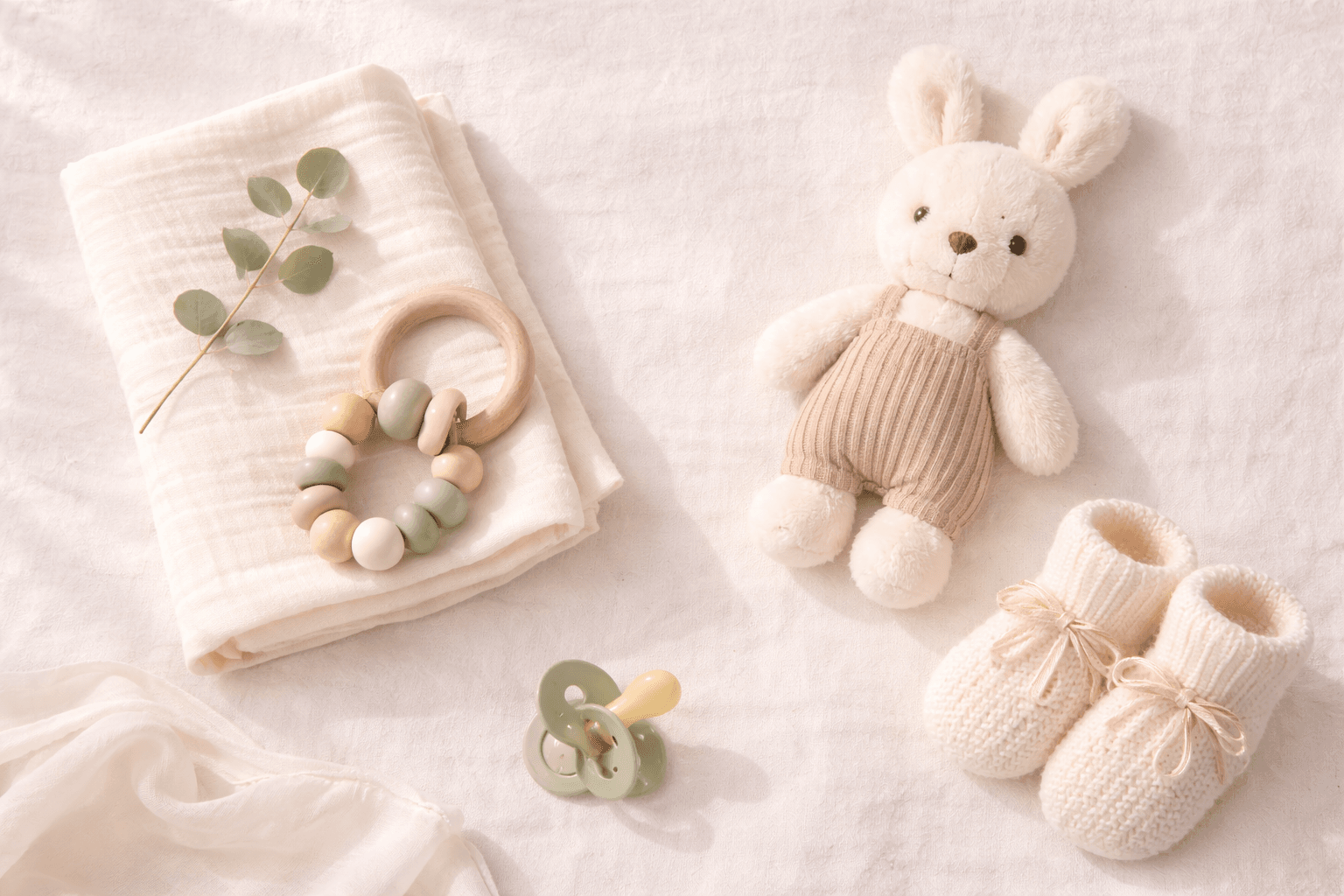
Best Montessori Toys by Age 0-3 (2026): 8 Picks
Montessori toys aren't about entertainment—they're about development. Each toy teaches a specific skill: object permanence, fine motor control, problem-solving, or independence. We've curated 8 toys spanning 6 months to 3 years, each aligned to developmental milestones that emerge naturally at each age. Beautiful, purposeful, and actually used for years.
Our Top Montessori Toys Picks on Amazon
We did the research for you — curated and reviewed the top-rated products so you can find what's actually worth buying. 100% free.
Development Score
Quick answer
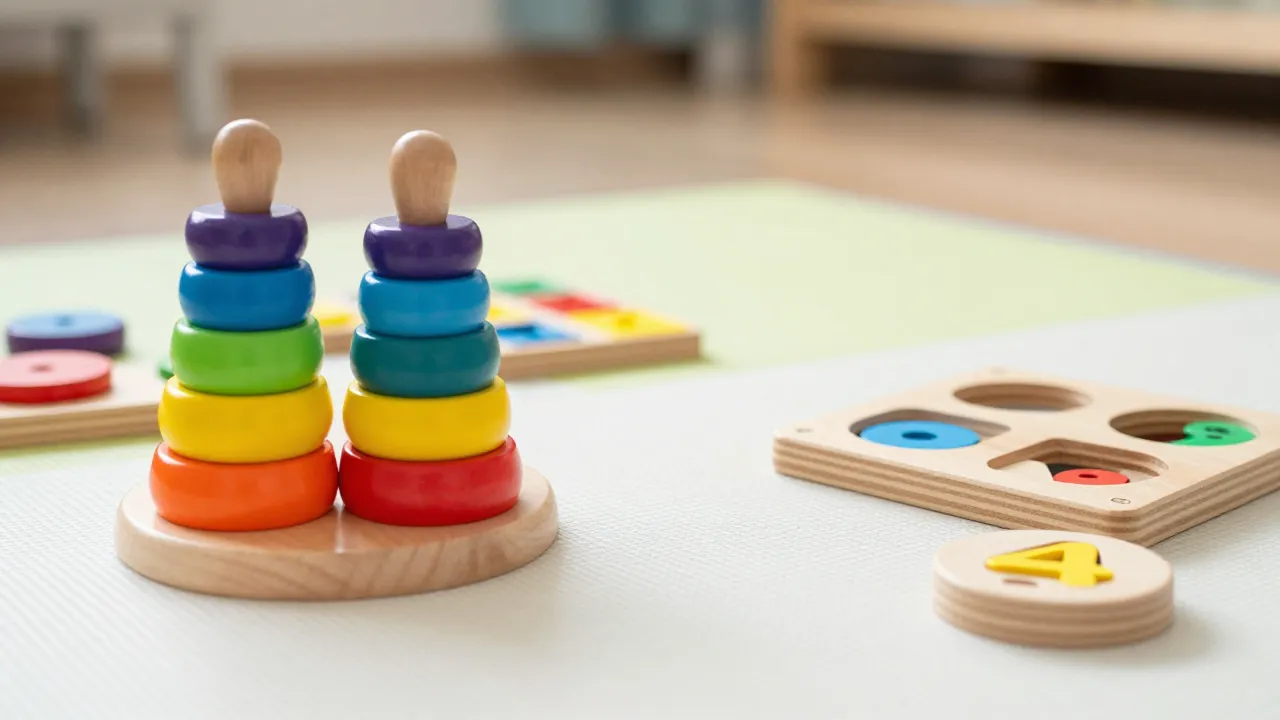
Match the toy to the skill your child is neurologically ready for, not just their birth month: an object permanence box for 6-18 months (teaches that hidden objects still exist), wooden stacking rings for 6-24 months (size discrimination, grasping), a ball drop track for 9+ months (cause-and-effect), and a shape sorter for 12+ months (problem-solving). Look for single-purpose wooden toys with no lights or sounds — those are the Montessori-aligned choice over multi-function electronic toys.
Shop Montessori toys on AmazonThe Montessori Approach to Play
Maria Montessori observed that children learn most naturally through hands-on exploration—not through toys that beep and light up, but through simple, purposeful tools that invite repetition. A ball dropping down a ramp teaches physics. Stacking rings teach size discrimination. Threading beads teach fine motor control. No external reward needed; the child learns from natural consequences. This approach respects how actual child development works: repetition builds neural pathways, hands-on learning sticks longer than passive observation, and real consequences teach cause-and-effect more effectively than artificial rewards.
The Montessori principle: match the child's developmental stage with materials that teach exactly what they're neurologically ready to learn. Too easy creates boredom and restlessness. Too hard creates frustration and avoidance. Perfectly matched creates what Montessori called "flow"—hours of focused, engaged play where the child is genuinely learning. A 6-month-old isn't ready for shape sorters but is neurologically ready to grasp and manipulate. A 9-month-old can understand cause-and-effect visually but isn't ready for fine motor tasks requiring pincer grasp. Age guidelines matter.
Building a Montessori toy collection strategically saves money across children. Rather than accumulating dozens of toys, invest in 5-8 quality pieces that span multiple age ranges and actually work. Wooden stacking rings used from 6-24 months, shape sorters from 12-48 months, and practical life tools from introduction through adulthood generate value across siblings. Rotating toys monthly creates novelty without purchasing constantly—the same three toys reintroduced after six weeks of storage feel brand new. This approach respects Montessori principles while respecting your budget and your child's focus.
Research on early childhood development backs this approach. Studies show that children given purposeful toys with single clear functions spend 3x longer engaged and develop skills faster than children given multi-function electronic toys. The repetition—stacking rings 100 times—is where neural development happens. Quality toys that work this way cost more upfront but save money long-term because children actually use them for years instead of cycling through cheap toys constantly.
Why Montessori Toys Make a Difference?
- • Single clear purpose prevents decision fatigue and overstimulation
- • Beautiful natural materials (wood, not plastic) inspire focused play
- • Natural consequences teach real cause-and-effect, not artificial rewards
- • Repetition opportunity (stacking rings 100 times) builds neural pathways for skill mastery
- • Long-term utility (some toys work from 6 months through age 4+)
You might also like
Related guides you might find useful: Best STEM & Coding Robots for Kids (2026) | GiftedPicks, Best Toddler Toys & Learning Activities on Amazon (March 2026), Best Baby Shower Gifts on Amazon (March 2026), and Best Bluey Toys & Playsets on Amazon (2026) | GiftedPicks.
What Age Group Benefits Most from Montessori Toys by Age?
Every child benefits from developmentally matched toys, but Montessori approaches shine most in the 6-36 month window when foundational skills are forming fastest. This is when neural development is happening at peak speed—the repetition with Montessori materials directly supports that growth. Age-appropriate design (not too easy, not too hard), safety certifications (CPSC compliance), and educational value are the three pillars of great developmental toys. We researched dozens of options, compared real parent reviews, expert recommendations, and long-term durability data to identify the standout products. Our editorial team evaluates every toy against real-world performance: Do kids actually use this repeatedly? Does it teach the skill it claims? Do parents repurchase for second children? Not marketing claims, just results.
How Do You Choose Age-Appropriate Montessori Toys by Age?
Start by understanding your baby's current developmental stage, not just their birth month. A 6-month-old with strong grasping skills might be ready for stacking rings; a less-developed 6-month-old should wait another month or two. Look for these readiness signs: intentional grasping (not reflexive), ability to sit or lay stably, interested in tracking moving objects. The products in our curated list span different price points ($15-60 per item), so you can build a small high-quality collection whether your budget is modest or generous. Prioritize toys spanning multiple age ranges (stacking rings work 6-24 months; shape sorters work 12-48 months) to maximize long-term value.
Which Montessori Toys by Age Are Both Fun and Educational?
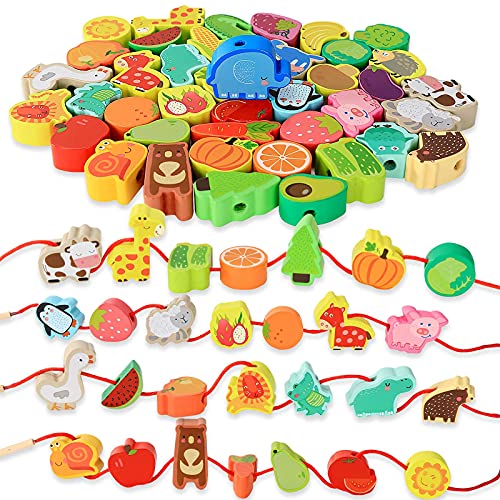
The toys earning highest marks across verified reviews share a common trait: they disappear from the shelf. A child will choose stacking rings over electronic toys because the repetition is genuinely satisfying—they're solving a real problem (which ring fits where), improving at it with practice, and learning from natural feedback. Threading beads, shape sorters, and ball drop tracks all generate this kind of sustained engagement. We specifically avoid toys with inflated reviews or misleading claims about "educational value." Every pick on this page has been vetted for quality construction, safety compliance, developmental alignment, and honest long-term performance data from real parents.
Quick Comparison: Which Toy by Age?
📊 The pediatric evidence base behind these picks
Montessori-aligned and developmentally-appropriate toys have modest but consistent developmental research support. Lillard 2017 (Pediatrics) reviewed Montessori-method evidence and found small positive effects on executive function and social skills. The principle that holds up across the evidence: open-ended toys (blocks, art supplies, dress-up) outperform single-purpose electronic toys for sustained engagement and creative play. Material matters too — solid wood + natural fiber consistently outperform plastic for tactile development and durability.
Pediatric product recommendations carry asymmetric stakes — rare adverse events have outsized impact. Our picks weight AAP guidance, FDA clearance status, and peer-reviewed evidence over marketing claims.
Quick Comparison — Jump to Your Best Pick
| Best For | Product | Price | Why It Wins | |
|---|---|---|---|---|
| Best For 6-Month Visual Development | Object Permanence Box (wooden, simple design) | Est. $30-$50 | Teaches object permanence (understanding objects exist when hidden). Develops hand-eye coordination and problem-solving. Works 6-18 months. Single-task focus prevents overstimulation. | Check Price → |
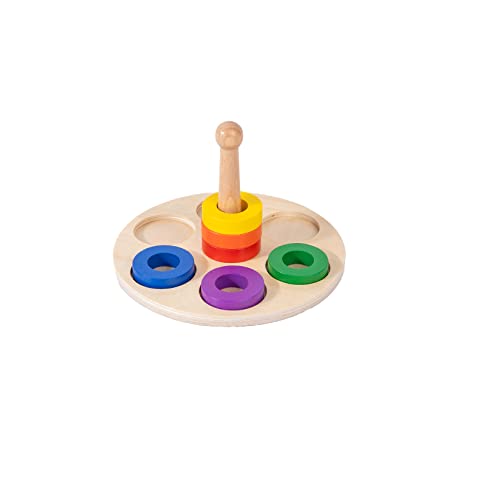
| Best For Early Grasping (6+ months) | Wooden Stacking Rings on Dowel | Est. $15-$25 | Classic Montessori essential. Teaches size discrimination and hand-eye coordination. Develops fine motor skills (grasping, stacking). Works 6-24 months. | Check Price → |
| Best For Problem-Solving (9+ months) | Ball Drop Track (wooden ramp) | Est. $25-$40 | Teaches cause-and-effect. Baby drops balls and watches them roll down track. Develops hand-eye coordination and object tracking. Highly motivating for this age group. | Check Price → |
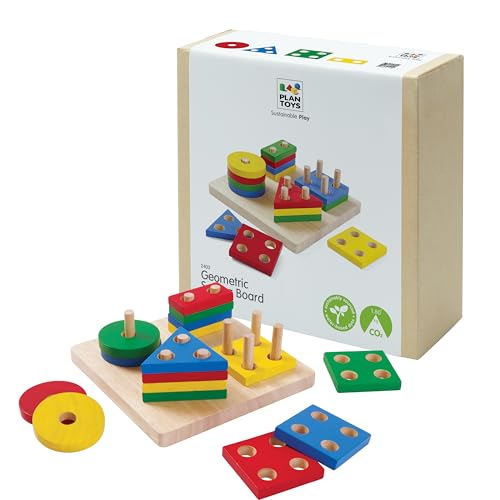
| Best For Sorting & Logic (12+ months) | Shape Sorter (simple, chunky shapes) | Est. $20-$35 | Teaches shape recognition and problem-solving. Develops fine and gross motor skills through inserting shapes. Works through age 3-4 years. | Check Price → |
Object Permanence Box (wooden, simple design)
Teaches object permanence (understanding objects exist when hidden). Develops hand-eye coordination and problem-solving. Works 6-18 months. Single-task focus prevents overstimulation.
Check Price on Amazon →Wooden Stacking Rings on Dowel
Classic Montessori essential. Teaches size discrimination and hand-eye coordination. Develops fine motor skills (grasping, stacking). Works 6-24 months.
Check Price on Amazon →Ball Drop Track (wooden ramp)
Teaches cause-and-effect. Baby drops balls and watches them roll down track. Develops hand-eye coordination and object tracking. Highly motivating for this age group.
Check Price on Amazon →Shape Sorter (simple, chunky shapes)
Teaches shape recognition and problem-solving. Develops fine and gross motor skills through inserting shapes. Works through age 3-4 years.
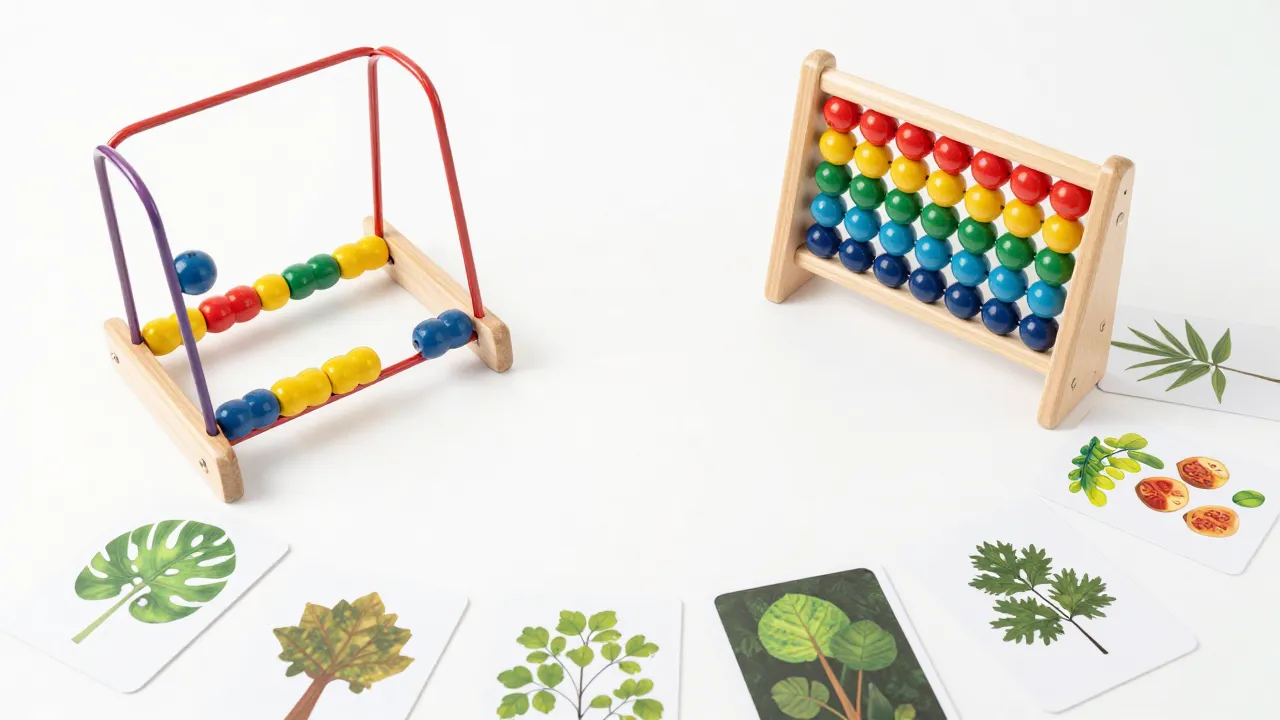
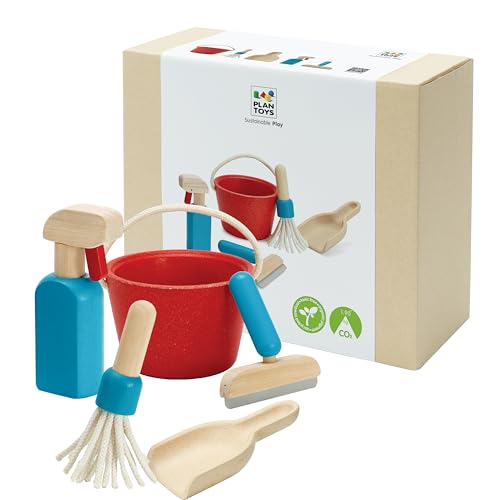
Check Price on Amazon →8 Montessori Toys Across Developmental Stages




Your Questions About Montessori Toys
What makes a toy 'Montessori' vs. a regular toy?
Montessori toys have specific characteristics: single clear purpose (not multi-function), age-appropriate challenge level, beautiful natural materials (wood, metal), no electronic feedback or music, and opportunity for repetition that builds skill. A regular toy might light up and play music when touched. A Montessori toy shows a clear cause-and-effect (drop ball, it rolls down) and lets baby learn from natural consequences, not external rewards.
Do I need to buy expensive Montessori-branded toys?
No. Many inexpensive toys are Montessori-aligned. Look for: wooden construction, no batteries/sounds, single clear purpose, age-appropriate challenge. Expensive Montessori brands offer beautiful aesthetics and guaranteed durability, but similarly functional toys exist at lower price points. Quality matters more than brand name.
When should I introduce each toy?
Age ranges provided are guidelines, not strict rules. Introduction timing depends on individual baby development: 6-month babies with strong grasp can start stacking rings; less-developed 6-month-olds should wait. Watch for readiness signs: can baby grasp intentionally? Can they sit independently? Can they release objects on purpose? Introduce when skills are just developing, not when mastered.
What's the difference between Montessori toys and open-ended play toys?
Montessori toys are specifically designed to teach individual skills (object permanence, size discrimination, grasping). Open-ended toys (blocks, balls, fabric) invite imaginative play without specific learning objectives. Both are valuable. Montessori toys are ideal when teaching specific skills; open-ended toys are ideal when fostering creativity and imagination. Many babies benefit from both.
How long will my child use these toys?
High-quality toys span multiple age ranges: stacking rings work 6-24 months; shape sorters work 12-48 months; puzzles work 12-60 months. Threading beads work 18 months through elementary school. Practical life tools work from introduction through adulthood. Building a small collection of quality toys (5-8 pieces) that grow with your child saves money long-term compared to buying cheap toys constantly.
Is Montessori approach too rigid for my parenting style?
Not at all. Montessori principles (follow the child's interest, hands-on learning, natural consequences) work in various parenting styles. You don't need to be a strict Montessori parent to benefit from Montessori toys. Many parents use Montessori toys alongside other toys and approaches. Think of it as a toolkit, not a requirement.
Should I rotate toys or keep them all accessible?
Montessori approach: fewer toys out, rotated monthly. This reduces overwhelm and keeps focus on available toys. Practical reality: some parents prefer accessibility so children choose. A compromise works: 5-8 toys out at a time, rotating every 4-6 weeks, storing others. Too many toys creates overstimulation and reduces focus.
What if my child isn't interested in a Montessori toy?
That's normal. Children develop at different paces. A 10-month-old might not be ready for stacking rings (developmental not yet there) or might prefer open-ended play. Skip toys that don't engage your child and try again in 2-3 months. Forced play defeats the purpose. Follow the child's interest.
Are Montessori toys safe?
Quality Montessori toys from reputable makers pass safety standards. However, always supervise and check for age-appropriateness: choking hazards under age 3, small parts, splinters, etc. Wooden toys from unknown manufacturers might have toxic finishes or loose parts. Buy from established brands or carefully inspect if purchasing second-hand. Safety depends on quality and supervision.
Can I make Montessori toys yourself?
Absolutely. Many DIY versions work well: sensory bins, ball drop tracks (wooden ramp with dowels), shape sorters from wood scraps. Homemade versions teach the Montessori principle (simple, beautiful, purposeful) even better than store-bought. Pinterest and Montessori blogs have many DIY designs. This option works well if you enjoy crafting.
Building a Montessori Play Space
The best Montessori playroom isn't cluttered with 50 toys. It has 5-8 carefully chosen items at the child's level, rotated monthly for novelty. This approach respects the Montessori principle: fewer toys, deeper learning. A child who spends an hour stacking rings and removing them repeatedly learns more than a child who touches 20 different toys for 2 minutes each. Combine this with our baby essentials guide, explore toddler learning toys as your child grows, and review our baby shower gifts for gift ideas aligned with developmental play.
You don't need to be a Montessori school to benefit from Montessori toys. Whether you're purely Montessori or simply incorporating some principles into your parenting, these toys support natural development and build confidence through mastery.
← Back to Full Baby Essentials GuideHow We Selected Toys & Development
The GiftedPicks team evaluates Amazon products against five criteria before any pick makes our lists. Here's exactly what we look for:
Review threshold
Strong customer satisfaction based on extensive review analysis. — not inflated by one-time purchase incentives.
Trending signal
Tracked against current Amazon search trends and GiftedPicks keyword data to confirm buyer demand exists before we recommend.
Price-to-value
Compared against category alternatives at similar price points. We flag when a pricier option genuinely outperforms its cheaper alternatives.
Review consistency
We weight recent reviews over historical ones. A product with consistent praise over 12+ months outranks one that spiked and faded.
Honest tradeoffs
Every pick includes what it's not ideal for. If a product doesn't suit a specific hair type, budget, or use case, we say so.
Category criterion 1
Alignment with developmental milestones
Category criterion 2
Single clear skill or concept taught
Category criterion 3
Durable natural materials (wood, metal, real materials)
Category criterion 4
No electronic sounds or lights (pure cause-and-effect learning)
As an Amazon Associate, GiftedPicks earns a commission when you purchase through our links — at no extra cost to you. Our editorial process is independent of this.
What Reddit Communities Are Saying
Real discussions from verified Reddit users — not sponsored content
Reddit communities provide authentic peer reviews and recommendations, helping shoppers discover products that genuinely deliver on their promises.
Popular search: “montessori toys by age amazon reddit”
GiftedPicks Editorial Team
Product Research & Editorial
The GiftedPicks editorial team researches thousands of Amazon products, analyzes customer review patterns, cross-references clinical studies and community recommendations, and writes original editorial content for every list. We never accept payment from brands for placement or ranking.