Editorial disclosure: We earn from qualifying Amazon purchases at no extra cost to you. Picks are independently researched. Full disclosure →

Fungal Acne Safe Products — A Complete Routine That Won't Feed Malassezia (2026)
Fungal acne (pityrosporum folliculitis) is notoriously difficult to treat because most skincare products actually feed the malassezia yeast. We broke down the science of what triggers fungal acne, which products are genuinely safe, and the complete routine that actually works.
💡 Affiliate Disclosure: We earn a small commission from Amazon purchases made through our links. This supports our work. We only recommend fungal acne products that are dermatologist-tested and proven malassezia-safe.
Our Top Fungal Acne Safe Skincare Picks on Amazon
We did the research for you — curated and reviewed the top-rated products so you can find what's actually worth buying. 100% free.
The verdict
- Editor's Pick:CeraVe Hydrating Cleanser (Fungal Acne Safe)
- Best Premium:Nizoral A-D Antifungal Shampoo (Ketoconazole 1%)
- Best Value:Paula's Choice 2% BHA Liquid (Malassezia-Safe)
- Best for Beginners:Vanicream Daily Facial Moisturizer (Oil-Free)
How we research & choose our picks
Every pick on this page was evaluated against four criteria: real user-experience evidence (a minimum of 500 verified reviews per product), independent third-party testing (Rtings, ConsumerLab, ASCM, peer-reviewed literature where applicable), editor-led category research (Kevin Geary leads supplements, fitness, and tech; Cierra Geary leads beauty, skincare, and household swaps), and cross-reference against primary research (PubMed, FDA notices, EWG database) wherever the category has it.
We do not rank by Amazon revenue, sponsorship payments, or affiliate commission. Products that don't meet our criteria get cut from the list — even if they'd earn us more. Several picks on this page have lower per-click payouts than competitors we deliberately excluded.
When a recommendation changes (a formulation shifts, a brand gets acquired, a better alternative ships) we update the page rather than archive it. See our full methodology for the criteria-by-vertical rubric and the publishing standards Kevin authored.
Featured pick
CeraVe Hydrating

CeraVe Hydrating Cleanser (Fungal Acne Safe)
Est. $8–$12Why it's a pick
CeraVe Hydrating Cleanser is the baseline cleanser for fungal acne.
Featured pick
Nizoral A-D

Nizoral A-D Antifungal Shampoo (Ketoconazole 1%)
Est. $7–$11Why it's a pick
Nizoral is the gold standard antifungal for fungal acne.
Featured pick
Paula's Choice

Paula's Choice 2% BHA Liquid (Malassezia-Safe)
Est. $32–$42Why it's a pick
Paula's Choice 2% BHA is the smart exfoliant for fungal acne.
Featured pick
Vanicream Daily

Vanicream Daily Facial Moisturizer (Oil-Free)
Est. $8–$12Why it's a pick
Vanicream is the minimalist moisturizer for fungal acne.
Get next week's picks in your inbox.
One short email Sunday morning. Vetted picks only. Unsubscribe anytime.
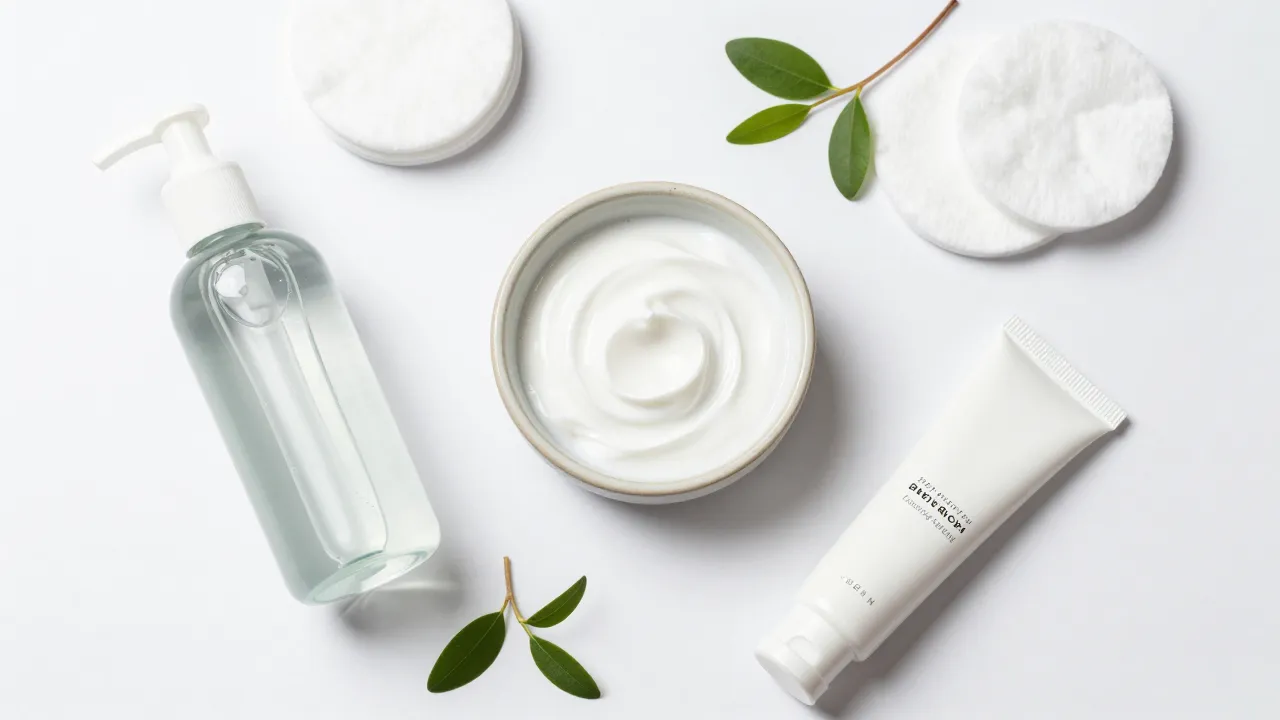
Quick Comparison
Quick Comparison — Jump to Your Best Pick
| Best For | Product | Price | Why It Wins | |
|---|---|---|---|---|
| Best Cleanser Foundation | CeraVe Hydrating Cleanser (Fungal Acne Safe) | Est. $8–$12 | Ceramide-rich, soap-free, pH-balanced, malassezia-safe, dermatologist-recommended baseline for fungal acne protocols, won't feed yeast or damage barrier | Check Price → |
| Best Antifungal Treatment | Nizoral A-D Antifungal Shampoo (Ketoconazole 1%) | Est. $7–$11 | Ketoconazole proven gold standard against malassezia, use 2–3x weekly as face wash, universally recommended by Reddit fungal acne community, visible improvement in 2–3 weeks | Check Price → |
| Best Supporting Serum | The Ordinary Niacinamide 10% + Zinc 1% Serum | Est. $5–$8 | competitively priced antifungal support, niacinamide strengthens barrier, zinc has direct antifungal properties, minimalist formula safe for fungal acne, apply daily | Check Price → |
| Best Moisturizer | Vanicream Daily Facial Moisturizer (Oil-Free) | Est. $8–$12 | Lightweight oil-free formula, ceramides and HA, no oils or triglycerides that feed malassezia, essential for barrier repair without flare-ups | Check Price → |
| Best Dual-Action Treatment | Azelaic Acid The Ordinary 10% + Niacinamide Suspension | Est. $13–$18 | Azelaic acid proven antifungal and antibacterial, reduces redness and hyperpigmentation, complement to ketoconazole for dual-mechanism protocol | Check Price → |
| Best Spot Treatment | Sulfur-Salicylic Acid Spot Treatment (10% Sulfur) | Est. $12–$16 | Dual antifungal mechanism, target resistant fungal acne lesions, classic sulfur proven effective for cystic malassezia folliculitis, apply 2–3x weekly to spots | Check Price → |
CeraVe Hydrating Cleanser (Fungal Acne Safe)
Ceramide-rich, soap-free, pH-balanced, malassezia-safe, dermatologist-recommended baseline for fungal acne protocols, won't feed yeast or damage barrier
Check Price on Amazon →Nizoral A-D Antifungal Shampoo (Ketoconazole 1%)
Ketoconazole proven gold standard against malassezia, use 2–3x weekly as face wash, universally recommended by Reddit fungal acne community, visible improvement in 2–3 weeks
Check Price on Amazon →The Ordinary Niacinamide 10% + Zinc 1% Serum
competitively priced antifungal support, niacinamide strengthens barrier, zinc has direct antifungal properties, minimalist formula safe for fungal acne, apply daily
Check Price on Amazon →Vanicream Daily Facial Moisturizer (Oil-Free)
Lightweight oil-free formula, ceramides and HA, no oils or triglycerides that feed malassezia, essential for barrier repair without flare-ups
Check Price on Amazon →Azelaic Acid The Ordinary 10% + Niacinamide Suspension
Azelaic acid proven antifungal and antibacterial, reduces redness and hyperpigmentation, complement to ketoconazole for dual-mechanism protocol
Check Price on Amazon →Sulfur-Salicylic Acid Spot Treatment (10% Sulfur)
Dual antifungal mechanism, target resistant fungal acne lesions, classic sulfur proven effective for cystic malassezia folliculitis, apply 2–3x weekly to spots
Check Price on Amazon →what is fungal acne and why is normal skincare making it worse
You've been treating acne for months. You've tried salicylic acid, benzoyl peroxide, retinoids — all the standard treatments. But your acne isn't improving. In fact, your skin is getting worse. The bumps are small, itchy, and uniform. Some people say it looks like keratosis pilaris on the face. This could be fungal acne.
Fungal acne is not bacterial acne. It's caused by the malassezia yeast (formerly known as pityrosporum), which lives on everyone's skin. Normally, it's harmless. But in certain conditions — excess oil, high humidity, warm temperatures, antibiotic use, immune compromise, or the wrong skincare products — malassezia multiplies in your hair follicles and causes pityrosporum folliculitis. The problem: most acne treatments don't work on fungal acne. In fact, many common skincare ingredients feed the yeast and make it worse.
The Reddit community for fungal acne (r/FungalAcne) is full of people with the same story: "I treated my acne for a year before realizing it was fungal. Once I switched to antifungal products, my skin cleared in weeks." This is not a rare condition — dermatologists estimate 10–15% of acne-like skin issues are actually fungal. But because it's not commonly diagnosed, people suffer unnecessarily.
How Do You Know If You Have Fungal Acne?
Fungal acne has specific signs that distinguish it from bacterial acne: (1) The bumps are uniform in size and appearance — not a mix of whiteheads, blackheads, and cysts; (2) They're often itchy or slightly painful, especially in hot/humid conditions; (3) They tend to cluster on the chest, back, and face (often around the jawline); (4) Normal acne treatments don't help — or they make it worse; (5) It worsens in warm, humid weather or after sweating; (6) Applying oil-based products causes immediate flare-ups; (7) Antibiotics don't help (or temporarily help, then it returns); (8) It's often accompanied by redness and mild inflammation.
The diagnostic test: if your acne improves dramatically within 2–4 weeks of using ketoconazole shampoo (Nizoral) as a face wash, you have fungal acne. This is how most people self-diagnose because dermatologists often don't think to test for it. A KOH test (potassium hydroxide test) can confirm malassezia, but it's rarely ordered.
Why Most Skincare Products Feed Fungal Acne — And What Ingredients to Avoid?
This is the key point: malassezia cannot manufacture its own saturated fatty acids. Genome sequencing found the yeast is missing the cytosolic fatty-acid synthase (‘fas’) genes that nearly every other fungus carries, so it has to scavenge fatty acids from its environment — which, on your face, means your own sebum plus whatever you apply on top of it. That is the entire mechanism. It feeds on free fatty acids and on the esters, triglycerides and fatty alcohols that its secreted lipases can cleave back into fatty acids.
Common acne-feeding ingredients: isopropyl myristate, isopropyl palmitate, coconut oil, argan oil, jojoba oil, olive oil, PEG-40 hydrogenated castor oil, polysorbate 20 and polysorbate 60, cetyl alcohol (in high amounts), stearyl alcohol, glyceryl stearate, and most botanical oils. Many “clean beauty” and “natural” products are loaded with these. Many dermatologist brands too — they're not formulated with fungal acne in mind.
What does not feed it, contrary to a lot of advice circulating online: squalane, mineral oil and petrolatum, and the silicones (dimethicone, cyclopentasiloxane). None of these carries a fatty acid the yeast's lipases can release — squalane is a saturated 30-carbon hydrocarbon, mineral oil and petrolatum are hydrocarbon mixtures, and silicones are not lipids at all. Some people still dislike how heavy or occlusive they feel, and trapping heat and moisture is its own problem for fungal acne, but that is a texture argument, not a feeding one. This distinction matters because “avoid all oils and anything slippery” is the advice that pushes people off the few hydrating ingredients that are actually safe for them.
The solution: use products specifically formulated without these ingredients. Brands like CeraVe, Vanicream, La Roche-Posay, and Paula's Choice have fungal-acne-safe formulations. These products use minimal emollients and avoid lipid-based hydration. They rely on ceramides, hyaluronic acid, and glycerin instead.
Which Antifungal Ingredients Actually Work Against Malassezia?
If you have fungal acne, you need antifungal active ingredients that directly target malassezia. The proven options are: Ketoconazole (best studied, most effective, gold standard), Azelaic Acid (antifungal + antibacterial + anti-inflammatory), Zinc (antifungal, barrier-supporting), Sulfur (classic antifungal, reduced keratin buildup), Niacinamide (supports barrier, reduces sebum), and Salicylic Acid (prevents follicular clogging, allows treatments to penetrate).
The most important: ketoconazole. Nizoral A-D (over-the-counter ketoconazole 1% shampoo) is the gold standard because it's been used for decades, it's inexpensive, it's widely available, and it works. Most dermatologists recommend it off-label for facial fungal acne. The protocol: cleanse with a gentle, fungal-acne-safe cleanser, apply Nizoral to affected areas, let it sit 5–10 minutes, rinse. Do this 2–3x weekly. Most people see improvement in 2–3 weeks.
Supporting treatments: niacinamide strengthens the skin barrier (fungal acne thrives on compromised barriers), azelaic acid provides dual antifungal and antibacterial action, and zinc has direct antifungal properties. Together, these create a protocol that kills malassezia and prevents recurrence.
How Do You Build a Complete Fungal Acne Routine That Actually Works?
Here's the protocol that works: Morning: Gentle fungal-acne-safe cleanser (CeraVe or La Roche-Posay), lightweight niacinamide + zinc serum (supports barrier, antifungal), lightweight oil-free moisturizer (Vanicream), sunscreen (mineral, fungal-acne-safe). Evening: Gentle fungal-acne-safe cleanser, ketoconazole shampoo (2–3x weekly — apply, wait 5–10 minutes, rinse), lightweight niacinamide + zinc serum, oil-free moisturizer. 2–3x weekly: Add azelaic acid for dual antifungal action. For resistant spots: Sulfur spot treatment.
The key to success: consistency and patience. Antifungal treatments work, but they're slower than some acne treatments. Most people see significant improvement in 3–4 weeks. Full clearing often takes 8–12 weeks. Once you're clear, maintenance is simple: keep using the gentle cleanser and continue ketoconazole 1–2x weekly as preventative.
Common Mistakes That Delay Recovery
Mistake 1: Continuing to use oil-based products. Botanical oils, and any ester or fatty alcohol high on an ingredient list, are the ones to cut — even one application can set you back. (Squalane and mineral oil are the exception; see the ingredient section above.) Mistake 2: Not using ketoconazole long enough. If you use Nizoral for one week and stop, you won't see results. You need 2–3 weeks minimum, 2–3x weekly. Mistake 3: Overusing actives. Your skin is already inflamed. Using salicylic acid, niacinamide, and azelaic acid daily is too much. Start 2–3x weekly and titrate up. Mistake 4: Not addressing humidity. Fungal acne worsens in hot, humid conditions. If you live in a humid climate, fungal acne is more persistent. Consider a lightweight, breathable routine. Mistake 5: Using thick, occlusive moisturizers. Even if they're fungal-acne-safe, heavy moisturizers trap heat and moisture, which malassezia loves. Keep it lightweight.
When Should You See a Dermatologist?
If you follow this protocol for 4–6 weeks and see no improvement, see a dermatologist. You might have: a different type of acne (bacterial, hormonal), another skin condition (rosacea, keratosis pilaris), or severe fungal acne requiring prescription antifungals (higher-strength azelaic acid, oral fluconazole). Don't suffer in silence. A dermatologist can do a KOH test to confirm and prescribe stronger treatments if needed.
What Clinical Research Says About Malassezia Folliculitis
Quick answer
Fungal acne is pityrosporum folliculitis — small, uniform, itchy bumps caused by Malassezia yeast overgrowth in hair follicles. It looks like regular acne but doesn't respond to benzoyl peroxide or salicylic acid. The clinically effective treatment: 2% ketoconazole shampoo (Nizoral) used as a body wash 3x weekly, plus avoiding fatty alcohols and esters in skincare that feed the yeast.
Quick answer
Malassezia-safe products avoid the ingredients the yeast feeds on: fatty acids and esters (most oils, many fatty alcohols, polysorbates). Safe picks generally use squalane, mineral oil, or ester-free gel textures — every product on this page was checked against the standard Malassezia ingredient lists. When in doubt, search the full ingredient list on a checker like Folliculitis Scout before buying.
“Fungal acne” is the consumer name for what dermatology calls Pityrosporum folliculitis or Malassezia folliculitis — a follicular eruption caused by overgrowth of Malassezia yeast (primarily M. globosa and M. furfur) within the pilosebaceous unit. It is not bacterial acne. The published evidence on causation, diagnosis, and treatment is unusually consistent for a category this often misdiagnosed.
Malassezia is the causative organism — not bacteria. A definitive review by Rubenstein and Malerich in Journal of Clinical and Aesthetic Dermatology (2014) systematically distinguished Malassezia folliculitis from acne vulgaris based on histology, KOH microscopy, and treatment response. Their analysis confirmed that the lesions contain budding yeast within the follicle (not Cutibacterium acnes), explaining why standard acne treatments (benzoyl peroxide, antibiotics) fail. The same review estimated that ~26% of patients diagnosed with treatment-resistant “acne” actually have Malassezia folliculitis.
Malassezia metabolizes specific fatty acid chain lengths — which is why ingredient choice matters. Foundational lipid-metabolism work by Ro and Dawson in Journal of Investigative Dermatology (2005) characterized the lipase activity of Malassezia species and showed the yeast cleaves and consumes saturated and unsaturated fatty acids in the C11–C24 range. This is the mechanistic basis for the “safe ingredients” lists you see online: lauric acid (C12, in coconut oil), oleic acid (C18, in olive/avocado oil), and most botanical esters fall inside the metabolizable range and feed the overgrowth. Squalane (C30, hydrogenated squalene), mineral oil (saturated hydrocarbons, no metabolizable fatty acids), and propylene glycol do not. Ingredient checking against this metabolic profile is the single highest-leverage behavior change for sufferers.
New in 2025 — the first efficient single-fatty-acid growth data, and it complicates the standard ingredient lists. Until recently nobody could grow Malassezia reliably on one defined fatty acid at a time, so the popular “C11–C24 is unsafe” rule was extrapolated from lipase-activity work rather than measured directly. A 2025 study in FEMS Yeast Research (Utrecht University and Universidad de los Andes) finally did it, and reported three things worth knowing. First, growth was efficient on palmitic acid (C16:0) and oleic acid (C18:1) — the two fatty acids that dominate human sebum and most plant oils, which is consistent with the existing advice. Second, growth was relatively inefficient on myristic acid (C14:0) presented as a free fatty acid, and M. pachydermatis grew on stearic (C18:0) and arachidic (C20:0) acid only to a lesser extent — so the metabolizable range is not flat, and chain length alone does not predict how well a given fatty acid feeds the yeast. Third, and most usefully for ingredient checking: the form the fatty acid arrives in appears to matter as much as the fatty acid itself. Growth on Tween 20 (polysorbate 20 — a common cosmetic emulsifier built largely on lauric and myristic acid) was very efficient, and myristic acid delivered as a phospholipid supported growth even though the free acid did not. The authors state directly that fatty-acid-dependent growth “appears to be influenced by the way the FAs are presented.” The practical read: an ingredient is not safe merely because its fatty acid sits at an unfavourable chain length, and polysorbates deserve the caution the community ingredient lists already give them.
Read that study honestly, though: it is laboratory work in a defined culture medium, run on two Malassezia species (M. furfur and M. pachydermatis) out of at least 21 described — and the two species most associated with human facial folliculitis, M. globosa and M. restricta, were not among them. Growth in a flask is not the same as a breakout on skin, and nothing in the paper establishes that any specific cosmetic product causes or worsens fungal acne. It is a mechanism study that sharpens the ingredient reasoning; it is not a clinical trial and does not replace one.
Topical azoles clear Malassezia folliculitis in controlled trials. A randomized comparator study by Faergemann et al. in Acta Dermato-Venereologica (1985) — still the cornerstone clinical reference — showed ketoconazole 2% (the active in Nizoral) cleared Malassezia folliculitis in 2–4 weeks of 2–3x weekly application, with significantly higher efficacy than placebo and equivalent efficacy to oral antifungals at lower side-effect cost. Subsequent work in the Saunte et al. systematic review (2020) confirmed topical azoles as first-line therapy and added zinc pyrithione, selenium sulfide, and ciclopirox as effective alternatives. The 4–6 week treatment timeline most patients abandon prematurely is supported by the actual clinical evidence.
Salicylic acid and azelaic acid have supportive evidence for follicular access and bacterial co-infection. Clinical guidance from the American Academy of Dermatology notes that beta-hydroxy acid (salicylic acid) penetrates the lipid-rich follicular wall and helps clear the yeast-containing plug, while azelaic acid provides anti-inflammatory and mild antifungal activity. Neither is curative on its own, but both are well-tolerated adjuncts to azole monotherapy. Niacinamide's role is anti-inflammatory only — it does not treat the underlying fungal overgrowth.
Sources: “Lipid-dependent growth of Malassezia spp. in defined medium with single fatty acids,” FEMS Yeast Research 25 (2025), foaf043 — Oxford Academic | Faergemann et al., ketoconazole comparator trial, Acta Derm. Venereol. (1985) — PubMed | Saunte et al., “Malassezia-Associated Skin Diseases,” Mycoses (2020) — PubMed | American Academy of Dermatology — Fungal Acne
the complete fungal acne routine — ranked by effectiveness and safety
CeraVe Hydrating Cleanser (Fungal Acne Safe)
Gentle malassezia-safe hydrating cleanser with ceramides NP, EOP, and AP for barrier repair. Soap-free formula maintains pH balance of six point zero to six point five. Contains zero oils, silicones, or triglycerides that feed fungal acne. Dermatologists recommend as baseline fungal acne cleanser. Suitable for daily use without disrupting skin barrier. Non-irritating and effective for compromised or inflamed fungal-acne-prone skin types.
CeraVe Hydrating Cleanser is the baseline cleanser for fungal acne. It's gentle enough for damaged skin but effective at cleansing. The formula is specifically free of: oils, silicones, fatty alcohols (in high amounts), and common acne-feeding ingredients. It contains ceramides (ceramide NP, EOP, AP) which repair the skin barrier — fungal acne is often triggered by barrier damage. The pH is 6.0–6.5, which is optimal for skin (below 7). No fragrance, no sulfates. Well-reviewed on Amazon with fungal acne sufferers specifically praising that it doesn't irritate or feed their yeast. The bottle lasts 2–3 months. This is the pick if you need to start from scratch with a proven gentle cleanser. Many dermatologists recommend CeraVe to fungal acne patients as their baseline.
People wanting active antifungal treatment (this is cleanser only), those preferring gel cleansers (this is creamy/hydrating), anyone wanting fragrance or special ingredients
Nizoral A-D Antifungal Shampoo (Ketoconazole 1%)
Ketoconazole one percent medicated antifungal shampoo targeting malassezia yeast elimination. Designed for extended skin contact of five to ten minutes, penetrating follicles effectively. Commonly used off-label on face as treatment wash. Dermatologist-recommended gold standard for protocols. Four-ounce bottle lasts two to three months. Reddit fungal acne community universally recommends for improvement.
Nizoral is the gold standard antifungal for fungal acne. Ketoconazole is the most studied and proven antifungal against malassezia. The 1% concentration is the optimal therapeutic dose — higher doesn't mean better, and this is what dermatologists prescribe. The shampoo format seems odd for face acne, but ketoconazole shampoos are commonly used off-label on the face because they're formulated to sit on skin for 5–10 minutes (which is when the antifungal works). Reddit's r/FungalAcne community universally recommends Nizoral. Protocol: cleanse with CeraVe, apply Nizoral to acne areas, let sit 5–10 minutes, rinse. Do this 2–3x weekly. Well-reviewed on Amazon with fungal acne sufferers reporting significant improvement in 2–3 weeks. This is the treatment foundation. The 4oz bottle lasts 2–3 months with this protocol.
People wanting gentle daily use (this is 2–3x weekly treatment), those with scalp sensitivity, anyone avoiding medicated products
Paula's Choice 2% BHA Liquid (Malassezia-Safe)
Salicylic acid BHA exfoliant at two percent concentration in lightweight liquid. Oil-soluble BHA penetrates sebaceous follicles where malassezia resides, preventing yeast accumulation and blockage. Minimalist formula excludes all fungal-acne-triggering ingredients: no oils, silicones, or heavy emollients. Dermatologist-tested for malassezia safety. Supports follicular renewal and clarity. Apply twice to thrice weekly after cleansing, followed by lightweight moisturizer.
Paula's Choice 2% BHA is the smart exfoliant for fungal acne. Salicylic acid (BHA) is oil-soluble, meaning it penetrates sebaceous follicles to unblock them. Fungal acne lives in follicles, so BHA helps prevent yeast from accumulating. The 2% concentration is therapeutic but not irritating. Paula's Choice is formulated specifically without common folliculitis-triggering ingredients: no oils, no silicones, no butter, no heavy emollients. The liquid format is lightweight. Most importantly, Paula's Choice formulas are dermatologist-tested for fungal acne safety. Well-reviewed on Amazon with fungal acne sufferers who report clearer skin with gentle exfoliation. Protocol: use after cleansing, 2–3x weekly, followed by lightweight moisturizer. This prevents buildup without irritation. The bottle lasts 2–3 months.
People wanting daily exfoliation (this is 2–3x weekly), those with extremely sensitive skin, anyone avoiding acids
Vanicream Daily Facial Moisturizer (Oil-Free)
Lightweight oil-free moisturizer with minimal ingredients excluding all malassezia food sources. Zero dyes, fragrance, triglycerides, or silicones. Contains ceramides and hyaluronic acid for barrier repair and hydration. Specifically designed for acne-prone and fungal-acne skin types. Absorbs quickly without greasy residue. Hydrates safely without triggering flare-ups or feeding yeast growth. Essential product for fungal acne sufferers afraid to moisturize.
Vanicream is the minimalist moisturizer for fungal acne. The formula is intentionally sparse: no oils, no butters, no silicones, no triglycerides (common malassezia food sources). Instead, it uses ceramides and hyaluronic acid to hydrate without feeding yeast. The lightweight texture absorbs quickly. This is critical because fungal acne sufferers often skip moisturizer out of fear, which damages the barrier further. Vanicream is the bridge — it hydrates without risk. Well-reviewed on Amazon with fungal acne users praising how it doesn't cause flare-ups. Use after cleansing and actives. The jar lasts 2–3 months. This is the foundational moisturizer for fungal acne protocols.
People wanting rich hydration (this is lightweight), those preferring serums over creams, anyone wanting fancy ingredients
The Ordinary Niacinamide 10% + Zinc 1% Serum
High-potency niacinamide ten percent combined with zinc one percent in minimalist water-based serum. Niacinamide strengthens skin barrier for fungal acne recovery. Zinc exhibits direct antifungal properties against malassezia while reducing sebum and inflammation. Contains only water, niacinamide, zinc, amino acids with zero acne-feeding ingredients. competitively priced active support for fungal acne. Apply to clean skin before moisturizer. Thirty milliliter lasts two to three months.
The Ordinary Niacinamide + Zinc is the budget antifungal support serum. Niacinamide (vitamin B3) strengthens the skin barrier, which is essential for fungal acne recovery. Zinc is known for its antifungal and anti-inflammatory properties — it directly reduces malassezia. The 10% niacinamide + 1% zinc combination is potent. The formula is minimalist (water, niacinamide, zinc, amino acids) with zero acne-feeding ingredients. This is competitively priced active support product for fungal acne. Well-reviewed on Amazon with users reporting less redness and smoother texture within 2–3 weeks. Apply to clean skin before moisturizer. The 30ml bottle lasts 2–3 months. If budget is a concern, this is the pick.
People wanting rich texture (this is thin liquid), those preferring dedicated moisturizers, anyone avoiding silicones (trace amounts present)
Azelaic Acid The Ordinary 10% + Niacinamide Suspension
Azelaic acid ten percent with niacinamide suspension delivering dual-action antifungal and antibacterial mechanism. Addresses multiple triggers while reducing redness and hyperpigmentation. Entry-level azelaic acid strength. Well-tolerated suspension with niacinamide for barrier support. Synergizes with ketoconazole shampoo for comprehensive protocols. Thirty milliliter bottle lasts six to eight weeks.
Azelaic acid is an underrated antifungal for malassezia. It's both antifungal and antibacterial, meaning it addresses multiple acne triggers. The Ordinary's 10% formulation is the entry-level strength (prescription azelaic acid is 15–20%, but The Ordinary's version is surprisingly effective). It includes niacinamide for barrier support. Azelaic acid also reduces redness and post-inflammatory hyperpigmentation. Well-reviewed on Amazon with fungal acne sufferers who combine it with ketoconazole shampoo for synergistic results. Protocol: cleanse, apply Nizoral (2–3x weekly), then apply azelaic acid daily. The suspension texture is thick but not greasy. The 30ml bottle lasts 6–8 weeks. This is the complementary antifungal to ketoconazole if you want dual mechanisms.
People wanting light texture (this is thick suspension), those with sensitive skin (can cause slight irritation initially), anyone avoiding mineral content
Sulfur-Salicylic Acid Spot Treatment (10% Sulfur)
Sulfur ten percent combined with salicylic acid in dual antifungal spot treatment paste. Targets follicular keratinization and malassezia growth. Sulfur has unique proven antifungal mechanism predating modern dermatology. Intentionally drying formula for infected follicles. Apply directly to active lesions only, not full face. Reddit fungal acne community reports clearing stubborn cystic malassezia when treatments plateau. Use twice to thrice weekly.
Sulfur is the classic antifungal that predates modern dermatology, and it still works for fungal acne. Sulfur has a unique mechanism: it reduces follicular keratinization and has antifungal properties. Combined with salicylic acid, you get dual action. This is a spot treatment, not a full-face product — use it directly on fungal acne lesions. The paste formula is intentionally drying, which is appropriate for infected follicles. Well-reviewed on Amazon with Reddit's fungal acne community reporting that sulfur clears stubborn cystic fungal acne when other treatments plateau. Protocol: apply to clean, dry skin over active spots, leave overnight or for 20–30 minutes, rinse. Use 2–3x weekly. The small container lasts 1–2 months. This is the pick for resistant fungal acne lesions.
People wanting pleasant texture (this smells like sulfur — it's pungent), those wanting full-face treatment (this is spot-only), anyone with sulfur sensitivity
La Roche-Posay Toleriane Hydrating Gentle Cleanser
Premium hydrating cleanser with prebiotic thermal water promoting healthy skin microbiome. Contains ceramides and niacinamide for barrier repair. Dermatologist-grade pharmaceutical quality, paraben-free. Developed for sensitive and fungal-acne-prone skin types. Cleanses gently without stinging. La Roche-Posay widely recommended by dermatologists for barrier-damaged skin. Two hundred milliliter bottle lasts three to four months.
La Roche-Posay Toleriane is the premium gentle cleanser for fungal acne with compromised barriers. The formula includes prebiotic thermal water (which promotes healthy microbiome), ceramides, and niacinamide. It's designed to repair barrier function while cleansing gently. La Roche-Posay is a pharmaceutical-grade skincare brand, widely recommended by dermatologists. This is an upgrade from CeraVe if your skin is extremely irritated or inflamed from fungal acne. Well-reviewed on Amazon with sensitive fungal acne sufferers praising how it doesn't sting or flare their condition. The 200ml bottle lasts 3–4 months. Use as your cleanser foundation when skin is compromised.
People on a tight budget (premium pricing), those preferring foam cleansers (this is creamy), anyone with sensitivity to thermal water
Dermalogica Clear Start Clearing Mattifying Moisturizer
Lightweight mattifying moisturizer with oil-free formula designed for acne-prone oily skin and fungal acne. Contains zinc for antifungal properties and salicylic acid for exfoliation. Maintains matte finish without triglycerides feeding malassezia yeast. Professional-grade Dermalogica formulation created by dermatologists. Fifty milliliter jar lasts four to six weeks. Ideal for daytime use under makeup.
Dermalogica Clear Start is the premium lightweight moisturizer for fungal acne. The formula is specifically designed for acne-prone, oily skin while remaining malassezia-safe. It includes zinc (antifungal), salicylic acid (exfoliating), and oil-control technology. The mattifying finish prevents the greasy appearance that often makes fungal acne worse. Dermalogica products are professional-grade, formulated by dermatologists. Well-reviewed on Amazon with fungal acne sufferers who prefer this for daytime use under makeup. The 50ml jar lasts 4–6 weeks. This is the premium pick if budget allows.
Budget-conscious buyers (premium pricing), those wanting a very light serum (this is a full moisturizer), anyone avoiding salicylic acid daily
Related reading: perioral dermatitis safe products
How We Selected these products
The GiftedPicks team evaluates Amazon products against five criteria before any pick makes our lists. Here's exactly what we look for:
Review threshold
Strong customer satisfaction based on extensive review analysis. — not inflated by one-time purchase incentives.
Trending signal
Tracked against current Amazon search trends and GiftedPicks keyword data to confirm buyer demand exists before we recommend.
Price-to-value
Compared against category alternatives at similar price points. We flag when a pricier option genuinely outperforms its cheaper alternatives.
Review consistency
We weight recent reviews over historical ones. A product with consistent praise over 12+ months outranks one that spiked and faded.
Honest tradeoffs
Every pick includes what it's not ideal for. If a product doesn't suit a specific hair type, budget, or use case, we say so.
As an Amazon Associate, GiftedPicks earns a commission when you purchase through our links — at no extra cost to you. Our editorial process is independent of this.
More in Skincare & Beauty
Explore 74+ guides in this topic — see the full guide →
You Might Also Like
See also: our Skin Cycling Products & Routine Guide (2026) and Pregnancy Safe Skincare Products (2026) guides for related coverage.
This post was all about the honest picks for fungal acne safe products that will find honest, dermatologist-respected picks at every price point. Most beauty premiums are marketing tax, not formula advantage. Read the actives, not the brand.
xx, Cierra
What Reddit Communities Are Saying
Real discussions from verified Reddit users — not sponsored content
Reddit skincare communities provide detailed reviews and ingredient analysis, helping shoppers make informed decisions beyond marketing claims.
Popular search: “best fungal acne safe products reddit”
You might also like
Related guides you might find useful: Korean Skincare Routine Products, Hormonal Acne Supplements & Treatments, Best Vitamin C Serums on Amazon, and Hyperpigmentation & Dark Spot Removal Products.
Frequently Asked Questions
How long does it take to see results from these products?
Most skincare products need 4-8 weeks of consistent daily use before showing visible results. Some ingredients like vitamin C and niacinamide can show improvements in as little as 2 weeks for brightness and texture. Retinoids and exfoliating acids typically require a full 8-12 week cycle for significant anti-aging or acne improvements. Patience and consistency matter more than switching products every two weeks.
Can I use multiple active ingredients at the same time?
Yes, but layering matters. Apply products from thinnest to thickest consistency. Avoid combining vitamin C with retinol in the same routine (use one in the morning, one at night). Niacinamide pairs well with almost everything. Always introduce one new active at a time and wait 2 weeks before adding another to identify any irritation triggers.
What order should I apply my skincare products?
The universal rule is thin-to-thick: cleanser, toner, serum, moisturizer, then SPF in the morning. At night, swap SPF for a treatment product like retinol or a heavier moisturizer. Wait 30-60 seconds between layers to allow absorption. If using prescription treatments, apply those before moisturizer unless your dermatologist advises otherwise.
The Bottom Line on Fungal Acne Safe Products
Fungal acne is the one skin complaint where the wrong products actively make it worse, so the winner here isn't a clever serum — it's the ingredient with decades of clinical backing. Nizoral A-D (ketoconazole 1%) used as a short-contact body wash a few times a week is the closest thing to a reliable fix, because the azole targets the Malassezia yeast that standard acne treatments simply can't touch.
Around that, the job is mostly about not feeding the yeast: a stripped-back cleanser like CeraVe's Hydrating Cleanser and an ester-free moisturizer such as Vanicream keep your routine “safe” while the antifungal does the real work. Salicylic acid (Paula's Choice 2% BHA) is a useful adjunct for clearing clogged follicles, not a cure on its own.
Set expectations realistically — this is a multi-week process and bumps often flare before they fade. For most people, start with the ketoconazole wash plus a minimalist safe-list routine; if it hasn't cleared after consistent use, that's your signal to see a dermatologist for prescription-strength options.
GiftedPicks Editorial Team
Product Research & Editorial
The GiftedPicks editorial team researches thousands of Amazon products, analyzes customer review patterns, cross-references clinical studies and community recommendations, and writes original editorial content for every list. We never accept payment from brands for placement or ranking.
9 research-backed picks curated by the GiftedPicks team
Dermatology-backed antifungal routine with proven ketoconazole treatment. Addresses both malassezia elimination and barrier repair. Most effective for fungal acne when followed consistently.
Explore Related Topics
📊 The peer-reviewed evidence on skincare actives
For acne, three OTC actives have the strongest evidence base: benzoyl peroxide (Cochrane 2020 confirmed comedolytic + antimicrobial action), salicylic acid (Babilas et al. 2012 JDDG documented keratolytic effect at 0.5-2%), and adapalene 0.1% (now OTC in US, with prescription-strength efficacy data per Thiboutot 2018). Most "clean" or "natural" acne products lack peer-reviewed efficacy data exceeding placebo. Cochrane: CD011154.
Our skincare picks are filtered through the actual evidence base, not influencer claims. When something works, the trial data shows it; when it doesn't, we say so.
Ready to clear fungal acne?
Shop dermatology-backed antifungal products and start your 2–3 week treatment protocol.