
The complete spicule serum buyer's guide
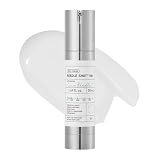
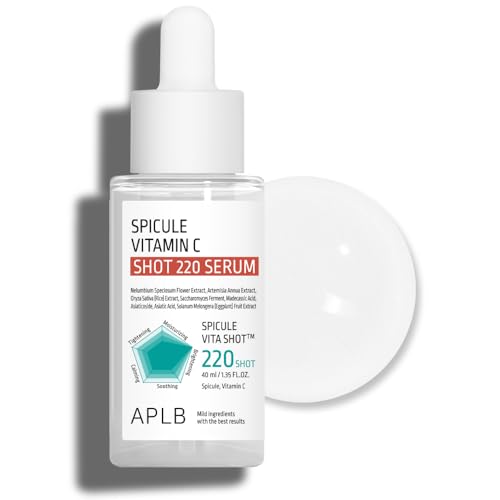
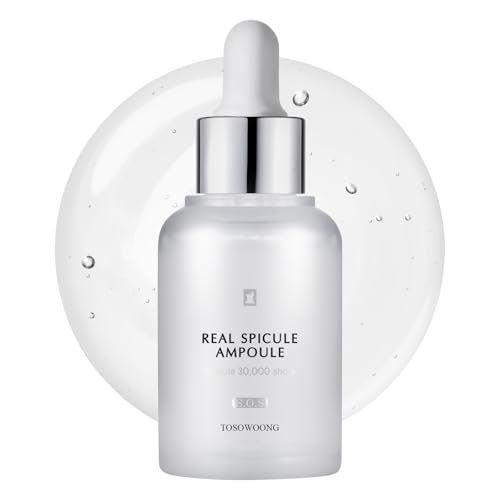
Most of the spicule serum content circulating online is either pure marketing hype or the same recycled TikTok talking points. The picks above are the four products in the category where the mechanism, the formulation, and the use-case match are all defensible — VT's Reedle Shot 100 is the original viral benchmark, APLB pairs spicules with stabilized vitamin C for tone-brightening, medicube layers exosome growth-factor signaling for premium-tier regeneration, and TOSOWOONG offers a legitimate budget alternative that doesn't cut corners on the silica-needle mechanism.
What actually are spicules and how do they work?
Spicules are microscopic silica needles — either sea-sponge-derived (the original source) or synthesized from sodium silicate. They don't dissolve into the skin. When applied as part of a serum, they physically embed in the upper epidermis and create temporary micro-channels through mechanical disruption. This produces shallow exfoliation and a transient increase in stratum corneum permeability — the same general category of effect as traditional microneedling (per Hou et al. 2017 Dermatol Surg), just at a much milder depth. The tingling you feel on application is the mechanical contact itself, not a chemical reaction.
Are spicule serums real microneedling?
They're a much milder member of the same category. Traditional dermaroller microneedling penetrates 0.25-2.5mm into the dermis, triggering the collagen-induction wound-healing response Sasaki 2009 documented. Spicule serums work in the upper epidermis only — they create real micro-channels, but at a fraction of the depth, so the collagen response is correspondingly minimal. What they do produce reliably: surface exfoliation, smoother texture, brighter tone, and short-term improvement in how subsequent serums penetrate. They're a legitimate exfoliation tool, not a substitute for clinical microneedling.
Why does the application sting and is the sting bad?
The sting is mechanical — thousands of microscopic silica needles making contact with the upper epidermis simultaneously. It's sharper than chemical-exfoliant tingle and lasts roughly 30-60 seconds at the Reedle Shot 100 density. It's not a sign of damage at consumer-formula concentrations. That said, if the sting is severe enough that you can't complete the application, switch to a lower-density formulation like the TOSOWOONG sea-sponge spicule ampoule, which produces a more diffuse, less sharply-pointed sensation. If you experience real redness lasting hours, broken skin, or a stinging sensation that persists after rinsing, your barrier likely needs repair before reattempting.
Can I use spicule serums with retinol or acids?
Not on the same night. The spicule serum is already producing the barrier-permeability change and mechanical exfoliation that retinoids and AHAs/BHAs would normally produce on a different mechanism. Stacking them creates real over-exfoliation risk — barrier compromise, persistent redness, sensitivity flare. Practical pattern: spicule serum 2x weekly, retinol on the off-nights, vitamin C in the morning. Or alternate weeks: spicule for two weeks, then a week of retinol-only with no spicule. Your barrier needs the rest periods.
How do I pick between the 4 spicule serums?
Match the formulation to your primary skin goal. VT Reedle Shot 100 is the daily-routine standard — the OG viral formula with the largest review base, ideal for general texture refinement and pore appearance. APLB Spicule Vita Shot 220 is the right pick when hyperpigmentation, post-acne marks (PIH), or uneven tone is your primary concern — the spicules carry the stabilized vitamin C deeper than topical vitamin C alone reaches. medicube Exosome Shot Zero is the premium-tier choice for users 35+ wanting active regeneration support beyond exfoliation — the 2,000 PPM exosome content signals fibroblast growth factor activity in the post-spicule recovery phase. TOSOWOONG is the budget alternative with niacinamide pairing — best for users testing the category before committing to premium formulations, or anyone wanting niacinamide-driven tone work in a single product.
What about TOSOWOONG vs the VT Reedle Shots?
TOSOWOONG is the most legitimate non-VT pick in the category. The silica-needle mechanism is comparable, the spicules are slightly larger and less uniform than VT's (so the sting feels more diffuse and less sharp), and the niacinamide pairing addresses pigment and pore concerns the CICA-anchored VT line doesn't directly target. The price point is meaningfully lower. The honest tradeoff: VT has the larger user base, the more refined formulation iteration, and the validated barrier-soothing CICA backbone. TOSOWOONG is a defensible budget pick or a parallel choice for users whose primary concern is tone/pores rather than texture.