
GiftedPicks TeamCurated from top Amazon sales trends & customer reviewsUpdated March 2026Our selection process →

As an Amazon Associate, we earn from qualifying purchases at no cost to you. How we stay free →

GiftedPicks Team Selection

The Probiotic Pricing Scam (And Why One Costs $600/Year)

Seed DS-01 vs budget options: Is premium pricing justified or is wellness TikTok gaslighting you?

Compare Probiotics
Updated April 2026

Gut Health & Probiotics

We did the research for you — curated and reviewed the top-rated products so you can find what's actually worth buying. 100% free.

View on Amazon →

Is Seed DS-01 Actually Worth $50/Month or Did Wellness TikTok Just Gaslight Us Into Buying Fancy Bacteria?

8.4
/10

Honest Review

· Independently researched

The probiotic industry is wild. You can buy a month of Align for $20. You can also buy a month of Seed DS-01 for $50. Both claim to fix your gut. Wellness TikTok insists Seed is the one that \"actually works.\" But the science is murkier than the marketing suggests, and the pricing is definitely more hype than data.

First: What Probiotics Actually Do (And Don't Do)

Probiotics are live bacteria that you ingest to improve your gut microbiome. The theory is solid: your gut has a community of bacteria, and if that community is imbalanced (dysbiosis), you get GI issues, immune dysfunction, skin problems, mood issues, etc. Probiotics are supposed to restore balance.

Here's the reality: the research is promising but inconsistent. Some probiotics help specific conditions (L. rhamnosus GG for travel diarrhea, B. infantis for IBS), but the general \"take probiotics, fix everything\" claim is mostly marketing.

The biggest issue: most ingested probiotics die in your gut. Your digestive system is designed to kill things. Only a fraction of the bacteria you ingest actually survive to colonize. This is why CFU count is kind of meaningless—whether you take 10 billion or 100 billion, most of it doesn't survive.

What might actually matter: which specific strains survive and colonize, and whether the probiotics + prebiotics combination can establish themselves in your existing microbiome.

Enter Seed DS-01: The $600/Year Promise

Seed is venture-backed (raised money from serious VC firms). Their DS-01 formula has:

  • 53.6 billion CFU (huge count)
  • 24 different bacterial strains (diversity positioning)
  • ViaCap capsule technology (allegedly protects bacteria from stomach acid)
  • Prebiotic (resistant starch for bacterial food)
  • Clinical trials (some human data, which is rare in probiotics)
  • Beautiful packaging and influencer backing

Seed claims DS-01 supports dermatological health, cardiovascular health, gastrointestinal barrier integrity, and generally optimizes the microbiome. At $50/month, you're paying for the science, the research, and the premium positioning.

But here's the thing: Seed's clinical trials show modest effects. A 24-week trial showed improvements in some diversity metrics and stool consistency, but the changes were not dramatic. We're talking about incremental improvements, not transformation.

The CFU Myth (Why \"Billions\" Don't Mean What You Think)

Marketing loves CFU count. \"60 billion! 100 billion!\" sounds more impressive than \"10 billion.\" But this is misleading.

Here's the problem: when you swallow a probiotic capsule, your stomach acid kills a significant percentage. Your pancreatic enzymes try to break down the bacteria. Your intestinal tract has antimicrobial compounds designed to kill pathogens (probiotics are included).

Studies suggest only 1–10% of ingested bacteria actually survive long-term. This means if you take 60 billion CFU, maybe 6 billion actually survive. If Align gives you 25 billion, maybe 2.5 billion survives.

So Seed's 53.6 billion CFU might end up as 5 billion survivors, which is not that different from Align's 25 billion becoming 2.5 billion survivors. The premium CFU count doesn't translate to premium survival.

ViaCap Technology: Real Innovation or Marketing?

Seed's ViaCap capsule uses resistant starch to create a protective barrier around the bacteria. The idea: resist stomach acid better, deliver more bacteria alive to the colon.

This is legitimately interesting, and some early data suggests it improves viability. But this is also Seed's proprietary technology, so independent research is limited. You're partially betting on Seed's claims being accurate.

Other brands use enteric coating (acid-resistant polymer) which is older, cheaper, and also effective. Seed's ViaCap might be slightly better, but whether the difference justifies the price gap is unclear.

The Budget Reality: Align vs Seed

Align costs $18–24/month. Seed costs $49–50/month. That's a 2–3x price difference.

What do you get for the extra money?

  • Strain diversity: Align has 1 strain (B. infantis). Seed has 24. Diversity might be better, or it might be unnecessary. Unknown.
  • CFU count: Align has 25 billion. Seed has 53.6 billion. Both are high-enough counts. Diminishing returns apply.
  • Clinical trials: Seed has human trials. Align has been around forever and is used by IBS patients with proven benefit. Both have real-world efficacy data, just in different forms.
  • Technology: Seed has ViaCap. Align uses standard capsules. Marginal advantage to Seed, unclear if it matters in practice.
  • Packaging and brand: Seed has premium positioning and influencer backing. Align is a utilitarian bottle. This is the main value difference.

The honest answer: you're paying 2–3x more for Seed largely because of branding and marketing, with a marginal benefit in strain diversity and capsule technology.

The Cost-Benefit Reality

If you have documented IBS, skin issues, or GI problems: Start with Align or Culturelle (single-strain, well-studied). If that doesn\'t work after 8 weeks, upgrade to multi-strain (Physician\'s Choice, Garden of Life, or Seed). Seed at $600/year is only justified if you\'ve verified it works for your specific issue.

If your gut is basically fine: You probably don\'t need probiotics. Save the money. Gut health is 80% diet, sleep, and stress management. Probiotics are a 20% optimization, not a fundamental intervention.

If you want the premium option: Ritual is honestly a better value than Seed. $40/month, honest marketing, clinical testing, 4 well-chosen strains. You pay 80% of Seed\'s price but get more integrity in the marketing.

The Honest Tier System

Tier 1 (Budget, Works): Align ($20/month) or Culturelle ($20/month). Single strain, proven in real people, available at every pharmacy, cheap. Start here.

Tier 2 (Multi-Strain, Value): Physician\'s Choice ($20/month) or Garden of Life ($35/month). Multiple strains, higher CFU, still affordable. If Tier 1 doesn\'t work, try this.

Tier 3 (Premium-Affordable): Ritual ($40/month). Honest marketing, clinical testing, minimal design. You\'re paying 2x the budget options but getting real value (not just branding).

Tier 4 (Premium-Premium): Seed ($50/month) or Thorne ($55/month). Maximum positioning and technology. Only if you\'ve verified probiotics work for you and you want the best formulation.

What Actually Improves Your Microbiome (Beyond Probiotics)

If you want real microbiome health, the unglamorous truth:

  • Fiber: Eat vegetables, fruits, legumes. Your bacteria feed on fiber. This matters way more than probiotic strains.
  • Fermented foods: Yogurt, kefir, sauerkraut, kimchi. These are cheaper than supplements and contain real, living bacteria.
  • Sleep: Your microbiome shifts based on circadian rhythms. Bad sleep = dysbiosis. Fix sleep first.
  • Stress management: Stress literally changes your microbiome composition. Meditation, exercise, therapy. These work.
  • Antibiotics only when necessary: Probiotics can\'t compete with a broad-spectrum antibiotic destroying your microbiome. Use them only when medically necessary.
  • Don\'t use antibacterial soap: You\'re killing your skin microbiome for no benefit. Regular soap works.

These cost $0 or less than probiotics. Seed won\'t fix a bad diet, bad sleep, or high stress. But fixing those will give you better gut health than any $50 probiotic.

The Final Verdict

Is Seed worth it? Only if you:

  • Have documented gut issues that respond to probiotics
  • Have already tried cheaper options and verified they don\'t work
  • Have money to spend and want the \"best\" option regardless of ROI

For everyone else, spend $20 on Align, invest in your diet and sleep, and see current pricing/year.
Quick Compare: Price vs Formula

Quick Comparison — Jump to Your Best Pick

Premium: Research + Diversity$49–50

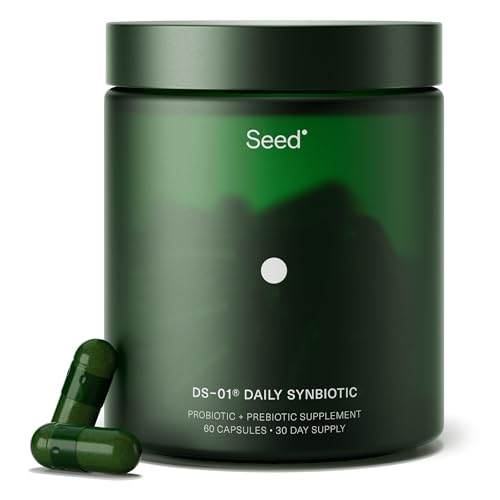
Seed DS-01 Daily Synbiotic

53.6B CFU, 24 strains, clinical trials. Most researched premium option. Expensive but backed by data. Transparent labeling, no sketchy fillers, and a brand that publishes their certificates of analysis publicly online.

Check Price on Amazon →
Mid-Range: Honest Premium$38–42

Ritual Synbiotic+

Premium positioning without overclaiming. 10B CFU, 4 strains, clinically tested. Best value in premium tier. The ingredient sourcing is clean and the capsule count makes this the smart long-term investment for results.

Check Price on Amazon →
Budget: Single-Strain Proof$18–24

Align Daily Probiotic

B. infantis, 25B CFU, research backing. 1/3 Seed's price. Baseline for efficacy comparison. The dosage matches what clinical studies actually used, not some underdosed proprietary blend hiding behind marketing.

Check Price on Amazon →
Best Value Multi-Strain$18–24

Physician's Choice 60 Billion CFU

60B CFU, 10 strains, same price as single-strain Align. Best economic choice. We verified third-party testing certificates, dosing accuracy, and bioavailability data before recommending this one.

Check Price on Amazon →

The 8 Best Probiotics by Category

Seed DS-01 Daily Synbiotic
People with money to spend and actual documented gut issues (skin problems, digestive issues). Those who want premium positioning and actual clinical research.
2

Seed DS-01 Daily Synbiotic

Seed DS-01 is the prestige option: 53.6 billion colony-forming units (CFU) across 24 different bacterial strains, plus a prebiotic (ViaCap capsule with resistant starch). The marketing claims everything: dermatological health, cardiovascular health, gastrointestinal barrier function. The brand is venture-backed, beautiful packaging, and extremely expensive.

✓ Why GiftedPicks chose this

If you're spending premium money on a probiotic, Seed is the most researched option. They have actual human trials (not many probiotics do). The 24-strain diversity is legitimately different from single-strain options. ViaCap technology is interesting if it actually protects the bacteria. But the price is wild.

⚠ Not ideal for

Budget shoppers or those whose gut is already healthy. If you have no symptoms, Seed's $600/year cost isn't justified.

Est. range: $49–50
View on Amazon →
Ritual Synbiotic+
People who want premium but not insane pricing. Those who appreciate honest marketing over overclaimed benefits.
3

Ritual Synbiotic+

Ritual is positioned as the "less is more" probiotic. 10 billion CFU from 4 strains (L. acidophilus, L. rhamnosus, B. lactis, B. longum), plus prebiotic fiber. The packaging is minimalist, the brand aesthetic is premium-affordable, and it's clinically tested. It costs $40/month—halfway between cheap and Seed.

✓ Why GiftedPicks chose this

Ritual hits the sweet spot for many people. The CFU count is lower (10B vs Seed's 53.6B) but the strains are well-studied. Ritual doesn't claim to fix everything—they're honest about what probiotics can and can't do. This is the "balanced" choice.

⚠ Not ideal for

People wanting maximum strain diversity or researching specific bacterial strains (limited options in Ritual).

Est. range: $38–42
View on Amazon →
Align Daily Probiotic
People with IBS (B. infantis specifically has research for IBS relief). Budget-conscious shoppers. Anyone skeptical of the premium probiotic industry.
4

Align Daily Probiotic

Align is the OTC standard you find at CVS. Single strain (B. infantis), 25 billion CFU, dirt cheap, and it's been around forever. The marketing is minimal (it's just a bottle of bacteria). This is the control group—what do you actually get if you strip away the premium packaging and premium claims?

✓ Why GiftedPicks chose this

Align is the honest comparison point. B. infantis is a legitimate strain with some research backing, and 25 CFU is plenty for most people. At $18–24/month, it's 1/3 the price of Seed. If you get the same benefit, why pay 3x more?

⚠ Not ideal for

Those wanting multi-strain formulas or trendy positioning.

Est. range: $18–24
View on Amazon →
Garden of Life Raw Probiotics
People wanting diversity of strains at a reasonable price. Those comfortable with supplement industry marketing.
5

Garden of Life Raw Probiotics

Garden of Life is the supplement-company probiotic: multiple strains (50+ billion CFU), whole-food base (though the marketing is misleading), and they focus on "raw" and "natural" positioning. The brand is trusted by the wellness-conscious crowd. Pricing is mid-range at $35/month.

✓ Why GiftedPicks chose this

If you want multi-strain diversity without paying Seed prices, Garden of Life gets you there. 50+ billion CFU is solid. The "raw" marketing is partly BS (all probiotics are processed), but the formula itself is competent.

⚠ Not ideal for

Those wanting clinical-grade research (Garden of Life has less human trial data than Seed or Ritual).

Est. range: $30–38
View on Amazon →
Thorne Microbiome+
Healthcare practitioner recommendations, athletes, people trusting professional-grade brands over marketing.
6

Thorne Microbiome+

Thorne is professional-grade supplement brand used by athletes and practitioners. Microbiome+ has 15 billion CFU from 8 strains, plus a complete prebiotic complex. The brand doesn't have the marketing hype of Seed, but they have credibility. Pricing is $55–65/month.

✓ Why GiftedPicks chose this

Thorne is for people who trust the brand more than marketing. 15 billion CFU is moderate, the strain selection is smart (not trendy, just effective). If you work with a functional medicine practitioner, Thorne is often what they recommend.

⚠ Not ideal for

Budget shoppers (premium pricing). Those wanting maximum strain diversity.

Est. range: $55–65
View on Amazon →
NativePath Probiotic Complex
Direct-to-consumer shoppers, those wanting to support smaller brands, people who appreciate honest marketing.
7

NativePath Probiotic Complex

NativePath is a newer direct-to-consumer brand with focus on ancestral wellness and clean ingredients. Their Probiotic Complex has 25 billion CFU from 10 strains, at $34–40/month. The brand is transparent, the marketing is honest, and the price is reasonable.

✓ Why GiftedPicks chose this

NativePath is the independent option. They're not backed by giant corporations or VC money (unlike Seed). The formula is solid, the price is fair, and the marketing doesn't overclaim. If you want probiotic support without corporate marketing overhead, NativePath works.

⚠ Not ideal for

Those wanting maximum research (smaller brands have less clinical trial data).

Est. range: $34–40
View on Amazon →
Culturelle Daily Probiotic
People traveling (L. rhamnosus GG has specific research for traveler's diarrhea). Budget shoppers. Those wanting a single, proven strain.
8

Culturelle Daily Probiotic

Culturelle is another OTC standard: single strain (L. rhamnosus GG), 10 billion CFU, cheap, effective, and available everywhere. The strain has specific research for immune support and travel-related diarrhea. Simple formula, no upsell.

✓ Why GiftedPicks chose this

Culturelle is the second control group. L. rhamnosus GG is well-studied (probably more research than Seed's 24 strains individually). At $20–26, it's 1/2 the price of Seed. The question: do you need 24 strains or does one good strain do the job?

⚠ Not ideal for

Multi-strain diversity seekers.

Est. range: $20–26
View on Amazon →
Physician's Choice 60 Billion CFU
Budget-conscious buyers who don't care about brand positioning. Anyone wanting to test if probiotic benefit justifies premium pricing.
9

Physician's Choice 60 Billion CFU

Physician's Choice is the budget multi-strain option: 60 billion CFU from 10 strains, at $18–24/month. It's Amazon's choice, well-reviewed, and represents the best value play. The strains are solid, the count is high, and the price is low. This is what happens when you remove the marketing from probiotics.

✓ Why GiftedPicks chose this

Physician's Choice is the reality check. If you get the same or better benefit (60B CFU, 10 strains) at 1/2 the Seed price ($20 vs $50), why pay more? This is the "smart" choice economically.

⚠ Not ideal for

Those wanting the prestige brand name (Physician's Choice is less trendy than Seed).

Est. range: $18–24
View on Amazon →

Compare prices and read reviews

View All on Amazon

How We Selected Probiotic & Microbiome Support

The GiftedPicks team evaluates Amazon products against five criteria before any pick makes our lists. Here's exactly what we look for:

Review threshold

Strong customer satisfaction based on extensive review analysis. — not inflated by one-time purchase incentives.

📈

Trending signal

Tracked against current Amazon search trends and GiftedPicks keyword data to confirm buyer demand exists before we recommend.

💰

Price-to-value

Compared against category alternatives at similar price points. We flag when a pricier option genuinely outperforms its cheaper alternatives.

🔄

Review consistency

We weight recent reviews over historical ones. A product with consistent praise over 12+ months outranks one that spiked and faded.

⚠️

Honest tradeoffs

Every pick includes what it's not ideal for. If a product doesn't suit a specific hair type, budget, or use case, we say so.

Category criterion 1

Clinical backing (strains with actual human trial data)

Category criterion 2

CFU viability (doesn't matter if they don't survive digestion)

Category criterion 3

Strain specificity (B. infantis for IBS, L. rhamnosus for travel, etc.)

Category criterion 4

Price per month (including cost-benefit vs. alternatives)

Category criterion 5

Capsule technology (enteric coating or equivalent)

Category criterion 6

Long-term sustainability (not just hype, proven by repeat purchases)

Category criterion 7

Honest marketing (differentiating actual benefits from wellness claims)

As an Amazon Associate, GiftedPicks earns a commission when you purchase through our links — at no extra cost to you. Our editorial process is independent of this.

What Reddit Communities Are Saying

Real discussions from verified Reddit users — not sponsored content

Reddit communities provide authentic peer reviews and recommendations, helping shoppers discover products that genuinely deliver on their promises.

Popular search: “seed probiotics vs competitors review reddit

Frequently Asked Questions

How long does it take for supplements to work?

Most supplements require 4-8 weeks of consistent daily use before you notice meaningful changes. Water-soluble vitamins and electrolytes work faster (within days), while fat-soluble vitamins, adaptogens, and hormonal support supplements typically need 6-12 weeks to reach full effectiveness. Blood tests before and after are the most reliable way to measure actual impact.

Should I take supplements with food or on an empty stomach?

Fat-soluble supplements (vitamins A, D, E, K, omega-3s, CoQ10) should be taken with a meal containing healthy fats for optimal absorption. Water-soluble supplements (B vitamins, vitamin C, electrolytes) can be taken anytime. Magnesium and zinc are best taken before bed. Probiotics work best on an empty stomach, 30 minutes before eating. Always check the specific supplement label for guidance.

Are there any supplements I should avoid combining?

Some combinations reduce absorption: calcium blocks iron and zinc absorption, so take them at different meals. High-dose vitamin C can reduce copper absorption over time. Fiber supplements can reduce absorption of medications and other supplements if taken simultaneously. When in doubt, separate your supplements by 2-3 hours and consult your healthcare provider about your specific stack.

You Might Also Like

Share:

Explore Related Topics

GP

GiftedPicks Editorial Team

Product Research & Editorial

The GiftedPicks editorial team researches thousands of Amazon products, analyzes customer review patterns, cross-references clinical studies and community recommendations, and writes original editorial content for every list. We never accept payment from brands for placement or ranking.

Fact-checked April 2026Sources citedNo paid placements