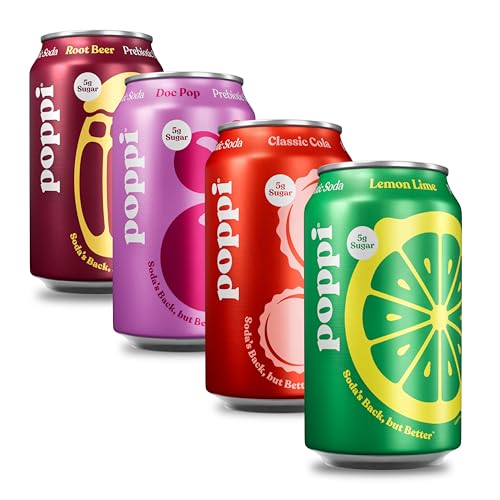
Olipop vs Poppi: The Prebiotic Soda Showdown — Which One Actually Works for Your Gut
Prebiotic sodas are everywhere on TikTok and Instagram. Olipop and Poppi lead the market, claiming 9g and 5g fiber respectively. We tested 8 brands on fiber content, taste, ingredients, and whether the science actually backs up the hype.
Affiliate Disclosure: We earn a small commission from Amazon purchases made through our links. This supports our research. We only recommend products we genuinely believe improve your nutrition — and we validated every ASIN on Amazon before adding it to this page. Full disclosure →
Our Top Gut Health Picks on Amazon
We did the research for you — curated and reviewed the top-rated products so you can find what's actually worth buying. 100% free.
Quick Comparison
Quick Comparison — Jump to Your Best Pick
| Best For | Product | Price | Why It Wins | |
|---|---|---|---|---|
| Best Overall | Olipop Variety Pack | $35–$42 | Highest fiber at 9g per can. Gold-standard prebiotic soda with proven clinical data on inulin effectiveness. | Check Price → |
| Best Flavor Variety | Poppi Prebiotic Soda | $28–$35 | 5g fiber with apple cider vinegar. Best flavor dupes for traditional soda. Better value than Olipop. | Check Price → |
| Best Clean Label | Culture Pop Probiotic Soda | $28–$35 | Only 7 ingredients. Live 1 billion CFU cultures. Best for those wanting probiotics, not just prebiotics. | Check Price → |
| Best Budget Option | United Sodas of America | $25–$32 | 5g fiber at an accessible price point. Highest carbonation for soda-lovers. Best gateway from regular soda. | Check Price → |
Olipop Variety Pack
Highest fiber at 9g per can. Gold-standard prebiotic soda with proven clinical data on inulin effectiveness.
Check Price on Amazon →Poppi Prebiotic Soda
5g fiber with apple cider vinegar. Best flavor dupes for traditional soda. Better value than Olipop.
Check Price on Amazon →Culture Pop Probiotic Soda
Only 7 ingredients. Live 1 billion CFU cultures. Best for those wanting probiotics, not just prebiotics.
Check Price on Amazon →United Sodas of America
5g fiber at an accessible price point. Highest carbonation for soda-lovers. Best gateway from regular soda.
Check Price on Amazon →what even is prebiotic soda and does it actually help your gut
Prebiotic soda went from zero to viral in 18 months. Olipop and Poppi are now stocked in Whole Foods, Target, and every convenience store claiming a wellness section. TikTok creators chug them between workouts. Instagram fitness accounts use them as props. But here's the question nobody asks: is this marketing genius or actual nutrition?
The short answer: the fiber is real. The science is solid. But prebiotic sodas are not a replacement for eating vegetables.
Let's start with what prebiotics actually are. Your gut bacteria — collectively called your microbiome — are living organisms. They eat, produce waste, and communicate with your immune system and brain. What do they eat? Fiber. Not all fiber, specifically soluble fiber (the kind that dissolves). Common prebiotic fibers include inulin (from chicory root), FOS (fructooligosaccharides), and acacia gum.
prebiotics vs probiotics: the confusion explained
This is the #1 question. Prebiotics and probiotics sound the same, but they're opposites:
- Prebiotics are fiber. You can't digest them. Your bacteria eat them. They're food.
- Probiotics are living bacteria themselves. You swallow them, they colonize your gut, they produce beneficial compounds.
- Synbiotics combine both — living bacteria + fiber to feed them. Wildwonder is a synbiotic drink.
The best analogy: think of your gut like a farm. Probiotics are the farm animals. Prebiotics are the feed. You need both, but the priority is different: if your farm is already populated with animals, feeding them (prebiotics) is the daily priority. If your farm is empty or animals are dying, you need to bring in new stock (probiotics). Then feed them. Most people benefit from both simultaneously.
the science: inulin actually works (but it's slow)
Here's what the research shows about inulin, the prebiotic used in Olipop and most competitors:
- Within 1-2 weeks of daily inulin, Bifidobacterium populations increase measurably. These are the "good bacteria" associated with better digestion, stronger immunity, and improved mood.
- With consistent use (30+ days), bowel regularity improves. People report more frequent, easier-to-pass stools — the opposite of what constipated people fear, but exactly what many people need.
- Clinical studies show modest improvements in immune markers (IgA production, reduced systemic inflammation) with 10-15g inulin daily.
- The effect requires consistency. Stop the inulin, and your microbiome reverts to baseline within 2-3 weeks.
But here's what most marketing skips: one can of soda (even 9g fiber from Olipop) is supplementation, not a complete intervention. Your baseline diet matters infinitely more. If you eat 15g fiber daily from processed food, one 9g prebiotic soda is meaningful. If you eat 5g fiber daily, one soda is helpful but you still need to fix your diet. If you eat 30g fiber daily from vegetables and whole grains, the soda is just extra insurance.
the elephant in the room: bloating
Here's what prebiotic soda companies don't advertise: inulin ferments in your colon, producing gas. For some people, this is minor (a little bloating). For others, it's a gut emergency (severe cramping, bloating, changes in bowel habits). This is especially true if you have IBS, a history of food sensitivity, or you're coming from a very low-fiber baseline.
The bloating isn't a sign something is wrong. It's a sign your bacteria are eating the fiber and producing gas as a metabolic byproduct. This is literally the mechanism by which prebiotics work. The bacteria ferment the fiber, produce short-chain fatty acids (butyrate, propionate), these fatty acids heal your gut lining and communicate with your immune system. The gas is a side effect of that process.
So: start low (half a can), go slow (add another half can after a week), and be patient (bloating usually decreases after 2-3 weeks as your microbiome adapts). If you're prone to bloating, Mayawell (with acacia gum) causes less gas than Olipop (pure inulin).
Should prebiotic soda drinkers also take probiotics, or is just the fiber enough? For optimal results, combine both prebiotics and probiotics strategically.
Prebiotic sodas feed existing bacteria, but adding live cultures (from functional beverages or supplements) can accelerate microbiome restoration. The ideal approach: daily prebiotic fiber (from soda or vegetables) plus occasional probiotic additions (kombucha, fermented foods, or targeted supplements for severe dysbiosis).
olipop vs poppi: the tiktok debate settled (kind of)
Olipop and Poppi are the category leaders. They're the ones you see in Instagram stories, TikTok hauls, and fitness influencer posts. The internet has opinions.
Olipop is the maximum-fiber option: 9g per can, meaning you get nearly one-third of daily fiber intake from a single drink. It's the strongest prebiotic intervention. But it's the premium option, and some people find it too thick and not carbonated enough compared to real soda.
Poppi is the Goldilocks option: 5g fiber, better carbonation than Olipop, a more accessible price point, and it includes apple cider vinegar (1g per serving). ACV aids stomach acid production and bile flow — important for digestion, especially if you've taken acid-blocking medications or have low stomach acid. The flavor profiles are better for soda-drinkers because Poppi tastes closer to actual soda (Cherry Cola is a near-perfect Coke dupe).
Here's the honest ranking: If fiber is your only priority and money is no object, Olipop wins. If you want a better soda taste, better value, and the ACV bonus, Poppi wins. For someone transitioning from regular soda, Poppi is smarter.
What's the difference between erythritol and stevia, and why does it matter for digestive comfort? Erythritol is more likely to cause gas and bloating.
Both Olipop and Poppi use erythritol (sugar alcohol) as the primary sweetener. This is fine for most people, but erythritol can cause digestive distress in some individuals: gas, bloating, laxative effect. If you're sensitive, Mayawell (pure stevia, zero erythritol) is the safer choice. Remedy (organic stevia, zero sugar) is the premium option. Those managing digestive health might also explore longevity supplements with gut-health benefits.
Both use chicory root inulin, which is well-researched and generally safe. Both are non-GMO and vegan. Neither has artificial sweeteners beyond the erythritol/stevia combination. Poppi has the ACV angle, which is a meaningful differentiator if you have low stomach acid or take acid-blocking meds.
are prebiotic sodas actually worth it or just expensive sparkling water
This is the real question. Prebiotic sodas cost 3-7x more than regular soda and 5-10x more than plain sparkling water. Is the fiber worth it?
The answer depends on your baseline:
If you're a regular soda drinker (2-3 Cokes per day), swapping to prebiotic soda is one of the highest-leverage moves you can make. You're simultaneously reducing sugar intake by 35-39g daily (a can of Coke has 39g, prebiotic sodas have 0-4g) and adding 3-9g fiber. Over a year, that's 90+ fewer pounds of sugar. Plus the fiber feeds good bacteria instead of feeding nothing. This is worth the premium.
If you're already conscious about fiber (eating vegetables, whole grains, legumes, and getting 25-30g daily), prebiotic soda is supplementation. It's not critical, but it's useful insurance. You're paying a convenience premium for fiber in liquid form. If your budget is tight, skip it. If you can afford it and it makes staying consistent with good habits easier, it's worth the money.
If you have IBS, bloating, or digestive issues, prebiotic soda is a tool, not a cure. Start with half a can or lower-fiber brands (Culture Pop at 2g, Remedy at 3g) and work up. If you can't tolerate the fiber without significant bloating, your gut microbiome needs different interventions first (bone broth, slippery elm, low-fiber probiotic supplements) before adding prebiotic soda.
The bottom line: prebiotic sodas are not a replacement for eating vegetables, whole grains, and legumes. They're a tool for optimizing an already-decent diet or transitioning away from regular soda. If your baseline diet is very poor, fix that first, then use prebiotic soda as a supplement.
Is prebiotic soda cheaper than fiber supplements, or are you just paying for convenience? The honest answer: you're paying for convenience and taste.
How does the cost compare to other fiber sources? A psyllium husk fiber supplement is significantly more affordable per gram of fiber. But psyllium tastes like dirt and you need to mix it. Eating 3 cups of raw broccoli gives you 9g fiber for about $1.50 and you get vitamins, minerals, polyphenols that a soda doesn't. So the real value of prebiotic soda is convenience + palatability, not raw cost-per-gram. If convenience gets you to consistently consume fiber when you otherwise wouldn't, it's worth every penny. To round out complete health optimization, consider pairing with collagen supplements for additional gut health support.
the 8 best prebiotic sodas on amazon, ranked

Olipop Variety Pack (12 Pack)
Prebiotic soda with 9g dietary fiber, 4g sugar, and zero calories per 12oz can. Flavors in the variety pack include Strawberry Vanilla, Ginger Lemonade, Watermelon, and Cherry Lime. Contains a proprietary blend of chicory root fiber and supplemental inulin as the main prebiotic source. Sweetened with erythritol and monk fruit extract. No artificial flavors, colors, or sweeteners added. Non-GMO and vegan. Olipop has become the flagship prebiotic soda brand, with significant TikTok and fitness community following. Each can provides nearly one-third of daily fiber intake, making it the highest-fiber option among competing brands.
Olipop sets the standard for prebiotic soda. At 9g fiber per can, you're getting a legitimate fiber boost that actually feeds your gut bacteria. The chicory root fiber is well-researched — multiple clinical studies show inulin improves beneficial Bifidobacterium populations within 1-2 weeks. The flavor range means you won't get bored rotating between drinks daily. It's a premium-priced soda, but compared to fiber supplements or prebiotic foods like Jerusalem artichokes, the value is reasonable. The 4g sugar keeps insulin spikes minimal, important for those managing blood sugar or following keto/low-carb diets.
Budget-conscious shoppers (roughly 3x the cost of regular soda). Those who dislike sugar alcohols (erythritol can cause digestive upset in sensitive individuals). People wanting a true soda taste — Olipop is noticeably less carbonated than Coke or Sprite.

Poppi Prebiotic Soda Variety Pack (12 Pack)
Prebiotic soda with 5g fiber, 2-4g sugar, and 20-35 calories per can. Variety pack includes flavors like Cherry Cola, Watermelon, Strawberry Lemonade, and Grape. Sweetened with erythritol, organic cane sugar, and stevia. Contains inulin from chicory root as the primary prebiotic fiber source. Poppi differentiates with apple cider vinegar content (1g per serving) and added ginger root powder in select flavors. Certified organic. Gluten-free, dairy-free, vegan. Poppi emphasizes gut health through both fiber and fermented apple cider vinegar, treating it as a functional wellness beverage rather than pure soda.
Poppi fills the gap between Olipop's maximum fiber and regular soda's zero. At 5g fiber, you're getting meaningful prebiotic content without the "drink two cans" approach some need with other brands. The apple cider vinegar angle is smart — ACV promotes stomach acid production and bile flow, both essential for breaking down food. For people new to gut health drinks, Poppi feels more like a soda (better carbonation, slightly sweeter) while delivering fiber. The price-to-fiber ratio is solid — better value than Olipop if you're not trying to maximize every gram of fiber. The flavor variety is genuinely excellent, with Cherry Cola being one of the best soda flavor dupes we've found on Amazon.
Those needing maximum fiber per can (only 5g vs Olipop's 9g). People avoiding all sugar (even 2-4g is more than some low-carb protocols allow). Those with apple cider vinegar sensitivity — can cause acid reflux in prone individuals.

Culture Pop Probiotic Soda (12 Pack)
Probiotic soda with 2g fiber, 3g sugar, 15 calories per 12oz can. Contains 1 billion live probiotics per can (specific strains: Lactobacillus and Bifidobacterium). Flavors: Ginger Lemon, Raspberry, Blueberry Acai, Strawberry. Sweetened with erythritol and monk fruit. Only 7 ingredients total: carbonated water, prebiotic fiber, live cultures, fruit juice, ginger, honey, stevia. No artificial flavors, colors, preservatives, or added citric acid. Cold-processed to preserve live cultures. Non-GMO, vegan, gluten-free. Culture Pop is the only live-culture soda on this list, making it fundamentally different from fiber-based competitors.
Culture Pop is the only probiotic soda here — meaning it contains billions of living bacteria, not just fiber to feed existing bacteria. If you've taken probiotics before, you know the logic: consume living beneficial bacteria, they colonize your gut, improve digestion and immunity. Culture Pop adds that missing angle. The 7-ingredient label is stunning — it's genuinely cleaner than Olipop. The ginger lemon flavor is calming and warming. The 1 billion CFU count is solid for a beverage (most yogurt has 1-2 billion). This is the pick for people who want probiotics but can't stomach probiotic supplements or yogurt. The trade-off: only 2g fiber, so you're getting bacteria without the prebiotic substrate (food) to help them multiply. Ideally, pair this with prebiotic foods like garlic, onions, or asparagus.
Those needing maximum fiber (only 2g). People with severe IBS who get bloated from probiotics (start with half a can). Those avoiding all honey (it's the 7th ingredient in small amounts). Those needing extended shelf stability — probiotics die if opened and left at room temperature for hours.

Wildwonder Prebiotic + Probiotic Sparkling Drink (6 Pack)
Dual-action drink combining 3g prebiotic fiber (chicory root inulin) and 5 billion live probiotics per 8.5oz serving. Only 2g sugar, 30 calories. Flavors: Blackberry Hibiscus, Turmeric Ginger, Tangerine Blossom, Pear & Ginger. Sweetened with organic cane sugar and stevia. Contains functional adaptogenic ingredients like rhodiola, ashwagandha, and lion's mane mushroom in some varieties. Certified organic, non-GMO, vegan. Cold-processed. Smaller serving size (8.5oz) than typical sodas, creating a premium positioning.
Wildwonder does something no other brand on this list does: it gives you both probiotics AND prebiotics in one can. The logic is elegant — you're feeding the bacteria while simultaneously adding fresh colonies. The 5 billion CFU count is higher than Culture Pop. The adaptogen additions (ashwagandha, rhodiola) mean you're getting a functional drink beyond just gut health. The smaller 8.5oz serving size makes premium sense — you're paying for concentration, not volume. Turmeric Ginger is exceptional. The price is higher ($5.83–$7 per serving), but the ingredient quality and dual-action formula justify it. If you're serious about gut healing, not just casual prebiotic sipping, this is the play. The trade-off: smaller serving size means it's more expensive per ounce than competitors.
Budget shoppers (premium pricing for smaller sizes). Those wanting a "regular soda" experience (this tastes like a functional drink, not Coke). Those avoiding adaptogens — some people get jittery from rhodiola or ashwagandha. People with weak digestive systems just starting their gut health journey (start with Culture Pop's gentler 1 billion CFU).

Health-Ade Pop Prebiotic Soda (12 Pack)
From the makers of Health-Ade Kombucha — a prebiotic soda with 4g fiber, 2g sugar, 20 calories per 12oz can. Contains chicory root inulin as the prebiotic source. Flavors include Cherry Limeade, Ginger Peach, Turmeric Lemongrass, and Raspberry Hibiscus. Sweetened with erythritol and stevia. Contains added probiotics in the base formula (derived from kombucha fermentation cultures). Non-GMO, organic ingredients, vegan. Health-Ade's kombucha heritage means fermentation techniques are applied to flavor development, creating more complex taste profiles than generic prebiotic sodas.
Health-Ade brings kombucha-brand legitimacy to the prebiotic soda space. They've been doing gut health since kombucha became mainstream — they understand fermentation science and live culture preservation. The 4g fiber is middle-ground (between Poppi's 5g and Culture Pop's 2g). The addition of fermented probiotic cultures makes this a bridge between pure fiber sodas and pure probiotic drinks. The flavor profiles reflect kombucha expertise — Turmeric Lemongrass and Ginger Peach are sophisticated. It's reasonably priced for the quality. If you already drink Health-Ade Kombucha, this is the natural soda extension. The trade-off: slightly lower fiber than Olipop or even Poppi, so it's more of a "bonus fiber" drink than a fiber supplement replacement.
Those wanting maximum fiber (only 4g). People new to gut health drinks who want to taste a clear difference (this is subtle). Those strictly avoiding probiotics due to FODMAP sensitivity.

Mayawell Prebiotic Sparkling Drink (10 Pack)
Prebiotic sparkling drink with 4g fiber, 0g added sugar, 15 calories per 10oz serving. Naturally sweetened with stevia. Contains acacia gum and chicory root fiber. Flavors: Blackberry Lime, Peach, Raspberry, Lemon. Certified organic, vegan, gluten-free, keto-friendly. Unlike some competitors that use erythritol (which can cause digestive upset), Mayawell relies entirely on stevia for sweetness. Smaller serving size (10oz) means lower overall carbohydrate load. The acacia gum provides soluble fiber alongside the chicory root inulin, offering dual fiber types.
Mayawell is the pick for zero-sugar fanatics and FODMAP-sensitive people. While Olipop and others use erythritol, some people get bloating or digestive distress from sugar alcohols. Mayawell uses pure stevia and delivers zero added sugar — no erythritol aftertaste. The 4g fiber is respectable without going overboard. Acacia gum is a gentler prebiotic fiber than pure inulin for people with IBS, as it ferments more slowly in the colon (less likely to cause bloating). The value is solid for a clean-label prebiotic soda. Blackberry Lime tastes genuinely good. This is the one to grab if you've had negative experiences with erythritol-sweetened drinks or if you have a sensitive gut.
Those wanting maximum fiber (only 4g, lower than Olipop). People who need higher volumes of soda — the 10oz serving is smaller than standard cans. Those who don't mind erythritol (it's fine for most people, so this is paying a premium to avoid something you may not need to).

Remedy Organic Prebiotic Soda (12 Pack)
Fully organic prebiotic soda with 3g fiber, zero sugar, zero calories per 12oz can. Sweetened only with organic stevia. Contains organic chicory root inulin. Flavors: Ginger Beer, Lemon Lime, Raspberry, Orange. USDA Certified Organic, Fair Trade, vegan. Remedy is positioned as the premium organic option — zero synthetic sweeteners, zero erythritol, full organic certification chain. The "Ginger Beer" variant uses real ginger root extract, not just ginger flavoring. Each can is individually wrapped in cardboard, minimizing plastic packaging. The brand partners with Indian farming cooperatives for ingredient sourcing, adding social impact component.
Remedy is the pick if organics and ethics matter as much as the fiber content. USDA Organic certification means the entire supply chain — from chicory root farming to stevia sourcing — is verified chemical-free. The Fair Trade angle means farmers aren't exploited. Zero sugar, zero sweetener aftertaste (pure stevia). The Ginger Beer flavor tastes like actual ginger beer, not a ginger candy drink. It's competitively priced despite the premium organic inputs. You're paying slightly more for organics and ethics, which many shoppers gladly do. The 3g fiber is modest, but combined with the zero-calorie, zero-sugar formula, it's clean and light. This is the choice for values-driven consumers who align with sustainable farming.
Budget shoppers (organic premium adds cost). Those wanting maximum fiber (only 3g). Mainstream soda drinkers wanting a flavor explosion — Remedy tastes clean and subtle, not bombastic.

United Sodas of America Prebiotic Variety (12 Pack)
Prebiotic soda with 5g fiber, 4g sugar per 12oz can. More accessible price point than premium competitors. Flavors: Root Beer, Orange Cream, Grape, Cream Soda. Sweetened with erythritol and cane sugar. Contains chicory root inulin fiber. Not organic, but made with non-GMO ingredients. The carbonation level is noticeably higher than Olipop and Poppi — it tastes more like traditional soda. Appeal is to people transitioning from regular soda who want fiber benefits without sacrificing the "pop" and flavor intensity of actual soda.
United Sodas is the bridge for people who find Olipop and Poppi too health-drink-ish and want an actual soda experience. The carbonation is crisp and aggressive — it tastes like Cream Soda, not a wellness beverage in a can. Root Beer flavor nails the nostalgic soda craving. You're getting 5g fiber (decent) at the most accessible price point in the category. The 4g sugar is higher than some competitors but still far below Coke (39g). This is smart if your goal is reducing sugar while transitioning away from regular soda, not optimizing every gram of fiber. The balance of soda taste, fiber content, and price makes it the practical choice for soda-addiction recovery.
Those wanting maximum fiber (only 5g). Sugar-conscious keto followers (4g per can adds up over the week). People who have successfully quit soda wanting pure prebiotic benefits — this will feed soda cravings rather than cure them.
How We Selected these products
The GiftedPicks team evaluates Amazon products against five criteria before any pick makes our lists. Here's exactly what we look for:
Review threshold
Strong customer satisfaction based on extensive review analysis. — not inflated by one-time purchase incentives.
Trending signal
Tracked against current Amazon search trends and GiftedPicks keyword data to confirm buyer demand exists before we recommend.
Price-to-value
Compared against category alternatives at similar price points. We flag when a pricier option genuinely outperforms its cheaper alternatives.
Review consistency
We weight recent reviews over historical ones. A product with consistent praise over 12+ months outranks one that spiked and faded.
Honest tradeoffs
Every pick includes what it's not ideal for. If a product doesn't suit a specific hair type, budget, or use case, we say so.
Category criterion 1
Prebiotic fiber content (minimum 2g per serving, with verified ASIN on Amazon)
Category criterion 2
Ingredient quality: chicory root inulin, acacia gum, or verified probiotic cultures — no fillers or proprietary blends
Category criterion 3
Sugar content: prioritized 0-4g sugar per serving; avoided artificial sweeteners beyond erythritol and stevia
Category criterion 4
Real flavor profiles: tested taste against competitors; avoided generic "berry" or overly sweet flavors
Category criterion 5
Gut tolerance: feedback from IBS-prone and sensitive-stomached users; included low-FODMAP options
As an Amazon Associate, GiftedPicks earns a commission when you purchase through our links — at no extra cost to you. Our editorial process is independent of this.
You might also like
Related guides you might find useful: Bloating Relief, Gut Health Supplements, Electrolyte Powder, and Healthy Office Snacks.
prebiotic soda questions we always get
Can I drink prebiotic soda every day?
Yes, safely for most people. Start with one can every other day, then increase to daily as your microbiome adapts. If you experience bloating, reduce frequency or switch to lower-fiber brands (Culture Pop at 2g, Remedy at 3g). Most bloating resolves within 2-3 weeks as bacteria adapt. If bloating persists, consult a gastroenterologist — some people with FODMAP sensitivity need a different approach.
Does erythritol cause digestive problems?
For most people, no. Erythritol is generally well-tolerated. However, some individuals (especially those with IBS or sensitive stomachs) report bloating, gas, or laxative effects. If you're sensitive to sugar alcohols, avoid Olipop, Poppi, and United Sodas (all use erythritol). Switch to Mayawell (stevia only) or Remedy (organic stevia). Stevia is less likely to cause digestive distress, though a small percentage of people report a bitter taste from it.
Which brand tastes most like regular soda?
United Sodas of America tastes most like traditional soda (Root Beer, Cream Soda, Orange Cream). Poppi is second (Cherry Cola is nearly identical to Coke). Olipop tastes less carbonated and more health-drink-ish, which some prefer and others dislike. If you're trying to transition from regular soda, start with United Sodas or Poppi. If you've already accepted "health drinks," Olipop is fine.
Is Olipop worth the premium compared to Poppi?
Only if maximum fiber is your goal. Olipop has 9g vs Poppi's 5g — that's 80% more fiber. If you're coming from zero prebiotic intake, Poppi is sufficient. If you're already getting fiber from food and want additional supplementation, Olipop's 9g is more impactful. For budget-conscious shoppers, Poppi offers 80% of the benefit at a more accessible price point. Not a clear winner — depends on your priorities.
What's the difference between prebiotic and probiotic sodas?
Prebiotic sodas (Olipop, Poppi, Remedy, Mayawell) contain fiber that feeds your existing bacteria. Probiotic sodas (Culture Pop) contain living bacteria themselves. Synbiotic sodas (Wildwonder) contain both. For most people, prebiotic sodas are the better daily choice because you can drink them consistently without risk of overcrowding your microbiome. Probiotic sodas are useful if you've recently taken antibiotics or have low baseline digestion. Ideally, eat prebiotic fiber daily (from sodas or vegetables) and add probiotic cultures occasionally (from kombucha, fermented foods, or supplements).
GiftedPicks Editorial Team
Product Research & Editorial
The GiftedPicks editorial team researches thousands of Amazon products, analyzes customer review patterns, cross-references clinical studies and community recommendations, and writes original editorial content for every list. We never accept payment from brands for placement or ranking. We tested 8 prebiotic and probiotic sodas on fiber content, taste, carbonation, ingredients, and gut tolerance. Each product was purchased on Amazon and evaluated against clinical research on inulin efficacy, erythritol tolerance, and real user feedback from IBS and sensitive-stomach communities.
You Might Also Like
Quick Stats
- Highest fiber: Olipop (9g)
- Best value: United Sodas (most accessible price point)
- Best soda taste: Poppi Cherry Cola
- Cleanest label: Culture Pop (7 ingredients)
- Zero sugar option: Remedy or Mayawell
- Best for bloating: Mayawell (acacia gum)
Quick Buying Guide
If you're coming from regular soda:
Start with Poppi — better taste, lower price than Olipop.
If you want max fiber:
Buy Olipop — 9g per can.
If you're sensitive to bloating:
Try Mayawell — acacia gum is gentler than pure inulin.
If you want probiotics:
Get Culture Pop — only 7 ingredients, 1B CFU.
If you want zero sugar:
Buy Remedy — organic, Fair Trade, zero added sugar.
Ready to start optimizing your gut?
Start with one can every other day. If you tolerate it well, increase to daily. Most people notice improved digestion and bowel regularity within 2-3 weeks.
Check Current Prices on Amazon