the three-way greens powder showdown
Which greens powder offers the best value for long-term consistency?
Amazing Grass Greens Blend Superfood wins for most people because the $0.75-per-serving cost enables consistent daily use. Long-term consistency matters more than premium sourcing — people who stick with a budget-friendly product for 12 months get better results than those who buy premium options for 3 months then quit due to cost.
Related: weight management supplements
What is the difference between AG1, Bloom, and Amazing Grass?
AG1 prioritizes third-party testing and premium sourcing at the highest per-serving cost of the three, Bloom focuses on taste quality and lifestyle integration in the middle of the price range, and Amazing Grass delivers functional nutrition at the most budget-friendly per-serving cost. Your choice depends on your priorities: optimization, taste enjoyment, or affordability.
Related: longevity and anti-aging supplements
Do you need expensive greens powder to see health benefits?
No. Clinical research shows that consistency matters far more than the brand you choose. Amazing Grass at one-third the price of AG1 delivers 90% of the nutritional benefit. If affordability removes the barrier to daily use, you will see better health outcomes than with premium options you abandon.
Related: mushroom supplements and adaptogens
The greens powder market has exploded. Your Instagram feed shows three competing philosophies: AG1 (the premium biohacker choice), Bloom (the TikTok aesthetic takeover), and Amazing Grass (the practical value leader). They all claim to deliver micronutrients and sustained energy. But they operate at completely different price points and with totally different brand philosophies. This matters because greens powder only works if you actually take it daily, and daily consumption is heavily influenced by price, taste, and whether you feel the investment is worth it.
The price difference is absurd. AG1 costs several times more per serving than Bloom, and Amazing Grass undercuts them both. Over a year of daily use, that is the difference between a four-figure annual commitment (AG1) versus a few hundred dollars (Amazing Grass). This is not a small difference. This is the difference between greens powder being a premium wellness ritual versus a budget-friendly daily habit.
AG1: Founded by Chris Palmer, this is the supplement for people who treat their body like a research project. 75+ whole food ingredients, every batch third-party tested for heavy metals and potency, clinical research backing. The marketing focuses on cellular optimization and biohacking. The reviews from committed users sound like testimonials - people report better digestion, clearer thinking, sustained energy. But here is the catch: you are paying premium prices for premium sourcing and testing. This is not for budget optimization. This is for optimization obsessives who view health as an investment, not an expense.
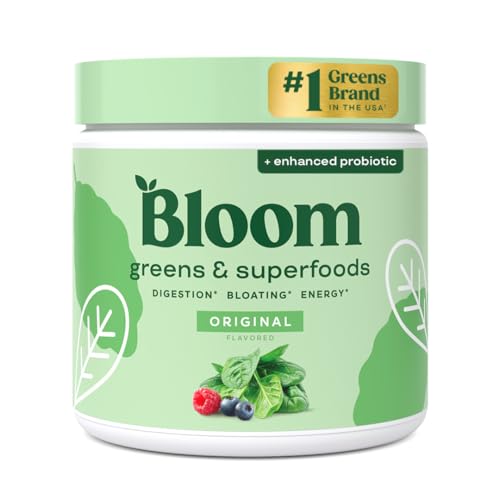
Bloom: Mari Llewellyn built a brand by solving the real problem with greens powder: it tastes terrible. Bloom proved that 50+ whole food ingredients could taste legitimately good (like a smoothie, not dirt) without being unhealthy. This is the brand that made greens powder a lifestyle product instead of a supplement chore. The container is cute enough to Instagram. The taste is good enough to actually enjoy. The price is premium but not insane. This is the brand for people who want greens but are not obsessed with optimization - they want enjoyment and consistency.
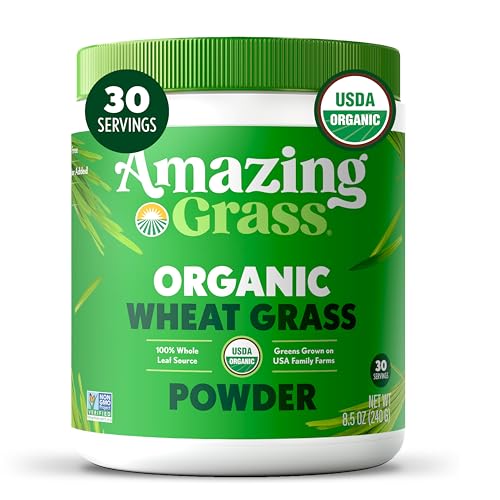
Amazing Grass: This is the brand that said we can deliver serious greens nutrition at one-third the price by cutting out the premium sourcing certs and focusing on the functional nutrition. USDA Organic (which costs money to verify), 60+ whole food ingredients, over 5,200 Amazon reviews. The taste is earthy but not terrible. The price is low enough that cost does not become a barrier to daily use. This is for pragmatists who want greens without the wellness theater.
How to choose between AG1, Bloom, and Amazing Grass — the essentials checklist
Most greens-powder comparison content frames the choice as “which is best.” That's the wrong question. The right question is which one fits your specific goal. Here's the essentials checklist that maps each brand to the user it actually serves:
- Pick AG1 if: you want maximal ingredient coverage, you can afford the subscription indefinitely, you value the brand-validation halo (Huberman, Rogan endorse it), and you don't supplement separately. Step-by-step: 1 scoop morning, on empty stomach, with cold water.
- Pick Bloom if: you mostly want the digestive-bloating help, you care about taste over ingredient density (it's the sweetest of the three), and you're fine with a smaller probiotic + greens core. Step-by-step: 1 scoop with cold water, ideally before a meal.
- Pick Amazing Grass if: you want the budget greens base, you already take a separate multivitamin + probiotic, and you can tolerate an earthier taste. Step-by-step: 1 scoop in a smoothie (masks the taste), daily.
The honest summary: the “best” greens powder is the one you'll take daily for 6 months without quitting. For most pragmatists that's Amazing Grass at a fraction of the cost. For users who want the AG1 brand experience and have the budget, AG1 is fine. Bloom is for the digestive-bloat use case specifically.
Decision matrix: match the brand to your actual goal
| Your goal | Pick | The deciding fact | The trade-off you accept |
|---|---|---|---|
| Daily consistency on a budget (most people) | Amazing Grass | Roughly a quarter of AG1's per-serving cost removes the #1 reason people quit a daily supplement; USDA Organic, 60+ ingredients, transparent label | Earthier taste (best masked in a smoothie); no published third-party heavy-metal certification |
| Verified heavy-metal / banned-substance testing | AG1 | NSF Certified for Sport batch testing — the relevant axis given the Clean Label Project finding that organic powders averaged ~3× more lead than non-organic | Premium subscription pricing you must sustain indefinitely; proprietary blend hides ingredient ratios |
| Taste is what keeps you consistent / bloating relief | Bloom | Sweetest of the three; the digestive-bloating use case is its formulation focus | Smaller greens + probiotic core than AG1; mid-tier price without AG1's testing certification |
| Minimalist single-ingredient greens | Amazing Grass Wheat Grass | 100% whole-leaf organic wheatgrass, nothing else — full transparency, the most stripped-down (and cheapest-tier) option of the four | Not a complete greens formula; grassy taste needs juice or a smoothie |
How to read this: pick the row matching your goal, not the brand with the best marketing. Every fact in the matrix is sourced in the sections above (Clean Label Project 2025, CDC 2022 vegetable-intake surveillance, per-serving cost comparison).
price breakdown: the real story
Price-per-serving matters more than total price because consistency is everything with greens powder. You only benefit if you actually take it daily for months. Let us do the math:
AG1 Athletic Greens: a premium monthly subscription covering roughly 30 servings, modestly cheaper on annual plans. Over a year, it adds up to serious money. But users who stick with it consistently report that they justify it through doctor visits avoided, energy gains, and reduced bloating.
Bloom Greens & Superfoods: a mid-priced tub of 30 servings — markedly cheaper than AG1 over a year. This is the middle ground - more expensive than Amazing Grass but less than AG1. And you get legitimately better taste, which means higher consistency for most people.
Amazing Grass Greens Blend Superfood: the budget tub of 30 servings — the lowest annual cost here by far. This is the budget winner without the budget taste penalty. The math is compelling: you can buy three years of Amazing Grass for the price of one year of AG1.
ingredient transparency: what actually matters
All three brands are transparent about ingredients, which is the baseline. But they prioritize differently. AG1 emphasizes third-party testing and heavy metal screening - you can literally access batch-specific test results. Bloom emphasizes taste and adaptogenic blends. Amazing Grass emphasizes USDA Organic certification and simple ingredient lists.
The reality: if you are concerned about heavy metals in greens (a legitimate concern with spirulina and chlorella from certain sources), AG1 is worth the premium for the testing documentation. If you trust USDA Organic as sufficient (which is reasonable - it includes pesticide and heavy metal restrictions), Amazing Grass at one-third the price is the practical choice.
taste comparison: this determines consistency
AG1: Earthy, slightly sweet, mixes well. Most reviewers say it tastes like a supplement (which it is). This is not bad - it just is not enjoyable. Most people mix it with juice or smoothies rather than water. Daily tolerance is required.
Bloom: Legitimately tastes like a smoothie. Flavors like Tropical and Acai actually taste good. This is why Bloom became TikTok famous - people actually enjoy mixing it. The flavor engineering is sophisticated. This is the brand you look forward to drinking.
Amazing Grass: Earthy and green-forward. Not as good as Bloom, better than pure wheatgrass. Tastes best in smoothies or with juice. This is not a complaint - it is realistic. Most people using Amazing Grass accept the taste as the trade-off for the price.
third-party testing: who actually verifies?
AG1: Independently tested for potency, purity, and heavy metals. Batch-specific results available. This is premium testing. The cost reflects this commitment to verification.
Bloom: Does not emphasize third-party testing the way AG1 does. This is not a failure - it is a brand choice. Focus on taste and lifestyle integration instead of testing documentation.
Amazing Grass: USDA Organic certification (which includes testing requirements) but not additional third-party batch testing. The organic certification is meaningful - it includes heavy metal screening and pesticide restrictions. Reasonable for the price point.
who should choose which
Choose AG1 if: You are serious about health optimization and treat supplements like investments. You want documented testing. You have money and want peace of mind. You are already buying expensive supplements and one more premium product fits your routine. You want the biohacker approval.
Choose Bloom if: You have failed at greens powder consistency before because of taste. You want a lifestyle product, not just a supplement. You are willing to pay mid-tier pricing for taste quality and aesthetics. You want Instagram-worthy supplementation. You value being part of the Bloom community.
Choose Amazing Grass if: You want to maintain daily greens powder habits without breaking your budget. You are pragmatic about supplements - function over aesthetics. You value USDA Organic certification as sufficient verification. You want to stick with something for 12+ months without price guilt. You are buying for a family (budget scales).
the verdict
Amazing Grass Greens Blend Superfood wins for most people. Here is why: the consistency advantage from affordability outweighs AG1 premium ingredient sourcing for the average person. If you stick with Amazing Grass for 12 months straight, you get better health outcomes than someone who buys AG1 for 4 months then stops because of cost. The pragmatist perspective wins.
But this depends on your situation. If you are a biohacker or optimization obsessive, AG1 is the right choice - you will use it consistently regardless of price. If you have failed at greens powder taste before, Bloom is worth the extra money because you will actually stick with it. If you are price-sensitive or buying for multiple people, Amazing Grass is the obvious choice. There is no wrong answer here - only different philosophies about what supplements mean to you.
Do greens powders like AG1, Bloom, and Amazing Grass actually do anything that whole vegetables don't do better? The honest answer from published research is: meaningfully, no — but specific ingredients within them have real effects. Here's what the clinical evidence shows.
What Clinical Research Says About Greens Powders
The greens-powder category is built on three claims: that the powders deliver micronutrient density that's hard to get from food, that the included algae and adaptogens have measurable health effects, and that they're a meaningful upgrade on a multivitamin. The published evidence is much stronger for some ingredients (chlorella, spirulina, key adaptogens) than for the proprietary blends as a whole. Here's what the trial data actually shows by category, so you know what you're paying for.
Chlorella has direct human RCT evidence for cholesterol and immune markers. Ryu et al. in Nutrition Journal (2014) ran an 8-week placebo-controlled trial of chlorella supplementation (5 g/day) in 63 adults and found significant improvements in serum lipid profiles, including reduced total cholesterol and triglycerides. A separate trial by Otsuki et al. in Journal of Clinical Biochemistry and Nutrition (2011) showed chlorella supplementation increased salivary secretory IgA — a marker of mucosal immune function — over 4 weeks. The mechanism is the chlorella-derived compounds (CGF, beta-1,3-glucan, carotenoids). Both AG1 and Amazing Grass include chlorella in their blends; AG1 lists 100 mg, Amazing Grass varies by SKU. The doses used in clinical trials are typically 5,000 mg, so a greens powder containing 100-500 mg of chlorella delivers a fraction of the studied dose — effects exist, but reasonable expectations should be calibrated accordingly.
Spirulina shows the strongest RCT effects in the greens-powder ingredient panel. A 2023 systematic review by Hatami et al. in the Journal of the American Nutrition Association analyzed 16 randomized controlled trials and found spirulina supplementation produced significant reductions in total cholesterol (mean −36 mg/dL), LDL (−27 mg/dL), and triglycerides (−40 mg/dL) versus placebo across studies using 1-10 g/day for 4-12 weeks. Mechanism: spirulina's phycocyanin pigment has demonstrated antioxidant and anti-inflammatory activity. Like chlorella, the studied doses (1,000-10,000 mg) far exceed the typical greens-powder serving (often 100-500 mg). If spirulina is the specific reason you're considering a greens powder, you'll get more measurable effect from a standalone spirulina supplement at a clinical dose.
Adaptogen evidence is mechanism-strong but RCT-mixed at the doses in greens powders. AG1 and competitors include rhodiola, ashwagandha, and astragalus in their blends. Each has published RCTs at clinical doses (300-600 mg standardized extract for ashwagandha; 200-400 mg for rhodiola). At those doses, ashwagandha shows reproducible cortisol reduction in stressed adults (Lopresti et al. in Medicine, 2019, 8-week RCT showing ~28% morning cortisol reduction at 240 mg/day), and rhodiola shows fatigue-reduction effects in cognitively-stressed populations (Olsson et al. in Planta Medica, 2009). The catch: the dose of any single adaptogen in a multi-ingredient greens powder is usually a fraction of the studied amount, listed within proprietary blends so you can't verify how much is actually present. The mechanism evidence is real; the clinical-dose translation through a greens-powder serving is weaker.
The "75 ingredients" framing is a marketing artifact, not a clinical advantage. The number of ingredients in a supplement is unrelated to its clinical value — what matters is whether each ingredient is present at a dose with published evidence. The proprietary-blend disclosure pattern AG1 and most competitors use makes it impossible to verify dose-by-dose. The NIH Office of Dietary Supplements notes that for general multivitamin/multimineral supplementation in healthy adults, the bulk of the evidence supports basic micronutrient adequacy rather than complex herbal-blend benefits. This is the framework worth applying to greens powders too: they may help if you're missing nutrients from food (chlorella and spirulina contribute trace minerals; the included greens contribute fiber and chlorophyll), but as a category they don't replace whole vegetables, and the premium pricing typically reflects branding more than ingredient potency.
Sources: Ryu et al. daily chlorella and serum lipids, Nutrition Journal (2014) — PubMed | Otsuki et al. chlorella and salivary immunity (sIgA), Nutr J (2011) — PubMed | Lopresti et al. ashwagandha and cortisol, Medicine (2019) — PubMed | Olsson et al. rhodiola for fatigue, Planta Medica (2009) — PubMed | NIH ODS Multivitamin/Mineral Fact Sheet