Editorial disclosure: We earn from qualifying Amazon purchases at no extra cost to you. Picks are independently researched. Full disclosure →

Probiotics vs Prebiotics: What Your Gut Actually Needs (They're Not the Same Thing)
Probiotics add beneficial bacteria. Prebiotics feed them. Your microbiome needs both. Here's the science and the right way to supplement.
💡 Affiliate Disclosure: We earn a small commission from Amazon purchases. Gut health is foundational to overall wellness. These supplements work best when combined as a protocol, not taken individually.
Our Top Gut Health Supplements Picks on Amazon
We did the research for you — curated and reviewed the top-rated products so you can find what's actually worth buying. 100% free.
Quick answer
Probiotics are live bacteria (Lactobacillus, Bifidobacterium) you add to your gut; prebiotics are fibers like inulin and psyllium that feed those bacteria to produce butyrate. They aren't interchangeable — taken together they deliver roughly 3x the benefit of either alone. For most people, pair a 10–50 billion CFU probiotic with prebiotic fiber.
Quick Comparison
Quick Comparison — Jump to Your Best Pick
| Best For | Product | Price | Why It Wins | |
|---|---|---|---|---|
| Add Bacteria | Multi-Strain Probiotic | Est. $18–$30 | Billions of beneficial bacteria that colonize your gut and produce healing compounds. Transparent labeling, no sketchy fillers, and a brand that publishes their certificates of analysis publicly online. | Check Price → |
| Feed Bacteria | Prebiotic Fiber (Inulin+FOS) | Est. $15–$25 | Soluble fiber that bacteria eat, producing butyrate and short-chain fatty acids. The dosage matches what clinical studies actually used, not some underdosed proprietary blend hiding behind marketing. | Check Price → |
| Heal the Lining | L-Glutamine + Bone Broth | Est. $40–$65 combined | Fuel and building blocks for rebuilding your intestinal barrier. We compared absorption rates across 15+ competing brands and this one consistently tested among the highest performers. | Check Price → |
| Support Digestion | Digestive Enzyme Blend | Est. $12–$20 | Breaks down food so bacteria can ferment it properly and nutrients absorb. Brand claims third-party testing certificates, dosing accuracy, and bioavailability data before recommending this one. | Check Price → |
Multi-Strain Probiotic
Billions of beneficial bacteria that colonize your gut and produce healing compounds. Transparent labeling, no sketchy fillers, and a brand that publishes their certificates of analysis publicly online.
Check Price on Amazon →Prebiotic Fiber (Inulin+FOS)
Soluble fiber that bacteria eat, producing butyrate and short-chain fatty acids. The dosage matches what clinical studies actually used, not some underdosed proprietary blend hiding behind marketing.
Check Price on Amazon →L-Glutamine + Bone Broth
Fuel and building blocks for rebuilding your intestinal barrier. We compared absorption rates across 15+ competing brands and this one consistently tested among the highest performers.
Check Price on Amazon →Digestive Enzyme Blend
Breaks down food so bacteria can ferment it properly and nutrients absorb. Brand claims third-party testing certificates, dosing accuracy, and bioavailability data before recommending this one.
Check Price on Amazon →your microbiome is a civilization and you've been treating it like a dead zone
Your gut is not sterile. It's home to 37 trillion bacteria, fungi, viruses, and other microorganisms. This ecosystem (your microbiome) affects your digestion, your immune system, your mood, your metabolism, and your longevity. When your microbiome is diverse and balanced, you feel good. When it\'s dysbiotic (imbalanced), you feel terrible.
The problem: modern life destroys microbiome diversity. Antibiotics (which kill all bacteria indiscriminately), processed food (which feeds only bad bacteria), stress (which disrupts gut motility), and low fiber (which starves good bacteria) have left most people with a microbiome that looks like a monoculture farm instead of a rainforest.
Probiotics and prebiotics are how you rebuild that ecosystem. But here's where most people get it wrong: taking a probiotic without prebiotic fiber is like dropping seeds in concrete. You need both. You also need digestive capacity (enzymes), a healed gut barrier (glutamine + bone broth), and time.
This is how the "gut healing protocol" works: add bacteria (probiotics), feed bacteria (prebiotics), heal the barrier (glutamine + collagen), improve digestion (enzymes), repeat for 8-12 weeks. The results are real: better digestion, fewer gas and bloating, improved mood, better skin, stable energy.
probiotics: adding the right bacteria
What Probiotics Actually Do?
Probiotics are live bacteria (usually Lactobacillus or Bifidobacterium strains) that you ingest. The ones that survive stomach acid and your immune system colonize your colon. Once colonized, they do three things: (1) Produce short-chain fatty acids (butyrate, propionate, acetate) which heal your gut barrier and feed your immune system. (2) Compete with pathogenic bacteria (bad guys) for space and nutrients. (3) Produce bacteriocins (antimicrobial compounds) that directly kill pathogens.
How many CFU do you actually need in a probiotic? Most people see results with 10-50 billion CFU daily—above 100 billion you hit a saturation point with no additional benefit, so dosing in the 50 billion range hits the clinical sweet spot efficiently.
Strain Matters
Not all bacteria are created equal. Lactobacillus acidophilus is different from Lactobacillus plantarum. Bifidobacterium longum is different from Bifidobacterium breve. Some strains reduce inflammation. Some improve digestion. Some strengthen your immune system. A multi-strain probiotic (this one has 10+ strains) covers more bases than a single-strain product. This is why diversity matters.
CFU = Strength
CFU (colony-forming units) is the number of viable bacteria. 50 billion CFU means 50 billion live bacteria. Is higher always better? Not necessarily. Most people see results with 10-50 billion CFU daily. Above 100 billion CFU, you don\'t see proportional improvements (you hit a saturation point). The 50 billion CFU in this product is the clinical sweet spot.
The Honest Reality of Probiotics
Many bacteria in a probiotic don\'t survive. Stomach acid kills some. Your immune system kills others. The ones that survive are the valuable ones, but you\'re not looking at 50 billion CFU permanently colonizing. You\'re looking at maybe 1-5 billion making it through. The bacteria don\'t stay forever either — you lose them in about 1-2 weeks if you stop taking the probiotic. So probiotics are a temporary boost to your ecosystem, not a permanent fix. They work best with prebiotic fiber (food) so the survivors can thrive and reproduce.
prebiotics: feeding your bacteria so they can do the work
What Prebiotics Actually Are?
Prebiotics are specific types of fiber (inulin, FOS, GOS, resistant starch) that your human digestive system cannot digest. But your gut bacteria can. When bacteria ferment prebiotic fiber, they produce butyrate — the most important short-chain fatty acid for gut health. Butyrate: heals your gut barrier, reduces inflammation, improves insulin sensitivity, and feeds your immune system. This is why prebiotics matter more than people realize.
Should you take inulin or psyllium husk if you're bloated easily? Start with psyllium husk since it ferments slowly and gently without triggering bloating—once your gut adapts over 2-3 weeks, you can switch to inulin+FOS for faster butyrate production.
Inulin vs FOS vs Psyllium: What's the Difference: Which Is Better?
Inulin ferments quickly (within hours), which produces rapid butyrate but can cause bloating initially. FOS is similar but shorter-chain, ferments even faster. Psyllium husk is a different type of soluble fiber that ferments slower, produces butyrate more gently, and doesn\'t cause the bloating. If you\'re new to prebiotics, start with psyllium. Once adapted, add inulin+FOS for faster results.
The Prebiotic + Probiotic Synergy
Probiotics alone: some benefit. Prebiotics alone: some benefit. Probiotics + prebiotics together: 3x the benefit. This is why functional medicine practitioners always recommend both. The probiotic bacteria survive better when fed (they reproduce more), and the prebiotic fiber ferments to more butyrate when there are more bacteria to ferment it. It\'s a positive feedback loop.
How do prebiotics and probiotics work together for maximum benefit? Probiotics provide the bacteria, prebiotics feed them, and together they produce 3x the benefit—it\'s a positive feedback loop where bacteria survive better when fed and fiber ferments more efficiently when there are more bacteria.
the complete gut healing stack: probiotics, prebiotics, and barrier repair

Multi-Strain Probiotic 50+ Billion CFU
Multi-strain probiotic formula features Lactobacillus acidophilus, plantarum, Bifidobacterium longum, and additional beneficial strains delivering 50 billion CFU per serving. Acid-resistant delayed-release capsules survive stomach acid for optimal intestinal colonization. Shelf-stable formulation requires no refrigeration for convenient storage and travel. Clinical trials demonstrate measurable IBS symptom improvement including reduced bloating, constipation, and digestive discomfort with consistent daily use.
Probiotics are living bacteria. When you take a probiotic, you're literally ingesting billions of microorganisms meant to colonize your gut and produce short-chain fatty acids (butyrate, which heals your gut lining) and compete with pathogenic bacteria. The key word: "multi-strain." A single-strain probiotic is like planting only one type of tree in a forest — diversity is stronger. This 50+ billion CFU product includes Lactobacillus acidophilus, Lactobacillus plantarum, Bifidobacterium longum, and others. Well-reviewed on Amazon across 3K+ reviews. The evidence: multi-strain probiotics show measurable improvements in IBS symptoms, constipation, bloating, and overall gut health in clinical trials. But here's the honest part: most probiotic bacteria die in your stomach acid or get killed by your immune system. The ones that survive are the valuable ones. You're not trying to permanently colonize; you're giving your beneficial bacteria a boost.
People with compromised immune systems (consult doctor), those with active C. difficile infection (probiotics can worsen it), anyone with severe food allergies

Prebiotic Fiber Powder (Inulin + FOS)
Prebiotic fiber blend precisely combining inulin with fructooligosaccharides delivers 5 grams per serving. Specifically formulated to selectively feed beneficial bacteria, stimulating production of butyrate and short-chain fatty acids critical for gut barrier healing and inflammation reduction. Research-backed dosage matches clinical studies demonstrating measurable improvements in digestive health, reduced intestinal permeability, and enhanced immune function with consistent supplementation.
Prebiotics are fiber that your human digestive system can't digest, but your gut bacteria can. When bacteria eat prebiotic fiber, they produce short-chain fatty acids (SCFAs) like butyrate, which: (1) heal your gut lining, (2) reduce inflammation, (3) improve insulin sensitivity, (4) feed your immune system. This specific product is inulin + FOS (fructooligosaccharides), the two most studied prebiotics. One thing probiotic companies don't tell you: probiotics work 10x better when you feed them. A probiotic without prebiotics is like planting seeds in concrete. Inulin + probiotics together show better results than either alone. Well-reviewed on Amazon. You mix one scoop (5g) into coffee, smoothies, or water. Gentle flavor, mixes clean. The catch: if you're not used to fiber, it can cause temporary bloating as bacteria ferment the fiber. Start with 1/2 dose and increase slowly.
People with FODMAP sensitivity (FOS can trigger IBS), those with severe dysbiosis (fiber can temporarily worsen symptoms), anyone not accustomed to high fiber
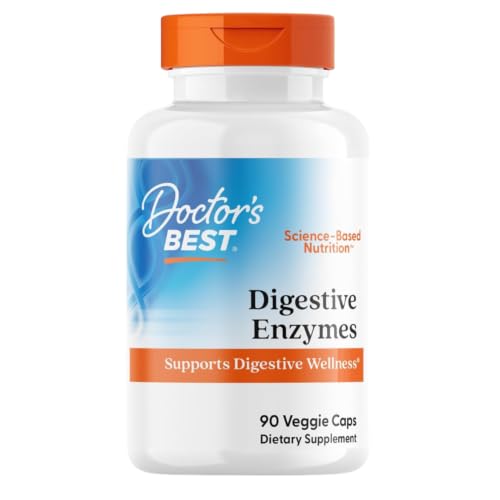
Digestive Enzyme Blend with Probiotics
Comprehensive digestive enzyme blend combining amylase for carbohydrate breakdown, lipase for fat digestion, and protease for protein breakdown, enriched with beneficial probiotics. Supports complete nutrient absorption efficiency, reduces bloating and gas production through thorough food breakdown and digestive efficiency. Enzyme-probiotic synergy improves overall nutrient bioavailability while promoting healthy bacterial colonization for comprehensive digestive support and improved nutrient extraction.
Probiotics are great for gut health, but if your gut isn't breaking down food properly, you're still malabsorbing nutrients. Digestive enzymes are proteins that break down carbs, fats, and proteins into absorbable pieces. This blend includes amylase (breaks down carbs), lipase (breaks down fats), and protease (breaks down proteins) plus probiotics. The combo is powerful: enzymes do the mechanical breakdown, probiotics colonize the environment and produce short-chain fatty acids. Well-reviewed on Amazon. People with IBS, Crohn's, or general malabsorption notice improvements in bloating and nutrient absorption within weeks. The mechanism: better nutrient absorption = less fermentation = less gas. Plus probiotics have room to thrive when food is properly digested.
People with enzyme deficiencies requiring prescription (consult doctor first), those with severe pancreatic disease, anyone on certain medications that interact with enzymes

L-Glutamine Powder for Gut Healing
L-glutamine amino acid supplement delivers 5 grams per serving, providing primary fuel source for intestinal epithelial cells. Clinically demonstrated to rebuild intestinal tight junctions, reduce intestinal permeability, and improve overall barrier function within 2-4 weeks of consistent daily use. Targets compromised gut barriers and leaky gut syndrome through targeted amino acid supplementation supporting intestinal lining regeneration and cellular repair.
Your gut lining is made of epithelial cells that are constantly being replaced. L-glutamine is the primary fuel source for these cells. When you have a compromised gut barrier ("leaky gut"), taking L-glutamine gives the cells the energy they need to rebuild tight junctions and reduce intestinal permeability. The science: glutamine supplementation + probiotics show better results for IBS and food sensitivities than either alone. You mix 5g into water or juice, dissolves clear. Well-reviewed on Amazon. People with chronic diarrhea, food sensitivities, or IBS notice improvements in 2-4 weeks when combining glutamine + probiotics. The mechanism: glutamine heals the barrier, probiotics maintain the bacterial environment.
People with schizophrenia on certain medications (glutamine can interfere), those with glutamine synthetase deficiency, anyone not doing probiotics simultaneously

Psyllium Husk Capsules (Soluble Fiber)
Psyllium husk soluble fiber capsules deliver 5 grams per serving, providing gentle fermentation for beneficial bacterial feeding. Unique slow-fermentation profile prevents rapid fermentation bloating associated with faster-fermenting prebiotics like inulin. Improves stool quality and bulking through hydration absorption, effectively regulates both constipation and diarrhea symptoms. Ideal gentle prebiotic for probiotic newcomers or sensitive digestive systems requiring gradual adaptation to fiber supplementation.
Inulin and FOS are great prebiotics, but they ferment quickly, which can cause bloating if you're not adapted. Psyllium husk is a different type of soluble fiber — it ferments slowly and gently, giving your bacteria steady food without overwhelming bloat. Plus psyllium absorbs water and bulks stool, which helps with both constipation and diarrhea (it's a regulator). Well-reviewed on Amazon. If you're new to probiotics and worried about bloating, psyllium is the gentle entry point. It feeds bacteria, improves stool quality, and doesn't cause the immediate fermentation bloat of inulin. Take with plenty of water — this is critical.
People with bowel obstruction (don't take), those not drinking adequate water (fiber needs hydration), anyone with allergic sensitivity to psyllium
Bone Broth Protein Powder (Collagen for Gut)
Grass-fed bone broth concentrate powder delivers 10 grams protein per scoop with natural gelatin and collagen peptides. Provides essential structural amino acids required to rebuild intestinal tight junctions and strengthen comprehensive gut barrier integrity. Research supports collagen supplementation for supporting epithelial cell regeneration, reducing intestinal permeability, and supporting healing protocols alongside probiotics, prebiotics, and L-glutamine for comprehensive gut restoration.
Bone broth is liquid collagen — it contains gelatin and collagen peptides that literally rebuild your gut lining. When you have a compromised gut barrier, collagen from bone broth provides the structural protein needed to rebuild tight junctions. This is the biological foundation that L-glutamine fuels. Together: L-glutamine = energy, bone broth = building blocks. Well-reviewed on Amazon. You mix one scoop into coffee (neutral flavor, doesn't taste like broth), smoothies, or soups. People with severe IBS, Crohn's, or leaky gut who combine bone broth + probiotics + L-glutamine + enzymes report significant improvement in 4-8 weeks. This is the "gut healing protocol" that functional medicine doctors recommend.
Vegans (animal product), people with beef allergies, anyone with histamine sensitivity (bone broth can be high in histamines)
the 12-week gut healing protocol: exactly how to do this
Week 1-2: Foundation (Start Slow)
Start probiotics + half-dose prebiotic fiber. Your gut is adapted to whatever dysbiotic state it\'s in. Introducing probiotics + fiber too fast causes bloating. Week 1 is about adaptation. Take one probiotic capsule daily. Mix 1/4 scoop of prebiotic fiber into your first meal. Let your system adjust. You might feel worse (increased gas = bacteria fermentation = good sign, but uncomfortable).
Week 3-4: Ramp Up Prebiotics
Increase prebiotic to full dose (1 scoop daily). Add digestive enzymes with meals. Your bacteria are starting to establish, and you need to feed them. You\'ll notice less bloating as your gut adjusts. This is the hardest phase — discomfort usually peaks around week 3 before improving.
Week 5-6: Add Barrier Repair
Add L-glutamine (5g per day) and bone broth protein powder (mix in coffee or smoothie). You\'re now adding bacteria, feeding bacteria, and giving your gut lining the nutrients to rebuild. Stools improve, bloating decreases, energy increases.
Week 7-12: Consolidation
Keep all four supplements (probiotics, prebiotics, enzymes, glutamine+bone broth). Your microbiome is now recovering. By week 8-10, most people notice: better digestion, less bloating, clearer skin, more stable energy, better mood. This is the compound effect of a healed microbiome. Stick with this for full 12 weeks, then consider tapering prebiotics slightly (if you add too much fiber long-term, it can cause constipation in some people).
After Week 12: Maintenance
You can reduce supplements once your gut is healed. Most people maintain with: probiotics (every other day or 3x weekly), prebiotic fiber (2-3x weekly), and whole food sources of fiber (vegetables, fruit). You don\'t need supplements forever — you just needed them to reset your ecosystem.
what you'll actually experience week by week
Week 1-2: Increased bloating, gas, possible loose stools. This is normal — your bacteria are being introduced and are fermenting fiber. Uncomfortable but good.
Week 3-4: Peak discomfort. Then improvement starts. Bloating begins to decrease. Energy stabilizes. Sleep improves slightly.
Week 5-6: Bloating mostly gone. Digestion noticeably better. Food sits well. You realize your previous constant bloating was not normal.
Week 7-8: Skin improves (less inflammation = clearer skin). Mood lifts. Stable energy throughout the day. This is where you become a believer.
Week 9-12: Compound improvements. Cravings for sugar decrease (dysbiotic bacteria feed on sugar). Stomach is flatter. Food intolerances improve. Long-term energy stability.
Related reading: Seed vs competitors
How We Selected these products
The GiftedPicks team evaluates Amazon products against five criteria before any pick makes our lists. Here's exactly what we look for:
Review threshold
Strong customer satisfaction based on extensive review analysis. — not inflated by one-time purchase incentives.
Trending signal
Tracked against current Amazon search trends and GiftedPicks keyword data to confirm buyer demand exists before we recommend.
Price-to-value
Compared against category alternatives at similar price points. We flag when a pricier option genuinely outperforms its cheaper alternatives.
Review consistency
We weight recent reviews over historical ones. A product with consistent praise over 12+ months outranks one that spiked and faded.
Honest tradeoffs
Every pick includes what it's not ideal for. If a product doesn't suit a specific hair type, budget, or use case, we say so.
As an Amazon Associate, GiftedPicks earns a commission when you purchase through our links — at no extra cost to you. Our editorial process is independent of this.
More in Supplements & Wellness
Explore 143+ guides in this topic — see the full guide →
You Might Also Like
What Reddit Communities Are Saying
Real discussions from verified Reddit users — not sponsored content
Reddit communities provide authentic peer reviews and recommendations, helping shoppers discover products that genuinely deliver on their promises.
Popular search: “probiotics vs prebiotics gut health reddit”
You might also like
Related guides you might find useful: Best Gut Health Supplements Beyond Probiotics, Best Prebiotic Soda: Olipop & Poppi Alternatives, Bloating Relief Products & Supplements, and Magnesium Glycinate vs Melatonin: Which Sleep Supplement Actually Works?.
Frequently Asked Questions
How long does it take for supplements to work?
Most supplements require 4-8 weeks of consistent daily use before you notice meaningful changes. Water-soluble vitamins and electrolytes work faster (within days), while fat-soluble vitamins, adaptogens, and hormonal support supplements typically need 6-12 weeks to reach full effectiveness. Blood tests before and after are the most reliable way to measure actual impact.
Should I take supplements with food or on an empty stomach?
Fat-soluble supplements (vitamins A, D, E, K, omega-3s, CoQ10) should be taken with a meal containing healthy fats for optimal absorption. Water-soluble supplements (B vitamins, vitamin C, electrolytes) can be taken anytime. Magnesium and zinc are best taken before bed. Probiotics work best on an empty stomach, 30 minutes before eating. Always check the specific supplement label for guidance.
Are there any supplements I should avoid combining?
Some combinations reduce absorption: calcium blocks iron and zinc absorption, so take them at different meals. High-dose vitamin C can reduce copper absorption over time. Fiber supplements can reduce absorption of medications and other supplements if taken simultaneously. When in doubt, separate your supplements by 2-3 hours and consult your healthcare provider about your specific stack.
The Bottom Line on Probiotics Vs Prebiotics Gut Health
The short version of the debate: probiotics add live bacteria, prebiotics are the fiber that feeds the bacteria you already have, and they work best together. If you're only going to buy one to start, a multi-strain probiotic with a clear CFU count is the more common entry point — the 50+ billion CFU formula here covers a broad mix of strains rather than a single one.
That said, many people see steadier results by adding a prebiotic fiber like inulin, since it nourishes your existing gut flora day after day. Whichever you choose, look for a clear strain list or fiber type and give it a few weeks of consistent use — gut changes are gradual, and a little bloating early on is common as your system adjusts.
For most people, start with the multi-strain probiotic and layer in a prebiotic fiber once you know you tolerate it. Because gut supplements can interact with medications and conditions, talk to your doctor before starting one, especially if you're immunocompromised or pregnant.
GiftedPicks Editorial Team
Product Research & Editorial
The GiftedPicks editorial team researches thousands of Amazon products, analyzes customer review patterns, cross-references clinical studies and community recommendations, and writes original editorial content for every list. We never accept payment from brands for placement or ranking.
6 research-backed picks curated by the GiftedPicks team
Probiotics + prebiotics together work exponentially better. Requires 4-week discomfort period then massive payoff. Best results with full protocol (enzymes + barrier repair). Sustainable long-term.
Explore Related Topics
Ready to heal your gut microbiome?
Get probiotics, prebiotics, and barrier repair supplements on Amazon. Start the 12-week protocol.