Starting Your Fitness Journey (Without the Intimidation)
most people quit fitness because they start with equipment that's too hard or makes them feel stupid. heavy dumbbells you can't control, machines with 30 settings, complex movement patterns. they don't feel good and you quit.
beginner equipment is specifically designed to be safe, forgiving, and actually enjoyable. the difference between quitting after week one and building a lasting fitness habit is often just better equipment choices. you need tools that let you succeed early so you build confidence instead of embarrassment.
this list prioritizes safety, ease of use, and progression. everything here can grow with you for at least 6-12 months of training. these aren't toys — they're professional-grade tools that happen to be beginner-friendly.
The Beginner Fitness Progression (What Matters)
beginners need three things: safety (low injury risk), confidence (ability to do the exercise), and progression (path to get better). equipment chosen for advanced lifters fails on at least two of these criteria.
safety: resistance bands are safer than free weights because they're forgiving. suspension training is safer than barbells because your own bodyweight is the load. machines are safer than free weights but less functional. for beginners, safer usually wins because you'll use it consistently without injury.
confidence: if your first workout involves heavy dumbbells you can barely control, you won't do a second one. lighter loads, more reps, focus on movement quality. bands and light dumbbells build confidence. then you add load.
progression: the equipment needs to grow with you. fixed 10 lb dumbbells won't work forever. adjustable systems or progressively harder band resistance levels let you improve without replacing equipment.
Resistance Bands vs Dumbbells (For Beginners)
Should beginners start with bands or dumbbells? Bands are safer for learning movement patterns—they're forgiving and reduce injury risk—while dumbbells build faster long-term strength once form is solid.
dumbbells are better long-term. bands are better for starting. this is actually important to get right.
bands excel for beginners because: resistance is forgiving (if you lose control, the band just goes slack), every exercise can be modified easier (step back to make it harder), injury risk is lower, cost is lower.
dumbbells excel because: mechanical load stimulates more growth, progression is clearer (5 → 10 → 15 lbs is obvious), movement patterns are more natural, long-term results are faster.
the answer: start with bands (3-4 weeks), build confidence and learn patterns, then add dumbbells and use bands as activation/assistance. this is the optimal progression. For those ready to progress, selecting proper dumbbell weights ensures continued strength gains without plateauing.
Bodyweight vs Equipment (The Spectrum)
suspension training (trx) sits between pure bodyweight and external load. your own bodyweight is resistance, but it can be modified by changing body angle. this is brilliant for beginners because progression is smooth (easier angles → harder angles) without buying new equipment.
pure bodyweight (push-ups, squats, dips) is even safer but plateaus faster. if you can't do a full push-up yet, assisted options build strength until you can.
progression spectrum: bodyweight → assisted bodyweight → suspension training → light dumbbells → moderate dumbbells → heavy dumbbells. each step adds load and reduces progression headroom. beginners typically spend 4-8 weeks on each step.
The Space & Intimidation Factor
here's what determines if you actually keep using equipment: does it require you to look at a complex machine? do you need to understand multiple settings? does it take up an entire room?
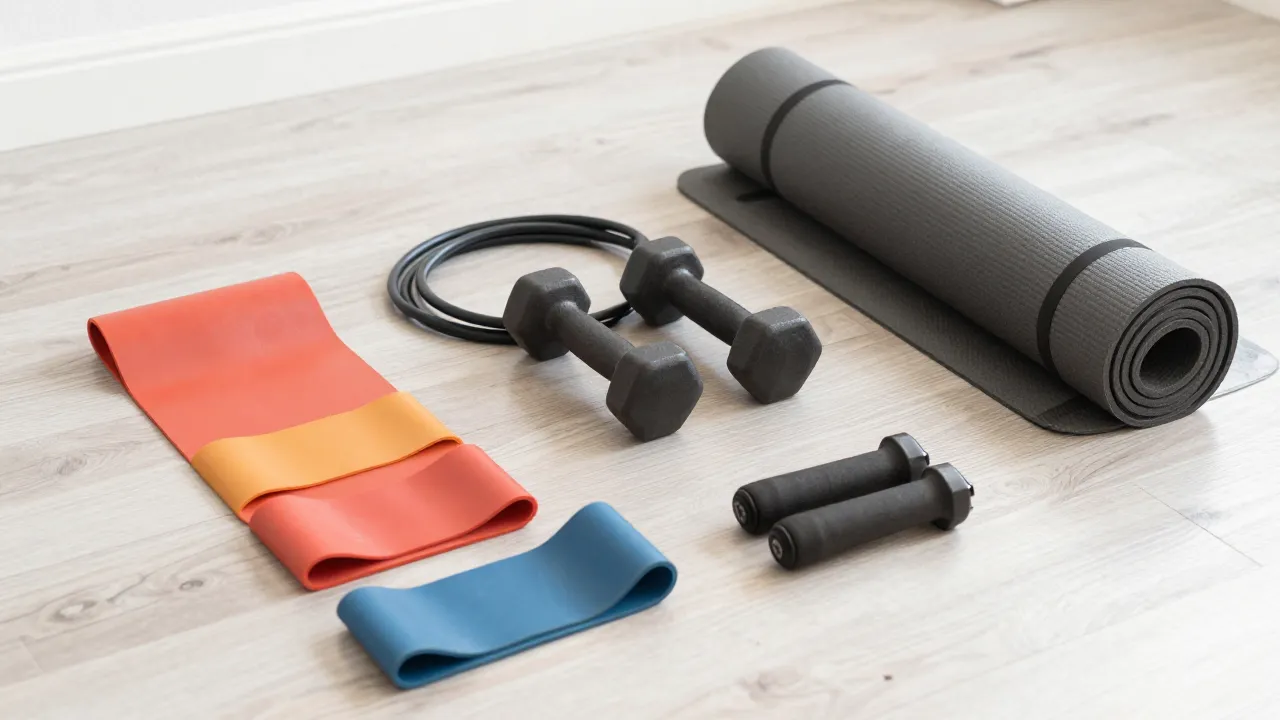
resistance bands roll into a ball. a yoga mat lives in a corner. a suspension trainer hangs from a doorway. these tools are invisible when you're not using them. compare that to a barbell setup or cable machine — you see it every day and if you're not using it, it's a constant reminder of your failure.
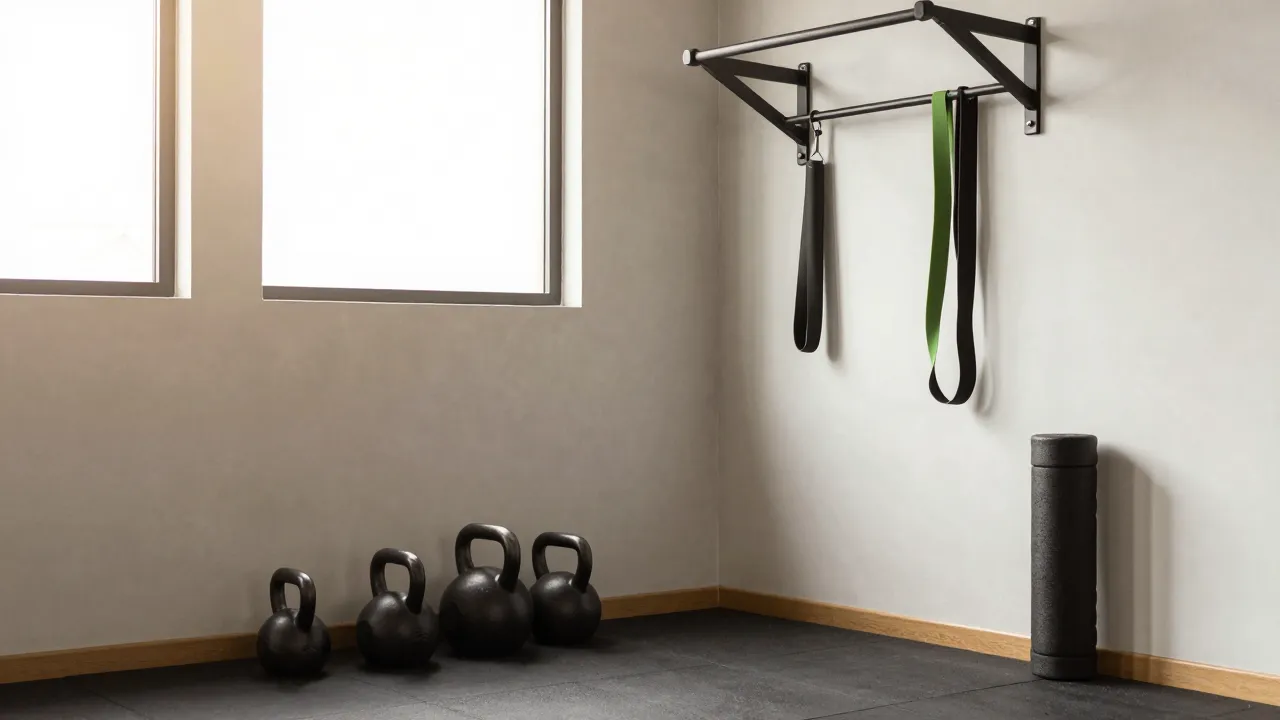
simplicity matters more for beginners. a mat + bands + pull-up bar covers every movement pattern and takes up less space than a single piece of commercial equipment.
Cardio for Beginners (It's Not Running)
What's the best cardio option for exercise beginners? Stationary bikes offer zero impact on joints and full intensity control, making them safer than running—and they pair perfectly with low-effort workout routines.
beginners think they need to run. most can't run consistently without joint pain. instead: stationary bike (low impact, full intensity control) or rowing machine (full body, low impact, satisfying workout).
stationary bike is specifically better for beginners because: you can start at absurdly low resistance and still get work, zero impact on knees, you can watch tv while you do it (consistency advantage), progression is obvious (increase resistance or duration).
rowing is better if you want full-body engagement but has a slightly higher learning curve. either is better than running for beginners. When you're ready to diversify, comparing rowing machines to treadmills shows why rowers deliver superior full-body results for intermediate training.
The Psychological Tools (Don't Skip These)
music during workouts improves consistency and performance. this is measured and real. a small bluetooth speaker ($50-80) is a beginner secret weapon because it makes workouts feel less like punishment and more like a thing you want to do.
a dedicated workout space (even just a yoga mat in the corner) signals "this is a real thing" to your brain. it improves consistency. beginner psychology is important.
The Beginner Program (So You Know What to Do)
here's what a beginner week actually looks like with this equipment:
day 1: resistance bands circuit. assisted pull-ups 3 sets, band rows 3 sets, band chest press 3 sets, band squats 3 sets. 20 minutes total.
day 2: cardio. stationary bike 15-20 minutes, moderate intensity.
day 3: rest or gentle yoga/stretching on the mat.
day 4: repeat day 1 with slightly more reps or band resistance.
day 5: repeat day 2, slightly longer or harder.
day 6-7: rest.
that's a complete beginner program. after 4-6 weeks, add light dumbbells and increase frequency. this progression is sustainable and actually builds a habit.