Editorial disclosure: We earn from qualifying Amazon purchases at no extra cost to you. Picks are independently researched. Full disclosure →
The Plastic-Free Workout Gear Fitness Shops Are Actually Recommending
Your gym bag is quietly one of the highest-microplastic-exposure zones in your house — synthetic mats, plastic bottles, PVC-coated bands, and microfiber-shedding towels all compound across hundreds of sessions a year. These are the eight swaps that actually fix it.
💡 Affiliate Disclosure: We earn a small commission from Amazon purchases made through our links. This supports our work. We only recommend fitness swaps we would hand a training partner who asked us where to start.
Our Top Plastic Detox Workout & Fitness Picks on Amazon
We did the research for you — curated and reviewed the top-rated products so you can find what's actually worth buying. 100% free.
Quick answer
The gym's highest-contact swaps are the yoga mat and water bottle. For most people the Manduka PRO — PVC but OEKO-TEX-certified and emissions-free — is the category king; choose the Yoloha Unity cork mat to eliminate PVC entirely. Pair with a Hydro Flask stainless bottle, since synthetic activewear sheds roughly 250,000 microfibers per wash.
Quick Comparison
📊 The peer-reviewed evidence base
Marfella et al. (2024) in the New England Journal of Medicine (390:900-910) examined carotid endarterectomy patients and found microplastics embedded in atheromatous plaques of 58% of patients; those patients had a 4.5× higher risk of cardiovascular events over 34 months follow-up (DOI: 10.1056/NEJMoa2309822). Correlation, not causation — but the chronic-inflammation mechanism is well-characterized.
These studies are the strongest current evidence base for the plastic-detox swaps recommended on this page. See our complete plastic detox guide for the full kitchen + bathroom + lifestyle reorganization.
Quick Comparison — Jump to Your Best Pick
| Best For | Product | Price | Why It Wins | |
|---|---|---|---|---|
| Best Yoga Mat (Traditional) | Manduka PRO 6mm | Est. $129–$149 | OEKO-TEX certified PVC is the non-toxic, third-party-tested version of the material. Emissions-free German manufacturing. Lifetime guarantee. #1 teacher-recommended mat in the world and the closed-cell category king. | Check Price → |
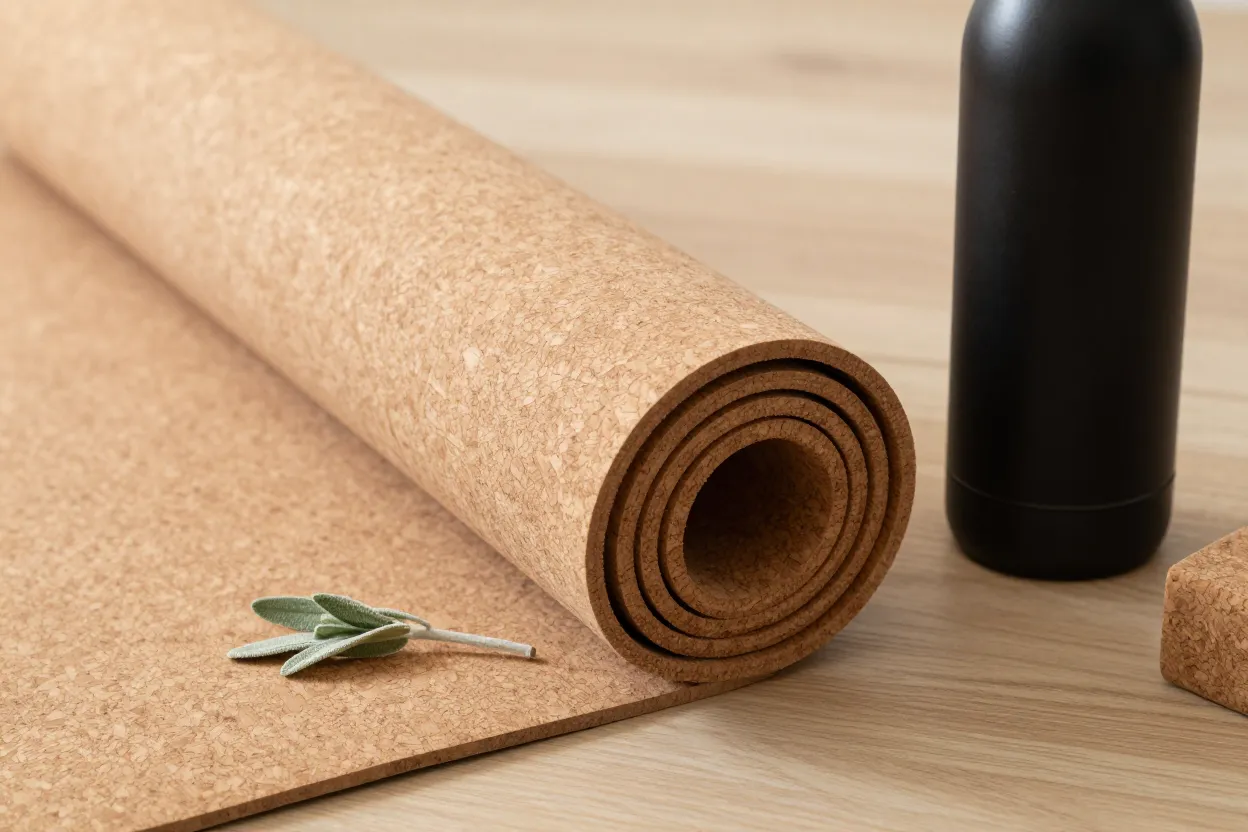
| Best Cork Yoga Mat | Yoloha Unity 6.5mm | Est. $125–$150 | Portuguese bark-harvested cork on a recycled-rubber base. USA-made. Grip actually increases when wet, which makes it hot-yoga-grade. Zero PVC, zero polyurethane. Naturally antimicrobial via cork's suberin content. | Check Price → |
| Biggest Daily-Use Swap | Hydro Flask 32oz Wide Mouth | Est. $45–$55 | Every gym-goer drinks 32-64 ounces during a workout. Eliminating single-use plastic bottles across 3-5 weekly sessions compounds into the highest-leverage plastic swap on this list. 18/8 stainless, 24-hour cold retention, lifetime warranty. | Check Price → |
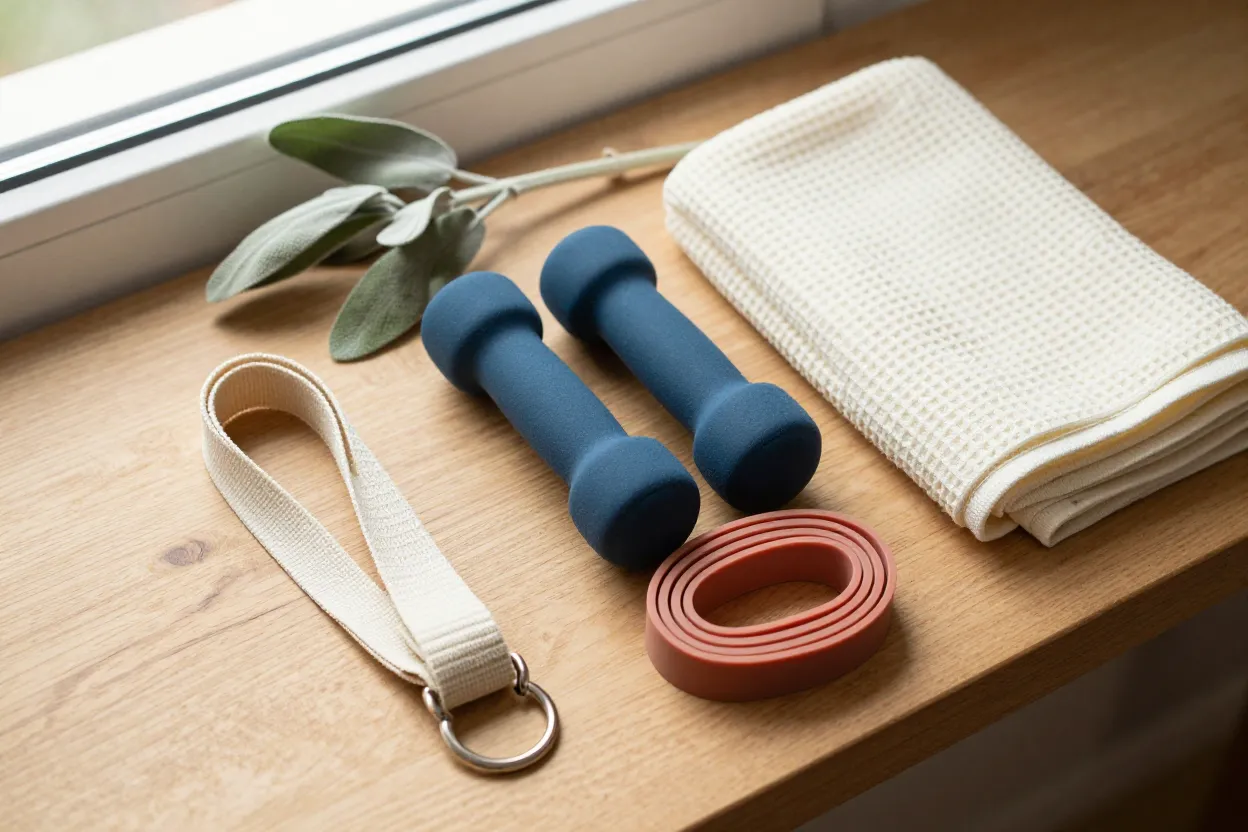
| Best Budget Pick | Hugger Mugger D-Ring Yoga Strap | Est. $14–$18 | 100 percent cotton strap with a solid metal D-ring buckle. Replaces the plastic-click-buckle straps that dominate the category. Yoga-studio standard since 1986 and built to outlast a decade of use. | Check Price → |
Manduka PRO 6mm
OEKO-TEX certified PVC is the non-toxic, third-party-tested version of the material. Emissions-free German manufacturing. Lifetime guarantee. #1 teacher-recommended mat in the world and the closed-cell category king.
Check Price on Amazon →Yoloha Unity 6.5mm
Portuguese bark-harvested cork on a recycled-rubber base. USA-made. Grip actually increases when wet, which makes it hot-yoga-grade. Zero PVC, zero polyurethane. Naturally antimicrobial via cork's suberin content.
Check Price on Amazon →Hydro Flask 32oz Wide Mouth
Every gym-goer drinks 32-64 ounces during a workout. Eliminating single-use plastic bottles across 3-5 weekly sessions compounds into the highest-leverage plastic swap on this list. 18/8 stainless, 24-hour cold retention, lifetime warranty.
Check Price on Amazon →Hugger Mugger D-Ring Yoga Strap
100 percent cotton strap with a solid metal D-ring buckle. Replaces the plastic-click-buckle straps that dominate the category. Yoga-studio standard since 1986 and built to outlast a decade of use.
Check Price on Amazon →Workout gear is one swap — get your overall score across all 8 categories.
8 quick questions across water, food storage, cookware, beverages, and personal care. Get a 0–100 score plus the top 3 swaps that would actually move the needle for you.
0 of 8 answered
Why Your Gym Bag Is Quietly One of the Highest-Microplastic-Exposure Zones in Your House
The 2011 Patagonia study and the 2024 NIH follow-up both reached the same conclusion from different angles: synthetic athleticwear (polyester, nylon, spandex blends) sheds microfibers faster during sweat and movement than any other clothing category. A single synthetic workout shirt sheds roughly 250,000 microfibers per wash, which multiplied across a 3x-per-week gym habit is the plastic-detox story the Netflix doc did not tell. The fix is not just "natural fiber activewear" — it is a two-sided approach: reduce microfiber shedding through wool and cotton base layers, and catch what synthetics do shed via a laundry pass. The laundry-side catch is covered in detail in our microfiber-free laundry swaps guide — the gym-bag side is this page.
Three equipment categories compound harder than the rest. The yoga mat: 2-3 hours of skin contact per session across 150 sessions a year is 400-plus hours of PVC or alternative material against the body — more concentrated contact than most textiles in the house. The water bottle: daily, often twice-daily, and the fastest-compounding plastic-elimination swap in any gym bag because a 3-5x-weekly cardio session burns through multiple single-use bottles. Resistance bands and straps: lower priority but still PVC in the cheap brands, and the material sits against skin during stretches. Every item on this list replaces a plastic category equivalent with wool, cotton, natural rubber, cork, or OEKO-TEX-grade material. For the wider framing across every room in the house, our complete plastic detox shopping list covers the full sequence.
The honest PVC caveat matters here because a plastic-detox list that reflexively rejects PVC misses the most important nuance in the category. The Manduka PRO is PVC — and it is the most-recommended yoga mat in the world because its OEKO-TEX certification and emissions-free German manufacturing make it the non-toxic, third-party-tested version of the material. "PVC" gets blanket-dismissed in plastic-detox circles, but the category has a legitimate certified lane, and pretending otherwise pushes shoppers toward no-name alternatives that are actually worse. If you want to fully eliminate PVC from the gym, the Yoloha Unity cork mat is the answer. Both are category kings — the choice is tactile preference (sticky closed-cell vs grippy textured), not ideological PVC rejection. For wet-area plastic that lives adjacent to the gym routine, pair this with our bathroom plastic swaps guide.
Is Cork Actually Better Than Rubber for Yoga Mats?
It depends on practice style. Cork grip increases when wet (sweat-positive), while rubber grip is sweat-neutral or slightly degraded under heavy moisture. Hot yogis and heavy-sweaters prefer cork because the mat actually gets stickier mid-practice rather than turning into a slip-and-slide. Cork is also naturally antimicrobial through its suberin content, so the mat does not develop the locker-room funk that plastic mats pick up within months. The downside is texture: cork's surface is grippy-textured rather than sticky closed-cell, which means pressure points on knees and wrists feel different. A 6mm cushion offsets this for most practitioners but some find the texture itself uncomfortable on skin. Yoloha Unity is the cork category king; Manduka eKO is the natural-rubber alternative if you prefer a rubber texture over cork or closed-cell.
Why Didn't You Include a Cork Foam Roller or Glass Shaker Bottle?
Honesty: neither category has a real Amazon leader. Manduka makes EVA foam rollers, not cork — the "cork foam roller" slot exists in specialty yoga-studio supply but not in the Amazon inventory anyone reading this list actually buys from. Glass protein shakers are a scattered category of no-name brands on Amazon, none with the 4.3-plus star rating and 500-plus review volume we use as a responsible-recommendation bar. Per our editorial rule, we drop slots that do not have a category king rather than pad a list with mediocre picks. For a foam roller, the TriggerPoint GRID is the cross-category leader (polypropylene, not plastic-detox-ideal, but durable and honest about what it is). For shaker bottles, a wide-mouth mason jar with a stainless-steel insert works better than anything branded as a "glass shaker" on Amazon. Dropping a slot is the editorial discipline that makes the other 8 picks trustworthy.
Can Natural-Rubber Resistance Bands Replace Synthetic Workout Bands?
Yes, and they outlast them. TheraBand's natural latex bands are the clinical-grade option used in physical-therapy clinics worldwide via the 8-level color-coded resistance system (yellow through silver). Natural rubber is more elastic (more rebound, more accurate resistance curve) than synthetic polyisoprene, so the feel at the high end of a stretch is meaningfully different — which matters because the high end of the stretch is where form breaks down on cheap bands. The honest caveat is allergies: roughly 1-3 percent of users have latex sensitivities severe enough to require the non-latex TheraBand line, which the brand sells for exactly this reason. Resistance bands should be replaced every 6-12 months regardless of material — once you feel the rebound degrade, it is time. Natural rubber degrades more cleanly than synthetic (biodegradable versus landfill) when that replacement cycle hits.
How We Selected these products
The GiftedPicks team evaluates Amazon products against five criteria before any pick makes our lists. Here's exactly what we look for:
Review threshold
Strong customer satisfaction based on extensive review analysis. — not inflated by one-time purchase incentives.
Trending signal
Tracked against current Amazon search trends and GiftedPicks keyword data to confirm buyer demand exists before we recommend.
Price-to-value
Compared against category alternatives at similar price points. We flag when a pricier option genuinely outperforms its cheaper alternatives.
Review consistency
We weight recent reviews over historical ones. A product with consistent praise over 12+ months outranks one that spiked and faded.
Honest tradeoffs
Every pick includes what it's not ideal for. If a product doesn't suit a specific hair type, budget, or use case, we say so.
Category criterion 1
PVC-free OR certified non-toxic PVC only. Manduka PRO is OEKO-TEX-certified and emissions-free (the non-toxic PVC lane). Everything else is cork, natural rubber, stainless, 100 percent cotton, Supima cotton, or platinum silicone.
Category criterion 2
Category-leader review volume plus brand heritage. Manduka #1 teacher-recommended mat, Hydro Flask category-defining insulated bottle, TheraBand the clinical-grade PT band, Bala Bangles the viral category-creator. No no-name brands despite lower prices.
Category criterion 3
Drop-slot-don't-pad discipline. Two slots in the original spec (cork foam roller, glass shaker bottle) had no Amazon category leader that passed our 4.3-star plus 500-review bar. We shipped 8 products, not 10, rather than recommend mediocre items to hit a count.
As an Amazon Associate, GiftedPicks earns a commission when you purchase through our links — at no extra cost to you. Our editorial process is independent of this.
The 8 Plastic-Free Fitness Swaps — Ranked by Daily Exposure
You might also like
Related guides in the plastic detox cluster: The Complete Plastic Detox Shopping List, Plastic Detox Starter Kit: 10 Beginner Swaps, Plastic Detox Bathroom Swaps, and Plastic-Free Laundry Swaps.
Frequently Asked Questions
Is the Manduka PRO actually plastic-free if it's made of PVC?
No, it is not plastic-free — it is PVC. What makes the Manduka PRO defensible on a plastic-detox list is OEKO-TEX Standard 100 certification (third-party testing against 100-plus harmful substances, including phthalates, heavy metals, and AZO dyes) plus emissions-free German manufacturing. "PVC" gets blanket-dismissed in plastic-detox circles, but the category has a legitimate certified lane — and the Manduka PRO built it. If your goal is zero PVC regardless of certification, choose the Yoloha Unity cork mat instead. If your goal is the most certified-clean version of a PVC mat plus lifetime durability, the Manduka PRO is the category king. Both are legitimate plastic-detox picks for different priorities.
Do cork yoga mats smell or hold bacteria over time?
Less than plastic mats, meaningfully. Cork is naturally antimicrobial via its suberin content (a waxy substance in cork oak bark that resists bacterial and fungal growth), which is why cork mats do not develop the locker-room funk that PVC and TPE mats pick up within 6-12 months of regular use. That does not mean cork is maintenance-free — sweat still needs to be wiped off after hot sessions, and the mat needs to fully dry before rolling up for storage. But the baseline smell profile is dramatically better than plastic, and the mat ages toward a neutral leather-like scent rather than accumulating funk. For hot-yoga practitioners specifically, cork is the only material that reliably stays grip-positive across years of heavy sweat without a funk payoff.
Can I use natural rubber resistance bands if I have a latex allergy?
No — if you have a diagnosed latex allergy, avoid natural rubber latex bands entirely. TheraBand sells a non-latex line specifically for this use case, and it is the right default for anyone with known latex sensitivity. Roughly 1-3 percent of the general population has some level of latex allergy; healthcare workers and people with frequent surgery exposure have higher rates. The reaction can range from mild contact rash to severe anaphylaxis, so this is not a risk-it-and-see category. If you have never been tested and have no reaction history to latex gloves or latex medical equipment, natural rubber bands are almost certainly fine. Natural rubber also delivers a more accurate resistance curve than synthetic polyisoprene at the high end of a stretch, which is why clinical PT settings default to it when allergies allow.
Why is stainless steel better than aluminum for a gym water bottle?
Food-grade 18/8 stainless steel does not require an interior liner, while aluminum bottles always do — and the aluminum-bottle interior liner is where most of the plastic-exposure and BPA-substitute concerns live. Aluminum reacts with acidic contents (anything below pH 5.5, which covers most electrolyte drinks and flavored waters) and must be lined with an epoxy-based coating to prevent metal leaching. Those liners have historically included BPA, and the "BPA-free" alternatives (BPS, BPF) are not proven safer. Stainless steel is non-reactive with beverages across the normal pH range, which is why 18/8 stainless bottles ship unlined. The additional benefits are durability (stainless does not dent as easily), heat retention (vacuum-insulated stainless holds cold for 24 hours versus 4-6 on single-wall aluminum), and end-of-life recyclability.
Are Supima cotton gym towels worth 2x the price of synthetic microfiber?
For plastic-exposure reasons, yes. The 2024 NIH follow-up on microfiber shedding confirmed that synthetic microfiber towels shed up to 700,000 fiber fragments per wash cycle, and gym towels hit the washing machine 3-4 times a week. That is the highest-frequency microfiber-shedding textile in a typical household. Supima cotton waffle towels shed some natural cotton fiber (all textiles shed) but cotton biodegrades, while synthetic microfiber persists in wastewater and eventually in the food chain. Supima specifically is the USA-grown premium long-staple cotton (under 1 percent of global cotton production) — stronger, softer, and more durable than standard cotton, which means the towel outlasts cheaper cotton options. Waffle weave is the gym-bag-critical spec: faster drying than terry loop, less mildew in a wet gym bag.
How long do cork yoga mats actually last before they wear out?
Cork yoga mats last 3-5 years under daily practice, which is roughly 2x the lifespan of cheap PVC or TPE mats (12-18 months) and shorter than the lifetime-warranty Manduka PRO. The wear pattern is different: cork does not get a compressed-foot-print divot the way PVC does — it wears evenly across the surface as the cork texture rounds out over time. The signal that a cork mat is done is grip loss: the wet-grip advantage degrades first, usually around year 3-4, after which the mat still works for lower-intensity flows but loses its hot-yoga edge. Yoloha Unity's recycled-rubber base typically outlasts the cork surface, so the whole mat gets retired rather than just the top layer. For daily hot-yoga practitioners, expect 3 years; for casual 2-3x-weekly practice, expect 4-5 years.
You Might Also Like
What Reddit Communities Are Saying
Real discussions from verified Reddit users — not sponsored content
Reddit communities provide authentic peer reviews and recommendations, helping shoppers discover products that genuinely deliver on their promises.
Popular search: “plastic detox workout fitness reddit”
GiftedPicks Editorial Team
Product Research & Editorial
The GiftedPicks editorial team researches thousands of Amazon products, analyzes customer review patterns, cross-references clinical studies and community recommendations, and writes original editorial content for every list. We never accept payment from brands for placement or ranking.
8 research-backed picks curated by the GiftedPicks team
Eight plastic-free fitness swaps ranked by daily-contact exposure — yoga mat, water bottle, brick, bands, strap, wearable weights, towel. OEKO-TEX, cork, natural rubber, 18/8 stainless, Supima cotton. Drop-slot-don't-pad editorial discipline: 8 picks, not 10.
Explore Related Topics
Ready to detox your gym bag plastics?
Shop the 8 Netflix-inspired plastic-free fitness swaps on Amazon.