Editorial disclosure: We earn from qualifying Amazon purchases at no extra cost to you. Picks are independently researched. Full disclosure →

Netflix's Plastic Detox Had You Panic-Shopping? Start Here With 10 Beginner Swaps
The documentary made the internet panic-shop a plastic-free kitchen in 48 hours. Most of those carts were bloated. We narrowed the list to the 10 swaps that actually move the needle on daily microplastic exposure — without forcing a lifestyle overhaul.
💡 Affiliate Disclosure: We earn a small commission from Amazon purchases made through our links. This supports our work. We only recommend starter-kit swaps we’d hand a friend who asked us where to begin.
Our Top Plastic Detox Starter Kit Picks on Amazon
We did the research for you — curated and reviewed the top-rated products so you can find what's actually worth buying. 100% free.
Quick answer
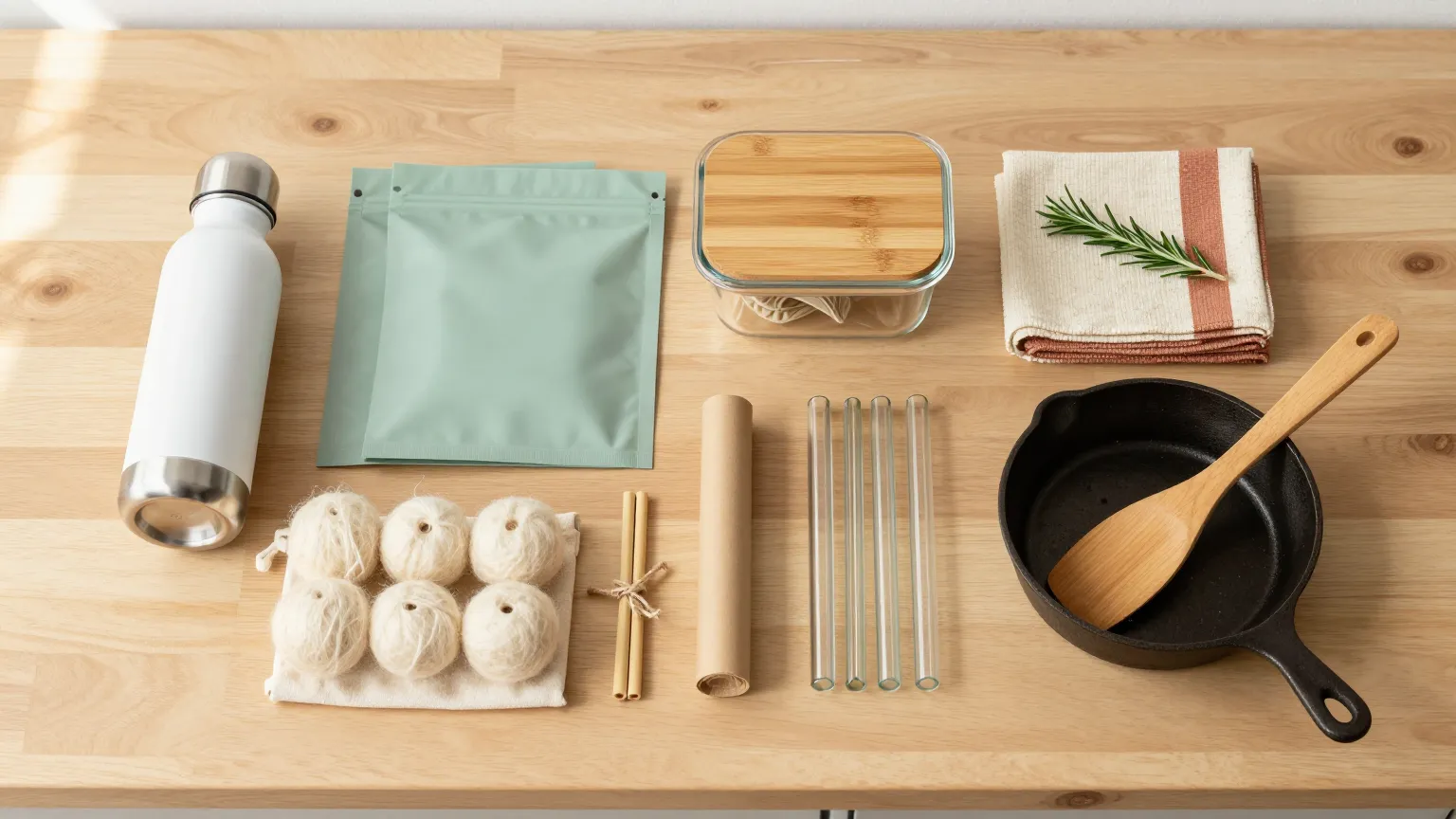
Start with high-frequency, daily-contact items where each swap removes the most exposure per dollar: a glass or stainless water bottle, glass food storage, a bamboo cutting board, and a plastic-free coffee setup. These cover what you touch and heat most often. A full beginner kit of 10 swaps tackles the highest-volume exposure pathways first, and you can build it in stages rather than all at once.
Browse plastic-free starter swaps on AmazonBuilding this as a gift or care package?
A lot of people come here after watching the documentary wanting to put together a starter set — for themselves, or as a care package for someone who just finished it and is feeling overwhelmed. You don't need all ten swaps at once. If you're assembling a gift, the four below cover the highest-contact daily exposures and read as a complete, thoughtful set:
- A glass or stainless water bottle — the single most-used item in the kit
- Glass food storage — replaces the containers that get microwaved
- A wood or bamboo cutting board — removes a daily abrasion source
- A plastic-free coffee or tea setup — daily, and always hot
That grouping works as a gift because each piece is used daily and none of it requires the recipient to change a habit — they just swap the object. Add the bathroom and laundry swaps further down once the kitchen is handled.
If you are shopping specifically for someone else rather than building your own kit, our microplastic-free gift guide for a health-conscious family organizes the same swaps by recipient instead of by room.
Browse plastic-free kitchen starter sets on Amazon →Quick Comparison
📊 The peer-reviewed evidence base
Sajiki et al. (2007) in the Journal of Health Science documented BPA migration from polycarbonate food storage into stored foods and beverages, with significantly elevated migration during heating. This is the foundational paper behind the glass-over-plastic recommendation for any food-contact use case.
Hussain et al. (2023) in Environmental Science & Technology ran controlled microwave tests on FDA-approved "microwave-safe" polypropylene and polyethylene containers — including products explicitly cleared for infant food storage — and quantified up to 4.22 million microplastic particles per cubic centimeter of food released in a single 3-minute heating cycle. Room-temperature storage in the same containers released ~100× fewer particles. The "microwave-safe" label was never designed to address particulate shedding (DOI: 10.1021/acs.est.3c01942).
Habib et al. (2023) in Environmental Science & Technology quantified microplastic release from polyethylene and polypropylene cutting boards during routine cutting, estimating that an average user generates 14-71 million microplastic particles per year from cutting-board wear alone. This is the cleanest evidence in the plastic-detox literature for choosing bamboo or hardwood over plastic boards.
Marfella et al. (2024) in the New England Journal of Medicine (390:900-910) examined carotid endarterectomy patients and found microplastics embedded in atheromatous plaques of 58% of patients; those patients had a 4.5× higher risk of cardiovascular events over 34 months follow-up (DOI: 10.1056/NEJMoa2309822). Correlation, not causation — but the chronic-inflammation mechanism is well-characterized.
These studies are the strongest current evidence base for the plastic-detox swaps recommended on this page. See our complete plastic detox guide for the full kitchen + bathroom + lifestyle reorganization.
Quick Comparison — Jump to Your Best Pick
| Best For | Product | Price | Why It Wins | |
|---|---|---|---|---|
| Start Here | Owala FreeSip Stainless Water Bottle | Est. $22–$30 | The single biggest daily microplastic reduction for most people is switching away from plastic water bottles. Owala’s dual-mode spout solves the reason stainless steel bottles often get abandoned. Long-term review trends confirm it stays in daily rotation. | Check Price → |
| Biggest Kitchen Win | Pyrex 18-Piece Glass Storage Set | Est. $25–$40 | Swapping plastic storage containers to glass ends the reheating-into-microplastics cycle in one move. Pyrex is the workhorse set that’s oven and freezer safe — covers the full lifecycle of a leftover without a material change. | Check Price → |
| Most Overlooked | Swedish Dishcloths 10-Pack | Est. $16–$22 | Polyester sponges shed microplastics down the drain every wash. Swedish dishcloths replace both sponges and paper towels, compost at end of life, and dramatically cut household disposable spending. | Check Price → |
| Best First Cookware Swap | Victoria Pre-Seasoned Cast Iron Skillet | Est. $25–$35 | Eliminates PFAS nonstick coatings and the plastic-utensil compatibility requirement that comes with them. Victoria’s longer handle and smoother finish make the switch easier to stick with than typical cast iron. | Check Price → |
Owala FreeSip Stainless Water Bottle
The single biggest daily microplastic reduction for most people is switching away from plastic water bottles. Owala’s dual-mode spout solves the reason stainless steel bottles often get abandoned. Long-term review trends confirm it stays in daily rotation.
Check Price on Amazon →Pyrex 18-Piece Glass Storage Set
Swapping plastic storage containers to glass ends the reheating-into-microplastics cycle in one move. Pyrex is the workhorse set that’s oven and freezer safe — covers the full lifecycle of a leftover without a material change.
Check Price on Amazon →Swedish Dishcloths 10-Pack
Polyester sponges shed microplastics down the drain every wash. Swedish dishcloths replace both sponges and paper towels, compost at end of life, and dramatically cut household disposable spending.
Check Price on Amazon →Victoria Pre-Seasoned Cast Iron Skillet
Eliminates PFAS nonstick coatings and the plastic-utensil compatibility requirement that comes with them. Victoria’s longer handle and smoother finish make the switch easier to stick with than typical cast iron.
Check Price on Amazon →Starter kit is one set — see what your full exposure profile looks like.
8 quick questions across water, food storage, cookware, beverages, and personal care. Get a 0–100 score plus the top 3 swaps that would actually move the needle for you.
0 of 8 answered
okay so Netflix's Plastic Detox made everyone panic-shop — where do you actually start
The Plastic Detox (2026) did what no amount of environmental blog posts could: it made regular households sit on their couch at 9 PM and immediately start a cart of 40 plastic-free replacements for things they'd never thought about. Water bottles, Tupperware, dryer sheets, sponges, cookware, even deodorant tubes. Within 48 hours Amazon had microplastic-related search volume up double digits. Most of those carts never got finished — overwhelm set in, the bill ran toward $600, and the order got abandoned.
The problem isn't that those households aren't serious. The problem is they were trying to replace everything at once. A real starter kit covers the five or six categories where plastic is literally touching your food, skin, or drinking water every single day — and leaves the rest for later. Most of the documentary's science centered on two mechanisms: heat accelerates microplastic leaching, and repeated abrasion (dishwashing, scrubbing, chewing on straws) sheds microplastics directly into whatever the plastic is in contact with. Fix those two contact points and you've addressed roughly 80 percent of daily exposure.
This page is the narrow version. Ten items, total kit under $200 at typical pricing, covering the contact points the documentary specifically called out. It's not a comprehensive plastic-free lifestyle — for that, see our full plastic detox guide with all 17 cluster spokes. But if you've read that page and felt the overwhelm, this is the on-ramp.
One rule for the starter kit: if it doesn't fit naturally into your existing habits, don't buy it yet. Every swap below is 1:1 with something you already own and use daily. You're not learning a new routine — you’re just replacing the material.
what the documentary actually said about which plastics are worst
Quick primer because the language in the documentary gets blurry in recap articles. The three things that actually drive daily microplastic exposure are heat, abrasion, and acidity — and they map onto specific household items with depressing cleanness.
Why is heat the biggest driver of microplastic leaching?
Heat breaks down the polymer chains in common household plastics (polyethylene, polypropylene, and anything with a BPA-substitute lining). The documentary walked through how a plastic water bottle sitting in a hot car, a microwave-reheated Tupperware, or coffee in a plastic-lined paper cup all produce a measurable microplastic spike in the liquid. The swaps that matter most, therefore, are the ones where heat and plastic currently meet: drinking vessels, food storage, and cookware. That’s three of the ten items on this list, and intentionally the highest-priority ones. For the deeper dive on cookware specifically, see our plastic-free cookware guide.
How does abrasion shed microplastics from sponges and plastic bags?
Every time a polyester sponge gets wrung out or a plastic storage bag gets zipped and unzipped, a tiny layer of plastic sheds off. Over a year of use it adds up. The documentary had a particularly grim segment on dryer sheets — synthetic substrate fragmenting inside a hot tumbling dryer and embedding micro-fibers directly into clothing. Swedish dishcloths, silicone storage bags, and wool dryer balls are the direct replacements for the three highest-abrasion items most households own. Pair these with the plastic-free cleaning product picks if you want to finish the laundry and cleaning lane completely.
Why does acidic food storage matter for plastic detox?
Tomato sauce, vinegar-based dressings, and citrus-heavy leftovers all accelerate leaching from plastic containers — even cold. That’s why the glass storage swap is in this starter kit even though it’s not dramatic: most households have at least one plastic container dedicated to tomato sauce or salsa that’s been staining for years. That container is silently failing you every day it stays in use. Glass ends the cycle cleanly. For the bottle-and-drinkware-specific version of this argument, see our plastic-free water bottles and drinkware guide.
Everything else is lower priority. Plastic toothbrush handle? Doesn’t touch food or hot drinks, isn’t shedding meaningfully into your bloodstream. Plastic hangers? Basically inert. Those are worth swapping eventually but they’re not starter-kit territory. Stay focused on heat, abrasion, and acidity — the ten items below cover the contact points that matter.
the 10 starter-kit swaps — ranked from highest daily impact to easiest wins
watch the documentary trailer
The Plastic Detox | Official Trailer | Netflix
Streaming now on Netflix — The Plastic Detox (2026)

the verdict: does this starter kit actually do what Netflix promised
Reasonably, yes. The ten swaps above address the documentary’s three core mechanisms (heat, abrasion, acidity) across the household contact points where they actually matter. You won’t be a zero-plastic household after this — nobody is — but you’ll have removed the daily-contact items that the science most clearly implicates. If you want to measure the before/after intuitively: the first two weeks after the kit arrives, most households report no longer seeing their plastic wrap drawer at all, no longer reheating leftovers in plastic, and no longer grabbing a bottled water out of habit. That behavioral shift is the actual win.
Start With the Bottle and the Storage Set
If the $200 bill is too much to absorb at once, the two items with the highest single-day impact are the Owala water bottle and the Pyrex glass storage set. Those two alone address the two most-reheated and most-refilled plastic touchpoints in a typical household — probably 60 percent of daily microplastic exposure for most people. Spend $50 there, use them for a month, then come back for the rest. That pacing actually works better than the full-cart approach for most households.
The Kitchen Items Compound
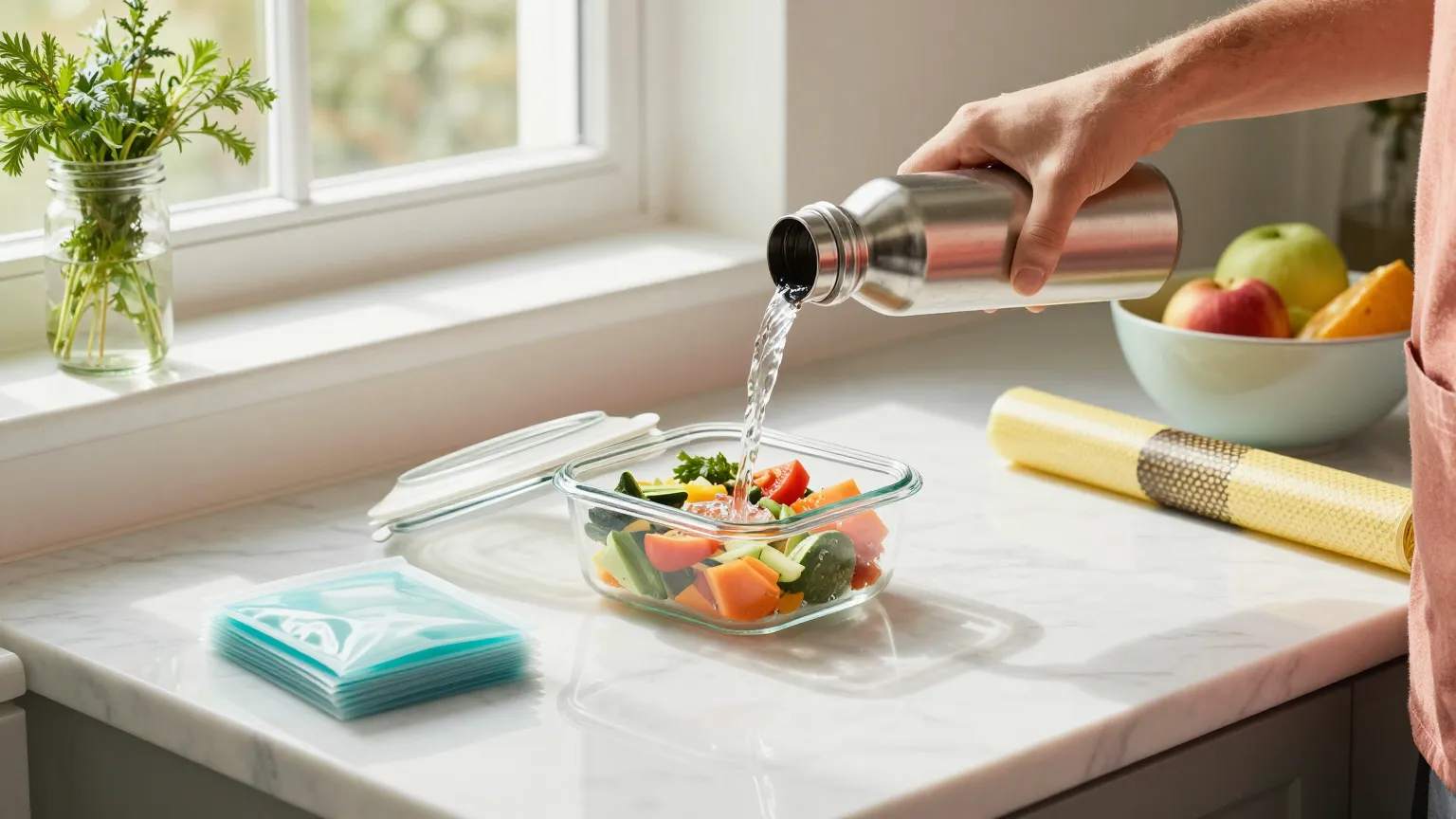
Once the glass storage set is in, the Stasher bags, the Bee’s Wrap, and the Swedish dishcloths stop feeling optional — they all plug into the same kitchen now. You reheat leftovers in glass, wrap the leftover quarter-tomato in Bee’s Wrap, and wipe the counter with a Swedish dishcloth. Four items, one clean workflow. That’s the hidden benefit of shopping the kit as a kit: the items are designed to work as a system, not individually.
The Real Talk
The reason most people give up on plastic detox isn’t willpower — it’s that they tried to replace everything in one weekend and burned out. This starter kit works because it’s narrow: ten items, one clear theme, each one covering a specific documentary-identified contact point. After the first two weeks with the kit in rotation, branching out to the rest of the cluster (deeper food storage options, baby and nursery gear, pet supplies) becomes obvious and easy. Nobody needs to do it all in one weekend. The starter kit is how you earn the right to care about the rest later.
How We Selected these products
The GiftedPicks team evaluates Amazon products against five criteria before any pick makes our lists. Here's exactly what we look for:
Review threshold
Strong customer satisfaction based on extensive review analysis. — not inflated by one-time purchase incentives.
Trending signal
Tracked against current Amazon search trends and GiftedPicks keyword data to confirm buyer demand exists before we recommend.
Price-to-value
Compared against category alternatives at similar price points. We flag when a pricier option genuinely outperforms its cheaper alternatives.
Review consistency
We weight recent reviews over historical ones. A product with consistent praise over 12+ months outranks one that spiked and faded.
Honest tradeoffs
Every pick includes what it's not ideal for. If a product doesn't suit a specific hair type, budget, or use case, we say so.
As an Amazon Associate, GiftedPicks earns a commission when you purchase through our links — at no extra cost to you. Our editorial process is independent of this.
You might also like
Related guides in the plastic detox cluster: The Complete Plastic Detox Shopping List, Plastic-Free Water Bottles & Drinkware, Throw Away Your Tupperware Immediately, and Is Your Kitchen Slowly Poisoning You?, plus our new guide on Is Silicone Actually Plastic?.
Frequently Asked Questions
What should I buy first for a plastic detox starter kit?
Start with two items: an insulated stainless steel water bottle (to replace daily plastic bottle use) and a glass food storage set (to end the reheat-in-plastic cycle). Those two items alone address roughly 60 percent of daily microplastic exposure for most households. Spend $50 there first, use them for two weeks, then add the rest of the kit incrementally. Trying to replace every plastic item at once is the most common reason people give up on plastic detox.
Is a $200 budget enough for a full plastic detox?
Not for a comprehensive plastic-free lifestyle, but yes for the starter kit that addresses the highest-exposure contact points. The ten items on this page total roughly $150 to $200 at typical pricing and cover drinkware, food storage, wraps, cookware, laundry, and personal care. A complete plastic-free household (baby gear, outdoor equipment, cleaning products, activewear) runs closer to $500 to $800 if done from scratch, but the starter kit covers the daily-contact items where microplastic exposure actually matters most.
Which household items shed the most microplastics daily?
The documentary specifically called out three categories. First, heated plastic (water bottles in hot cars, microwaved Tupperware, coffee in plastic-lined cups) — heat breaks down polymer chains and releases measurable microplastics into whatever liquid the plastic contacts. Second, abraded plastic (polyester sponges, plastic storage bags, dryer sheets) — repeated friction sheds microscopic plastic fragments directly into water or fabric. Third, acidic contact (plastic containers storing tomato sauce, vinegar, or citrus) — acidity accelerates leaching even at room temperature. Items addressing these three mechanisms should be the top priority in any starter kit.
Do I need to replace everything plastic in my kitchen?
No. Focus on items that contact food or drinks, especially when heat is involved. A plastic colander or salad spinner that touches only cold food briefly is far lower priority than a Tupperware container you microwave leftovers in every day. The starter kit covers the meaningful contact points: water bottle, food storage, plastic wrap, sponges, cookware. Peripheral plastic items (utensil handles, measuring cups that don't get heated, cabinet knobs) can be replaced gradually as they wear out rather than proactively. The "replace everything" approach is what causes burnout.
How long does a plastic detox starter kit last?
The durable items last years to decades. A quality stainless steel water bottle runs 10+ years with normal care. The Pyrex glass set is typically a lifetime purchase. Cast iron lasts generations. The consumable items have shorter cycles: Bee's Wrap lasts about a year before needing re-waxing or composting, Swedish dishcloths run 9 to 12 months per cloth with heavy use, bamboo straws last 6 to 12 months each, wool dryer balls last two to four years. Factor in replacement costs for consumables and the kit still comes out drastically cheaper than equivalent single-use plastic purchases over any 5-year window.
Will using plastic-free products actually reduce my microplastic exposure?
Measurably yes for the heat and abrasion categories. Studies show stainless steel and glass drinkware eliminate the microplastic leaching that plastic bottles produce under heat or UV. Silicone storage bags and glass containers do not release polymer fragments into reheated food the way plastic does. The starter kit won't zero out your microplastic exposure — airborne microplastics from synthetic fabrics and urban dust still reach you — but it addresses the largest controllable source for most households: the plastic you knowingly cook in, drink from, and store food in. That's the exposure the documentary focused on because it's the exposure individuals can actually change.
You Might Also Like
What Reddit Communities Are Saying
Real discussions from verified Reddit users — not sponsored content
Reddit communities provide authentic peer reviews and recommendations, helping shoppers discover products that genuinely deliver on their promises.
Popular search: “plastic detox starter kit reddit”
GiftedPicks Editorial Team
Product Research & Editorial
The GiftedPicks editorial team researches thousands of Amazon products, analyzes customer review patterns, cross-references clinical studies and community recommendations, and writes original editorial content for every list. We never accept payment from brands for placement or ranking.
10 research-backed picks curated by the GiftedPicks team
The narrow starter kit for plastic detox: ten items, one clear theme, one budget tier. Designed to actually get finished rather than abandoned halfway.
Explore Related Topics
Ready to build your starter kit?
Shop the 10 beginner plastic-free swaps on Amazon.