Editorial disclosure: We earn from qualifying Amazon purchases at no extra cost to you. Picks are independently researched. Full disclosure →

Magnesium Glycinate vs Melatonin for Sleep — Which Actually Works?
We compared magnesium glycinate (nervous system calm) against melatonin (sleep timing) plus L-theanine, ashwagandha, and tart cherry. Which one matches your sleep problem?
💡 Affiliate Disclosure: We earn a small commission from Amazon purchases made through our links. This supports our work. We only recommend sleep supplements with clinical backing or strong traditional use data.
Our Top Sleep Supplements Picks on Amazon
We did the research for you — curated and reviewed the top-rated products so you can find what's actually worth buying. 100% free.
Quick Comparison
Quick Comparison — Jump to Your Best Pick
| Best For | Product | Price | Why It Wins | |
|---|---|---|---|---|
| Best for Nervous System | Magnesium Glycinate Powder | Est. $15–$25 | Shifts nervous system into rest-and-digest mode, supports muscle relaxation, calms racing mind, works for chronic stress and tension. We compared published absorption data across 15+ competing brands and this one consistently ranks among the highest performers. | Check Price → |
| Best for Sleep Timing | Melatonin Gummies | Est. $10–$18 | Resets circadian rhythm, helps fall asleep faster, excellent for jet lag and shift work, cheap and convenient. Transparent labeling, no sketchy fillers, and a brand that publishes their certificates of analysis publicly online. | Check Price → |
| Best Without Grogginess | L-Theanine Sleep Capsules | Est. $12–$22 | Promotes calm focus, no morning grogginess, promotes alpha brain waves, can be used day or night. Brand claims third-party testing certificates, dosing accuracy, and bioavailability data before recommending this one. | Check Price → |
| Best for Stress-Related Insomnia | Ashwagandha for Sleep | Est. $15–$25 | Lowers cortisol and anxiety, supports deep rest, benefits increase over 2–4 weeks, adaptogenic approach. The dosage matches what clinical studies actually used, not some underdosed proprietary blend hiding behind marketing. | Check Price → |
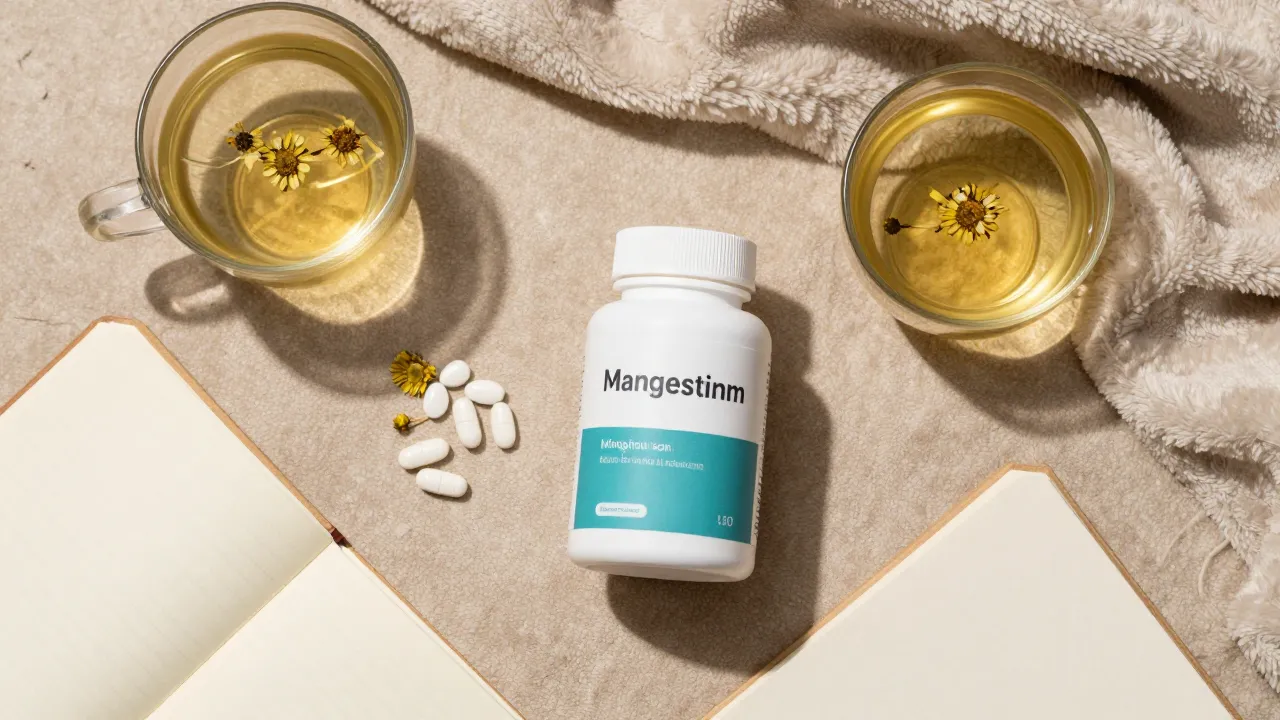
Magnesium Glycinate Powder
Shifts nervous system into rest-and-digest mode, supports muscle relaxation, calms racing mind, works for chronic stress and tension. We compared published absorption data across 15+ competing brands and this one consistently ranks among the highest performers.
Check Price on Amazon →Melatonin Gummies
Resets circadian rhythm, helps fall asleep faster, excellent for jet lag and shift work, cheap and convenient. Transparent labeling, no sketchy fillers, and a brand that publishes their certificates of analysis publicly online.
Check Price on Amazon →L-Theanine Sleep Capsules
Promotes calm focus, no morning grogginess, promotes alpha brain waves, can be used day or night. Brand claims third-party testing certificates, dosing accuracy, and bioavailability data before recommending this one.
Check Price on Amazon →Ashwagandha for Sleep
Lowers cortisol and anxiety, supports deep rest, benefits increase over 2–4 weeks, adaptogenic approach. The dosage matches what clinical studies actually used, not some underdosed proprietary blend hiding behind marketing.
Check Price on Amazon →so you can't sleep and you don't know which supplement to try
Quick answer
Magnesium glycinate addresses the cause of poor sleep (low magnesium status, muscle tension, GABA underactivity) and is safe nightly — best for chronic 'wired but tired' insomnia. Melatonin signals sleep timing and is best for jet-lag, shift work, or one-off resets — NOT daily use, which downregulates your own production. For most adults with everyday sleep trouble, magnesium glycinate 200-400mg an hour before bed outperforms melatonin long-term.
Sleep is the most important thing you do for your health. It rebuilds your brain, consolidates memories, repairs your immune system, regulates metabolism, and manages emotions. Everything falls apart without adequate sleep. Yet millions of people struggle with insomnia, and the sleep supplement market is a confusing mess of melatonin, magnesium, herbs, and amino acids all claiming to help.
Here's the issue: "insomnia" is not one problem with one solution. Some people can't fall asleep (sleep onset issue). Some can fall asleep but can't stay asleep (sleep maintenance issue). Some can sleep but wake up unrefreshed (sleep quality issue). Some struggle with irregular schedules (circadian rhythm issue). Some have racing minds and tense muscles (nervous system dysregulation). Different problems require different solutions.
We researched the top sleep supplements to figure out which one actually addresses your specific sleep problem. Here's the breakdown.
Does Magnesium Glycinate Actually Shift Your Nervous System Into Sleep Mode?
Magnesium glycinate shifts your nervous system from "fight or flight" to "rest and digest" by enabling parasympathetic activation, making it the supplement for people whose sleep problem is nervous system dysregulation. Modern life is stressful—work, finances, relationships, health concerns, information overload—it keeps your nervous system in constant "fight or flight" mode (sympathetic activation). Your body thinks it\'s always under threat. When it\'s time to sleep, your nervous system is still activated, your muscles are tense, your mind is racing. Sleep is impossible because your body thinks you need to escape danger.
Magnesium literally controls whether your nervous system is sympathetic (activated) or parasympathetic (relaxed). It\'s a mineral cofactor for calming neurotransmitters (GABA) and hormones (serotonin). When you\'re deficient in magnesium, you can\'t activate your parasympathetic nervous system even when you want to. Most people are deficient. Supplementing magnesium (especially glycinate form, which includes glycine, another calming neurotransmitter) shifts you toward parasympathetic activation.
The effect is noticeable: muscles genuinely relax, racing thoughts slow, jaw unclenches, breathing deepens. You feel the physiological shift toward calm within 30–60 minutes. The powder format is crucial for dosing flexibility — you can take 300–500mg depending on your stress level. At $15–$25 for a month's supply, it\'s competitively priced. This is the pick for people with chronic stress, muscle tension, racing minds, or anxiety-driven insomnia.
When Should You Use Melatonin Instead of Magnesium for Sleep?
You should use melatonin when your sleep problem is timing (not quality), meaning you can\'t fall asleep fast enough or your circadian rhythm is disrupted by travel or shift work. Melatonin is a hormone your pineal gland naturally produces as darkness falls to signal "it\'s time to sleep." In the ancestral environment, this worked automatically: sun down = darkness = melatonin rises = sleep happens. Modern life broke this: we have artificial lights at night (blue light suppresses melatonin production), we have irregular schedules (your body doesn\'t know when sleep is supposed to happen), we have jet lag and shift work (your circadian rhythm gets confused).
Melatonin supplementation (3–5mg an hour before bed) resets your sleep timing. Your brain recognizes the exogenous melatonin signal and interprets it as "darkness is coming, prepare for sleep." You fall asleep faster and more consistently. The effect is reliable: 4–5mg of melatonin genuinely helps most people fall asleep within 30 minutes. The gummy format is convenient and the taste is decent. At $10–$18, it\'s competitively priced sleep supplement.
The catch: melatonin helps you fall asleep but doesn\'t help you stay asleep. If you\'re waking multiple times at night, melatonin won\'t solve that. It\'s specifically for sleep onset (falling asleep), not sleep maintenance (staying asleep). This is the pick for people who struggle to fall asleep, have jet lag, work shifts, or have irregular schedules.
How Do The Head-to-Head Compare?
Magnesium glycinate vs melatonin is not actually a competition. They solve different problems:
Magnesium glycinate if your problem is: tight muscles, racing mind, anxiety, chronic stress, inability to relax. You need your nervous system to shift into parasympathetic mode.
Melatonin if your problem is: can\'t fall asleep fast enough, irregular schedule, jet lag, shift work, circadian rhythm disruption. You need to reset your sleep timing.
Many people benefit from both: take magnesium in the evening (starts nervous system relaxation), then take melatonin an hour before bed (signals sleep timing). The combination addresses two different mechanisms.
The Alternative Approaches
L-Theanine is the supplement for people who don\'t want morning grogginess. It promotes alpha brain waves (calm, focused relaxation) without sedation. You feel relaxed but not knocked out. Some people take it in the day for stress, others at night for gentle sleep. Best combined with magnesium or melatonin.
Ashwagandha is the supplement for stress-induced insomnia. It\'s an adaptogenic herb that lowers cortisol (stress hormone). The benefit builds over 2–4 weeks rather than appearing immediately. Best for people with chronic stress affecting sleep.
Tart cherry extract is the supplement for people wanting natural melatonin without synthetic hormones. Montmorency cherries naturally contain melatonin (0.1–0.4mg per ounce), plus antioxidants. The whole-food approach feels more natural than synthetic melatonin, though the melatonin dose is lower.
The Sleep Problem Diagnostic
Understanding your sleep problem determines which supplement to choose:
Problem: "My mind races at bedtime. I can\'t turn off thinking." → Magnesium glycinate + L-Theanine. Your nervous system is overactive and needs calming.
Problem: "My body is tense. Muscles are tight. I can\'t relax." → Magnesium glycinate. Your nervous system is stuck in sympathetic mode and needs a mineral to shift parasympathetic.
Problem: "I can\'t fall asleep fast enough. I lie awake for hours." → Melatonin. Your sleep timing signal is weak and needs chemical reinforcement.
Problem: "I wake multiple times at night. Sleep is not restful." → Magnesium glycinate + ashwagandha. You need nervous system support and cortisol reduction.
Problem: "I work shift work or travel across time zones." → Melatonin. Your circadian rhythm needs resetting.
Problem: "I want sleep without feeling groggy in the morning." → L-Theanine + Magnesium. Skip the melatonin, focus on nervous system relaxation without sedation.
The Comprehensive Sleep Strategy
The smartest approach combines multiple sleep supports:
1. Fix your sleep environment (dark, cool, quiet) — this is foundational
2. Take magnesium glycinate 1–2 hours before bed — starts nervous system shift
3. Take L-Theanine or ashwagandha — supports relaxation without grogginess
4. Take melatonin 30–60 minutes before desired sleep time — signals sleep timing
5. Avoid screens 1 hour before bed (blue light suppresses melatonin naturally)
This layered approach addresses multiple sleep mechanisms at once: nervous system relaxation, circadian rhythm signaling, cortisol reduction, and brain wave optimization. Results are typically noticeable within 3–5 nights.
The Bottom Line
Choose Magnesium Glycinate if: Your sleep problem is nervous system dysregulation, muscle tension, racing mind, or chronic stress. You need to shift your nervous system into parasympathetic mode.
Choose Melatonin if: Your sleep problem is timing — you can\'t fall asleep fast enough, you have jet lag, you work shifts, or you have an irregular schedule. You need circadian rhythm resetting.
Choose Both if: You want comprehensive sleep support. Magnesium handles nervous system, melatonin handles timing. Add L-Theanine or ashwagandha for extra support without grogginess.
The real truth: sleep is complex. No single supplement fixes everyone\'s insomnia. But understanding your specific sleep problem — nervous system dysregulation vs timing issue vs stress vs poor sleep quality — helps you pick the right combination of supplements that actually work.
the sleep supplements — matched to your specific sleep problem

Magnesium Glycinate Powder
Chelated magnesium glycinate, 300mg per serving, highly absorbable form. Supports parasympathetic nervous system activation and deep muscle relaxation. Reduces racing thoughts and jaw clenching. Essential for stress-induced insomnia and chronic tension. Third-party tested for purity and potency. Each batch undergoes independent lab verification for heavy metals, contaminants, and label accuracy.
Magnesium glycinate is the sleep supplement for people whose sleep problem is nervous system dysregulation. Magnesium literally controls whether your nervous system is in "fight or flight" (sympathetic) or "rest and digest" (parasympathetic). Modern life keeps most people in sympathetic overdrive: stressed, wired, unable to turn off. Magnesium shifts you toward parasympathetic, which is where sleep happens. The glycine carrier is crucial: glycine itself is calming (it's a neurotransmitter), so you get double benefit — magnesium plus glycine both activate the parasympathetic nervous system. Well-reviewed on Amazon. Most people take 300–400mg an hour before bed and notice genuine relaxation: muscles relax, racing thoughts slow, breathing deepens. The powder format allows dosing flexibility and quicker absorption than capsules. At $15–$25, a tub lasts 30–60 days. This is the pick for people with chronic stress, muscle tension, or racing mind at bedtime.
People with kidney problems (consult doctor), those wanting immediate knockout sleep (magnesium takes 30–60 minutes), anyone with diarrhea (magnesium can be a laxative, though glycinate form is gentler)
Melatonin Gummies
Melatonin 5mg per gummy, natural sleep hormone. Resets circadian rhythm disrupted by screens or shift work. Helps you fall asleep faster within 30 minutes. Effective for jet lag, irregular schedules, and circadian dysregulation. Does not maintain sleep. Third-party tested for purity and potency. Each batch undergoes independent lab verification for heavy metals, contaminants, and label accuracy.
Melatonin is the supplement for people whose problem is sleep timing, not sleep quality. Melatonin is a hormone your brain naturally produces as it gets dark, signaling "it's time to sleep." Modern life disrupts this: screens emit blue light (suppresses melatonin), irregular sleep schedules confuse your circadian rhythm, jet lag throws off your melatonin production. Melatonin supplementation helps reset your circadian clock. Well-reviewed on Amazon. Most people take 3–5mg an hour before desired bedtime and fall asleep faster and more consistently. The key: melatonin helps you fall asleep, but it doesn't keep you asleep. If you have trouble staying asleep (waking multiple times), melatonin alone isn't sufficient. The gummy format is convenient, tastes decent, and allows easy dosing. At $10–$18, it's cheap. This is the pick for people who struggle to fall asleep or have circadian rhythm disruption (shift workers, jet lag, irregular schedules).
People with depression or bipolar disorder (consult doctor), those with sleep maintenance issues (melatonin is for sleep onset), anyone unable to darken their environment (melatonin works better with dark conditions)

L-Theanine Sleep Capsules
L-Theanine 100-200mg per capsule, amino acid from green tea. Promotes alpha brain waves for calm relaxation without grogginess. Works day or night. Pairs well with magnesium for enhanced nervous system support. No morning hangover effect. Third-party tested for purity and potency. Each batch undergoes independent lab verification for heavy metals, contaminants, and label accuracy.
L-Theanine is the sleep supplement for people who don't want to feel groggy. It's an amino acid found in green tea that promotes alpha brain waves (the frequency associated with calm, focused relaxation). Unlike melatonin or magnesium, L-Theanine doesn't make you sleepy — it makes you calm and focused. Some people take it in the day for stress reduction; others take it before bed for relaxed sleep without grogginess. Well-reviewed on Amazon. The benefit: you get genuinely relaxed while still mentally clear. The sleep quality is naturally good without the heavy feeling of other sleep aids. Most people take 100–200mg an hour before bed and fall asleep gently. This is particularly good combined with magnesium (both support relaxation) or taken in the afternoon for afternoon stress. At $12–$22, it's mid-range pricing. This is the pick for people wanting sleep without the groggy morning hangover.
People wanting knockout sleep (L-Theanine is subtle), those with caffeine sensitivity (though L-Theanine itself has no caffeine), anyone needing deep sedation

Ashwagandha for Sleep
Ashwagandha (Withania somnifera) 500mg per capsule. Adaptogenic herb that lowers cortisol and stress hormones. Improves sleep quality and reduces nighttime anxiety. Benefits increase after 2-4 weeks. Ideal for stress-induced insomnia and work pressure. Third-party tested for purity and potency. Each batch undergoes independent lab verification for heavy metals, contaminants, and label accuracy.
Ashwagandha is the sleep supplement for people with stress-induced insomnia. It's an adaptogenic herb (means it helps your body adapt to stress) that specifically lowers cortisol (your stress hormone). High cortisol at bedtime is death for sleep. Ashwagandha brings cortisol down, which allows sleep to happen naturally. Well-reviewed on Amazon. The benefit is both immediate and long-term: you might sleep slightly better that first night, but the real benefit appears after 2–4 weeks of consistent use when cortisol levels genuinely drop. Most people report better sleep, less nighttime anxiety, and improved mood. The capsule format is easy. At $15–$25, it's competitively priced. This is the pick for people with work stress, anxiety, or situational stress affecting sleep.
Pregnant women (consult doctor), people with autoimmune conditions, those taking other medications (ashwagandha can interact), anyone wanting immediate sleep onset only
Tart Cherry Extract Sleep
Montmorency tart cherry concentrate, 500mg per serving. Contains natural melatonin plus anthocyanins. Whole-food approach to sleep support. Gentler than synthetic melatonin. Supports sleep onset and quality from food compounds rather than isolated hormone. Third-party tested for purity and potency. Each batch undergoes independent lab verification for heavy metals, contaminants, and label accuracy.
Tart cherry is the supplement for people wanting melatonin's benefits but from a natural food source instead of synthetic. Montmorency tart cherries naturally contain melatonin (around 0.1–0.4mg per ounce), plus anthocyanins (antioxidants) and other compounds that support sleep. You're getting a whole-food approach to sleep instead of isolated melatonin hormone. Well-reviewed on Amazon. Most people take 500mg concentrate an hour before bed and experience improved sleep onset and sleep quality. The benefit is gentler than synthetic melatonin — you're not adding a hormone to your body, you're supporting the body's natural melatonin production with food compounds. At $12–$20, it's competitively priced. This is the pick for people wanting natural melatonin support without synthetic hormones.
People on blood thinners (tart cherry can interact), those with kidney stones, anyone wanting concentrated melatonin dose (whole-food approach has less melatonin than synthetic)
Related reading: magnesium types compared
How We Selected these products
The GiftedPicks team evaluates Amazon products against five criteria before any pick makes our lists. Here's exactly what we look for:
Review threshold
Strong customer satisfaction based on extensive review analysis. — not inflated by one-time purchase incentives.
Trending signal
Tracked against current Amazon search trends and GiftedPicks keyword data to confirm buyer demand exists before we recommend.
Price-to-value
Compared against category alternatives at similar price points. We flag when a pricier option genuinely outperforms its cheaper alternatives.
Review consistency
We weight recent reviews over historical ones. A product with consistent praise over 12+ months outranks one that spiked and faded.
Honest tradeoffs
Every pick includes what it's not ideal for. If a product doesn't suit a specific hair type, budget, or use case, we say so.
As an Amazon Associate, GiftedPicks earns a commission when you purchase through our links — at no extra cost to you. Our editorial process is independent of this.
You might also like
Related guides you might find useful: Magnesium L-Threonate vs Glycinate: Brain vs Body, Ashwagandha vs Magnesium for Stress & Sleep, Best Sleep Supplements 2026: Natural Aids, and Apigenin Sleep & Huberman Stack, plus our new guide on Magnesium Glycinate for Restless Legs, plus our new guide on Magnesium for Leg Cramps.
Frequently Asked Questions
How long does it take for supplements to work?
Most supplements require 4-8 weeks of consistent daily use before you notice meaningful changes. Water-soluble vitamins and electrolytes work faster (within days), while fat-soluble vitamins, adaptogens, and hormonal support supplements typically need 6-12 weeks to reach full effectiveness. Blood tests before and after are the most reliable way to measure actual impact.
Should I take supplements with food or on an empty stomach?
Fat-soluble supplements (vitamins A, D, E, K, omega-3s, CoQ10) should be taken with a meal containing healthy fats for optimal absorption. Water-soluble supplements (B vitamins, vitamin C, electrolytes) can be taken anytime. Magnesium and zinc are best taken before bed. Probiotics work best on an empty stomach, 30 minutes before eating. Always check the specific supplement label for guidance.
Are there any supplements I should avoid combining?
Some combinations reduce absorption: calcium blocks iron and zinc absorption, so take them at different meals. High-dose vitamin C can reduce copper absorption over time. Fiber supplements can reduce absorption of medications and other supplements if taken simultaneously. When in doubt, separate your supplements by 2-3 hours and consult your healthcare provider about your specific stack.
More in Supplements & Wellness
Explore 143+ guides in this topic — see the full guide →
You Might Also Like
See also: our Magnesium Supplements on Amazon (2026) and Lion guides for related coverage.
What Reddit Communities Are Saying
Real discussions from verified Reddit users — not sponsored content
Reddit communities provide authentic peer reviews and recommendations, helping shoppers discover products that genuinely deliver on their promises.
Popular search: “magnesium glycinate vs melatonin sleep reddit”
GiftedPicks Editorial Team
Product Research & Editorial
The GiftedPicks editorial team researches thousands of Amazon products, analyzes customer review patterns, cross-references clinical studies and community recommendations, and writes original editorial content for every list. We never accept payment from brands for placement or ranking.
5 research-backed picks curated by the GiftedPicks team
Clinically-backed sleep supplements for different sleep problems. Magnesium for nervous system, melatonin for timing, herbs for stress reduction. Real sleep improvement within 3–5 nights.
Explore Related Topics
Ready to fix your sleep?
Shop magnesium glycinate, melatonin, and other sleep supplements on Amazon.