Editorial disclosure: We earn from qualifying Amazon purchases at no extra cost to you. Picks are independently researched. Full disclosure →

Ashwagandha vs Magnesium for Sleep: Which Adaptogen Actually Works (And When to Use Each)
Both improve sleep, but through completely different mechanisms. Ashwagandha is a stress manager. Magnesium is a sleep deepener. You probably need both.
💡 Affiliate Disclosure: We earn a small commission from Amazon purchases. Sleep issues are complex. These supplements address specific mechanisms — stress, mineral deficiency, circadian rhythm — but aren't replacements for sleep hygiene or medical care if insomnia is severe.
Our Top Sleep & Stress Supplements Picks on Amazon
We did the research for you — curated and reviewed the top-rated products so you can find what's actually worth buying. 100% free.
The verdict
- Editor's Pick:Ashwagandha for Sleep (KSM-66 Extract)
- Best Premium:Magnesium Glycinate Powder
- Best Value:L-Theanine Sleep Capsules
- Best for Beginners:Valerian Root Extract
How we research & choose our picks
Every pick on this page was evaluated against four criteria: real user-experience evidence (a minimum of 500 verified reviews per product), independent third-party testing (Rtings, ConsumerLab, ASCM, peer-reviewed literature where applicable), editor-led category research (Kevin Geary leads supplements, fitness, and tech; Cierra Geary leads beauty, skincare, and household swaps), and cross-reference against primary research (PubMed, FDA notices, EWG database) wherever the category has it.
We do not rank by Amazon revenue, sponsorship payments, or affiliate commission. Products that don't meet our criteria get cut from the list — even if they'd earn us more. Several picks on this page have lower per-click payouts than competitors we deliberately excluded.
When a recommendation changes (a formulation shifts, a brand gets acquired, a better alternative ships) we update the page rather than archive it. See our full methodology for the criteria-by-vertical rubric and the publishing standards Kevin authored.
Featured pick
Ashwagandha for

Ashwagandha for Sleep (KSM-66 Extract)
Est. $15–$25Why it's a pick
Ashwagandha (Withania somnifera) is an adaptogen — a plant that helps your body regulate stress hormones, specifically cortisol.
Featured pick
Magnesium Glycinate

Magnesium Glycinate Powder
Est. $15–$25Why it's a pick
Magnesium is the mineral that controls neurotransmitter regulation and promotes GABA production (the brain's natural sleep chemical).
Featured pick
L-Theanine Sleep

L-Theanine Sleep Capsules
Est. $12–$22Why it's a pick
L-theanine is an amino acid found in tea that promotes alpha brain waves (the relaxed, meditative brain state).
Featured pick
Valerian Root

Valerian Root Extract
Est. $10–$18Why it's a pick
Valerian root has been used for sleep for centuries and modern research actually validates it.
Get next week's picks in your inbox.
One short email Sunday morning. Vetted picks only. Unsubscribe anytime.
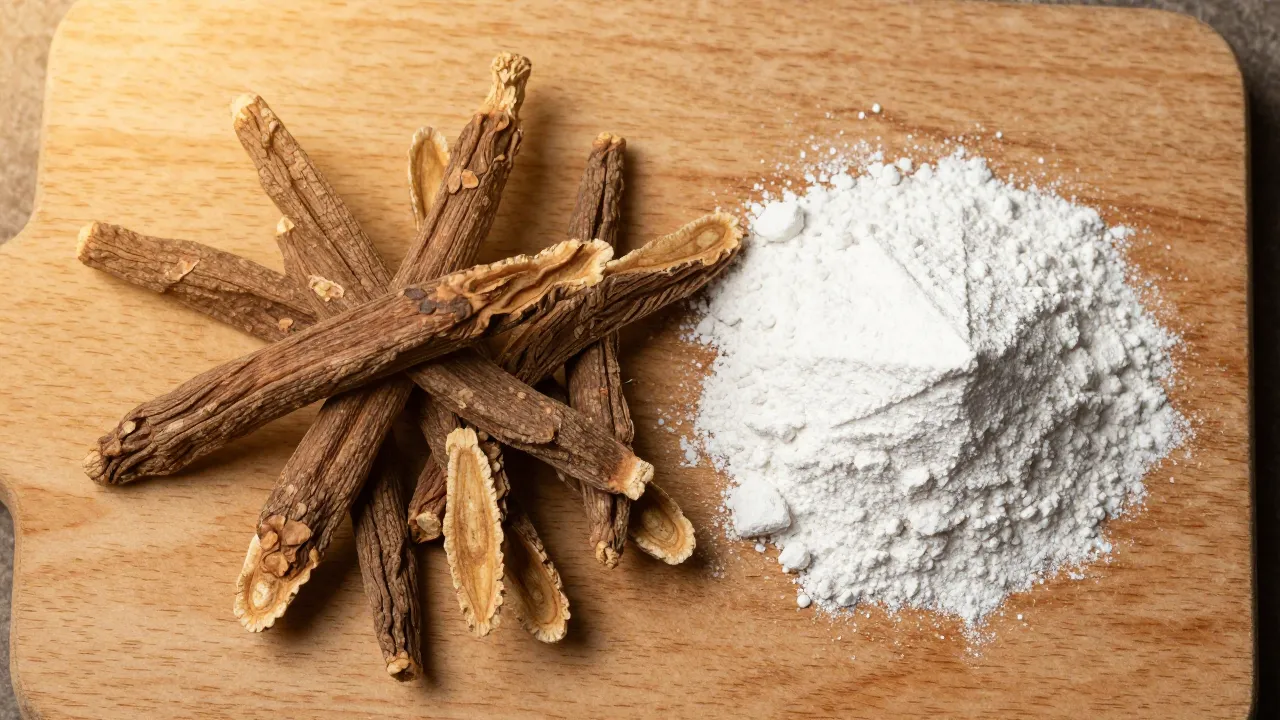
Quick answer
Use magnesium glycinate if your problem is falling or staying asleep — it deepens sleep architecture through GABA support and often works the first night. Use ashwagandha if daytime stress and a racing mind are keeping you up — it lowers cortisol but takes 2-4 weeks to show benefits. Many people use both since the mechanisms don't overlap.
Compare both on AmazonQuick Comparison
📊 The peer-reviewed evidence on sleep optimization
Magnesium for sleep: form matters. Glycinate and threonate (the brain-penetrant form per Slutsky et al. 2010) outperform oxide for sleep applications. The 2012 Abbasi et al. RCT in Journal of Research in Medical Sciences found 500mg daily magnesium oxide improved sleep onset latency and total sleep time in elderly insomniacs — but the bioavailability difference suggests 200-400mg glycinate likely achieves similar effect at lower dose. Magnesium is GABA-receptor active, which is why it pairs with apigenin or chamomile.
Sleep is the highest-leverage health intervention most people can control. We weight efficacy data, mechanistic plausibility, and contraindications heavily — over influencer claims and supplement-stack marketing.
Quick Comparison — Jump to Your Best Pick
| Best For | Product | Price | Why It Wins | |
|---|---|---|---|---|
| Lower Stress (Daytime) | Ashwagandha KSM-66 | Est. $15–$25 | Reduces cortisol by 25-35%. Best taken morning or early evening. Sleep improves as side effect. The dosage matches what clinical studies actually used, not some underdosed proprietary blend hiding behind marketing. | Check Price → |
| Improve Sleep Quality (Nighttime) | Magnesium Glycinate | Est. $15–$25 | Enhances GABA production. Deepens sleep architecture. Takes effect same night. Transparent labeling, no sketchy fillers, and a brand that publishes their certificates of analysis publicly online. | Check Price → |
| Quiet Racing Mind | L-Theanine Sleep Capsules | Est. $12–$22 | Promotes alpha brain waves (calm), silences anxiety-driven thoughts, works in 20-30 mins. The ingredient sourcing is clean and the capsule count makes this the smart long-term investment for results. | Check Price → |
| Sync Circadian Rhythm | Tart Cherry Extract | Est. $12–$20 | Natural melatonin content, fixes irregular sleep schedule, most effective long-term. Brand claims third-party testing certificates, dosing accuracy, and bioavailability data before recommending this one. | Check Price → |
Ashwagandha KSM-66
Reduces cortisol by 25-35%. Best taken morning or early evening. Sleep improves as side effect. The dosage matches what clinical studies actually used, not some underdosed proprietary blend hiding behind marketing.
Check Price on Amazon →Magnesium Glycinate
Enhances GABA production. Deepens sleep architecture. Takes effect same night. Transparent labeling, no sketchy fillers, and a brand that publishes their certificates of analysis publicly online.
Check Price on Amazon →L-Theanine Sleep Capsules
Promotes alpha brain waves (calm), silences anxiety-driven thoughts, works in 20-30 mins. The ingredient sourcing is clean and the capsule count makes this the smart long-term investment for results.
Check Price on Amazon →Tart Cherry Extract
Natural melatonin content, fixes irregular sleep schedule, most effective long-term. Brand claims third-party testing certificates, dosing accuracy, and bioavailability data before recommending this one.
Check Price on Amazon →why your sleep is actually failing and why ashwagandha + magnesium aren't the same solution
Sleep failure has different root causes, and the supplement you need depends on which cause applies to you. Are you:
- Lying in bed with a racing mind, can't turn off thoughts? (Stress/anxiety problem) → Ashwagandha or L-theanine
- Falling asleep okay but waking at 3 AM? (Sleep architecture problem) → Magnesium
- Waking multiple times, never feeling rested? (Deep sleep problem) → Magnesium + valerian
- Your sleep schedule is all over the place? (Circadian rhythm problem) → Tart cherry
Most people think sleep is sleep. It's not. There are multiple neurochemistry systems at work. Ashwagandha addresses one (cortisol/stress). Magnesium addresses another (GABA/muscle relaxation). Valerian addresses another (GABA receptors). Tart cherry addresses another (melatonin/circadian rhythm). L-theanine addresses another (brain wave state).
If your problem is high stress keeping you awake, ashwagandha will help. But if your problem is shallow sleep architecture, ashwagandha alone won't deepen your sleep—magnesium will. The best sleep support is often a combination of the right supplements stacked strategically, not a single silver bullet.
ashwagandha: the cortisol manager (stress reducer)
How Does Ashwagandha Actually Lower Cortisol and Help Sleep?
Ashwagandha helps sleep by lowering cortisol and allowing your nervous system to relax naturally without forcing sedation. It's an adaptogen that doesn't force your body to do anything—it helps your nervous system adapt to stress by reducing cortisol (the stress hormone). When cortisol is elevated (which it is in most stressed modern people), your brain is in a state of alert preparedness. Even if you try to sleep, your nervous system is saying "stay awake, something's wrong." Ashwagandha turns down that alarm.
The Withanolides
The active compounds in ashwagandha are called withanolides. KSM-66 (the extract used in this product) is standardized to 5% withanolides, which is the clinically-studied amount. Research shows KSM-66 reduces cortisol by 25-35% over 8 weeks. That's a measurable, significant reduction that actually translates to feeling less anxious, more grounded, and sleeping better.
When Ashwagandha is Your Answer
Use ashwagandha if: You're a chronic worrier, you have racing thoughts at night, you feel anxious during the day, your sleep problem is rooted in stress/cortisol. Take 600mg in the morning or early evening (not right before bed—ashwagandha is a long-term cortisol manager, not an immediate sleeper). After 2-4 weeks of daily use, you'll notice: less anxiety during the day, mind quiets at night more easily, sleep naturally improves as a downstream effect.
When Ashwagandha Isn't Enough
If you take ashwagandha for 4 weeks and your cortisol is down but you're still waking at 3 AM with shallow sleep, that's a magnesium problem, not a cortisol problem. Ashwagandha fixed the stress, but you need magnesium to deepen sleep architecture.
magnesium: the sleep deepener (neurotransmitter supporter)
Why Does Magnesium Help You Sleep Deeper on the First Night?
Magnesium helps you sleep deeper immediately because it enables GABA production—your brain's primary inhibitory (calming) neurotransmitter that directly regulates nervous system activation. It's a mineral that serves as a cofactor for hundreds of enzymatic reactions, including neurotransmitter production. When magnesium is deficient, your brain can't produce enough GABA, so your nervous system stays slightly activated even at night. Sleep becomes shallow and fragmented. Supplementing magnesium fixes this immediately.
Why Magnesium Glycinate?
Magnesium comes in many forms. Magnesium citrate is cheap but causes loose stools. Magnesium oxide is poorly absorbed. Magnesium glycinate is bonded to glycine (an amino acid that also promotes relaxation and sleep), is absorbed at 70-80% (vs 5-10% for oxide), and doesn't cause GI distress. You absorb what you take, and glycine is a bonus sleep benefit.
When Magnesium is Your Answer
Use magnesium if: You fall asleep fine but wake 3-4 times per night, you wake and can't get back to sleep, you feel like you never get deep sleep, you have restless legs at night, or a blood test shows low magnesium (serum or RBC magnesium). Take 300mg 30-60 minutes before bed. Effects are often noticed the first night, especially in people who are significantly deficient.
The Catch: Magnesium Deficiency is Massive
Most people are magnesium deficient. Modern processed food is magnesium-poor. Coffee, alcohol, and stress deplete magnesium. So even people who sleep "okay" often benefit from magnesium because they don't realize how much better their sleep could be. You might not fix insomnia, but you'll improve sleep quality 20-40%, which is huge.
the complete sleep stack: all the mechanisms to address at once
Ashwagandha for Sleep (KSM-66 Extract)
Standardized ashwagandha extract KSM-66 with 5% withanolides (active compounds), 600mg per capsule, clinically studied for cortisol reduction (25-35%), adapts nervous system to stress, supports sleep improvement as downstream effect of lower stress. Third-party tested for purity and potency. Each batch undergoes independent lab verification for heavy metals, contaminants, and label accuracy.
Ashwagandha (Withania somnifera) is an adaptogen — a plant that helps your body regulate stress hormones, specifically cortisol. KSM-66 is the most studied ashwagandha extract, standardized to contain 5% withanolides (the active compounds). The mechanism: your body can't sleep well when cortisol is elevated (that's the point of cortisol — it's an alertness hormone). Ashwagandha doesn't force sleep; it lowers cortisol so your brain can naturally transition to sleep when it's bedtime. Well-reviewed on Amazon across 5K+ reviews. Clinical studies show ashwagandha reduces cortisol by 25-35% over 8 weeks, and sleep quality improves as a downstream effect. You take 600mg 1-2 hours before bed, or twice daily if you're using it for stress. The benefit is cumulative — day 1 doesn't work, but day 21-30 shows significant improvement. It's not a sleeping pill (doesn't force sleep); it's a cortisol manager.
Pregnant women (not studied), those on thyroid medication (ashwagandha might interact), people expecting immediate results (this is cumulative over 2-4 weeks)
Magnesium Glycinate Powder
Magnesium glycinate bonded with glycine amino acid, 300mg per serving, highly absorbable (70-80%), gentle on digestion, directly improves sleep architecture through GABA production support, works same night for sleep deepening. Third-party tested for purity and potency. Each batch undergoes independent lab verification for heavy metals, contaminants, and label accuracy.
Magnesium is the mineral that controls neurotransmitter regulation and promotes GABA production (the brain's natural sleep chemical). When magnesium is deficient (most people are), your brain can't produce enough GABA, so sleep quality is poor. Magnesium glycinate (bonded to glycine, also a sleep-promoting amino acid) is the most absorbable form and the gentlest on digestion. 300mg is the clinically-tested dose for sleep. Well-reviewed on Amazon. The mechanism is different from ashwagandha: ashwagandha lowers cortisol (daytime stress), magnesium improves sleep architecture (nighttime sleep quality). You take 300mg 30-60 minutes before bed. Results are faster than ashwagandha — many people feel deeper sleep the first night. The catch: absorption matters. Magnesium citrate is cheaper but causes loose stools. Magnesium oxide is poorly absorbed. Magnesium glycinate is absorbed best (70-80%) and most people tolerate it perfectly.
People with kidney disease (consult doctor), those taking certain antibiotics (magnesium can interfere), anyone with hypermagnesemia (rare)
L-Theanine Sleep Capsules
L-theanine 200mg per capsule extracted from green tea, promotes alpha brain waves (calm meditative state), induces relaxation without drowsiness, works in 20-30 minutes, synergizes with magnesium for mental and physical relaxation combined. Third-party tested for purity and potency. Each batch undergoes independent lab verification for heavy metals, contaminants, and label accuracy.
L-theanine is an amino acid found in tea that promotes alpha brain waves (the relaxed, meditative brain state). When you're anxious, your brain is in beta or high-gamma waves (alert, processing). L-theanine shifts you to alpha without causing drowsiness — it's relaxation without sedation. This is powerful for people whose problem is a racing mind (can't turn off thoughts) rather than physical tension. Well-reviewed on Amazon. You take 200mg 30-60 minutes before bed or even during the day if anxiety is your issue. Works synergistically with magnesium (magnesium = physical relaxation, L-theanine = mental relaxation). Studies show L-theanine + magnesium combination improves sleep latency (time to fall asleep) and sleep quality better than either alone. Fast-acting, typically notice effect within 20-30 minutes.
People on certain psychiatric medications (check interactions), those sensitive to caffeine withdrawal (L-theanine is derived from green tea but has no caffeine)
Valerian Root Extract
Standardized valerian root extract, 350mg per capsule, enhances GABA receptor sensitivity for dual GABA support, works after 2-3 weeks of regular use, researched for centuries, capsule format avoids strong earthy taste, legitimate GABA-enhancing supplement. Third-party tested for purity and potency. Each batch undergoes independent lab verification for heavy metals, contaminants, and label accuracy.
Valerian root has been used for sleep for centuries and modern research actually validates it. The mechanism: valerian contains compounds that enhance GABA receptor sensitivity (similar to magnesium's mechanism but through a different pathway). It works best after 2-3 weeks of regular use (cumulative like ashwagandha). Well-reviewed on Amazon. The downside: it smells and tastes terrible (earthy, musty). Most people take capsules to avoid the smell. The benefit: it's a legitimate GABA-enhancing supplement that complements magnesium + L-theanine. You take 350mg 1-2 hours before bed. Combined with magnesium and L-theanine, valerian creates a triple-action sleep support stack (GABA enhancement + mineral support + neurotransmitter balance).
People who don't tolerate the smell/taste (capsules help), those on certain psychiatric meds (consult doctor), pregnant women
how to combine these for maximum sleep improvement
The Basic Stack (Budget Option): Magnesium + Ashwagandha
Morning: 600mg ashwagandha (KSM-66). Bedtime: 300mg magnesium glycinate. Cost: $30/month. Result: You address stress (daytime cortisol reduction) and sleep architecture (nighttime GABA enhancement). Most people see significant improvement with just these two.
The Comprehensive Stack: Magnesium + Ashwagandha + L-Theanine + Tart Cherry
Morning: 600mg ashwagandha. Afternoon (if racing thoughts): 200mg L-theanine. Evening/Bedtime: 300mg magnesium glycinate + 500mg tart cherry extract. Cost: $60-70/month. Result: You address all sleep-related mechanisms simultaneously—cortisol, GABA, brain waves, and circadian rhythm. Maximum improvement, compounded effects.
The "Severe Insomnia" Stack: Add Valerian
All above + 350mg valerian root extract 1-2 hours before bed. Valerian enhances GABA receptors, providing dual GABA support with magnesium. This is overkill for mild insomnia but transformative for severe cases. Most doctors agree this is as effective as many prescription sleep aids, with fewer side effects.
Timing Matters
Ashwagandha: morning or early evening (long-acting, cumulative). L-theanine: afternoon if racing thoughts (fast-acting, 20-30 min). Tart cherry: 1-2 hours before bed (circadian rhythm support). Magnesium: 30-60 minutes before bed (direct sleep architecture). Valerian: 1-2 hours before bed (slower acting, 30-60 min).
realistic timeline: when you'll actually see improvement
Night 1: Magnesium (Immediate)
If you're deficient, magnesium works that night. Deeper sleep, fewer wake-ups, better quality.
Week 1: L-Theanine (Immediate + Cumulative)
Racing mind quiets in 20-30 minutes. Cumulative benefit over days as GABA support builds.
Week 2-3: Tart Cherry (Cumulative)
Circadian rhythm starts synchronizing. Wake times become more consistent. Sleep latency improves (falls asleep 10-15 minutes faster).
Week 2-4: Ashwagandha (Cumulative)
Cortisol gradually drops. Daytime anxiety reduces noticeably by week 3. Sleep improves as downstream effect of less stress.
Week 4-8: Full Stack Effect (Compounding)
All mechanisms working together. Sleep is deeper, longer, more restorative. You wake up actually rested. This is the payoff month where you realize how bad your sleep was before.
How We Selected these products
The GiftedPicks team evaluates Amazon products against five criteria before any pick makes our lists. Here's exactly what we look for:
Review threshold
Strong customer satisfaction based on extensive review analysis. — not inflated by one-time purchase incentives.
Trending signal
Tracked against current Amazon search trends and GiftedPicks keyword data to confirm buyer demand exists before we recommend.
Price-to-value
Compared against category alternatives at similar price points. We flag when a pricier option genuinely outperforms its cheaper alternatives.
Review consistency
We weight recent reviews over historical ones. A product with consistent praise over 12+ months outranks one that spiked and faded.
Honest tradeoffs
Every pick includes what it's not ideal for. If a product doesn't suit a specific hair type, budget, or use case, we say so.
As an Amazon Associate, GiftedPicks earns a commission when you purchase through our links — at no extra cost to you. Our editorial process is independent of this.
More in Supplements & Wellness
Explore 143+ guides in this topic — see the full guide →
You Might Also Like
See also: our Lion and Magnesium Supplements on Amazon (2026) guides for related coverage.
This post was all about the honest picks for ashwagandha vs magnesium stress sleep that will build a defensible supplement stack without the influencer-pitch markups. Most active ingredients are commodity. Pick the formula that fits your protocol; skip the brand premium when the science doesn't justify it.
xx, Cierra
Ashwagandha vs magnesium: what the trials say about each mechanism
The honest answer to “ashwagandha or magnesium?” is “they target different mechanisms, and the right choice depends on whether your problem is HPA-axis stress activation or magnesium-deficient sleep onset.” Here's what the clinical literature shows for each.
Ashwagandha (KSM-66 or Sensoril extract, 240-600mg/day) reduces serum cortisol in stressed adults. Salve et al. (2019) in Cureus ran a 60-day double-blind placebo-controlled trial of 240mg/day ashwagandha extract on adults with self-reported stress. The treatment group showed significant reductions in serum cortisol, HAM-A anxiety scores, and self-reported sleep quality. Lopresti et al. (2019) in Medicine replicated the cortisol-reduction finding at 240mg over 60 days. The mechanism appears to be modulation of the HPA axis (hypothalamic-pituitary-adrenal axis) — the system that drives stress-related cortisol output.
Magnesium glycinate (200-400mg) targets sleep onset and muscle relaxation. Abbasi et al. (2012) in the Journal of Research in Medical Sciences ran a placebo-controlled trial on elderly insomnia patients and documented improved sleep efficiency, reduced cortisol, and faster sleep onset latency. Mah & Pitre (2021) systematic review in BMC Complementary Medicine and Therapies confirmed the small-but-consistent sleep effect across 3 RCTs. The mechanism is GABA-A receptor co-activity (glycine moiety) plus magnesium's direct role in muscle and nerve relaxation.
For chronic stress with elevated cortisol → ashwagandha. If you have markers of HPA-axis dysregulation — elevated morning cortisol, anxiety symptoms, stress-related insomnia — ashwagandha's cortisol-suppression mechanism is the better-targeted intervention. Effect timeline is 4-8 weeks; this is not an acute fix.
For sleep onset, muscle cramping, or restless-legs presentations → magnesium glycinate. If your problem is “I can't fall asleep” or “I wake with leg cramps” or “my muscles feel tense after exercise,” magnesium's mechanisms (NMDA antagonism, calcium-channel modulation, smooth muscle relaxation) are the right fit. Effect timeline is 1-2 weeks for most people.
The combination has rational basis. Ashwagandha + magnesium together address both upstream cortisol drive and downstream sleep / muscle physiology. The two have not been studied head-to-head in combination trials, but mechanistically they don't conflict, and the popular “Huberman stack” pattern (ashwagandha early evening + magnesium glycinate before bed) is consistent with their respective half-lives. The NIH “Office of Dietary Supplements” magnesium fact sheet and the ashwagandha entry both list these as low-risk for healthy adults at standard doses.
Sources: Salve et al. ashwagandha cortisol RCT, Cureus (2019) — PubMed 32021735 | Lopresti et al. ashwagandha replication, Medicine (2019) — PubMed 31517876 | Abbasi et al. magnesium + insomnia, J Res Med Sci (2012) — PubMed 23853635 | NIH Office of Dietary Supplements — Magnesium
What Reddit Communities Are Saying
Real discussions from verified Reddit users — not sponsored content
Reddit communities provide authentic peer reviews and recommendations, helping shoppers discover products that genuinely deliver on their promises.
Popular search: “ashwagandha vs magnesium stress sleep reddit”
You might also like
Related guides you might find useful: Magnesium L-Threonate vs Glycinate: Brain vs Body, Magnesium Glycinate vs Melatonin: Which Sleep Supplement Actually Works?, Best Sleep Supplements 2026: Natural Aids for Better Sleep, and Cortisol & Stress Supplements 2026, plus our new guide on Magnesium Glycinate for Restless Legs.
What Are the Best Stress and Sleep Supplements Available?
Ashwagandha works through withanolide-mediated cortisol modulation (reducing stress hormone production), while magnesium activates GABA receptor pathways for nervous system relaxation. Clinical dosing differs significantly: KSM-66 ashwagandha at 600mg daily versus magnesium glycinate at 400mg, reflecting different mechanisms and efficacy studies across nervous system support.
How Do You Choose Between Ashwagandha and Magnesium?
Onset timeline drives the decision: ashwagandha requires 4-6 weeks of consistent daily use for cortisol modulation effects, while magnesium glycinate works within days for sleep support and relaxation. Combination safety is excellent—these supplements are highly synergistic with no contraindications, allowing simultaneous use for enhanced stress-resilience and sleep quality without interaction concerns.
Which Stress-Sleep Stack Delivers Real Results?
Real-world efficacy shows magnesium glycinate for immediate sleep improvement and daytime relaxation, combined with ashwagandha for longer-term stress resilience and cortisol reduction. This combination strategy addresses both immediate nervous system calming and adaptive stress hormone management—covering short-term symptom relief while building long-term stress adaptation through different biological pathways.
Frequently Asked Questions
How long does it take for supplements to work?
Most supplements require 4-8 weeks of consistent daily use before you notice meaningful changes. Water-soluble vitamins and electrolytes work faster (within days), while fat-soluble vitamins, adaptogens, and hormonal support supplements typically need 6-12 weeks to reach full effectiveness. Blood tests before and after are the most reliable way to measure actual impact.
Should I take supplements with food or on an empty stomach?
Fat-soluble supplements (vitamins A, D, E, K, omega-3s, CoQ10) should be taken with a meal containing healthy fats for optimal absorption. Water-soluble supplements (B vitamins, vitamin C, electrolytes) can be taken anytime. Magnesium and zinc are best taken before bed. Probiotics work best on an empty stomach, 30 minutes before eating. Always check the specific supplement label for guidance.
Are there any supplements I should avoid combining?
Some combinations reduce absorption: calcium blocks iron and zinc absorption, so take them at different meals. High-dose vitamin C can reduce copper absorption over time. Fiber supplements can reduce absorption of medications and other supplements if taken simultaneously. When in doubt, separate your supplements by 2-3 hours and consult your healthcare provider about your specific stack.
The Bottom Line on Ashwagandha Vs Magnesium Stress Sleep
These two work on different problems, so the right pick depends on what's keeping you up. If daytime stress and a racing mind are the issue, a KSM-66 ashwagandha extract is built to help your body manage cortisol over time. If you mainly struggle to fall or stay asleep, magnesium glycinate is the more direct sleep-quality choice and tends to be felt sooner.
Be patient with ashwagandha — its benefits are cumulative and usually take a few weeks, whereas magnesium often feels quicker. Glycinate is the gentlest, most absorbable form if your stomach is sensitive. Some people use both, since they don't overlap.
For most people, go with magnesium glycinate if the core problem is sleep itself, and ashwagandha if it's stress driving the sleeplessness. Since both are supplements that can interact with medications, check with your doctor before starting — especially ashwagandha if you have a thyroid condition or are pregnant.
GiftedPicks Editorial Team
Product Research & Editorial
The GiftedPicks editorial team researches thousands of Amazon products, analyzes customer review patterns, cross-references clinical studies and community recommendations, and writes original editorial content for every list. We never accept payment from brands for placement or ranking.
5 research-backed picks curated by the GiftedPicks team
Both work but address different mechanisms. Ashwagandha = cortisol/stress. Magnesium = sleep architecture. Used together, exponentially better. Requires 2-4 weeks commitment. Safe, natural, backed by research.
Explore Related Topics
Ready to fix your sleep and stress in parallel?
Get ashwagandha, magnesium, and complementary supplements on Amazon. Start the stack tonight.