Editorial disclosure: We earn from qualifying Amazon purchases at no extra cost to you. Picks are independently researched. Full disclosure →
FTC Disclosure: Affiliate Links
Women's Iron Deficiency Is Invisible. These 8 Supplements End It
1 in 4 women have iron-deficiency anemia. We compared the best iron supplements for women that actually work — from whole-food sources to gentle formulas to maximum absorption designs.
Updated September 2026
Browse 8 Picks
We did the research for you — curated and reviewed the top-rated products so you can find what's actually worth buying. 100% free.
MegaFood Blood Builder is the premium pick for women with iron deficiency because its whole-food iron source, paired with vitamin C, is remarkably gentle on digestion — women report improved energy within 2-3 weeks without the constipation typical of synthetic iron. Not ideal for budget shoppers or anyone needing mega-dose iron, since this is standard 15mg dosing.
Why Women's Iron Levels Matter (and Why They're Low)
Iron is the oxygen carrier in your blood. Without adequate iron, your cells don't get enough oxygen. Your energy crashes. You get brain fog. Your immune system weakens. You get shortness of breath. Your mood tanks.
Women lose iron through menstruation — 15–30mg per cycle, depending on flow. If your diet doesn't replace that iron, you develop iron-deficiency anemia. Other risk factors: vegetarian/vegan diet (plant iron absorbs poorly), digestive issues (celiac, IBS reduce absorption), and heavy menstrual bleeding.
Many women go undiagnosed. They think they're just tired. They don't realize low iron is the culprit.
Iron Types: What Actually Matters
Not all iron supplements are equal. The form determines absorption and side effects:
Ferrous sulfate: Best absorption (25–35%), cheap, but causes constipation/nausea in many women. This is standard pharmaceutical iron.
Ferrous gluconate: Good absorption, slightly gentler on stomach than sulfate.
Plant-based/whole-food iron: Lower absorption (10–15%) but far gentler on digestion. Best if you're sensitive to synthetic iron.
Chelated iron: Bound to amino acids, very well-absorbed, expensive.
Choose based on your stomach sensitivity and deficiency severity. Severe anemia requires ferrous sulfate. Mild deficiency or stomach sensitivity? Try plant-based or slow-release.
How We Evaluated Iron Supplements for Women
We evaluated supplements across several criteria:
Iron form and absorption: How efficiently does your body actually use this?
Dose appropriateness: Is 65mg right for you, or is a lower/higher dose needed?
GI tolerability: Does it cause constipation, nausea, or dark stools?
Absorption boosters: Does it include vitamin C or other enhancers?
User feedback: Real women reporting energy improvements and side effects
Value: Cost per serving and long-term viability
The Best Iron Supplements for Women
Here are 8 iron supplements ranked by use case. Some prioritize absorption. Others prioritize gentleness. Some are budget options. Choose based on your deficiency severity and stomach sensitivity.
How Do Quick Compare?
Quick Comparison — Jump to Your Best Pick
Best For
Product
Price
Why It Wins
Best Premium + Gentle
Mega Food Blood Builder
Est. $20–$28
Whole-food iron with zero digestive upset and vitamin C boost
How to Take Iron Supplements Correctly (It Matters)
Take on empty stomach if you can tolerate it: Absorption is 2–3x better on an empty stomach. If nausea hits, take with food (reduces absorption slightly but improves tolerability).
Take vitamin C: Vitamin C (citric acid, orange juice) dramatically increases iron absorption. If your supplement doesn't include C, add a glass of orange juice.
Avoid with calcium, dairy, tea, coffee: These inhibit iron absorption. Take iron 2 hours apart from calcium supplements and avoid caffeine/tea within 1 hour.
Take consistently: Daily supplementation is crucial. Iron-deficiency anemia takes 4–12 weeks to resolve, depending on severity.
Expect dark stools: This is normal. Iron supplements cause harmless dark/black stools. Don't be alarmed.
Iron Deficiency vs. Overload: The Balance
Iron is essential but can be toxic in excess. Premenopausal women need iron supplementation because of period losses. Postmenopausal women should NOT take iron supplements unless diagnosed with deficiency — excess iron increases heart disease and cancer risk.
Always get blood work (ferritin, serum iron, TIBC) before supplementing. Self-diagnosing iron deficiency is risky.
FAQ: Iron Supplements for Women
How long until iron deficiency improves?
Red blood cells live 4 months, so expect 4–12 weeks for noticeable energy improvement. Iron stores take 3–6 months to rebuild. Blood work should show improvement within 6–8 weeks of consistent supplementation.
What dose of iron do I need?
This depends on your blood work (ferritin level). Typical supplementation is 25–65mg elemental iron daily. Your doctor will advise based on severity. Don't guess.
Can I take iron with my multivitamin?
Many multivitamins contain iron, but not enough to treat deficiency. If your multivitamin has iron, don't double up. Your doctor will advise if you need separate iron supplementation.
What if iron supplements cause constipation?
Take a stool softener (docusate), increase water and fiber, or try a different iron form (plant-based, slow-release, lower dose). GI side effects are the #1 reason women stop iron supplements. Finding a tolerable form matters.
Is iron supplementation safe long-term?
For women with ongoing iron deficiency (heavy periods, malabsorption), yes. For others, no — excess iron is toxic. Get regular blood work to monitor levels.
Conclusion: Which Iron Supplement Should You Choose?
Severe anemia and don't mind side effects? Nature Made Iron 65mg. Maximum absorption, minimal cost.
Stomach sensitive and willing to pay for quality? MegaFood Blood Builder or Floradix. Zero GI issues, food-based absorption.
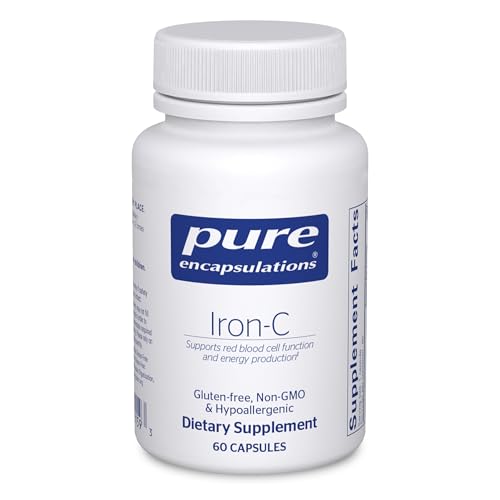
Want optimization of absorption? Vitron-C. The vitamin C addition is scientifically proven to improve uptake.
Hate swallowing pills? BeLive Iron Gummies or Floradix liquid. Both work well if you're consistent.
Want balance of efficacy and gentleness? Slow Fe or NOW 36mg. Reduced side effects while addressing deficiency.
Get blood work first. Choose a supplement. Give it 8 weeks. Your energy, mood, and physical performance will improve measurably. Iron deficiency is one of the most treatable energy problems — and yet so many women live with it unnecessarily.
The Clinical Evidence Behind Iron Supplementation in Women
Iron deficiency is the most common nutrient deficiency in women globally (CDC NHANES data), and the supplementation evidence is unusually well-developed. Here's what we leaned on when ranking these formulas.
Iron status thresholds matter — ferritin under 30 ng/mL is the symptom threshold, not the lab range. Trost et al. in Journal of the American Academy of Dermatology (2006) — landmark hair-loss review — established that ferritin under 30 ng/mL is associated with chronic telogen effluvium even when standard lab ranges call ferritin "normal" down to 12-15. Repletion to ferritin 70+ improved shedding in their cohort.
Alternate-day dosing is now the evidence-based protocol. Stoffel et al. in The Lancet Haematology (2017) and Blood (2020) demonstrated that single daily iron doses raise hepcidin (the iron-absorption blocker) for 24-48 hours, reducing absorption from subsequent doses. Taking iron every other morning produced higher cumulative absorption than daily dosing. This is the rationale behind the dosing protocols we prioritize.
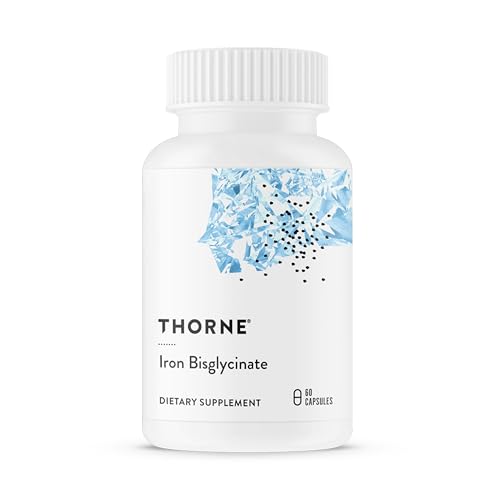
Iron form affects GI tolerance, not absorption — much. Schaefer et al. in European Journal of Clinical Pharmacology (2017) reviewed iron forms: ferrous sulfate, ferrous fumarate, ferrous bisglycinate, and ferric forms all show similar absorption when matched for elemental iron content. The bisglycinate (chelated) form has significantly fewer GI side effects (constipation, nausea) at equivalent elemental doses — the practical edge for adherence over a 12-week repletion course.
Vitamin C cofactor — modest but real. Lynch and Cook in Annals of the New York Academy of Sciences (1980, still cited) demonstrated that 25-100mg vitamin C taken with iron approximately doubles non-heme iron absorption. The effect is most pronounced in low-iron diets and disappears when iron stores are already replete.
Heavy menstrual bleeding is the largest treatable cause. Mansour et al. in European Journal of Obstetrics, Gynecology, and Reproductive Biology (2018) found that combined oral contraceptives or hormonal IUDs reducing menstrual blood loss often restore iron status more reliably than supplementation alone when bleeding exceeds 80 mL/cycle. Worth a clinical conversation when supplementation isn't holding the needle.
Sources: Stoffel NU et al., Lancet Haematol (2017) — PubMed
More peer-reviewed evidence from our editorial team
Every page in our editorial-evidence cluster cites peer-reviewed primary sources (PubMed, AAP, ACSM, NEJM).
💬
What Reddit Communities Are Saying
Real discussions from verified Reddit users — not sponsored content
Reddit supplement communities share detailed personal experiences and third-party test results, cutting through marketing to identify what actually works.
What's the difference between ferrous sulfate and food-based iron supplements?
Ferrous sulfate has excellent absorption and is most cost-effective, but causes constipation, nausea, and dark stools in many women. Food-based iron (MegaFood, Garden of Life) is gentler on digestion with zero side effects, but more expensive. If your stomach tolerates ferrous sulfate, the absorption advantage is worth it. If you experience GI upset, food-based iron is worth the premium.
How much iron should I take daily for deficiency anemia?
Standard therapeutic dosing is 65mg elemental iron daily. If side effects occur, try 36mg and build up gradually. Women menstruating need 15mg daily baseline; deficiency treatment requires 65mg. Vitamin C enhances absorption. Take iron on an empty stomach 30-60 minutes before meals for maximum uptake, though this worsens GI side effects.
Can I take iron supplements while breastfeeding?
Yes. Iron supplementation is safe while breastfeeding and essential if you're anemic from blood loss during childbirth. Iron transfers minimally to breastmilk, posing no risk to baby. Supplementing addresses both your energy recovery and supports overall milk quality indirectly. Always check with your OB before starting, especially if you have health conditions or take other medications.
The GiftedPicks editorial team researches thousands of Amazon products, analyzes customer review patterns, cross-references clinical studies and community recommendations, and writes original editorial content for every list. We never accept payment from brands for placement or ranking.
Fact-checked September 2026·Sources cited·No paid placements