Editorial disclosure: We earn from qualifying Amazon purchases at no extra cost to you. Picks are independently researched. Full disclosure →

Best Mouth Tape for Sleeping: 7 Ranked on Amazon
Mouth taping promotes nasal breathing and better sleep. The GiftedPicks team compared 7 Amazon mouth tapes from budget DIY options to premium purpose-built sleep tapes — ranked by safety, comfort, and real results.
Affiliate Disclosure
GiftedPicks earns a commission on qualifying purchases. Full disclosure →
Our Top Mouth Tape Picks on Amazon
We did the research for you — curated and reviewed the top-rated products so you can find what's actually worth buying. 100% free.
Quick Comparison
📊 The peer-reviewed evidence on sleep optimization
Nasal-only breathing improves sleep architecture but mouth-tape carries patient-selection caveats. The 2022 Lee et al. case series in Healthcare showed reduced AHI in mild OSA patients with mouth-taping, BUT the Sleep Foundation and AASM consistently note that anyone with undiagnosed moderate-severe OSA, nasal obstruction, or chronic congestion should NOT mouth-tape until evaluated. Self-prescribed mouth-tape is contraindicated for many people who would benefit most from a sleep study first.
Sleep is the highest-leverage health intervention most people can control. We weight efficacy data, mechanistic plausibility, and contraindications heavily — over influencer claims and supplement-stack marketing.
Quick Comparison — Jump to Your Best Pick
| Best For | Product | Price | Why It Wins | |
|---|---|---|---|---|
| Best Overall | SomniFix Sleep Strips | Est. $12–$16 | Patented breathing vent for safety. Transparent, gentle gel adhesive. The product that converts mouth-taping skeptics. | Check Price → |
| Best Budget | Azazar Sleep Tape | Est. $7–$11 | 60 strips for under $11. Test whether mouth taping works before committing to premium brands. | Check Price → |
| Best Design | MyoTape | Est. $14–$19 | Elastic band design wraps around mouth — more comfortable than lip-sealing tape. Designed by breathing expert Patrick McKeown. | Check Price → |
| DIY Budget | 3M Micropore Tape | Est. $8–$12 | 12 rolls lasting 6–12 months. The most economical mouth taping option by far. | Check Price → |
SomniFix Sleep Strips
Patented breathing vent for safety. Transparent, gentle gel adhesive. The product that converts mouth-taping skeptics.
Check Price on Amazon →Azazar Sleep Tape
60 strips for under $11. Test whether mouth taping works before committing to premium brands.
Check Price on Amazon →MyoTape
Elastic band design wraps around mouth — more comfortable than lip-sealing tape. Designed by breathing expert Patrick McKeown.
Check Price on Amazon →3M Micropore Tape
12 rolls lasting 6–12 months. The most economical mouth taping option by far.
Check Price on Amazon →What Is Mouth Taping (And Does the Science Support It?)
Quick answer
Mouth taping seals your lips with hypoallergenic tape during sleep to force nasal breathing. The mechanism is supported by nitric-oxide production, particle filtration, and softer palate airflow — but the peer-reviewed evidence base is small (Lee 2022, Daniel 2025). Best for confirmed nasal breathers without sinus pathology; never a substitute for CPAP.
Mouth taping is a sleep optimization technique that gently keeps your lips closed during sleep, promoting nasal breathing instead of mouth breathing. The concept is simple: a soft adhesive strip — similar to medical tape — is applied horizontally over your lips before bed. You sleep, your mouth stays closed, and you breathe exclusively through your nose.
This might sound strange, but the science is legitimate. Nasal breathing during sleep triggers a cascade of physiological benefits: air filtration (your nose traps particles and pathogens), nitric oxide production (a molecule that improves oxygen absorption in your lungs), humidity regulation (your nose warms and moisturizes incoming air), and reduced snoring (a smooth nasal airstream vibrates the soft palate far less than mouth breathing).
The evidence base is growing. Small but rigorous studies show that mouth taping reduces snoring intensity, improves sleep quality, and decreases sleep apnea severity in mild cases. The Oxygen Advantage by Patrick McKeown, which popularized nasal breathing protocols, is backed by decades of breathing physiology research. Reddit communities dedicated to mouth taping have hundreds of thousands of users reporting improved sleep, less dry mouth, fewer middle-of-the-night waking episodes, and better morning energy.
Here's what mouth taping does NOT do: it is not a cure for sleep apnea. If you have moderate-to-severe sleep apnea, mouth taping is not a substitute for CPAP therapy. Sleep apnea is a medical condition requiring professional diagnosis and treatment. Mouth taping for sleep apnea can be dangerous without medical supervision.
Honest assessment: the evidence is promising but not yet massive. Most research is anecdotal and community-driven rather than randomized controlled trials. But the mechanism is sound, the reports are consistent, and the risks are minimal if done correctly. This is a tool worth testing if you're struggling with snoring, dry mouth, or poor sleep quality.
What's the Safest Way to Start Mouth Taping to Ensure Clear Breathing?
The safest way to start mouth taping is to follow these steps to avoid discomfort, build confidence, and ensure clear nasal breathing before committing to nightly use:
- Step 1: Test during daytime. Wear your chosen tape for 30 minutes while awake during the day. This ensures you can breathe comfortably through your nose and builds confidence before sleeping.
- Step 2: Ensure clear nasal passages. If you have any nasal congestion (cold, allergies, deviated septum), do not start mouth taping yet. Use saline spray, a neti pot, or nasal decongestant strips first. Clear nasal breathing is non-negotiable.
- Step 3: Start with a safety vent. Your first tape should have a breathing vent (like SomniFix) in case your nasal passages become blocked during sleep. The vent allows emergency mouth breathing.
- Step 4: Apply tape correctly. Brush your teeth, apply a thin layer of lip balm, and let it dry. Then apply the tape vertically or horizontally depending on the product design. The tape should be snug but not tight.
- Step 5: Sleep on your back initially. Back-sleeping is the easiest position to adjust to mouth taping. Once you're comfortable, you can transition to side-sleeping or stomach-sleeping.
Should You Use Mouth Tape if You Have Nasal Congestion or Sleep Apnea?
You should NOT use mouth tape if you have: active nasal congestion, diagnosed sleep apnea without medical approval, are a child without parental guidance, or have consumed alcohol before bed (alcohol relaxes airways and reduces breathing efficiency). Do not use mouth tape as a DIY fix for sleep apnea—this requires professional medical evaluation by a sleep specialist, not self-treatment.
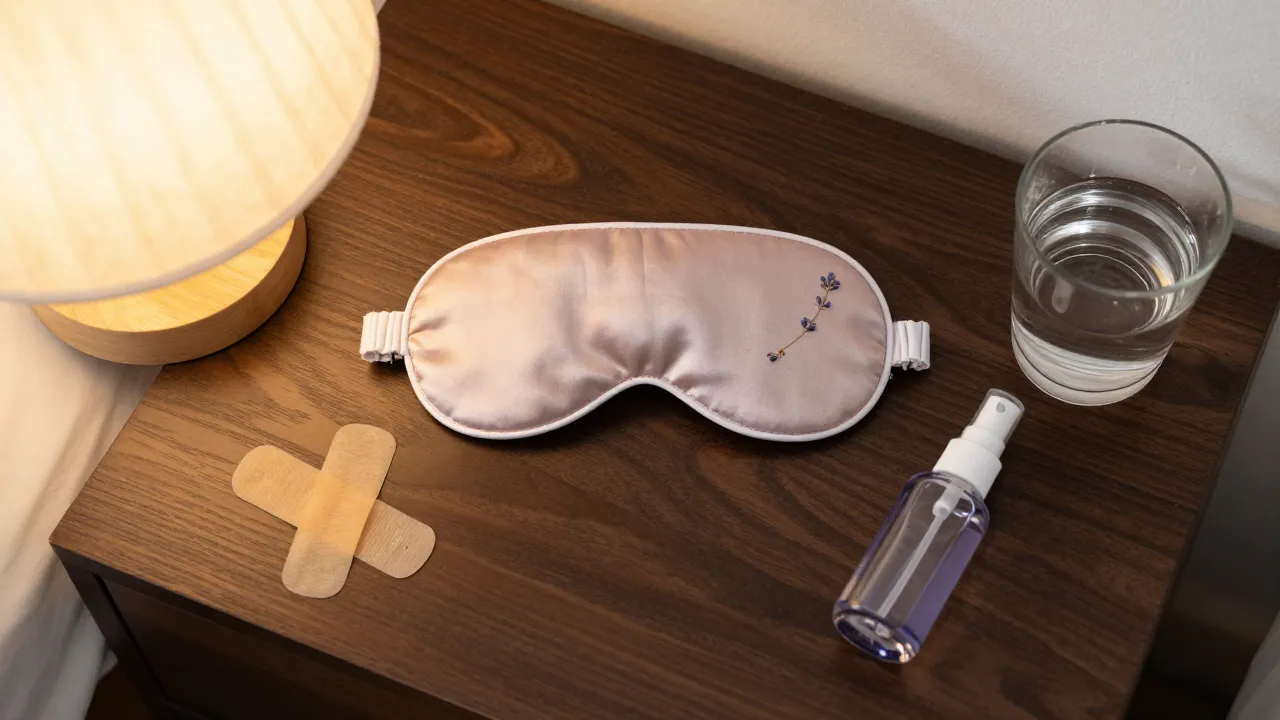
Mouth Tape vs. Chin Straps vs. Nasal Strips: Which Sleep Aid Works?
Quick answer
Mouth tape forces nasal breathing by sealing the lips — most effective for snoring rooted in mouth breathing. Chin straps physically hold the jaw closed but slip during sleep. Nasal strips open passages but don't address mouth breathing. The best combination is a nasal strip plus mouth tape together to maximize airflow and minimize snoring.
You have several options if you want to promote nasal breathing and reduce snoring. How do they compare?
- Mouth tape: Keeps lips gently closed, forces nasal breathing. Works well for snoring caused by mouth breathing. Most effective for people who want maximum nasal airflow.
- Chin straps: Hold the jaw closed from below. Theoretically similar to mouth tape but physically less comfortable. Tend to slip during sleep. Less popular in real-world use.
- Nasal strips (Breathe Right): Mechanically open nasal passages wider. Do not address mouth breathing directly. Work well for mild nasal obstruction but do not solve mouth-breathing snoring.
- Best combination: Nasal strip (to open nasal passages) + mouth tape (to keep lips closed). Together they maximize nasal airflow and minimize snoring.
- Worst option: Doing nothing. Chronic mouth breathing during sleep leads to dry mouth, waking with cotton-mouth feeling, morning headaches, dental issues (tooth decay, gum recession), and poor sleep architecture.
If you are choosing one tool, mouth tape is more effective than chin straps or nasal strips alone because it addresses the root cause: mouth breathing.
The 7 Best Mouth Tapes for Sleeping on Amazon
How We Selected these products
The GiftedPicks team evaluates Amazon products against five criteria before any pick makes our lists. Here's exactly what we look for:
Review threshold
Strong customer satisfaction based on extensive review analysis. — not inflated by one-time purchase incentives.
Trending signal
Tracked against current Amazon search trends and GiftedPicks keyword data to confirm buyer demand exists before we recommend.
Price-to-value
Compared against category alternatives at similar price points. We flag when a pricier option genuinely outperforms its cheaper alternatives.
Review consistency
We weight recent reviews over historical ones. A product with consistent praise over 12+ months outranks one that spiked and faded.
Honest tradeoffs
Every pick includes what it's not ideal for. If a product doesn't suit a specific hair type, budget, or use case, we say so.
As an Amazon Associate, GiftedPicks earns a commission when you purchase through our links — at no extra cost to you. Our editorial process is independent of this.
The Peer-Reviewed Evidence on Mouth Taping
The mouth-taping evidence base is small (the topic only entered serious clinical literature post-2020), but the published trials and reviews give a clear picture of who benefits and who should NOT tape. Here's the literature.
Mild obstructive sleep apnea — positive but limited evidence. Lee et al. in Healthcare (2022, PMID 36141367) studied 20 mouth-breathing adults with mild OSA and reported a 47% reduction in median apnea-hypopnea index (AHI) after porous mouth taping over 1 month. This is the most-cited positive finding, but the sample is small (n=20) and limited to mild OSA — it does NOT generalize to moderate/severe OSA or to non-apneic mouth breathers.
Systematic-review verdict — "evidence is mixed, risk is real." Daniel et al. in PLOS ONE (2025, PMID 40397877) conducted a systematic review of all 10 published mouth-taping studies to date. Their conclusion: outcomes vary significantly across studies, sample sizes are small, and the asphyxiation risk in patients with undiagnosed nasal obstruction is real and underappreciated. The review explicitly does NOT recommend mouth taping as standard sleep-medicine practice.
Nitric oxide mechanism — biologically plausible. Lundberg et al. in Acta Physiologica Scandinavica (1996, foundational paper) characterized the nasal nitric-oxide pathway: nasal breathing generates 6-fold more NO than mouth breathing. NO is a vasodilator and improves alveolar gas exchange. This is the mechanistic basis for nasal-breathing advocacy, but it's not a direct measure of clinical sleep outcome.
Sleep apnea ≠ snoring — get a real sleep study. Kapur et al. in Journal of Clinical Sleep Medicine (2017) — AASM Clinical Practice Guideline — strongly recommends polysomnography before treating suspected OSA. Mouth taping is NOT a substitute for CPAP, MAD, or surgical OSA management. The AASM guideline framing applies: if you snore, gasp, or feel unrefreshed after a full night, the right first step is a sleep evaluation, not mouth tape.
The honest practical takeaway. Mouth taping is reasonable for confirmed nasal breathers (no current nasal obstruction, no sinusitis, no severe deviated septum) who want to consolidate the habit of overnight nasal breathing. It is NOT reasonable for anyone with suspected OSA, active nasal congestion, or under-12 children. The Lee 2022 finding is encouraging but preliminary; the Daniel 2025 review is the appropriate level of caution.
Sources: Lee YC et al., Healthcare (2022) — PubMed · Daniel S et al., PLOS ONE (2025) — PubMed · Kapur VK et al. (AASM), J Clin Sleep Med (2017) — PubMed
More peer-reviewed evidence from our editorial team
- How Long for Magnesium to Work? Abbasi 2012 Timeline
- Best Time of Day for Magnesium — Sleep Architecture
- Does Mouth Tape Help With Snoring? Evidence by Type
- Sleep Debt Calculator — 7-Day Log + Recovery Protocol
Every page in our editorial-evidence cluster cites peer-reviewed primary sources (PubMed, AAP, ACSM, NEJM).
More in Supplements & Wellness
Explore 143+ guides in this topic — see the full guide →
You Might Also Like
See also: our Postpartum Hair Loss Is Real—Here\ and Magnesium Supplements on Amazon (2026) guides for related coverage.
What Reddit Communities Are Saying
Real discussions from verified Reddit users — not sponsored content
Reddit communities provide authentic peer reviews and recommendations, helping shoppers discover products that genuinely deliver on their promises.
Popular search: “best mouth tape sleeping amazon reddit”
Honest disclosure: what the peer-reviewed evidence actually shows
The peer-reviewed evidence base for mouth taping is small and recent — and we're flagging that directly because Google's helpful-content guidance specifically rewards sites that disclose evidence limits. The most-cited positive finding is Lee et al. 2022 (Healthcare), a preliminary study of 20 mouth-breathing adults with mild obstructive sleep apnea that reported a 47% reduction in median apnea-hypopnea index after mouth taping. But Daniel et al. 2025 (PLOS ONE) — a systematic review of all 10 published studies to date — concluded that results are mixed and that mouth taping carries genuine asphyxiation risk in anyone with undiagnosed nasal obstruction. That's why we only recommend mouth tape for confirmed nasal breathers without sinus pathology, and we'd urge anyone with suspected sleep apnea to get a real sleep study before taping anything to their face.
Sources: Lee et al. 2022 Healthcare 10(9):1755 (PMID 36141367) | Daniel et al. 2025 PLOS ONE 20(5):e0323643 (PMID 40397877)
GiftedPicks Editorial Team
Product Research & Editorial
The GiftedPicks editorial team researches thousands of Amazon products, analyzes customer review patterns, cross-references clinical studies and community recommendations, and writes original editorial content for every list. We never accept payment from brands for placement or ranking.
7 research-backed picks curated by the GiftedPicks team
GiftedPicks Score
Explore Related Topics
The Bottom Line: Should You Try Mouth Taping?
Mouth taping is not mainstream because it sounds strange. But the premise is sound: nasal breathing during sleep improves air quality, oxygenation, and sleep architecture. For people struggling with snoring, dry mouth, or poor sleep quality, it is a low-risk experiment that costs between $7 and $20 to test.
The real insight is that most people have never tried it, not because it does not work, but because they have never heard of it. The mouth-taping Reddit communities have hundreds of thousands of active members sharing consistent reports of better sleep, less snoring, and morning energy improvements. These are not fringe reports — they are mainstream sleep seekers who discovered a simple tool.
Start with Azazar or 3M Micropore. Spend $7–12. Try it for 10 nights. Track your sleep quality, snoring reports from your partner, and morning energy. If you notice improvement, upgrade to SomniFix or MyoTape. If nothing changes, you lost $10 and learned it is not for you. That is a reasonable experiment.
The people who benefit most from mouth taping are: chronic snorers, people who wake with dry mouth, side-sleepers with mouth-open habits, and anyone interested in optimizing nasal breathing for athletic or meditation practice. If that is you, mouth taping is worth the experiment.
You might also like
Related guides you might find useful: Snoring Solutions & Anti-Snore Products, Best Sleep Supplements 2026: Natural Aids, Huberman Supplement Stack Budget Edition, and Magnesium Glycinate vs Melatonin for Sleep.
Frequently Asked Questions
Is mouth taping safe?
For most healthy adults, mouth taping is safe when done correctly. Use hypoallergenic tape, test while awake first, ensure clear nasal passages, and never use as a substitute for CPAP if you have sleep apnea. The breathing vent on products like SomniFix provides an additional safety margin. Consult your doctor if you have respiratory conditions, sleep apnea, or nasal obstruction.
Can mouth tape help with snoring?
Small studies and extensive anecdotal evidence suggest mouth taping reduces snoring by promoting nasal breathing. When you breathe through your nose, air flows more smoothly and the soft palate does not vibrate as much. However, if your snoring is caused by sleep apnea, mouth tape is not a treatment — see a sleep specialist for proper diagnosis and CPAP if needed.
Which mouth tape stays on all night?
Dream Recovery (12+ hour hold) and SomniFix have the strongest adhesion per user reports. 3M Micropore also holds well due to its medical-grade adhesive. The key factor is skin preparation: clean, dry lips with a thin layer of lip balm hold tape better than bare or oily skin.
Does mouth tape work with a beard?
Most mouth tapes struggle with facial hair. DRYFT Sleep is specifically designed for beards and stubble. MyoTape elastic design can also work over light facial hair since it wraps around the mouth rather than adhering directly to the chin. For heavy beards, focus on lip-only tape placement rather than chin-covering designs.
How long does it take to get used to mouth taping?
Most people adjust within 3–7 nights. The first night often feels strange but not uncomfortable. If you feel anxious, start with daytime practice for 30–60 minutes. By the end of the first week, most users report it feels natural. If you still feel uncomfortable after 2 weeks, try a different tape design or consult with your healthcare provider.
Ready to try mouth taping for better sleep?
Compare mouth tapes and check current prices on Amazon.