Editorial disclosure: We earn from qualifying Amazon purchases at no extra cost to you. Picks are independently researched. Full disclosure →
The Plastic-Free Baby Registry Swaps New Parents Are Rating Highest
Glass bottles, food-grade silicone, and one honest recycled-plastic pick for the toddler phase. These are the ten registry essentials new moms and dads in the plastic-detox community consistently rate above the default Target and Buy-Buy-Baby options — with the tradeoffs stated plainly.
💡 Affiliate Disclosure: We earn a small commission from Amazon purchases made through our links. This supports our work. We only recommend baby registry items we would hand a new-parent friend who asked us where to start.
Our Top Plastic Detox Baby Registry Picks on Amazon
We did the research for you — curated and reviewed the top-rated products so you can find what's actually worth buying. 100% free.
Quick answer
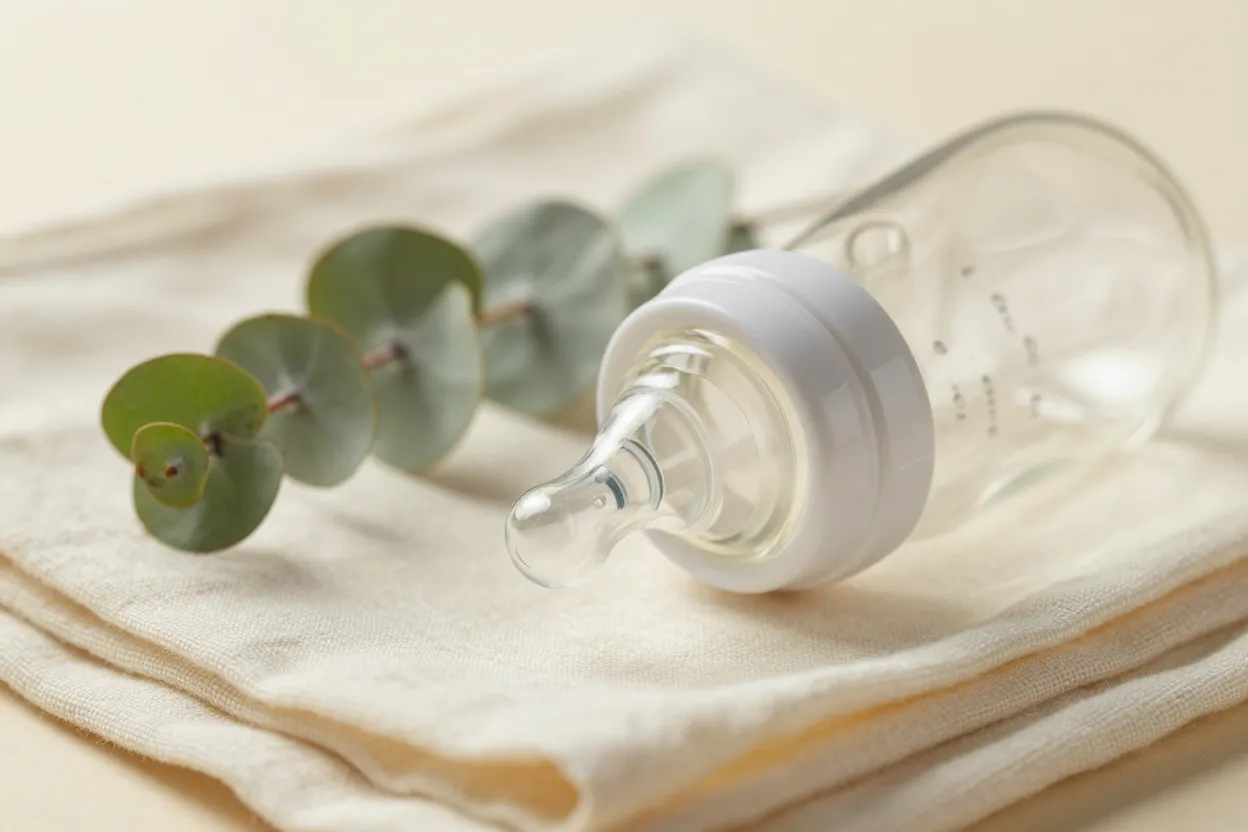
A plastic-free registry centers on glass bottles — Dr. Brown's Options+ is the top pick, with Philips Avent Natural as runner-up — plus food-grade silicone feeding gear like the ezpz Happy Mat and Siliskin stretch lids. Glass and silicone both survive boiling, steam, and dishwasher sterilization without warping or leaching the way some plastics can.
Browse glass bottles and silicone feeding gear on AmazonWhat the research says about infant plastic exposure
The landmark study here is hard to overstate. In 2020, Trinity College Dublin researchers reported in Nature Food that polypropylene baby bottles — the most common type — shed microplastics during normal formula preparation, with infants potentially ingesting on the order of a million-plus particles per day (regional average around 1.6 million, up to roughly 4.5 million) (Li et al., Nature Food 2020).
The driver is heat: shedding rose from about 0.6 million to 55 million particles per liter as water temperature went from 25°C to 95°C — meaning the WHO-recommended sterilizing and hot-water mixing steps are exactly what drive release. That is why the registry picks below favor glass and stainless bottles, and why we flag one free fix for plastic bottles: prepare and cool formula in a non-plastic container, then transfer. Health effects of this ingestion remain under active study; the exposure itself is well-documented.
Source: Li et al., microplastic release from polypropylene infant feeding bottles, Nature Food (2020) — Nature Food
New for 2026: several states now ban PFAS in juvenile products
If you registered for baby gear even a year ago, the legal floor has moved under you. "Juvenile products" — the statutory category covering car seats, high chairs, bassinets, strollers, playmats, nursing pillows, changing pads and similar gear made for infants and young children — can no longer be sold with intentionally added PFAS in a growing list of states. Minnesota was first, on January 1, 2025, under Amara's Law. Maine and Vermont followed on January 1, 2026. Connecticut began requiring PFAS labeling and advance state notification on July 1, 2026, which converts to an outright ban on January 1, 2028. Washington started requiring manufacturers to report intentionally added PFAS in covered categories sold from January 1, 2026, with the first report due January 31, 2027.
Why this matters for a registry specifically: PFAS in baby gear is mostly a stain-and-water-repellent finish on fabric — exactly the "wipes clean" feature that sells car seats, high chair covers and playmats. So the swap is not glass-for-plastic here; it is choosing gear whose fabric is not treated, and treating "easy-clean coating" as a question rather than a selling point. Two honest caveats. First, these laws restrict intentionally added PFAS, which is not a guarantee of zero detectable fluorine. Second — and this trips up almost everyone reading a plastic-detox list — PFAS are not microplastics. PFAS are fluorinated chemicals; microplastics are physical plastic fragments, like the ones the bottle study above measured. A stroller can be compliant with every one of these laws and still be made of plastic.
Sources: Fox Rothschild, newly effective state PFAS product regulation (February 2026) · Minnesota Pollution Control Agency, 2025 PFAS prohibitions.
Quick Comparison
📊 The pediatric evidence base behind these picks
AAP Safe Sleep Guidelines (2022 update) remain the single most important pediatric product-safety reference. Back sleeping on a firm flat surface, no soft bedding/bumpers/inclined sleepers, and room-sharing without bed-sharing for at least 6 months reduces SIDS risk substantially. The 2022 update specifically discouraged any sleep product with an incline >10° (which removed multiple bestselling rockers/loungers from the safe-sleep recommendation). Our picks filter against the current AAP guidance, not the marketing of the products themselves.
Pediatric product recommendations carry asymmetric stakes — rare adverse events have outsized impact. Our picks weight AAP guidance, FDA clearance status, and peer-reviewed evidence over marketing claims.
Quick Comparison — Jump to Your Best Pick
| Best For | Product | Price | Why It Wins | |
|---|---|---|---|---|
| Start Here | Boon Grass Countertop Baby Bottle Drying Rack | Est. $14–$18 | Lowest-cost first swap that replaces the ugly plastic dish rack every new parent inherits. Works for bottle parts, sippy cups, pacifiers, and silicone bibs simultaneously. BPA-free, PVC-free, and phthalate-free certification stack on an item that holds things going straight into a baby's mouth. | Check Price → |
| Highest Daily Contact | Dr. Brown's Options+ Glass Baby Bottles (4-Pack) | Est. $35–$45 | Bottles touch the baby's mouth 6-8x per day for the first year. Borosilicate glass is inert, does not leach, and survives unlimited heat sterilization cycles. Anti-colic internal venting solves the specific reason parents historically switched back to plastic. Hospital-recommended NICU standard. | Check Price → |
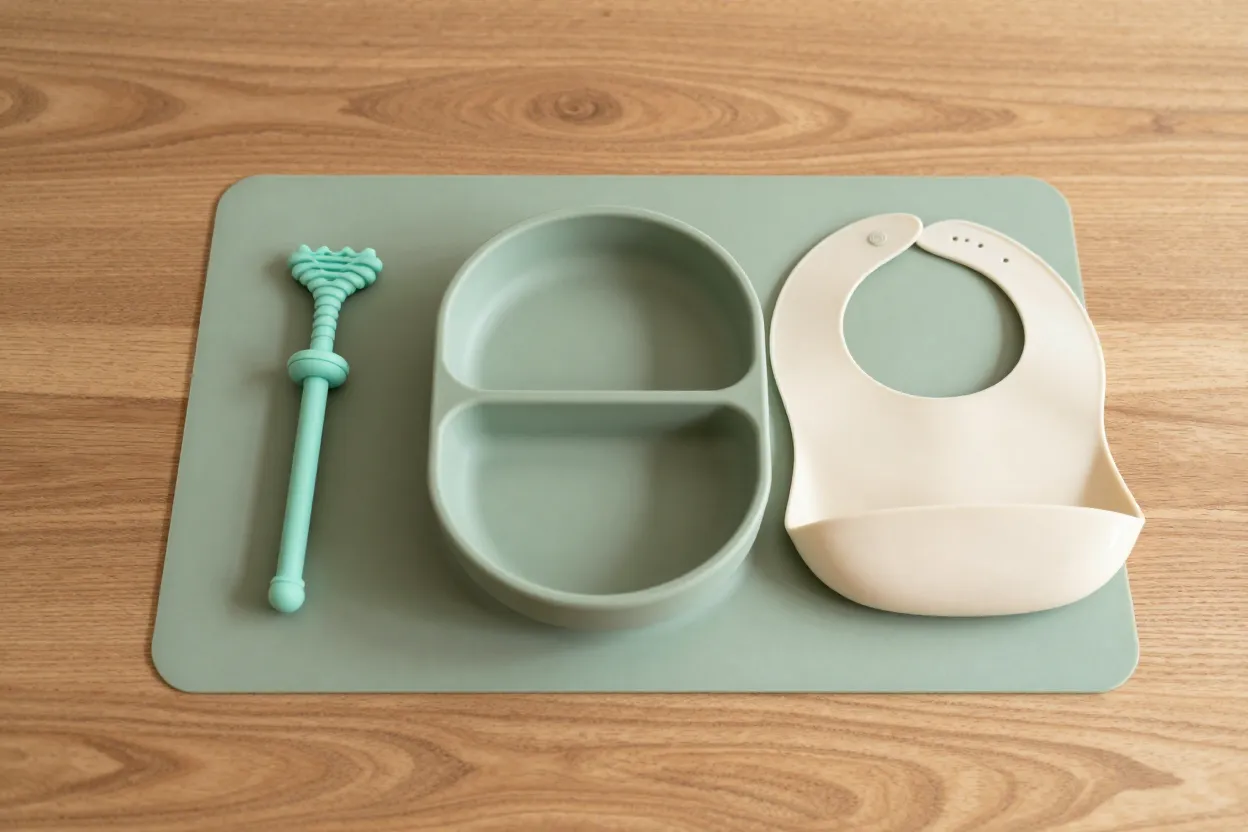
| Most Versatile | ezpz Happy Mat Silicone Placemat + Plate | Est. $22–$28 | One-piece food-grade silicone that is placemat, plate, and suction grip in a single continuous unit. Replaces at least three conventional plastic feeding items. OT-designed for self-feeding stages, dishwasher / microwave / oven-safe to 400°F, and the item most likely to still be in daily use at 18 months. | Check Price → |
| Budget-Friendly Honest Pick | Re-Play Recycled-Plastic Divided Plate | Est. $6–$10 | Made from 100% recycled milk jugs (HDPE #2), not virgin plastic. Not plastic-FREE — we are explicit about that — but dramatically lower-impact for the toddler phase when glass is impractical and kids throw plates off high chairs daily. Made in USA. BPA-, phthalate-, melamine-, and PVC-free. | Check Price → |
Boon Grass Countertop Baby Bottle Drying Rack
Lowest-cost first swap that replaces the ugly plastic dish rack every new parent inherits. Works for bottle parts, sippy cups, pacifiers, and silicone bibs simultaneously. BPA-free, PVC-free, and phthalate-free certification stack on an item that holds things going straight into a baby's mouth.
Check Price on Amazon →Dr. Brown's Options+ Glass Baby Bottles (4-Pack)
Bottles touch the baby's mouth 6-8x per day for the first year. Borosilicate glass is inert, does not leach, and survives unlimited heat sterilization cycles. Anti-colic internal venting solves the specific reason parents historically switched back to plastic. Hospital-recommended NICU standard.
Check Price on Amazon →ezpz Happy Mat Silicone Placemat + Plate
One-piece food-grade silicone that is placemat, plate, and suction grip in a single continuous unit. Replaces at least three conventional plastic feeding items. OT-designed for self-feeding stages, dishwasher / microwave / oven-safe to 400°F, and the item most likely to still be in daily use at 18 months.
Check Price on Amazon →Re-Play Recycled-Plastic Divided Plate
Made from 100% recycled milk jugs (HDPE #2), not virgin plastic. Not plastic-FREE — we are explicit about that — but dramatically lower-impact for the toddler phase when glass is impractical and kids throw plates off high chairs daily. Made in USA. BPA-, phthalate-, melamine-, and PVC-free.
Check Price on Amazon →Your registry covers one chunk. The other 90% of plastic exposure is elsewhere.
8 quick questions across water, food storage, cookware, beverages, and personal care. Get a 0–100 score plus the top 3 swaps that would actually move the needle for you.
0 of 8 answered
Why BPA-Free Isn't Plastic-Free — And What Actually Matters on a Baby Registry
BPA (bisphenol-A) was banned in US infant products in 2012, so manufacturers pivoted to BPS and BPF — structurally similar bisphenol analogs that 2019 NIH research has found to be equally endocrine-disrupting. "BPA-free" is 2015-era marketing, not 2026-era safety. The real bar for a plastic-detox baby registry is replacing the plastic category entirely wherever the baby's mouth, food, or prolonged skin contact is involved — not swapping one bisphenol for another. That means glass, food-grade silicone, stainless steel, or (for the toddler transition phase) recycled plastic, in that order of preference. For the wider room-by-room framing, our complete plastic detox shopping list covers the full sequence across the home; this page is the registry-specific drill-down.
Registry spending prioritized correctly goes to three categories where plastic contact is concentrated for babies. (a) Feeding contact — bottles, plates, sippy cups, bibs, utensils. Daily oral contact plus routine heat sterilization equals the highest cumulative exposure and the category where plastic-alternative quality has finally caught up with the convenience of plastic. (b) Sleep and thermal contact — mattresses, sleep sacks, swaddles. Second-highest exposure (roughly 8 hours a day of direct skin contact). (c) Toy mouthing — teethers, rattles, anything that gets chewed. The toys category is covered separately. Registry dollars should go to feeding first because that is where the exposure is concentrated AND where the quality of alternatives now matches or exceeds conventional plastic. Our plastic-free kitchen cookware guide covers the adjacent family-cooking swaps that pair naturally with baby-feeding upgrades.
The honest caveat on glass baby bottles: everyone loves the idea until their six-month-old drops one onto a tile floor. Glass bottles need dedicated silicone sleeves (sold separately) for crawl-age babies, or parents end up relegating them to home-only use while reverting to plastic on-the-go. Dr. Brown's sells silicone sleeves that fit their 4oz and 8oz Options+ glass bottles — buy the sleeves at the same time as the bottles, not later, because bottle-to-sleeve compatibility is specific and cross-brand fits are frustrating. This is the #1 practical friction point in the baby-plastic-detox path, and the workaround is roughly $8 per sleeve. For the toy-mouthing category that pairs with this feeding-first registry, our plastic-free kids toys guide covers the teether and rattle swaps that belong alongside these feeding items.
Are Glass Baby Bottles Actually Practical — or Will I Just Break Them All?
Yes, practical, with silicone sleeves. Borosilicate glass (the material every mainstream baby-bottle brand uses) is 5-10x more shatter-resistant than standard glass, and silicone sleeves add another layer of drop protection plus the grip crawl-age babies actually need to hold the bottle independently. Expect to break one bottle in the first year and factor in a replacement. The safety math is clear: one broken glass bottle you sweep up and replace, versus 365 days of plastic-bottle microplastic leaching at every heat-sterilization cycle. The trade is genuinely worth it. Dishwasher-safe glass also lasts the full bottle phase (12-18 months) without scratching, clouding, or developing the filmy residue that plastic bottles get after month 6.
Is Silicone Actually Safe for Babies, or Just Trendy?
Food-grade silicone is inert, non-reactive, and FDA-approved for food contact. It does not leach at sterilization temperatures (boil, steam, or dishwasher), does not absorb flavors or odors, and lasts years without visible degradation. The caveat worth knowing: "silicone" is a broad category and some cheap products use mineral fillers that reduce purity. Look for "100% food-grade silicone" or "platinum-cured silicone" (the highest quality grade). ezpz, Bumkins, OXO Tot, and Silikids all disclose their silicone grade publicly, which is why they made this list. The one practical nuance: silicone attracts dust and pet hair, so a visual inspection before feeding is the habit to build. No known endocrine-disruption or microplastic-shedding concerns with legitimate food-grade silicone from verified brands.
What About Stainless Steel for Babies — Is That Better Than Glass?
For sippy cups and toddler water bottles, stainless steel is arguably the best option: unbreakable, inert, lasts indefinitely, and fully recyclable at end of life. Category-leading brands include Klean Kanteen Kid, Pura Kiki, and Thinkbaby. For infant bottles specifically, stainless is harder because you cannot see the milk level through opaque steel — and visibility during feeds matters more than new parents realize, especially at 3am. Glass wins for the 0-12 month bottle phase specifically because of that visibility advantage. Stainless is the correct next step at roughly 9-12 months when babies transition to sippy cups and straw cups. Plan to own both categories across the baby's first two years rather than forcing a single-material answer.
How We Selected these products
The GiftedPicks team evaluates Amazon products against five criteria before any pick makes our lists. Here's exactly what we look for:
Review threshold
Strong customer satisfaction based on extensive review analysis. — not inflated by one-time purchase incentives.
Trending signal
Tracked against current Amazon search trends and GiftedPicks keyword data to confirm buyer demand exists before we recommend.
Price-to-value
Compared against category alternatives at similar price points. We flag when a pricier option genuinely outperforms its cheaper alternatives.
Review consistency
We weight recent reviews over historical ones. A product with consistent praise over 12+ months outranks one that spiked and faded.
Honest tradeoffs
Every pick includes what it's not ideal for. If a product doesn't suit a specific hair type, budget, or use case, we say so.
Category criterion 1
Glass, silicone, stainless steel, or recycled plastic only — nothing virgin plastic in items that contact the baby's mouth, food, or skin for extended periods. "BPA-free" without specifying which plastic alternative was substituted = rejected.
Category criterion 2
Daily-use durability verified — bottles that survive 400+ dishwasher cycles, silicone that does not yellow or tear, stainless that does not corrode. Registry purchases should last the full 12-18 month phase, not need replacement at 6 months.
Category criterion 3
Category-king review volume or pediatrician recommendation — Dr. Brown's Options+ (the anti-colic glass-bottle market leader), Philips Avent (global brand with hospital relationships), ezpz (occupational-therapist-designed). No no-name brands despite cheaper prices.
As an Amazon Associate, GiftedPicks earns a commission when you purchase through our links — at no extra cost to you. Our editorial process is independent of this.
The 10 Plastic-Free Baby Registry Swaps — Ranked by Daily Contact






You might also like
Related guides in the plastic detox cluster: The Complete Plastic Detox Shopping List, Plastic-Free Kids Toys, Plastic-Free Kitchen Cookware, Plastic Detox Starter Kit, and — for holiday shopping — Non-Toxic Christmas Gifts.
Frequently Asked Questions
Is BPA-free plastic actually safe for babies?
Not fully, and the science has moved since the 2012 BPA ban. When BPA was banned from infant products, manufacturers switched to BPS and BPF — structurally similar bisphenol analogs. 2019 NIH research has found those substitutes to be equally endocrine-disrupting in preclinical studies. So "BPA-free" means the product no longer contains the specific bisphenol that was banned, but it does not mean the product is free of endocrine-disrupting chemicals. A genuinely safer baby-product choice replaces the plastic category entirely wherever the baby's mouth or food makes contact — glass, food-grade silicone, or stainless steel — rather than substituting one bisphenol for another. Use BPA-free plastic where alternatives are impractical; use non-plastic where alternatives are practical.
Which plastic-free baby bottles don't break easily?
Every mainstream glass baby bottle on the market uses borosilicate glass, which is 5-10x more shatter-resistant than standard soda-lime glass. That said, "shatter-resistant" is not the same as unbreakable — a glass bottle dropped from high-chair height onto tile can still break. The fix is silicone sleeves, which virtually all major brands now sell as matched accessories. Dr. Brown's sells sleeves sized specifically to their Options+ line; Philips Avent and Tommee Tippee sell them for their own lines too. Buy the sleeves at the same time as the bottles. Realistic expectation: with sleeves installed, expect to break 0-1 bottles per year. Without sleeves, expect 2-3 per year once baby is crawling. Silicone sleeves cost roughly $8 each and pay for themselves in a single prevented break.
How do you sterilize silicone baby feeding items?
Food-grade silicone is sterilization-friendly across all three standard methods: boiling in water for 5 minutes, steaming in a dedicated steam sterilizer, or running through a dishwasher on the sanitize cycle. Silicone does not degrade at sterilization temperatures (unlike some plastics that warp or leach at high heat), does not absorb odors or flavors, and comes out of sterilization looking visually identical to how it went in. Frequency recommendation: daily dishwasher cleaning is enough for most uses; full sterilization once a week or after illness is standard pediatric guidance. Silicone bibs, plates, and straws are all top-rack dishwasher safe. The only silicone care caveat: silicone attracts dust and pet hair, so a visual inspection before use is a good habit regardless of how recently the item was cleaned.
Are recycled-plastic baby plates actually better than regular plastic?
Yes, meaningfully — and we want to be clear this still is not plastic-free. Recycled-plastic baby plates (like Re-Play, made from recycled HDPE #2, primarily post-consumer milk jugs) use raw material that already exists and would otherwise go to landfill, rather than pulling new petroleum feedstock to manufacture virgin plastic. That is a real environmental-impact reduction. HDPE #2 is also one of the safer plastic types for food contact — it does not contain bisphenols and is not chlorine-processed the way PVC is. The honest framing: recycled HDPE plates are the middle-ground practical pick for toddler phases (12-36 months) when glass is genuinely impractical because kids throw plates daily. They are not as safe as silicone or glass, but they are dramatically better than virgin plastic, and the practical durability makes the tradeoff defensible.
At what age should I transition from glass bottles to stainless sippy cups?
Most pediatricians recommend introducing a sippy cup or straw cup around 6 months, alongside solid-food introduction, and fully transitioning off bottles between 12 and 18 months. Stainless steel is arguably the best material choice for the sippy-cup phase: unbreakable, inert, lasts indefinitely, does not leach, and fully recyclable at end of life. Category-leading brands include Klean Kanteen Kid, Pura Kiki, and Thinkbaby. The one reason to stay on glass for bottles specifically is visibility — you can see the milk level during feeds, which matters more at 3am than parents expect. Once babies transition to sippy/straw cups for water or milk during the day, stainless is the durability and longevity winner. Plan to own both categories across the first two years rather than forcing one material.
Do I need to replace my entire baby registry, or can I phase in swaps?
Phase in swaps — that is the entire practical point of prioritizing by daily contact. The highest-exposure registry items are bottles and feeding accessories (6-8 daily oral contacts for bottles, 3+ daily for plates and bibs), which is where the plastic-detox dollars should go first. Secondary registry items like toy storage, diaper-change accessories, nursery decor, and clothing storage are lower-exposure and can stay conventional without meaningfully increasing plastic contact. Realistic budget sequencing: spend the primary registry budget on glass bottles + silicone feeding set + silicone bibs, use recycled HDPE plates (Re-Play) for the toddler phase, and address the lower-contact items over time as budget allows. The exposure math rewards concentrated spending on high-contact items rather than spreading budget thinly across the whole registry.
You Might Also Like
What Reddit Communities Are Saying
Real discussions from verified Reddit users — not sponsored content
Reddit communities provide authentic peer reviews and recommendations, helping shoppers discover products that genuinely deliver on their promises.
Popular search: “plastic detox baby registry reddit”
GiftedPicks Editorial Team
Product Research & Editorial
The GiftedPicks editorial team researches thousands of Amazon products, analyzes customer review patterns, cross-references clinical studies and community recommendations, and writes original editorial content for every list. We never accept payment from brands for placement or ranking.
10 research-backed picks curated by the GiftedPicks team
The highest-intent registry-tier spoke in the plastic-detox cluster: ten baby-registry swaps ranked by daily oral and skin contact. Glass and food-grade silicone first, one honest recycled-HDPE pick for the toddler phase. Certification-first sourcing throughout.
Explore Related Topics
Ready to build a plastic-free baby registry?
Shop the 10 Netflix-inspired plastic-detox baby essentials on Amazon.