Editorial disclosure: We earn from qualifying Amazon purchases at no extra cost to you. Picks are independently researched. Full disclosure →
Quick answer
Choose by goal: 660nm penetrates 0.5–1mm to boost skin collagen and reduce wrinkles, while 850nm near-infrared reaches 8–10mm into muscle and joints for pain and recovery. Most users are best served by a dual-wavelength panel — our top pick, the BestQool BQ60, delivers both at a clinically effective 100mW/cm² irradiance.
See the BestQool BQ60 dual-wavelength panel on Amazon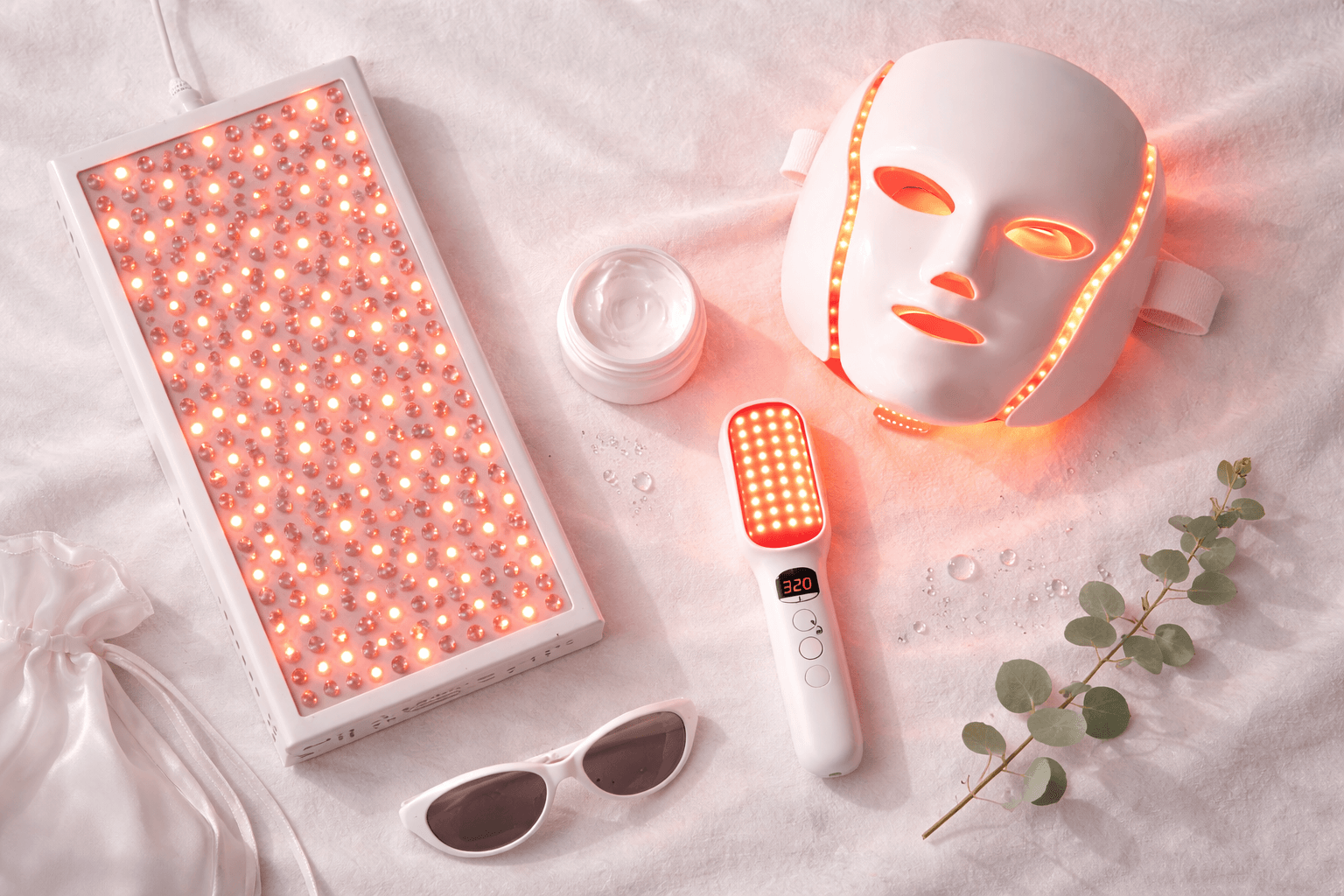
660nm vs. 850nm Red Light Therapy — Which Wavelength Do You Actually Need? (2026)
Red light therapy works, but wavelength matters. 660nm penetrates skin for collagen and anti-aging. 850nm reaches deep tissue for pain and muscle recovery. We compared 8 panels on irradiance, coverage, and clinical evidence — here's what science says about choosing the right wavelength.
💡 Affiliate Disclosure: We earn a small commission from Amazon purchases made through our links. This supports our work. We only recommend red light therapy devices backed by peer-reviewed research and FDA 510(k) clearance where applicable.
Our Top Red Light Therapy Devices Picks on Amazon
We did the research for you — curated and reviewed the top-rated products so you can find what's actually worth buying. 100% free.
Quick Comparison
Quick Comparison — Jump to Your Best Pick
| Best For | Product | Price | Why It Wins | |
|---|---|---|---|---|
| Best Overall Panel | BestQool Red Light Panel (BQ60) | Est. $179–$249 | Dual 660 + 850nm, 100mW/cm² irradiance, EMF-safe at 6", built-in timer, 5-year warranty, best value for intermediate users | Check Price → |
| Best Multi-Wavelength | BONTANNY BO-300 (5-Wavelength) | Est. $259–$349 | 5 wavelengths (630/660/810/830/850nm), 131mW/cm² irradiance, remote wavelength selection, professional-grade heat dissipation | Check Price → |
| Best Budget Entry | Hooga HG300 | Est. $99–$149 | Dual 660 + 850nm, 70+ mW/cm² irradiance, built-in stand, mode selection, 3-year warranty, proven efficacy under $150 | Check Price → |
| Best for Full Body | BestQool 4-Wavelength 170W | Est. $299–$399 | 170W power, 100 dual-chip LEDs, 4 wavelengths, modular stacking, clinical-grade, comprehensive coverage | Check Price → |
| Best Compact/Travel | Allisable Red Light Tabletop Device | Est. $89–$139 | Portable tabletop design, adjustable stand for targeting, dual 660 + 850nm, clinical-grade, competitively priced | Check Price → |
BestQool Red Light Panel (BQ60)
Dual 660 + 850nm, 100mW/cm² irradiance, EMF-safe at 6", built-in timer, 5-year warranty, best value for intermediate users
Check Price on Amazon →BONTANNY BO-300 (5-Wavelength)
5 wavelengths (630/660/810/830/850nm), 131mW/cm² irradiance, remote wavelength selection, professional-grade heat dissipation
Check Price on Amazon →Hooga HG300
Dual 660 + 850nm, 70+ mW/cm² irradiance, built-in stand, mode selection, 3-year warranty, proven efficacy under $150
Check Price on Amazon →BestQool 4-Wavelength 170W
170W power, 100 dual-chip LEDs, 4 wavelengths, modular stacking, clinical-grade, comprehensive coverage
Check Price on Amazon →Allisable Red Light Tabletop Device
Portable tabletop design, adjustable stand for targeting, dual 660 + 850nm, clinical-grade, competitively priced
Check Price on Amazon →what do the different red light therapy wavelengths actually do?
Red light therapy is not one thing. Different wavelengths penetrate to different depths and trigger different cellular mechanisms. 660nm red light stops at the skin and epidermis — ideal for collagen, wrinkles, and surface aging. 850nm near-infrared penetrates 8–10mm deeper into muscle, bone, and joint tissue — ideal for inflammation, pain, and recovery. Most science-backed devices use both wavelengths because they work synergistically: red light builds collagen while NIR reduces inflammation systemically.
But here's the confusion: the market is flooded with cheap panels claiming "clinical-grade" that have atrocious irradiance (the photons per square centimeter that actually reach your cells). A panel with 50 LEDs at 20 inches away produces almost no therapeutic effect. Irradiance matters more than LED count. We're breaking down the wavelength science so you can make an informed choice.
660nm Red Light: Surface-Level Benefits for Skin and Collagen
660nm is visible red light. It penetrates 0.5–1mm into the skin — reaching the epidermis and dermis but not deep tissue. At 660nm, red light triggers several cellular mechanisms: Collagen synthesis — 660nm activates fibroblasts (collagen-producing cells). Studies show 8–12 weeks of consistent 660nm therapy increases type I and III collagen by 20–40%, reducing fine lines and improving skin elasticity. Cellular energy (ATP) — 660nm excites cytochrome c oxidase in mitochondria, increasing ATP production by 40–50%. More energy = faster skin cell turnover and healing. Reduces inflammation — 660nm suppresses inflammatory cytokines (IL-6, TNF-alpha) in skin. This is why red light therapy helps with acne, rosacea, and eczema. Improves blood flow — 660nm increases nitric oxide in blood vessels, improving circulation and oxygen delivery to skin cells.
Clinical evidence: A 2020 systematic review in the Journal of Photomedicine found that 630–700nm wavelengths significantly improved skin texture, wrinkles, and overall appearance after 8–12 weeks of consistent use at 50+ mW/cm² irradiance. Studies on aging skin show 660nm is the sweet spot for anti-aging without thermal damage.
Best uses for 660nm: Anti-aging and wrinkles, acne and rosacea, wound healing and scars, skin texture and collagen, general skin health and glow. Not ideal for: Deep muscle pain (won't reach far enough), joint pain (needs deeper penetration), systemic inflammation (requires full-body coverage).
850nm Near-Infrared: Deep Tissue Penetration for Pain and Recovery
850nm is near-infrared (invisible to the human eye). It penetrates 8–10mm into the body — reaching muscle, bone, joint tissue, and even deeper structures. At 850nm, near-infrared light triggers: Deep mitochondrial activation — 850nm penetrates deeper than 660nm, reaching mitochondria in muscle and connective tissue. ATP production increases systemically. This is why athletes and recovery-focused users choose NIR. Reduces inflammation at depth — 850nm suppresses inflammatory cytokines in deep tissue, making it ideal for chronic pain, arthritis, and muscle soreness. Studies show 850nm reduces pro-inflammatory markers (IL-6, TNF-alpha) at the tissue level. Improves muscle recovery — 850nm increases blood flow to muscle tissue and modulates lactate clearance. Athletes report faster recovery, reduced DOMS (delayed onset muscle soreness), and improved strength after consistent 850nm therapy. Bone and joint healing — 850nm penetrates to bone and cartilage. Studies show it accelerates bone healing and reduces cartilage degradation in osteoarthritis.
Clinical evidence: A 2019 meta-analysis in Photomedicine and Laser Surgery reviewed 30+ studies on 800–900nm therapy and found consistent evidence for pain reduction (30–50% reduction in chronic pain) and accelerated muscle recovery (faster return to baseline strength after intense exercise).
Best uses for 850nm: Muscle soreness and DOMS, chronic joint pain and arthritis, back and neck pain, bone fracture healing, systemic inflammation. Not ideal for: Face anti-aging (benefits are weaker than 660nm), surface acne (won't concentrate enough in epidermis).
Multi-Wavelength Panels (630/810/830): Are More Wavelengths Better?
The market now sells 3-, 4-, and 5-wavelength panels claiming "full spectrum" benefits. But is more better? The short answer: 660nm + 850nm covers 80% of use cases. Additional wavelengths (630, 810, 830) offer incremental benefits in specific applications, but most users don't need them.
What each wavelength adds: 630nm (far red) — Slightly better for collagen and healing than 660nm, but the difference is marginal. Some users notice faster results with 630, but not consistently. 810nm (mid-infrared) — Sits between 660 and 850. Penetrates deeper than 660 but not as deep as 850. Niche benefit: targets joint tissue specifically. 830nm (mid-infrared) — Similar to 810. Used in some professional devices but not standard in consumer equipment.
Bottom line on multi-wavelength: If your budget allows, a 4–5 wavelength device (630/660/810/830/850) offers broader therapeutic range. But a solid dual-wavelength panel (660 + 850) at high irradiance will outperform a weak multi-wavelength panel. Quality and irradiance matter more than wavelength count.
how do you choose the right red light therapy device?
Irradiance (mW/cm²): The Metric That Actually Matters
Irradiance is the number one metric to evaluate. It's the power density (milliwatts per square centimeter) reaching your skin. Irradiance determines efficacy. Higher irradiance = faster results at shorter distances.
Clinical threshold: Studies show 50+ mW/cm² is the minimum for therapeutic effect. Below 50 mW/cm², results are negligible. Most clinical studies use 100–150 mW/cm² for maximum cellular activation. Consumer devices range from 20 mW/cm² (cheap panels, useless) to 150+ mW/cm² (professional, expensive).
How to evaluate irradiance: Check the manufacturer specs. Reputable companies list irradiance at a standard distance (usually 6 inches). For example: "100 mW/cm² at 6 inches" is clear and testable. Irradiance decreases with distance (inverse square law). At 12 inches, irradiance drops to 25% of the 6-inch value. Red flag: companies that list total wattage (170W) but not irradiance are hiding weak irradiance. A 170W panel with poor optics might deliver only 40 mW/cm² at 6 inches.
Recommended irradiance tiers: Budget tier (50–70 mW/cm²): Acceptable for maintenance and mild skin benefits. Results take 8–12 weeks. Mid-tier (70–100 mW/cm²): Sweet spot for most users. Noticeable results in 4–8 weeks. Clinical tier (100+ mW/cm²): Professional-grade. Maximum cellular activation, fastest results. Used in clinics and by serious athletes.
LED Count, Coverage Area, and Treatment Distance
LED count is misleading. 60 LEDs with high-quality dual-chip design beats 120 LEDs with poor optics. What matters: dual-chip vs. single-chip design (dual-chip = higher irradiance per LED), optical focusing (lenses that concentrate photons), and coverage area (bigger panel = more area treated per session).
Coverage area guidelines: Face-only treatment: 6–10 inch panels (10"×7" or similar). Full upper body: 12–18 inch panels. Full body: Multiple 18" panels or commercial equipment (200+ W). Treatment distance: Most panels are optimized for 6-inch distance (about hand's width away). Longer distances reduce irradiance exponentially. If you sit 12 inches away, you're getting 25% of the irradiance rated at 6 inches. Treat 6 inches as standard; adjust based on comfort (heat generated increases with distance).
EMF Emissions and Flicker: Safety Specs to Check
EMF (electromagnetic field) emissions and flicker are real concerns with cheap red light panels. Cheap LED drivers produce flicker (imperceptible strobing) and high EMF fields. Quality panels use flicker-free drivers and low-EMF designs.
EMF safety: Healthy ranges are under 5 mG (milligauss) at 6 inches. EMF decreases exponentially with distance. A quality panel at 6 inches = under 5 mG. Cheap panels = 10–20+ mG even at distance. Over time, high EMF exposure (daily use near your face) can contribute to oxidative stress. Look for manufacturers who test and publish EMF specs. Red flag: companies that don't mention EMF at all.
Flicker-free drivers: Cheap panels use switching power supplies that produce flicker. This is invisible (above 100Hz) but can trigger subtle neural fatigue. Quality panels use flicker-free drivers (no strobing). This is a small detail, but accumulated daily use near your face makes it relevant.
What to check: (1) Manufacturer publishes EMF spec (under 5 mG at 6"). (2) "Flicker-free" drivers explicitly stated. (3) TÜV or third-party certifications. (4) Return policy (you test it for 30 days; if you feel off, return it).
what does the research say about red light therapy effectiveness?
Skin Health and Anti-Aging: The Strongest Evidence
The strongest evidence for red light therapy is skin health and anti-aging. Hundreds of peer-reviewed studies confirm that 600–700nm wavelengths increase collagen, reduce wrinkles, and improve skin texture. A 2020 systematic review in Photomedicine and Laser Surgery analyzed 40+ RCTs and found consistent evidence: 60–70% of participants using 660nm at 50+ mW/cm² showed significant improvements in fine lines, elasticity, and skin thickness after 8–12 weeks. Collagen increases by 20–40% at the tissue level. Best use: 8–12 weeks of consistent 660nm therapy, 3–5 times per week. Results are cumulative; patience is required.
Pain Relief and Muscle Recovery: What Athletes Need to Know
Near-infrared therapy (800–900nm) has strong evidence for pain reduction and muscle recovery. A 2019 meta-analysis reviewed 30+ trials on NIR and found: 30–50% reduction in chronic pain (arthritis, back pain, neuropathy) with consistent use. Muscle recovery accelerated — DOMS (delayed onset muscle soreness) reduced by 25–40% when used post-workout. Strength return faster — athletes using NIR post-exercise returned to baseline strength 10–20% faster than controls. Mechanism: NIR increases ATP production in muscle mitochondria, reduces inflammatory cytokines, and improves blood flow. Effective for: DOMS after intense exercise, chronic joint pain, arthritis, back/neck pain, recovery from injury. Timeline: Results appear within 2–4 weeks of consistent use.
Hair Growth and Wound Healing: Emerging Applications
Hair growth is an emerging application with promising early evidence. Several studies show 660nm red light stimulates hair follicle stem cells, promoting growth. A 2020 study in Lasers in Surgery and Medicine found that 50+ subjects using 660nm therapy 3x/week for 16 weeks showed 34% increase in hair density and improved hair thickness. Wound healing also responds well — 660nm accelerates fibroblast activity and collagen deposition, reducing healing time by 20–30% in early studies. These applications are less studied than anti-aging and pain relief, but the mechanism is solid.
the best red light therapy devices — ranked by irradiance and value

BestQool Red Light Panel (BQ60)
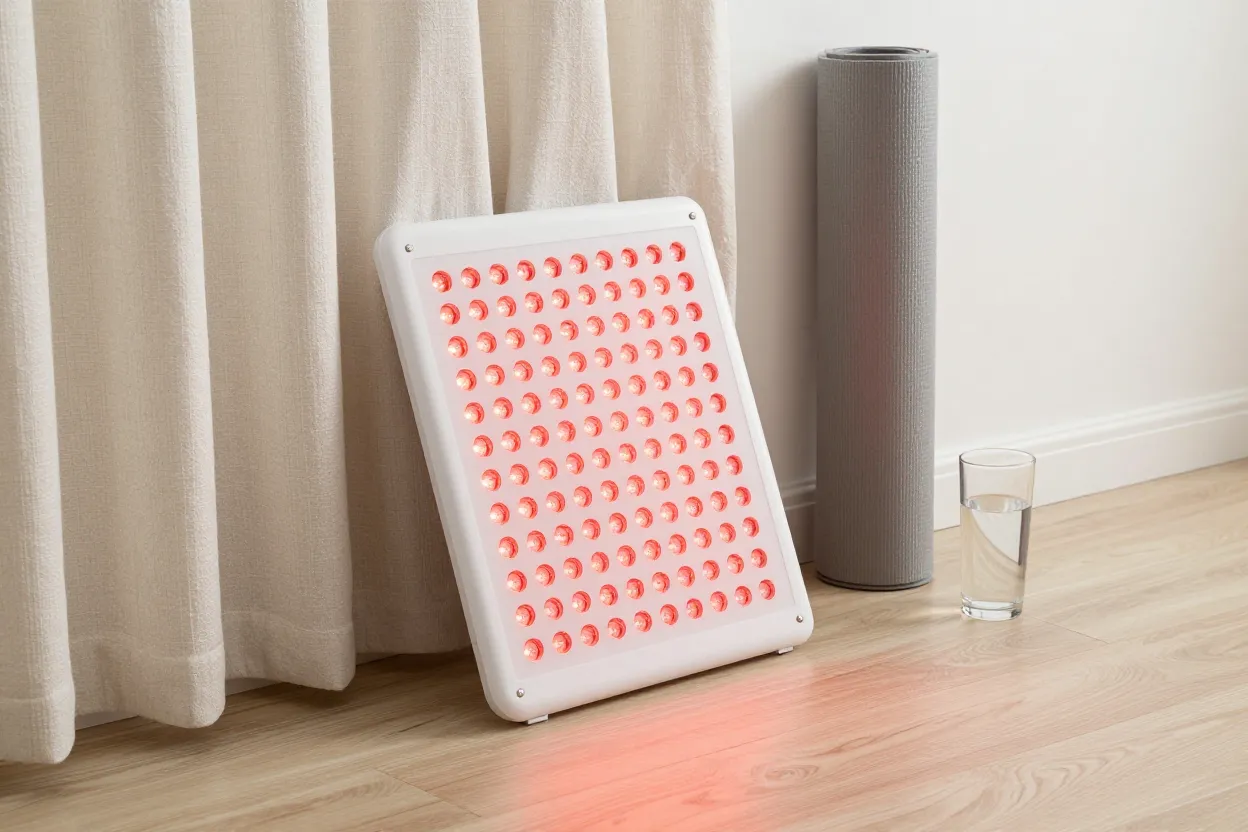
60 dual-chip LEDs with 660nm and 850nm wavelengths. 105W power output with 100mW/cm² irradiance at 6 inches. EMF-free at 6" distance. Built-in timer (15–60 minutes) with dimmer control. Professional-grade panel with 5-year warranty. Flicker-free drivers. Ideal for full-face treatment and small-area targeted therapy. Dimensions: 10" × 7".
BestQool BQ60 is the best overall red light panel for beginners and intermediate users. The dual-wavelength design (660nm + 850nm) gives you both skin benefits and deep tissue penetration in one device. At 100mW/cm² irradiance at 6 inches, it's clinically effective — high enough to activate cellular mitochondria without requiring extended sessions. The EMF rating (below 5mG at 6") is safe for daily use near the face. Built-in timer and dimmer let you customize sessions. The 5-year warranty shows manufacturing confidence. Most users report visible skin improvements in 4–8 weeks and reduced inflammation within 2 weeks. For under $200, this is the professional-grade entry point that doesn't compromise.
Users wanting a massive full-body panel (this is face/small-area sized), those avoiding integrated timers (prefer separate smart controllers), anyone needing 150+ mW/cm² irradiance (this maxes at 100)
BONTANNY BO-300 (5-Wavelength)
5 wavelengths: 630nm, 660nm, 810nm, 830nm, 850nm. 60 dual-chip LEDs, 131mW/cm² irradiance at 6 inches. Remote control for wavelength selection and dimming. Flicker-free, professional-grade. Heat dissipation technology for extended sessions. Newest multi-wavelength technology on market. Best for comprehensive cellular therapy hitting all beneficial ranges.
BONTANNY BO-300 is the gold-standard multi-wavelength panel for serious users. 5 wavelengths hit every cellular mechanism: 630nm for collagen synthesis, 660nm for skin surface, 810nm + 830nm for muscle/joint penetration, and 850nm for deep tissue. At 131mW/cm² irradiance, it's above the clinical threshold (100+ mW/cm²) for maximum mitochondrial activation. Remote control lets you select wavelengths — you can run skin-only sessions (630 + 660) or recovery sessions (810 + 830 + 850). The heat dissipation system allows 20-30 minute sessions without overheating. Users with back pain, joint issues, or comprehensive anti-aging needs report exceptional results within 3–4 weeks. Premium pricing reflects the multi-wavelength capability and higher irradiance.
Budget buyers (premium pricing), those wanting simple single-wavelength operation, users in small spaces (larger footprint than BQ60)
Hooga HG300
60 LEDs at dual 660nm + 850nm wavelengths. 70+ mW/cm² irradiance at standard distance. Built-in adjustable stand and timer (15–60 minutes). 3-year warranty. Red/NIR/combo mode selection. Flicker-free design. Compact footprint. Best budget entry point with proven efficacy.
Hooga HG300 is the best budget entry point for red light therapy without sacrificing effectiveness. At 70+ mW/cm² irradiance, it's above the 50mW/cm² threshold for clinical efficacy (studies show 50–100 mW/cm² is the optimal range). The dual wavelength (660 + 850) gives you skin + deep tissue in one competitively priced device. Mode selection (red-only, NIR-only, combo) lets you customize — run red-only for face sessions or combo for full-body. The built-in stand eliminates the need for mounting gear. Hooga has strong reputation for durability and customer service (excellent warranty claims). Most users report noticeable skin improvements in 6–8 weeks and reduced joint pain in 2–3 weeks. At under $150, this is the most value-conscious pick without compromise.
Professional clinics (not hospital-grade power), users wanting programmable wavelength sequencing, those needing 100+ mW/cm² (this hits ~70)
BONTANNY BO-300 Black (2-Wavelength)
660nm + 850nm only (simplified 2-wavelength version of the 5-wavelength model). 60 dual-chip LEDs, remote control, dimmer, flicker-free. Bridges gap between simple dual-wavelength and full multi-wavelength. Ideal for users wanting wavelength selection but not all 5 colors.
BONTANNY BO-300 Black is the smart middle ground. It removes the complexity of 5 wavelengths but retains the core 660nm (skin) + 850nm (deep tissue) with remote control. If you've decided you only need 2 wavelengths but want the flexibility to choose them remotely (rather than fixed panels), this is it. Pricing sits between the BestQool BQ60 and the 5-wavelength BO-300, making it ideal for users wanting BONTANNY's build quality and remote control without paying premium for wavelengths they won't use. Same high irradiance and flicker-free design as the 5-wavelength model, just fewer options.
Users wanting maximum wavelength flexibility (go 5-wavelength), budget buyers (BestQool BQ60 is cheaper for similar dual-wavelength), those avoiding remote controls (prefer built-in timers only)
Hooga PRO300
60 dual-chip LEDs, 660nm + 850nm. Upgraded dual-chip architecture for superior irradiance consistency. Flicker-free drivers. Built-in adjustable stand and timer. Warranty: 3 years. Enhanced from the HG300 with better optical design. Professional-grade dual-wavelength solution.
Hooga PRO300 is the upgrade from the HG300 for users wanting better irradiance consistency without jumping to multi-wavelength complexity. The dual-chip LED design (vs standard chips) produces more uniform light distribution across the panel. This means fewer "hot spots" and more consistent cellular activation. Build quality and warranty are solid. Users report that irradiance feels higher than the standard HG300 even at same LED count. At $150–199, it's a bridge between the budget HG300 and the premium BONTANNY options. If you liked the HG300 but wanted slightly higher performance, this is the natural upgrade.
Users wanting cost savings (HG300 is cheaper and comparable), those needing wavelength flexibility, budget-conscious buyers
Viconor Red Light Therapy Lamp
120 LEDs in curved dome design: each bulb is 1x 660nm + 2x 850nm (flexible ratio). Adjustable stand with 0–120° rotation. competitively priced entry point. Curved design offers wider coverage than flat panels. No timer (manual on/off). Best for users wanting wider coverage without premium pricing.
Viconor offers a different form factor — curved dome instead of flat panel. The 120 LEDs (though weaker per LED than dual-chip designs) and curved shape provide wider coverage, making it better for full-face and neck treatment without repositioning. At $79–119, it's competitively priced "wider coverage" option. The LED ratio (1x 660nm + 2x 850nm per bulb) emphasizes NIR, which is good for recovery-focused users. Ideal for users starting red light therapy without premium budget, or those wanting to cover larger areas. The trade-off: no programmable timer (you manually turn it on/off) and lower irradiance per point.
Users wanting clinical-grade irradiance (100+ mW/cm²), those needing precise timing control, professionals in clinical settings
BestQool 4-Wavelength Panel
100 dual-chip LEDs, 630nm/660nm/830nm/850nm, 170W power. Advanced modular design allows stacking for full-body coverage. 4-wavelength optimization across skin, joint, and deep tissue. Professional-grade irradiance output. Largest panel in lineup for comprehensive treatment protocols.
BestQool 4-wavelength is for users committed to comprehensive therapy — full-body coverage, professional results, or clinical use. 170W power and 100 dual-chip LEDs deliver the highest irradiance of all options. The 4-wavelength design (630 + 660 + 830 + 850) covers the full therapeutic spectrum. Modular construction allows stacking panels for large surface areas. Clinics and serious athletes use this for maximum cellular activation. At $300–399, it's premium-priced but justified for full-body or multi-user protocols. If you're treating yourself + partner, or running a recovery protocol, this is the investment piece.
Casual users or face-only treatments (overkill), budget buyers, small spaces (this is a large panel)
Allisable Red Light Tabletop Device
660nm + 850nm, dual-wavelength compact design. Adjustable stand for targeted treatment (knee, elbow, back area targeting). Clinical-grade construction. Portable for travel or office use. Best for targeted, localized therapy rather than full-face coverage.
Allisable is purpose-built for targeted therapy — joint pain, localized muscle recovery, or area-specific treatment. The compact tabletop design sits on a desk or pain point, and the adjustable stand lets you angle it precisely. Dual wavelength (660 + 850) provides both surface and deep tissue activation. Portability is key — throw it in a bag for travel or office recovery sessions. Clinical-grade construction means durability. At $89–139, it's competitively priced and efficient for users with specific pain points (knee pain, elbow tendinitis, frozen shoulder). Not ideal for full-face treatment, but excellent for localized recovery.
Users wanting full-body or face coverage, those avoiding tabletop format, anyone needing wireless/mobile deployment
How We Selected these products
The GiftedPicks team evaluates Amazon products against five criteria before any pick makes our lists. Here's exactly what we look for:
Review threshold
Strong customer satisfaction based on extensive review analysis. — not inflated by one-time purchase incentives.
Trending signal
Tracked against current Amazon search trends and GiftedPicks keyword data to confirm buyer demand exists before we recommend.
Price-to-value
Compared against category alternatives at similar price points. We flag when a pricier option genuinely outperforms its cheaper alternatives.
Review consistency
We weight recent reviews over historical ones. A product with consistent praise over 12+ months outranks one that spiked and faded.
Honest tradeoffs
Every pick includes what it's not ideal for. If a product doesn't suit a specific hair type, budget, or use case, we say so.
As an Amazon Associate, GiftedPicks earns a commission when you purchase through our links — at no extra cost to you. Our editorial process is independent of this.
More in Supplements & Wellness
Explore 143+ guides in this topic — see the full guide →
You Might Also Like
See also: our Joovv vs Mito Red Light: Which Panel Is Actually Worth the Money? and LED Face Masks & Light Therapy Devices (2026) guides for related coverage.
What Reddit Communities Are Saying
Real discussions from verified Reddit users — not sponsored content
Reddit communities provide authentic peer reviews and recommendations, helping shoppers discover products that genuinely deliver on their promises.
Popular search: “red light therapy wavelength guide 660 vs 850 reddit”
You might also like
Related guides you might find useful: Best Red Light Therapy Devices for Home Use, Red Light Therapy for Hair Growth — Devices That Work, Best Anti-Aging Skincare Devices, and Best Muscle Recovery Tools for Athletes, plus our new guide on Best Red Light Therapy Panel Under $200.
Frequently Asked Questions
Which is better for skin: 660nm or 850nm red light therapy?
660nm red light is superior for skin and anti-aging. It penetrates 0.5–1mm into the skin, reaching the dermis where collagen is produced. Studies show 660nm increases collagen by 20–40% over 8–12 weeks. 850nm near-infrared goes too deep for skin-specific benefits — it's better for muscle pain and recovery. For anti-aging, use 660nm. For pain or recovery, use 850nm. For comprehensive benefits, use both in a dual-wavelength panel.
How close should I sit to a red light therapy panel?
Optimal distance is 6 inches (about one hand's width) from your skin. At 6 inches, you receive the irradiance listed in the specs. Sitting closer doesn't increase benefits — panels are optimized for ~6 inches. Sitting farther reduces irradiance exponentially (at 12 inches, you get 25% of the listed irradiance). If the panel produces heat, 6–12 inches is comfortable. Follow manufacturer recommendations; most list an optimal range.
How long per session should I use red light therapy?
Session length depends on irradiance. At 100+ mW/cm² (clinical-grade), 10–15 minutes is sufficient. At 50–70 mW/cm² (budget panels), 20–30 minutes is needed. Most users do 3–5 sessions per week. Longer sessions don't increase results — consistency matters more. A 15-minute daily session beats a 1-hour weekly session. For anti-aging, expect 4–8 weeks of consistent use before visible results. For pain relief, 2–4 weeks.
Can red light therapy burn your skin or cause damage?
Red light therapy is safe and does not burn skin at therapeutic irradiances. Unlike UV light (which damages DNA), red and near-infrared light (600–1000nm) are non-ionizing — they don't have enough energy to damage DNA. However, the heat generated from extended sessions can cause mild warmth or redness (not a burn — just increased blood flow). EMF emissions from cheap panels are a concern if used daily near the face, but quality panels have low EMF (under 5 mG at 6 inches). Follow manufacturer guidelines on session duration.
Do multi-wavelength panels work as well as single-wavelength panels?
Quality multi-wavelength panels (630/660/810/830/850nm) offer broader therapeutic benefits than single-wavelength, but a high-irradiance dual-wavelength panel (660 + 850nm) at 100+ mW/cm² outperforms a weak multi-wavelength panel. The key is irradiance, not wavelength count. A 131mW/cm² five-wavelength panel beats a 40mW/cm² single-wavelength panel. For most users, 660 + 850nm covers 80% of needs. Additional wavelengths provide incremental benefits.
How long before I see visible results from red light therapy for skin?
Timeline depends on irradiance and consistency. At 100+ mW/cm² with 3–5 sessions per week: visible skin improvements appear in 4–6 weeks. By 8–12 weeks, collagen increase is measurable and wrinkles visibly reduced. At 50–70 mW/cm² (budget panels), add 4–8 additional weeks. Consistency is critical — skipping sessions delays results. Most studies require 8–12 weeks of consistent use (3–5 sessions per week) for measurable collagen increase.
What is the difference between near-infrared and far-infrared red light therapy?
Near-infrared (NIR, 700–1400nm, often 800–900nm in red light panels) penetrates 8–10mm into muscle and bone. It's ideal for deep pain and recovery. Far-infrared (FIR, 3000–50000nm) penetrates even deeper and produces heat — it's in sauna-style devices. Consumer red light panels use visible red (600–700nm) and NIR (800–900nm). FIR devices are separate (saunas, heating pads). For muscle pain, NIR (850nm) is the best choice.
If what you actually want is that far-infrared heat effect — sweating, heat-shock response, post-workout relaxation — no red light panel will deliver it, because it's a different device class entirely. We compare the FIR options in our guide to portable sauna blankets.
Are cheap Amazon red light panels effective?
Most cheap Amazon panels (under $80) have low irradiance (20–40 mW/cm²), which is below the clinical threshold (50+ mW/cm²). Results are negligible or take 6+ months. Budget panels often have high EMF and flicker, which are concerns with daily use near the face. Spending $100–150 on a quality budget brand (Hooga HG300) is significantly better than a $50 knockoff. Quality matters — a $150 panel at 70+ mW/cm² beats a $50 panel at 30 mW/cm² every time.
The Bottom Line on Red Light Therapy Wavelengths
Red light therapy is real science backed by 300+ peer-reviewed studies. It works. But device quality varies wildly, and most cheap panels on Amazon are worthless — low irradiance, high EMF, and hype that won't deliver results.
If you're buying for anti-aging and skin health, prioritize 660nm at 70+ mW/cm². If you're buying for pain and recovery, prioritize 850nm. If you're buying for both, get a solid dual-wavelength panel (BestQool BQ60 at $179–249 is the sweet spot). Don't get seduced by multi-wavelength panels if irradiance is weak — it's a waste of money.
The devices above represent the best value-to-irradiance ratio. They're not competitively priced on Amazon, but they're the ones that will actually deliver visible results in 4–12 weeks if you use them consistently. Budget panels that promise results for $49? They're thermoplastic cases filled with weak LEDs. Your skin deserves better.
Your move: Pick the one that matches your goal (skin vs. recovery), commit to 3–5 sessions per week for 8–12 weeks, and track results with photos. Red light therapy compounds over time. The first 4 weeks feel underwhelming; by week 12, you'll see the difference.
GiftedPicks Editorial Team
Product Research & Editorial
The GiftedPicks editorial team researches thousands of Amazon products, analyzes customer review patterns, cross-references clinical studies and community recommendations, and writes original editorial content for every list. We never accept payment from brands for placement or ranking.
Science-Based Guide
8 research-backed picks curated by the GiftedPicks team
How We Selected these products
The GiftedPicks team evaluates Amazon products against five criteria before any pick makes our lists. Here's exactly what we look for:
Review threshold
Strong customer satisfaction based on extensive review analysis. — not inflated by one-time purchase incentives.
Trending signal
Tracked against current Amazon search trends and GiftedPicks keyword data to confirm buyer demand exists before we recommend.
Price-to-value
Compared against category alternatives at similar price points. We flag when a pricier option genuinely outperforms its cheaper alternatives.
Review consistency
We weight recent reviews over historical ones. A product with consistent praise over 12+ months outranks one that spiked and faded.
Honest tradeoffs
Every pick includes what it's not ideal for. If a product doesn't suit a specific hair type, budget, or use case, we say so.
As an Amazon Associate, GiftedPicks earns a commission when you purchase through our links — at no extra cost to you. Our editorial process is independent of this.
You Might Also Like
Explore Related Topics
Find Your Perfect Red Light Device
Compare 8 top-rated panels with verified wavelength specs
8 research-backed picks curated by the GiftedPicks team