Editorial disclosure: We earn from qualifying Amazon purchases at no extra cost to you. Picks are independently researched. Full disclosure →

The 7 Non-Toxic Sleep Upgrades Netflix Plastic Detox Fans Swear By
You spend a third of your life with skin pressed against your bedding. That makes the bedroom the highest-exposure plastic room in the house — and the one almost every plastic-detox article quietly skips. These are the seven swaps that actually fix it.
💡 Affiliate Disclosure: We earn a small commission from Amazon purchases made through our links. This supports our work. We only recommend bedroom swaps we would hand a friend who asked us where to start.
Our Top Plastic Detox Bedroom & Sleep Picks on Amazon
We did the research for you — curated and reviewed the top-rated products so you can find what's actually worth buying. 100% free.
Quick answer
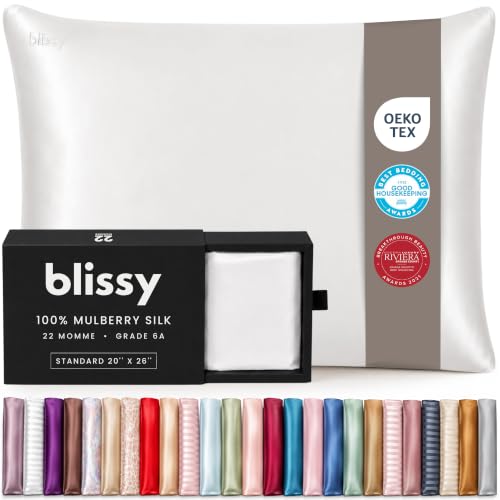
Start with the pillowcase: a 22-momme mulberry silk pillowcase (Blissy) is the highest-impact single swap, because nothing else touches your skin for 7-plus hours a night. Then replace synthetic bedding layer by layer — a GOLS-certified organic latex topper (Turmerry), a Pendleton Eco-Wise wool blanket, and a Naturepedic organic waterproof mattress protector.
Shop non-toxic bedding on AmazonQuick Comparison
📊 The peer-reviewed evidence base
Marfella et al. (2024) in the New England Journal of Medicine (390:900-910) examined carotid endarterectomy patients and found microplastics embedded in atheromatous plaques of 58% of patients; those patients had a 4.5× higher risk of cardiovascular events over 34 months follow-up (DOI: 10.1056/NEJMoa2309822). Correlation, not causation — but the chronic-inflammation mechanism is well-characterized.
These studies are the strongest current evidence base for the plastic-detox swaps recommended on this page. See our complete plastic detox guide for the full kitchen + bathroom + lifestyle reorganization.
📊 The peer-reviewed evidence on sleep optimization
Core body temperature drop is a major sleep-onset signal. The AASM and 2018 Harding et al. Sleep Medicine Reviews meta-analysis identify a ~0.5–1°C nocturnal drop as physiologically required for sleep architecture; ambient bedroom temperature of 60-67°F supports this. Cooling mattress toppers and active-cooling systems (Eight Sleep, Chilipad) directly address this lever — particularly for menopausal women, athletes recovering from intense training, and anyone living in warm climates without strong A/C.
Sleep is the highest-leverage health intervention most people can control. We weight efficacy data, mechanistic plausibility, and contraindications heavily — over influencer claims and supplement-stack marketing.
Quick Comparison — Jump to Your Best Pick
| Best For | Product | Price | Why It Wins | |
|---|---|---|---|---|
| Start Here | Blissy 100% Pure Mulberry Silk Pillowcase | Est. $75–$120 | The lowest-friction, highest-impact swap on the list. A single pillowcase replaces 7-plus hours of nightly synthetic contact against the face. 22-momme 6A-grade mulberry silk is the medical/luxury quality threshold — cheaper 12-16 momme "silk" does not deliver the benefits. OEKO-TEX certified dyes. | Check Price → |
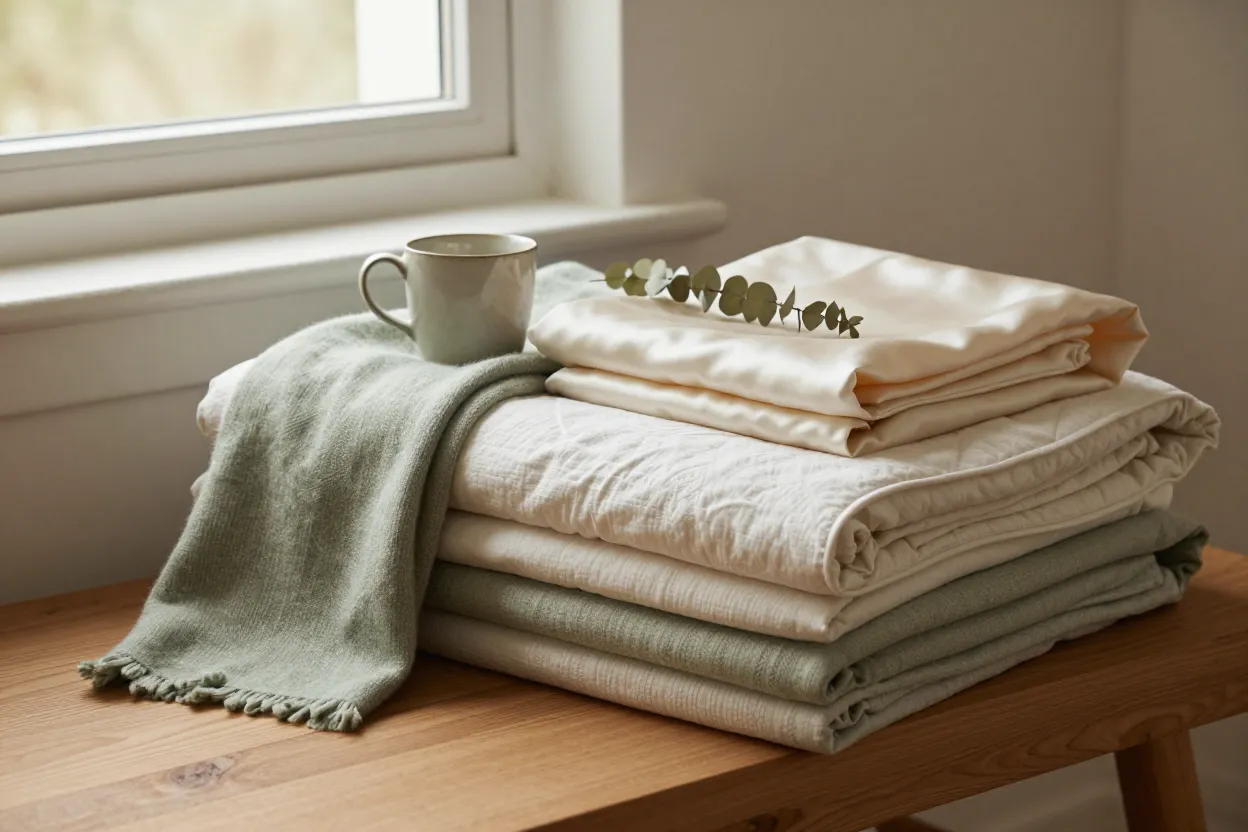
| Biggest Waste Reduction | Buffy Cloud Comforter | Est. $160–$190 | Each comforter diverts roughly 50 post-consumer plastic bottles from landfill via the recycled-fiber fill, replacing synthetic down-alternatives that shed microplastics for decades. Eucalyptus lyocell shell uses closed-loop fiber production (97 percent solvent recovery). CNET 2025 best-of. | Check Price → |
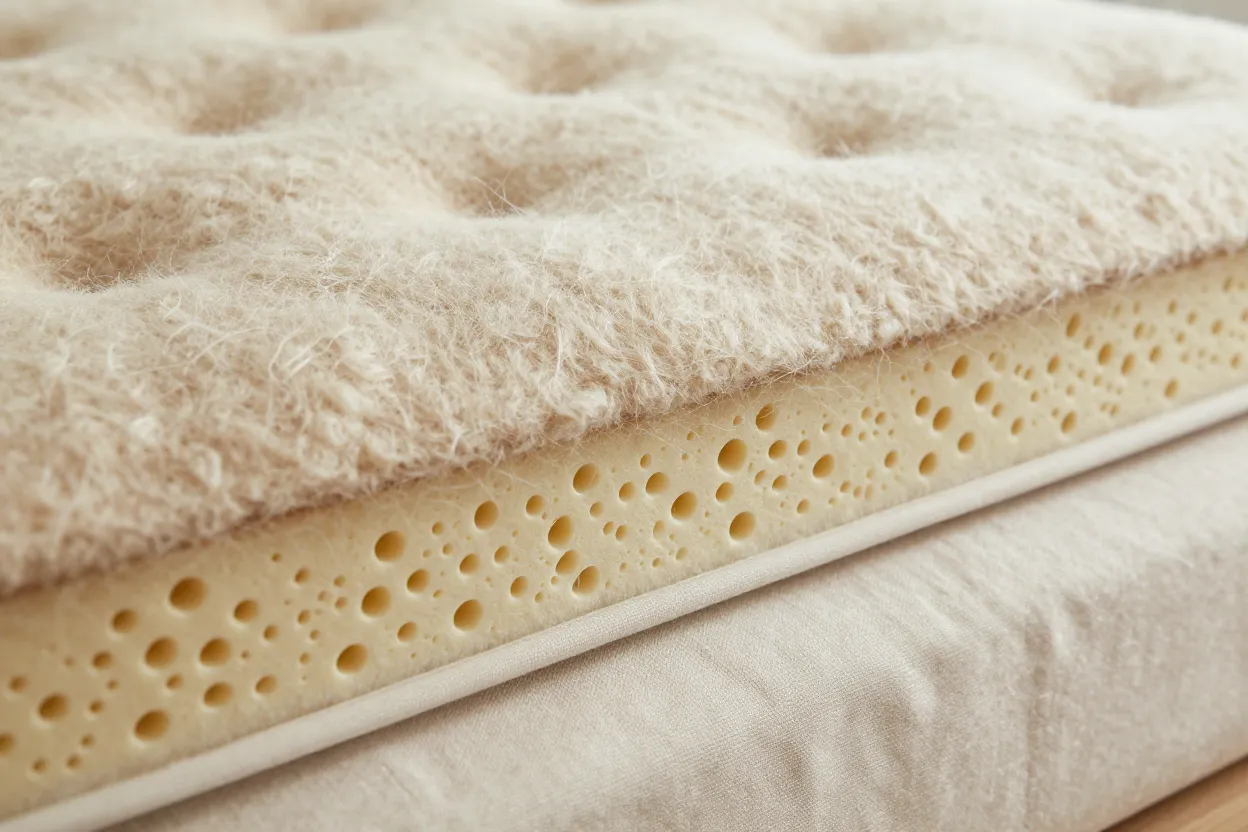
| Most Comprehensive | Sleep and Beyond myWoolly Latex Topper | Est. $280–$380 | Wool plus natural latex is the non-toxic sleep-surface gold standard. One purchase converts the 3 inches directly under your body from petroleum foam to Shropshire wool and natural latex noodles — the layer most bedroom-detox articles skip entirely. Hand-tufted, no chemical binders. | Check Price → |
| Premium Pick | Turmerry 7-Zone Natural Organic Latex Topper | Est. $200–$260 | GOLS-certified 95 percent-plus organic latex via Dunlop process with zoned pressure relief built specifically for side-sleeper body mechanics. Higher-spec alternative when wool is the wrong texture, at a meaningful discount to Avocado or Saatva for the same raw material bar. | Check Price → |
Blissy 100% Pure Mulberry Silk Pillowcase
The lowest-friction, highest-impact swap on the list. A single pillowcase replaces 7-plus hours of nightly synthetic contact against the face. 22-momme 6A-grade mulberry silk is the medical/luxury quality threshold — cheaper 12-16 momme "silk" does not deliver the benefits. OEKO-TEX certified dyes.
Check Price on Amazon →Buffy Cloud Comforter
Each comforter diverts roughly 50 post-consumer plastic bottles from landfill via the recycled-fiber fill, replacing synthetic down-alternatives that shed microplastics for decades. Eucalyptus lyocell shell uses closed-loop fiber production (97 percent solvent recovery). CNET 2025 best-of.
Check Price on Amazon →Sleep and Beyond myWoolly Latex Topper
Wool plus natural latex is the non-toxic sleep-surface gold standard. One purchase converts the 3 inches directly under your body from petroleum foam to Shropshire wool and natural latex noodles — the layer most bedroom-detox articles skip entirely. Hand-tufted, no chemical binders.
Check Price on Amazon →Turmerry 7-Zone Natural Organic Latex Topper
GOLS-certified 95 percent-plus organic latex via Dunlop process with zoned pressure relief built specifically for side-sleeper body mechanics. Higher-spec alternative when wool is the wrong texture, at a meaningful discount to Avocado or Saatva for the same raw material bar.
Check Price on Amazon →Bedding + sleep is one source — what's your full exposure profile?
8 quick questions across water, food storage, cookware, beverages, and personal care. Get a 0–100 score plus the top 3 swaps that would actually move the needle for you.
0 of 8 answered
Why the Bedroom Is the 8-Hour Plastic Exposure Most People Ignore
You spend a third of your life in your bedroom with skin in direct contact with sheets, pillowcase, comforter, and the top of the mattress. That is roughly 2,900 hours of continuous low-grade plastic exposure per year — more concentrated contact time than every other room in the house combined. Polyester sheets and synthetic-down comforters shed microfibers every night (the Patagonia study famously found roughly 250,000 microfiber fragments released per wash cycle on synthetic fleece, and bedding is no different). Conventional mattress toppers are petroleum-based memory foam off-gassing VOCs for the first 3-6 months of use, and conventional mattress protectors are usually vinyl or PVC with phthalate plasticizers. None of this is obvious because the plastic is not shaped like a bottle — it is fibers, foams, and coatings woven directly into the sleep surface. For the wider framing across every room, our complete plastic detox shopping list covers the full sequence; this page is the bedroom-specific drill-down.
The certifications that actually mean something in this category are a short list: GOTS (Global Organic Textile Standard — cotton, wool, linen, with batch-level third-party audits), GOLS (Global Organic Latex Standard — mattress toppers and pillows, with the same audit rigor for natural rubber), CertiPUR-US (VOC and phthalate limits on memory foam, which is the bar if you are buying any foam-fill product), GREENGUARD Gold (low chemical emissions on finished products), and OEKO-TEX Standard 100 (finished-product testing against 100-plus harmful substances including AZO dyes, formaldehyde, and pesticide residues). Anything labeled "eco," "green," or "natural" without one of those certifications is marketing copy. Anything with one is third-party verified. All seven picks on this list hit at least one of those bars, and half hit three. Laundry plastic is a related category — microfiber shedding from synthetic bedding during wash cycles is the same problem addressed from a different angle, and the plastic-free laundry swaps guide covers the catch-side fixes.
How to prioritize the bedroom detox depends entirely on where the daily exposure is highest. Your pillowcase touches your face for 7-plus hours a night — that is the single highest-contact textile in the entire house and the first item to swap. Sheets and comforter are next. Mattress topper matters because it is the 3-inch layer absorbing your sweat and breaking down into dust over 5-7 years, and the mattress itself is usually the largest petroleum-foam purchase in any home. Mattress protector is the gatekeeper between body fluids and the mattress — if the protector is vinyl or PVC, the entire "organic mattress" upgrade is undone because your body is pressed against the protector, not the mattress. Ranked by daily-exposure math: silk pillowcase first, natural-fiber sheets second, non-toxic topper plus organic protector third, wool or recycled-fill comforter fourth. For the adjacent-room logic across wet-area plastic, pair this guide with our bathroom plastic swaps.
What's the Difference Between GOTS, GOLS, and OEKO-TEX — And Do They Actually Matter?
GOTS is organic fiber sourcing plus low-toxicity processing — it applies to cotton, wool, linen, and hemp, and it is batch-audited by independent third parties. GOLS is the same rigor applied to latex: natural rubber with organic sourcing plus organic processing standards. OEKO-TEX Standard 100 is a finished-product test against 100-plus harmful substances (AZO dyes, formaldehyde, pesticide residues, heavy metals), which means it certifies what you actually get on the shelf, not just the raw material. GOTS is the hardest certification to earn because of the batch-audit requirement; OEKO-TEX is the easiest because it is a one-time finished-product test. Having any of them is a meaningful signal. Having GOTS plus OEKO-TEX together is the gold standard. Products labeled "eco" or "green" without any third-party certification are unverified marketing and should be treated as such.
Why Is Natural Latex Worth 2-3x the Price of Memory Foam?
Memory foam is polyurethane — a petroleum plastic — with added volatile organic compounds and frequently treated with flame-retardant chemicals banned in the EU. It off-gasses for the first 3-6 months after unboxing and degrades into fiber and dust over 5-7 years of use (which means you inhale what was the mattress). Natural latex (harvested from rubber tree sap) is inherently antimicrobial, does not off-gas, lasts 15-20 years, and biodegrades cleanly at end of life. The 2-3x price premium breaks even at roughly year 7-8 on a straight replacement-math basis, and everything after that is pure upside. Honest caveats: natural latex is 5-7x heavier than memory foam (moving a queen-size topper is a genuine two-person job), and people with latex allergies must avoid it entirely (the reaction can be severe).
Do Silk Pillowcases Actually Reduce Hair Damage, or Is That Marketing?
The friction claim holds up under actual dermatology research. Silk reduces mechanical abrasion against the hair shaft compared to cotton or polyester, which translates to less bedhead, less breakage, and fewer split ends for people with curly, fine, or chemically-treated hair. For thick straight hair the benefit is smaller but still measurable. The skincare claim also holds up: silk is significantly less absorbent than cotton, so nighttime moisturizer and retinol stays on your face rather than migrating into the pillow. The spec that separates real silk benefits from fake-silk marketing is momme count — 22 momme is the medical and luxury threshold where silk is dense enough to deliver the friction and moisture benefits. Cheaper "silk" pillowcases at 12-16 momme do not. Read the momme spec before buying, not the brand name.
How We Selected these products
The GiftedPicks team evaluates Amazon products against five criteria before any pick makes our lists. Here's exactly what we look for:
Review threshold
Strong customer satisfaction based on extensive review analysis. — not inflated by one-time purchase incentives.
Trending signal
Tracked against current Amazon search trends and GiftedPicks keyword data to confirm buyer demand exists before we recommend.
Price-to-value
Compared against category alternatives at similar price points. We flag when a pricier option genuinely outperforms its cheaper alternatives.
Review consistency
We weight recent reviews over historical ones. A product with consistent praise over 12+ months outranks one that spiked and faded.
Honest tradeoffs
Every pick includes what it's not ideal for. If a product doesn't suit a specific hair type, budget, or use case, we say so.
Category criterion 1
Third-party certified only — GOTS, GOLS, CertiPUR-US, GREENGUARD Gold, or OEKO-TEX Standard 100. "Eco-friendly," "green," "natural" without certification = marketing, not verified.
Category criterion 2
Daily-contact time weighted — highest-exposure items (silk pillowcase, sheets) prioritized over peripheral bedroom textiles. We ranked by 8-hour nightly contact, not by product count.
Category criterion 3
Category-king review volume — Coop Home Goods (280K+ reviews), Pendleton (80+ years brand heritage), Blissy (multi-million-dollar DTC brand with verified Amazon presence). No dropshipped no-name latex or silk brands despite cheaper prices.
As an Amazon Associate, GiftedPicks earns a commission when you purchase through our links — at no extra cost to you. Our editorial process is independent of this.
The 7 Non-Toxic Bedroom Swaps — Ranked by Daily Exposure




You might also like
Related guides in the plastic detox cluster: The Complete Plastic Detox Shopping List, Plastic Detox Starter Kit: 10 Beginner Swaps, Plastic Detox Bathroom Swaps, and Plastic-Free Laundry Swaps.
Frequently Asked Questions
What's the highest-priority non-toxic bedroom swap to start with?
A 22-momme mulberry silk pillowcase, because no other textile in your house is in direct skin contact for 7-plus hours a night the way a pillowcase is. The exposure math makes it the single highest-impact swap on any non-toxic bedroom list. A quality silk pillowcase replaces a full night of synthetic-fiber face contact with non-toxic, OEKO-TEX-certified material — and the secondary benefits (reduced hair breakage, skincare staying on your face instead of migrating to the pillow) are real dermatological effects, not marketing. The spec that matters is momme count; 22 momme is the threshold. Cheaper 12-16 momme "silk" does not deliver the same benefits regardless of brand name.
Is GOTS-certified organic cotton actually better than regular cotton?
Yes, meaningfully. GOTS is not just "organic fiber" — it is a full-chain certification covering sourcing (no pesticides, no GMO seed), processing (no toxic dyes, no formaldehyde finishes, no chlorine bleach), and labor standards. Conventional cotton uses roughly 16 percent of global insecticide volume on 2.5 percent of global farmland, and the residues persist in finished fabric. GOTS-certified cotton tests cleaner at the finished-product stage on both pesticide residues and processing chemicals. On softness and durability the difference is often imperceptible in the first year but shows up at year 3-4 of use (GOTS fabric tends to hold up better because it is not chemically softened with finishes that wash out). GOTS plus OEKO-TEX together is the gold standard.
How long does a natural latex mattress topper last compared to memory foam?
Natural latex lasts 15-20 years. Memory foam lasts 5-7 years before visible compression and loss of support. That roughly 3x lifespan difference is where the price premium pencils out — a $250 natural latex topper amortized over 15 years is $17 per year, versus a $100 memory foam topper replaced every 6 years at $16 per year. The environmental math tilts harder toward latex because memory foam is landfill-bound petroleum plastic, while natural latex biodegrades at end of life. Honest caveats: natural latex is 5-7x heavier than memory foam (a queen topper weighs 40-50 pounds — moving it is genuinely a two-person job), and people with latex allergies must avoid it. GOLS certification is the third-party verification bar.
Do wool and latex mattress toppers cause allergies?
Wool allergies are rare — most people who think they are allergic to wool are actually reacting to the lanolin or to the scratchiness of coarse-fiber wool, and high-loft fine wools like merino or Shropshire are both lanolin-reduced and soft enough to not trigger contact irritation. Natural latex allergies are more serious: roughly 1-6 percent of the general population has some level of latex sensitivity, and the reaction can range from mild rash to severe anaphylaxis. If you have a known latex allergy, avoid natural latex entirely and look at wool-only toppers or organic cotton fill instead. If you have never been tested and have no history of reaction to latex gloves or latex medical equipment, natural latex is almost certainly fine.
What momme count should I look for in a silk pillowcase?
22 momme is the threshold. Momme is the weight-per-unit-area measurement for silk fabric, and the number tracks directly with density, durability, and the friction-reduction benefit. Below 19 momme, silk is too thin to deliver meaningful hair and skin benefits and too delicate to survive regular laundering. At 19-22 momme you are in the zone where benefits start showing up. At 22-25 momme you are in the luxury range — denser fabric, longer fiber strands, better drape. Above 25 momme is rare outside specialty retailers and not worth the price premium for most users. Cheaper "silk" pillowcases in the 12-16 momme range are using the silk-adjacent marketing category more than delivering the actual performance. Read the spec, not the brand copy.
Can I trust "eco-friendly" labels on bedding?
No — "eco-friendly," "natural," and "green" are unregulated marketing terms that any brand can use without verification. The only trustworthy signals in bedding are third-party certifications: GOTS for organic textiles (batch-audited), GOLS for organic latex (same rigor), CertiPUR-US for memory foam VOC and phthalate limits, GREENGUARD Gold for low chemical emissions on finished products, and OEKO-TEX Standard 100 for testing against 100-plus harmful substances. If a product has one of those certifications, it has been independently verified. If a product has none, the claims are the brand's marketing copy. Default rule: every item on a non-toxic bedroom list should carry at least one certification, and the best picks carry multiple. All seven picks on this page do.
You Might Also Like
What Reddit Communities Are Saying
Real discussions from verified Reddit users — not sponsored content
Reddit home communities share honest product reviews and creative solutions, helping you find items that look great and actually work.
Popular search: “plastic detox bedroom sleep reddit”
GiftedPicks Editorial Team
Product Research & Editorial
The GiftedPicks editorial team researches thousands of Amazon products, analyzes customer review patterns, cross-references clinical studies and community recommendations, and writes original editorial content for every list. We never accept payment from brands for placement or ranking.
7 research-backed picks curated by the GiftedPicks team
The most comprehensive cluster spoke: seven non-toxic bedroom upgrades covering pillowcase, sheets layer, comforter, topper, and protector. Certification-first sourcing — GOTS, GOLS, CertiPUR-US, OEKO-TEX. Ranked by 8-hour daily exposure, not product count.
Explore Related Topics
Ready to detox your bedroom plastics?
Shop the 7 Netflix-inspired non-toxic bedroom swaps on Amazon.