Editorial disclosure: We earn from qualifying Amazon purchases at no extra cost to you. Picks are independently researched. Full disclosure →
The Plastic-Free Pantry Swaps That End Leaching Into Leftovers
The Netflix plastic detox documentary spent most of its runtime in the bathroom, but your kitchen is where daily heat, acid, and fat exposure drive the highest leaching math in your house. These are the 10 pantry and food storage swaps that actually fix it — glass, stainless steel, platinum silicone, and beeswax, no shortcuts.
💡 Affiliate Disclosure: We earn a small commission from Amazon purchases made through our links. This supports our work. We only recommend pantry swaps we would hand a friend who asked us where to start.
Our Top Plastic Detox Pantry & Food Storage Picks on Amazon
We did the research for you — curated and reviewed the top-rated products so you can find what's actually worth buying. 100% free.
Quick answer
Four materials do not leach into food: glass, stainless steel, platinum-cured silicone, and beeswax-infused cotton. Plastic releases phthalates, BPA, BPS, and BPF through three pathways: heat above roughly 170F, fatty foods, and acidic foods like tomato sauce. Borosilicate glass (Pyrex) and 18/8 stainless steel stay chemically inert under all three conditions.
Shop plastic-free food storage on AmazonQuick Comparison
📊 The peer-reviewed evidence base
Sajiki et al. (2007) in the Journal of Health Science documented BPA migration from polycarbonate food storage into stored foods and beverages, with significantly elevated migration during heating. This is the foundational paper behind the glass-over-plastic recommendation for any food-contact use case.
Hussain et al. (2023) in Environmental Science & Technology ran controlled microwave tests on FDA-approved "microwave-safe" polypropylene and polyethylene containers — including products explicitly cleared for infant food storage — and quantified up to 4.22 million microplastic particles per cubic centimeter of food released in a single 3-minute heating cycle. Room-temperature storage in the same containers released ~100× fewer particles. The "microwave-safe" label was never designed to address particulate shedding (DOI: 10.1021/acs.est.3c01942).
These studies are the strongest current evidence base for the plastic-detox swaps recommended on this page. See our complete plastic detox guide for the full kitchen + bathroom + lifestyle reorganization.
Quick Comparison — Jump to Your Best Pick
| Best For | Product | Price | Why It Wins | |
|---|---|---|---|---|
| Start Here | Pyrex Simply Store 18-Piece Glass Set | Est. $40–$55 | The lowest-friction 1:1 replacement for the Rubbermaid plastic storage kit every household already owns. 9 borosilicate glass containers plus 9 BPA-free lids, freezer-to-oven-to-dishwasher versatile. Pyrex has been making thermal-shock-resistant glass since 1915 — the brand heritage is the quality-assurance layer the Amazon-brand alternatives do not have. | Check Price → |
| Biggest Plastic Reduction | Stasher Reusable Silicone Bag 7-Pack | Est. $75–$90 | Each Stasher survives 3000-plus cycles — one 7-pack replaces roughly 21,000 single-use Ziploc bags over its lifetime. No other swap on this list compounds that fast. Platinum-cured silicone is the spec that matters (not peroxide-cured — that is the cheap silicone tell). Oven-safe to 400°F unlocks sous-vide and sheet-pan meal prep directly in the bag. | Check Price → |
| Premium Heirloom | Weck 742 Mold Jar Set of 6 (0.5L) | Est. $42–$55 | The gold standard for zero-plastic pantry storage. German canning system with all-glass lids, natural-rubber rings, and stainless steel clamps — zero plastic on food-contact surfaces AND on sealing surfaces. Weck is 130 years old and the jars last indefinitely. Rubber rings are the one replaceable component (inexpensive, swap every 1-5 years). | Check Price → |
| Best Bulk Refill | Ball Stainless Steel Wide-Mouth Storage Lids, 6-Pack | Est. $9–$14 | The highest-ROI swap on the list. Converts any existing wide-mouth Mason jar into plastic-free pantry storage for roughly $2 per jar. 18/8 stainless steel construction with a food-safe silicone gasket — the gasket is the only non-stainless component, and it is replaceable. Ball has been the canning-jar category leader since 1880. | Check Price → |
Pyrex Simply Store 18-Piece Glass Set
The lowest-friction 1:1 replacement for the Rubbermaid plastic storage kit every household already owns. 9 borosilicate glass containers plus 9 BPA-free lids, freezer-to-oven-to-dishwasher versatile. Pyrex has been making thermal-shock-resistant glass since 1915 — the brand heritage is the quality-assurance layer the Amazon-brand alternatives do not have.
Check Price on Amazon →Stasher Reusable Silicone Bag 7-Pack
Each Stasher survives 3000-plus cycles — one 7-pack replaces roughly 21,000 single-use Ziploc bags over its lifetime. No other swap on this list compounds that fast. Platinum-cured silicone is the spec that matters (not peroxide-cured — that is the cheap silicone tell). Oven-safe to 400°F unlocks sous-vide and sheet-pan meal prep directly in the bag.
Check Price on Amazon →Weck 742 Mold Jar Set of 6 (0.5L)
The gold standard for zero-plastic pantry storage. German canning system with all-glass lids, natural-rubber rings, and stainless steel clamps — zero plastic on food-contact surfaces AND on sealing surfaces. Weck is 130 years old and the jars last indefinitely. Rubber rings are the one replaceable component (inexpensive, swap every 1-5 years).
Check Price on Amazon →Ball Stainless Steel Wide-Mouth Storage Lids, 6-Pack
The highest-ROI swap on the list. Converts any existing wide-mouth Mason jar into plastic-free pantry storage for roughly $2 per jar. 18/8 stainless steel construction with a food-safe silicone gasket — the gasket is the only non-stainless component, and it is replaceable. Ball has been the canning-jar category leader since 1880.
Check Price on Amazon →Food storage is one source — what's your full exposure?
8 quick questions across water, food storage, cookware, beverages, and personal care. Get a personalized 0–100 score plus prioritized swap recommendations.
0 of 8 answered
Why Kitchen Plastic Leaching Is Worse Than Netflix's Documentary Implied
Three mechanisms drive plastic-into-food leaching, and your kitchen has all three happening multiple times per day. The first is heat — plastic warmed past roughly 170°F (a standard microwave reheat, a dishwasher top-rack cycle, a mug of hot coffee in a plastic travel cup) accelerates polymer breakdown and releases migrating compounds directly into the food. The second is fat and oil — phthalates and bisphenols are fat-soluble, which means they dissolve readily into oily or fatty foods stored in plastic containers (olive oil, nut butter, cheese, cured meats). The third is acid — tomato sauce, vinegar-based dressings, citrus, and fermented foods accelerate BPS and BPF leaching from plastic surfaces. Four materials do not exhibit this leaching pattern: glass, stainless steel, platinum-cured silicone, and beeswax-infused organic cotton (short-duration cold storage only). Every product on this list operates in one of those four material categories. For the wider framing across every room, our complete plastic detox shopping list covers the full sequence; this page is the pantry-specific drill-down.
Where the Netflix documentary under-indexed is the kitchen. It focused heavily on the bathroom — water bottles, shampoo bottles, cosmetics packaging — but the kitchen has the daily heat-plus-acid-plus-fat exposure pattern that drives the highest real-world leaching math in most households. Microwaving yesterday's pasta sauce in a plastic container is the most common and most leaching-intense action most American households perform 5-10 times per week. Every time that happens, the polymer-to-food migration accelerates dramatically. The fix is ruthless: replace every plastic storage container that gets microwaved, reheated, or used for tomato-based or fatty leftovers. Glass is the obvious upgrade path for containers, stainless for canisters, platinum silicone for bags, and beeswax wraps for short-duration cold cover. For the adjacent cookware layer (pans, pots, utensils) that also contributes to the heat-exposure story, pair this with our plastic-free kitchen cookware guide.
The honest compromise we need to name on this page: lids. Every mass-market "plastic-free" glass storage line still has plastic lids — Pyrex, Glasslock, OXO POP. The reason is mechanical: creating an airtight seal requires a flexible polymer that can compress against a rigid rim, and glass-on-glass simply does not compress. The exceptions are Weck (glass lid held in place by a natural-rubber ring and stainless clamps) and Kilner Clip-Top (glass lid with a natural-rubber gasket under a hinged steel clip). For food-contact situations where food physically touches the lid — jars stored on their side, inverted storage, shaking salad dressings — Weck and Kilner are the honest picks. For vertical pantry storage where food does not contact the lid at all, Pyrex and Glasslock's BPA-free plastic lids are a non-issue from a leaching standpoint. We call this out product-by-product below instead of hiding it. For a broader adjacent-room view of plastic exposure math, see our bathroom plastic swaps guide.
Is Silicone Actually Safe for Food Storage — or Just Trendy?
Food-grade platinum-cured silicone (the spec Stasher uses) is inert up to 400°F, does not leach, and does not absorb flavors the way cheap silicone does. It is the same grade used for medical tubing and baby-bottle nipples. Non-platinum-cured silicone — the peroxide-cured version used in most no-name Amazon-brand silicone bags — can contain fillers and peroxide residues that migrate into food under heat. The fix is to check the spec for "platinum-cured" explicitly; if the product page does not say that, assume peroxide-cured and move on. Stasher is the quality leader and the pick on this list. Honest caveat: silicone will pick up strong odors over time (curry, garlic, onion) — a baking soda paste rinse resets it. Lifespan on platinum silicone is 3000-plus cycles, which is why the waste-reduction math compounds so hard.
Do Beeswax Wraps Actually Replace Plastic Wrap — or Just Most of It?
Roughly 80 percent replacement is the honest number. Bee's Wrap and similar beeswax-infused organic cotton wraps cover bread loaves, cheese blocks, cut vegetables, sandwiches, and bowl-covering — anything cool that does not need a fully airtight seal. They do not work for raw meat, hot food, very wet food, or freezer storage (the wax cracks below freezing). Lifespan is 12 months of daily use with proper care: cold water only, no hot water, no dish soap directly on the wrap, no microwave. Pair beeswax wraps with platinum silicone bags (Stasher) for the remaining 20 percent — raw meat, liquids, freezer storage, hot food wrapping. The two together cover roughly 95 percent of household plastic-wrap use cases. Replace the wrap when the stickiness fades; it is biodegradable and compostable at end of life.
Which Mason Jar Lid Setup Is Most Plastic-Free?
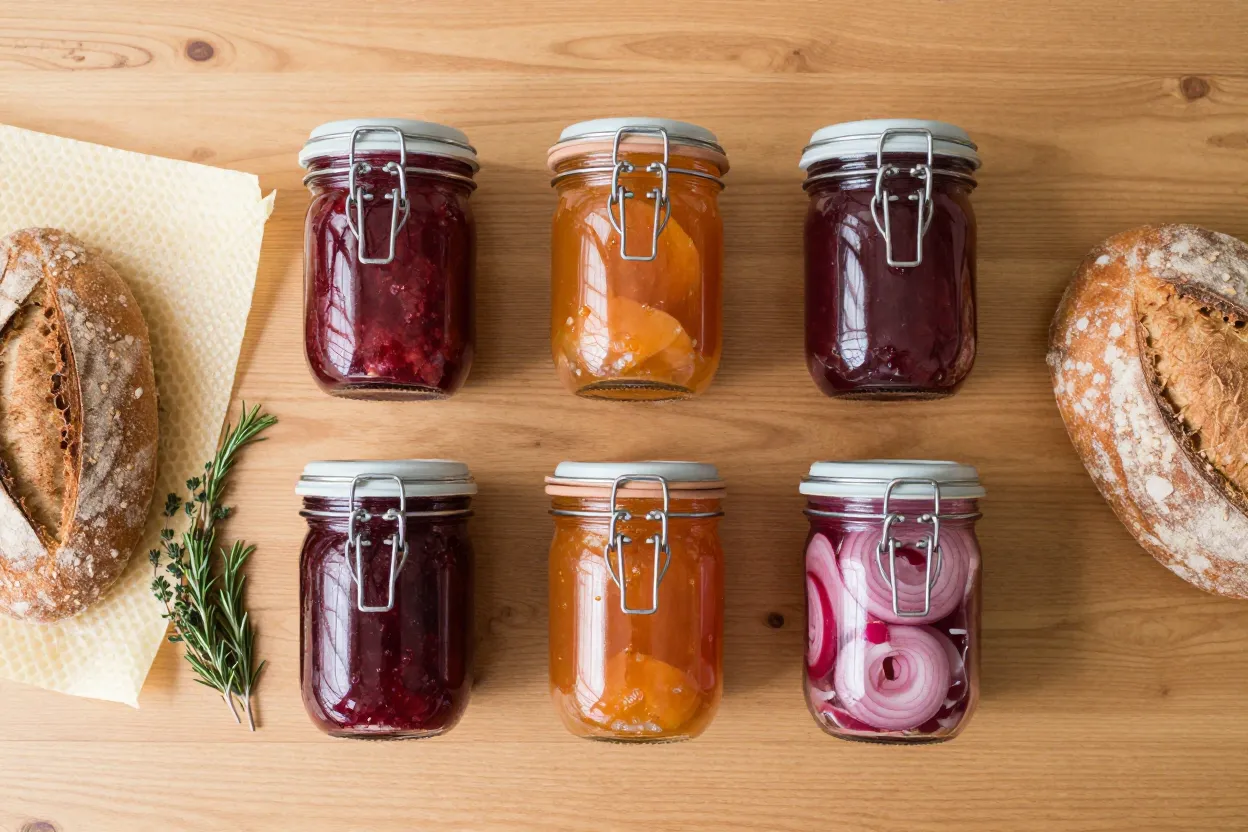
Weck is the gold standard — all-glass lid held in place by a natural-rubber ring under stainless steel clamps. Zero plastic on food-contact surfaces and zero plastic in the sealing system. Ball Stainless Steel Storage Lids are the best aftermarket option for households that already own Mason jars — they replace the plastic-coated canning lids that ship with Ball jars and work with jars you already own for roughly $2 per lid. Kilner Clip-Top uses a natural-rubber ring under a glass lid, clipped down by a steel wire closure; similar to Weck with a different aesthetic. What to avoid: two-piece canning lids with plastic-coated interiors (most Ball jars ship with these), and plastic-threaded storage caps sold as aftermarket Mason jar "storage lids" — those defeat the entire purpose of the glass jar. If you are converting an existing Mason jar pantry, Ball Stainless Storage Lids are the highest-ROI swap on the list.
How We Selected these products
The GiftedPicks team evaluates Amazon products against five criteria before any pick makes our lists. Here's exactly what we look for:
Review threshold
Strong customer satisfaction based on extensive review analysis. — not inflated by one-time purchase incentives.
Trending signal
Tracked against current Amazon search trends and GiftedPicks keyword data to confirm buyer demand exists before we recommend.
Price-to-value
Compared against category alternatives at similar price points. We flag when a pricier option genuinely outperforms its cheaper alternatives.
Review consistency
We weight recent reviews over historical ones. A product with consistent praise over 12+ months outranks one that spiked and faded.
Honest tradeoffs
Every pick includes what it's not ideal for. If a product doesn't suit a specific hair type, budget, or use case, we say so.
Category criterion 1
Food-contact surface must be glass, stainless steel, or platinum-cured silicone. Lids may be plastic where an airtight seal requires it (called out honestly in each product description), but the surface the food physically touches is non-plastic on 10 of 10 picks.
Category criterion 2
Category-leader review volume + decades of brand heritage. Pyrex (1915), Ball (1880), Weck (1895), Le Creuset (1925), Kilner (1842), Stasher (2016 — the exception, but category-defining). No knockoff brands despite lower prices.
Category criterion 3
Durability math: each pick should last 10+ years with proper care. Stasher 3000+ cycles. Weck glass indefinite. Pyrex thermal-shock-resistant borosilicate. LunchBots 18/8 stainless. The per-year cost of every item on this list beats plastic-container replacement cycles.
As an Amazon Associate, GiftedPicks earns a commission when you purchase through our links — at no extra cost to you. Our editorial process is independent of this.
The 10 Plastic-Free Pantry & Food Storage Swaps

The Plastic Detox Grocery Shopping Guide (Aisle-by-Aisle Checklist)
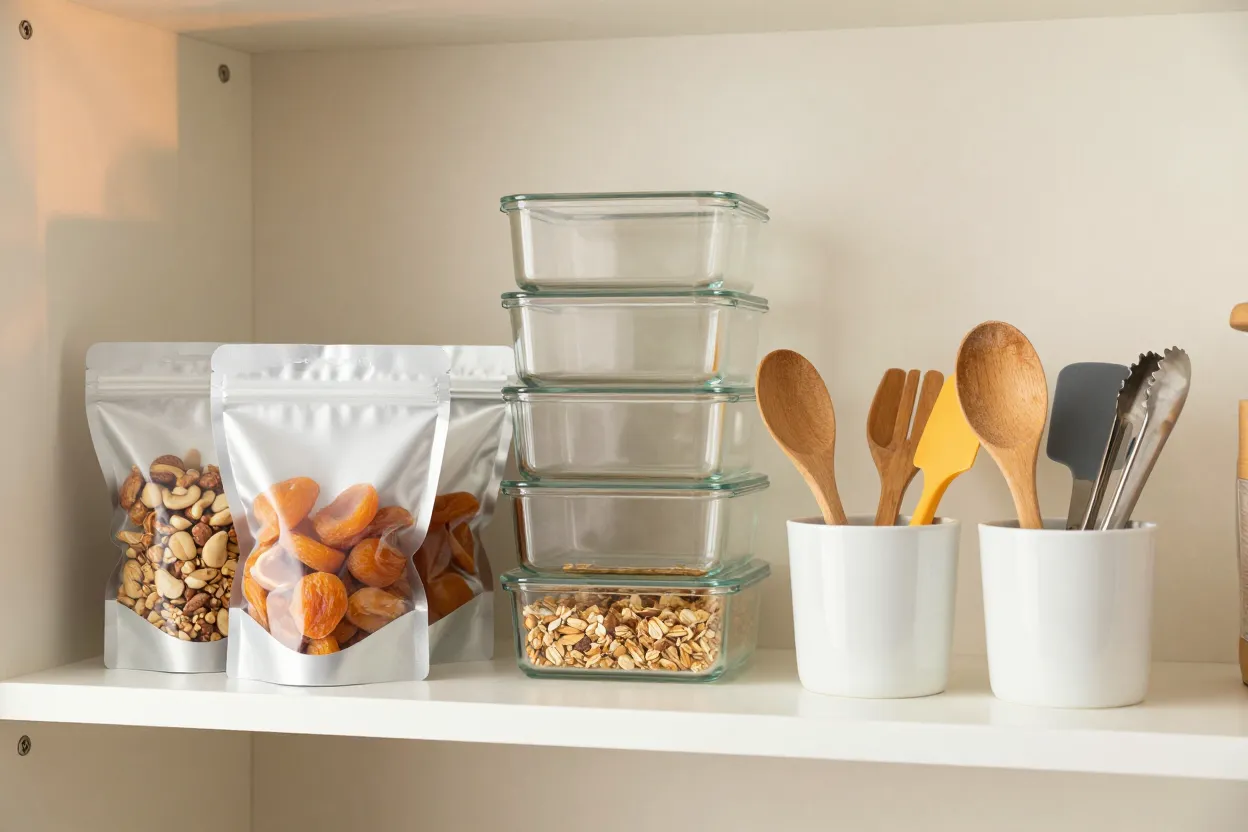
Everything above covers what you store food in. But most pantry plastic doesn't come from your containers — it comes home from the store with the food already in it. If you searched for a plastic detox grocery list or a grocery shopping guide, this is the checklist version: what to reach for and what to skip, aisle by aisle, using the same heat/fat/acid logic as the rest of this page.
| Aisle | Reach for | Skip when you can |
|---|---|---|
| Produce | Loose fruit and vegetables; bring cotton or mesh produce bags, or just skip the bag — you wash produce anyway | Pre-cut fruit in clamshells, bagged salads, shrink-wrapped vegetables |
| Canned & jarred | Glass jars for acidic foods especially — tomato sauce, salsa, pickles. Acid is one of the three leach accelerators covered above | Canned tomatoes and other acidic foods — most can interiors are plastic-based epoxy or acrylic linings, including many marked BPA-free |
| Dry goods | Cardboard and paper packaging — boxed pasta, paper-bagged flour and sugar, oats in cartons; bulk bins with your own jars where your store allows | The same staples in plastic bags or plastic tubs when a paper-packaged equivalent sits on the same shelf |
| Deli & butcher counter | Counter service wrapped in butcher paper — you can ask; many counters will also fill a container you hand them | Pre-packaged sliced meat and cheese in multi-layer plastic film, which is unrecyclable and sits in direct fat contact |
| Beverages | Glass bottles, aluminum cans, or concentrate you mix at home in your own bottle | Single-use plastic water bottles — the highest-frequency plastic contact in most carts |
| Freezer | Cardboard-boxed items; or buy fresh in season and freeze at home in the glass and silicone storage from this page | Steam-in-bag vegetables — the one freezer format designed to be microwaved in its plastic |
| Checkout | Your own totes; keep them in the car so the decision is already made | Double-bagged plastic for heavy items — the classic exit-door undo of a careful shop |
Honest framing, consistent with the rest of this cluster: a perfectly plastic-free cart doesn't exist at a normal American grocery store, and chasing one is how people burn out. The highest-leverage rows are the ones involving heat, fat, or acid — steam-in-bag vegetables, canned tomatoes, deli film — because those match the three leach pathways this page is built around. Get those plus beverages right and the rest is diminishing returns. For the full swap-by-swap version across the whole house, see the complete Plastic Detox products list.
You might also like
Related guides in the plastic detox cluster: The Complete Plastic Detox Shopping List, Plastic-Free Kitchen Cookware Alternatives, Plastic Detox Starter Kit: 10 Beginner Swaps, and Plastic-Free Laundry Swaps.
Frequently Asked Questions
Why do plastic containers leach more when microwaved?
Heat above roughly 170°F accelerates polymer breakdown in plastic containers, and the microwave routinely pushes food 30-60 degrees above that threshold. Under heat, migrating compounds — phthalates, BPA, BPS, BPF — release from the plastic at rates orders of magnitude higher than at room temperature. Fat and acid in the food compound the leaching because those compounds are fat-soluble and acid-accelerated. Tomato-based leftovers microwaved in plastic are the worst-case scenario: heat plus acid plus (in pasta sauce) fat, all three leaching mechanisms active simultaneously. The fix is glass. Borosilicate glass (Pyrex) is thermally stable, chemically inert, and does not release migrating compounds under any household heat condition. Ceramic stoneware and tempered glass (Glasslock) work the same way.
Are silicone storage bags actually dishwasher-safe long-term?
Platinum-cured silicone holds up in dishwashers long-term — Stasher bags have passed independent dishwasher-cycle testing past year 5 without mechanical failure. Peroxide-cured silicone (the cheap Amazon-brand version) does not — it starts to feel tacky, develop cloudy spots, and lose seal integrity within roughly 12-18 months of regular dishwasher use. The spec to check is "platinum-cured" explicitly on the product page; if the listing does not say that, assume peroxide-cured. Honest caveat: even platinum silicone will pick up strong odors over time (curry, garlic, onion) — a baking soda paste rinse resets it, but the smell memory is real. The pinch-loc closure on Stasher holds up better than the slider-zipper closures on competing brands, which typically fail within 6 months.
What's the difference between Pyrex, Weck, and Kilner glass storage?
Pyrex is borosilicate glass containers with BPA-free plastic lids — the lowest-friction 1:1 replacement for Rubbermaid-style plastic storage, oven/freezer/dishwasher versatile, thermally robust for the freezer-to-oven workflow. The lids are plastic; the food-contact surface is glass. Weck is a German canning system with all-glass lids held in place by natural-rubber rings and stainless steel clamps — zero plastic on food-contact surfaces AND on sealing surfaces, the gold standard, but 3x the per-jar cost of Pyrex. Kilner is a British clip-top system with glass lids, natural-rubber gaskets, and hinged steel clip closures — similar to Weck but with a different aesthetic and a lower per-jar price. Pick Pyrex for family-kitchen container storage, Weck for heirloom-grade canning and fermentation, Kilner for individual pantry jars (spices, grains, small-batch ferments).
Do beeswax wraps work for long-term freezer storage?
No — beeswax wraps are not freezer-safe for long-term storage. The wax coating cracks below freezing and loses its seal, which defeats the functional purpose of the wrap. Beeswax wraps work for 80 percent of household plastic-wrap use cases (bread, cheese, cut vegetables, sandwich wraps, bowl covers) but the remaining 20 percent — freezer storage, raw meat, hot food, very wet food — belongs to platinum silicone bags (Stasher), glass containers (Pyrex, Weck), or stainless steel (LunchBots). Pair beeswax wraps with silicone bags and glass containers to cover roughly 95 percent of household storage needs. Replace wraps when the stickiness fades after about 12 months of daily use; they are biodegradable and compostable at end of life.
Is it safe to put tomato sauce in plastic containers?
No — tomato sauce is the worst-case food for plastic leaching. It combines three of the mechanisms that accelerate polymer-to-food migration: acid (from the tomatoes), fat (from olive oil, cheese, or meat in the sauce), and heat (if microwaved or stored hot). Acid accelerates BPS and BPF release from plastic surfaces; fat dissolves phthalates and bisphenols; heat above 170°F multiplies the migration rate. Together, storing tomato sauce in plastic is the single highest-leaching scenario in a typical kitchen. The fix is glass or stainless steel: Pyrex Simply Store or Glasslock for everyday leftovers, Weck or Kilner jars for longer-term storage, LunchBots stainless for portioned lunch leftovers. Glass does not leach under acid, fat, or heat — it is chemically inert.
How do I transition my entire pantry from plastic to glass without spending $500 at once?
Sequence the swap by daily-exposure priority rather than buying everything at once. Start with the containers that get microwaved or hold acidic/fatty leftovers (Pyrex Simply Store 18-piece, roughly $40-55) — that single purchase fixes the highest-leaching scenario in most kitchens. Next add stainless steel storage lids to the Mason jars you already own (Ball Stainless Wide-Mouth Lids 6-Pack, $9-14) — the highest-ROI swap on the list for the price. Then add platinum silicone bags to replace Ziploc (Stasher 7-Pack, $75-90 but one-time-buy for 3000-plus uses). Beeswax wraps replace plastic cling wrap. Save the premium-tier Weck and Kilner jars for when you want to upgrade specific pantry staples one at a time. Total sequenced cost over 6 months: roughly $150, versus $500+ if you replace everything at once.
You Might Also Like
What Reddit Communities Are Saying
Real discussions from verified Reddit users — not sponsored content
Reddit communities provide authentic peer reviews and recommendations, helping shoppers discover products that genuinely deliver on their promises.
Popular search: “plastic detox pantry food storage reddit”
GiftedPicks Editorial Team
Product Research & Editorial
The GiftedPicks editorial team researches thousands of Amazon products, analyzes customer review patterns, cross-references clinical studies and community recommendations, and writes original editorial content for every list. We never accept payment from brands for placement or ranking.
10 research-backed picks curated by the GiftedPicks team
The most comprehensive pantry spoke in the plastic-detox cluster: 10 plastic-free food storage swaps covering containers, canisters, silicone bags, beeswax wraps, Mason jar conversion, all-glass-lid jars, stoneware crocks, and stainless bento. Food-contact surface is non-plastic on 10 of 10 picks. Lid compromises called out honestly, not hidden.
Explore Related Topics
Ready to detox your pantry plastics?
Shop the 10 Netflix-inspired plastic-free food storage swaps on Amazon.