


The complete plastic-free period products buying guide
Conventional menstrual products contain a mix of materials — rayon, synthetic absorbent gels, plastic backing layers, fragrance compounds, and chlorine-bleached fibers — that the published research has linked (at varying confidence levels) to dioxin trace exposure, phthalate exposure, and category-specific irritation. The good news is that there are well-studied alternatives at every product type. Here's how to think about the swap based on what you actually use.
New in 2026: PFAS in menstrual products is now illegal in several states
The period-underwear PFAS story used to be purely a consumer-trust problem — testing reports, a 2022 class-action settlement, brands promising they had reformulated. It is now a legal one, which changes what a shopper can rely on. "Menstruation products" is a named statutory category in the new state PFAS laws, and products with intentionally added PFAS can no longer be sold in Minnesota (since January 1, 2025, under Amara's Law) or in Colorado, Maine and Vermont (since January 1, 2026). Connecticut began requiring PFAS labeling and advance state notification on July 1, 2026, which becomes an outright ban on January 1, 2028.
What that does and does not buy you. It does mean a national brand shipping into those states has a legal reason, not just a reputational one, to keep intentionally added PFAS out of the product. It does not mean "certified PFAS-free": the statutes restrict PFAS that were deliberately added to serve a function, so trace contamination arriving through manufacturing sits outside their scope, and textile PFAS testing methods still have real limitations. For a specific brand, the current third-party test certificate is still the only direct answer — the law raises the floor, it does not replace the paperwork. Worth keeping straight while you shop: PFAS are fluorinated chemicals used for stain and moisture repellency, not microplastics. They are a separate question from the plastic backing layers and synthetic fibers the rest of this guide is about.
Source: Fox Rothschild, newly effective state regulation of PFAS in products (February 2026) · Minnesota Pollution Control Agency, 2025 PFAS prohibitions.
What's actually in conventional tampons and pads?
Conventional tampons (Tampax, Playtex, Kotex) typically contain rayon, conventional cotton, and chlorine-bleached fibers (modern manufacturers use ECF processes that minimize but don't eliminate dioxin formation). Conventional pads (Always, Stayfree) typically contain a synthetic absorbent core (sodium polyacrylate or similar), a plastic backing layer (usually polyethylene), and a synthetic top sheet. Scented variants additionally contain fragrance compounds — undisclosed proprietary mixes that have been linked to vulvar contact dermatitis in dermatology literature. The scale of exposure is small per use, but the cumulative-lifetime exposure matters because the average menstruating person uses ~10,000-15,000 single-use products over their reproductive lifespan.
Are menstrual cups actually safe?
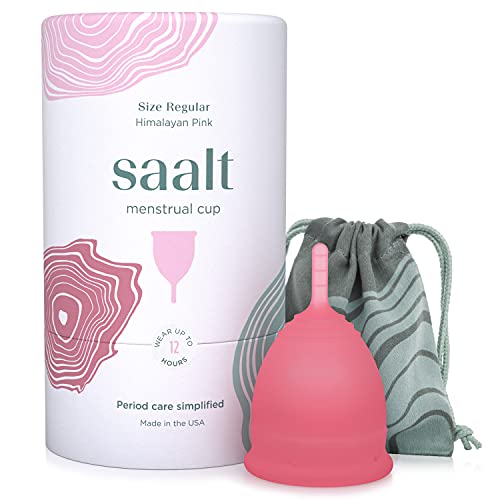
Yes — extensively documented. The 2019 Lancet systematic review by van Eijk et al. evaluated 43 menstrual cup studies and concluded cups have equivalent or lower TSS risk than tampons, equivalent or better leakage protection, and no documented chemical-leachate concerns. Medical-grade silicone (the material in DivaCup and Saalt) is one of the cleanest consumer materials — inert, non-reactive, no plastic, no leachates. The learning curve for insertion is real (most users take 2-3 cycles to fully adapt) but once adapted, the cup eliminates the entire chemical-exposure conversation. One cup replaces roughly 250-300 single-use products per year.
Why does the rayon question matter for tampons?
Rayon is a regenerated cellulose fiber processed from wood pulp. The variable that matters is the bleaching process used — chlorine bleaching (especially older elemental-chlorine processes) was associated with trace dioxin formation in the resulting fibers per DeVito 2002. Modern manufacturers use ECF (Elemental Chlorine Free) and TCF (Totally Chlorine Free) processes that have reduced dioxin formation by 90%+ since the 1990s. So conventional tampons in 2026 are not dangerous. But organic cotton tampons (Cora #3) eliminate rayon entirely and use no bleaching, so the variable is removed completely. The choice is essentially “reduce a small risk further” vs “accept the residual risk because the modern manufacturing is safe.” Both positions are reasonable. We recommend Cora because the price premium is small.
What's the deal with PFAS in period underwear?
This is the legitimate ongoing concern in the menstrual-product transparency conversation. In 2022, Thinx settled a class-action lawsuit specifically about PFAS detection in their period underwear after years of marketing the products as chemical-free. Independent testing by Consumer Reports and journalism by Sierra Club detected PFAS in multiple brands. KNIX (our #4 pick) and other brands have since publicly stated current products are PFAS-free with third-party testing, but the textile-PFAS testing methodology has known limitations and the category transparency is still maturing in 2026. Our honest editorial position: KNIX is a real plastic-detox option for users who don't want internal insertion, but readers who weight chemical disclosure heavily should review the brand's current third-party testing certifications directly before purchase. Menstrual cups (cups #1-2 above) avoid this entire question.
DivaCup vs Saalt — which is right for you?
DivaCup has 22 years of market data, the longest clinical safety record, and the most-cited Amazon reviews. Model 0 specifically is the first-time user / slim canal variant — the right entry point for anyone trying a cup for the first time. Saalt has a meaningfully softer silicone formulation that addresses the #1 reason people abandon cups (firmness discomfort, especially bladder pressure for sensitive users). Saalt is also B-Corp certified and made in the USA. Practical decision logic: start with DivaCup Model 0 if you're first-time. Switch to Saalt if you found DivaCup too firm. Neither will leak more than the other when properly inserted.
Common mistakes when switching from conventional menstrual products
Mistake 1: Trying a menstrual cup once and giving up after one cycle. Cup insertion has a 2-3 cycle learning curve. The Lancet review documented this — adoption rates are higher when users commit to 3 full cycles before judging fit. Mistake 2: Buying scented organic cotton products thinking “organic” means “all variables removed.” Fragrance compounds are still a separate exposure variable — choose unscented variants of organic products. Mistake 3: Assuming all period underwear brands are equivalent on PFAS testing. They're not — the category is heterogeneous. Read brand-specific third-party testing certifications before choosing. Mistake 4: Switching to an organic disposable but using it for 8+ hours like a regular tampon. Organic cotton tampons follow the same 4-8 hour change recommendations as conventional ones. Mistake 5: Storing menstrual cups in airtight plastic containers between cycles. Cups need to be cleaned and stored in the included cotton pouch (or a clean breathable container) — sealing them in plastic can trap moisture and promote silicone degradation.